1. ArchDaily
  2. Rooftop Architecture

Rooftop Architecture: The Latest Architecture and News

Rethinking the Flat Datum: Designing Space with Incline and Intent

Subscriber Access | 

Historically, architecture and the built environment have insisted on creating flat, hard surfaces. In earlier eras, walking without paved ground meant mud-caked shoes, uneven footing, tripping hazards, standing water after rain, and high maintenance. Hence, as we shaped cities, we prioritized a smooth, continuous, solid horizontal datum. The benefits are real: easier walking, simpler cleaning, and straightforward programming—furniture, equipment, and partitions all prefer a level base. This universal preference for building on flat ground remains the norm and, for many practical reasons, will likely continue to be.

What's less recognized is that making a truly flat surface is surprisingly difficult—and many well-executed "flat" floors aren't perfectly flat at all. They are often gently sloped, calibrated to precise gradients for drainage. While interior spaces do not always require this, many ground floors and wet areas do incorporate subtle inclines as a safeguard—whether for minor flooding or to manage water that overflows from the street or plumbing when one of the discharge systems is malfunctioning.

Rethinking the Flat Datum: Designing Space with Incline and Intent - Image 1 of 4Rethinking the Flat Datum: Designing Space with Incline and Intent - Image 2 of 4Rethinking the Flat Datum: Designing Space with Incline and Intent - Image 3 of 4Rethinking the Flat Datum: Designing Space with Incline and Intent - Image 4 of 4Rethinking the Flat Datum: Designing Space with Incline and Intent - More Images+ 49

Playscapes and Public Imagination: The Ambiguous Play in Urban Life of Hong Kong

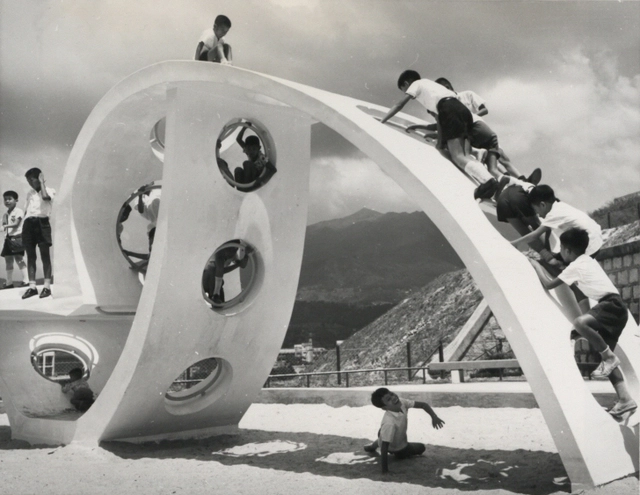
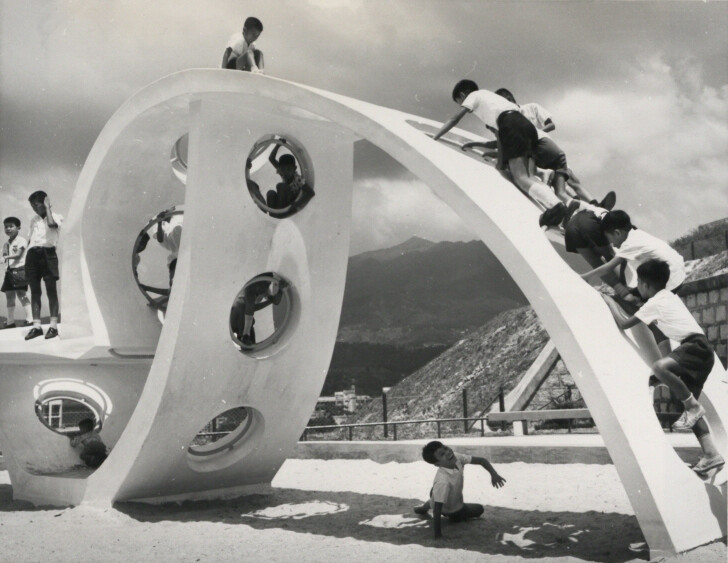
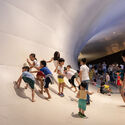
When we think about cities and urban life, we often focus on infrastructure, culture, commerce, nightlife, and density. In metropolises where there seems to be an endless array of activities—especially for adults—play rarely enters the conversation. Yet, the act of playing should be considered a vital part of urban life. Play directly influences how we shape our future cities—starting with how children engage with their environments. The experience of play, and more specifically, the design and presence of playgrounds, leaves lasting impressions on how young people grow up in cities. These spaces form a child's first, physical connection to the urban landscape. In this way, play deserves far more attention in conversations around urban wellness, livability, and the design of public space.

Playscapes and Public Imagination: The Ambiguous Play in Urban Life of Hong Kong - Image 1 of 4Playscapes and Public Imagination: The Ambiguous Play in Urban Life of Hong Kong - Image 2 of 4Playscapes and Public Imagination: The Ambiguous Play in Urban Life of Hong Kong - Image 3 of 4Playscapes and Public Imagination: The Ambiguous Play in Urban Life of Hong Kong - Image 4 of 4Playscapes and Public Imagination: The Ambiguous Play in Urban Life of Hong Kong - More Images+ 13

How to Design Residential Urban Terraces: Strategies for Living Well in High Places

Subscriber Access | 

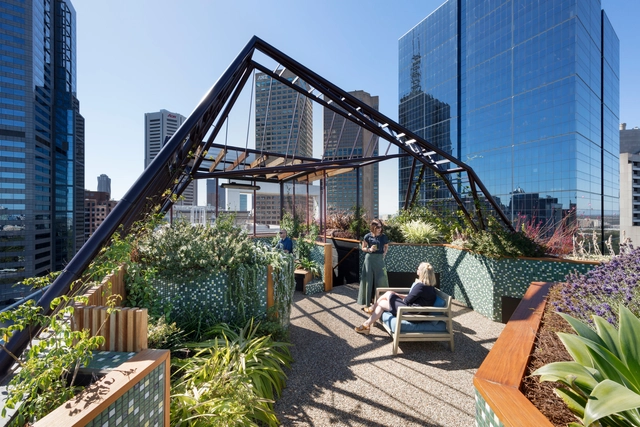
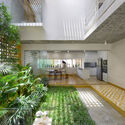
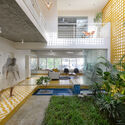
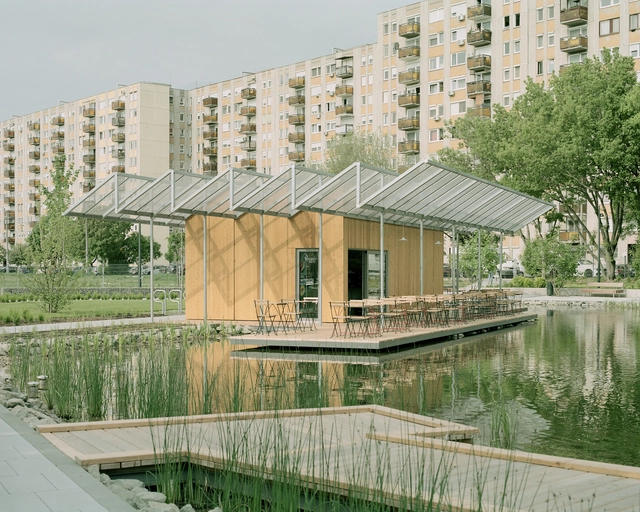
In today’s dense, vertical cities, terraces—often overlooked as mere technical rooftops—are emerging as key spaces for reconnecting with nature, expanding residential functions, and offering moments of collective relief. Particularly in single-family homes located in compact urban areas, these elevated surfaces represent valuable opportunities to increase usable living space without occupying more land. By lifting daily life above street level, terraces open new ways of inhabiting the city, enabling a range of uses from leisure and contemplation to food production and social gathering. In contexts marked by limited green space and strained infrastructure, they hold the potential to generate what landscape architect Catherine Mosbach calls "additional layers of urbanity." Whether imagined as hanging gardens, gathering spots, edible landscapes, or wellness zones, terraces challenge the idea that the city ends at the top floor—inviting us to see the roof as a new kind of ground.
How to Design Residential Urban Terraces: Strategies for Living Well in High Places - Image 1 of 4How to Design Residential Urban Terraces: Strategies for Living Well in High Places - Image 2 of 4How to Design Residential Urban Terraces: Strategies for Living Well in High Places - Image 3 of 4How to Design Residential Urban Terraces: Strategies for Living Well in High Places - Image 4 of 4How to Design Residential Urban Terraces: Strategies for Living Well in High Places - More Images+ 16

Designing with Humidity: How Architecture Adapts to the World’s Dampest Climates

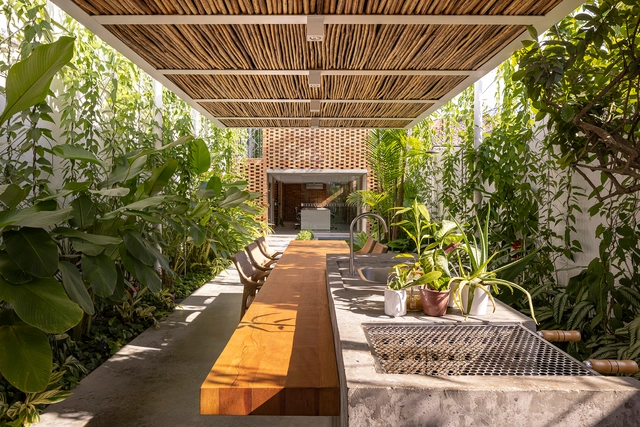
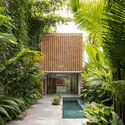
Humid environments present some of the most complex challenges in architectural design. From the tropical monsoon season of Southeast Asia to the equatorial heat of Central Africa, these environments demand solutions that account for intense moisture, high temperatures, and the constant battle against mold, decay, and stagnation. Yet, for centuries, communities in these regions have developed architectural techniques that do not fight against humidity but instead work with it, leveraging local materials, climate-responsive design, and passive cooling techniques to create sustainable and livable spaces. By considering atmosphere as a sensory and climatic phenomenon, architects will craft spaces that are not only evocative but also responsive, adaptive, and sustainable.

Designing with Humidity: How Architecture Adapts to the World’s Dampest Climates - Image 1 of 4Designing with Humidity: How Architecture Adapts to the World’s Dampest Climates - Image 4 of 4Designing with Humidity: How Architecture Adapts to the World’s Dampest Climates - Image 5 of 4Designing with Humidity: How Architecture Adapts to the World’s Dampest Climates - Image 7 of 4Designing with Humidity: How Architecture Adapts to the World’s Dampest Climates - More Images+ 13

How Roofscapes' Paris Pilot Project is Pioneering Climate-Resilient Architecture in Europe

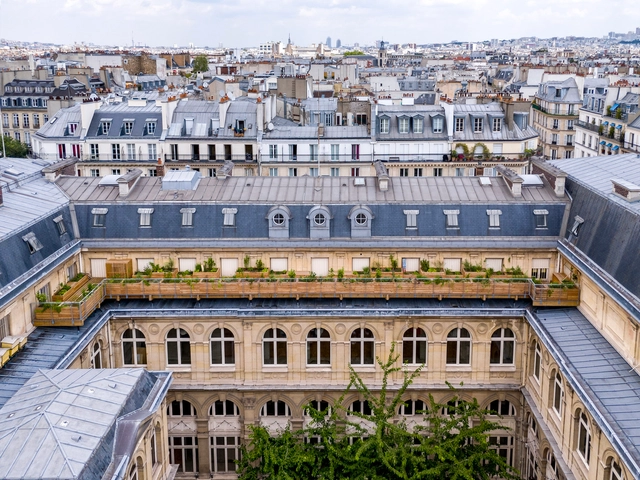
As record-breaking temperatures sweep across European cities, practitioners have recognized that existing infrastructure is poorly equipped to address the impacts of climate change. In response to this concern Roofscapes, a startup emerging from the MIT School of Architecture and Planning, has developed innovative solutions to amplify urban climate resilience. Their approach focuses on the strategic adaptation of underutilized spaces such as rooftops. By tackling the immediate challenges posed by extreme heat, the startup's work epitomizes how architectural innovation can directly contribute to addressing climate adaptation needs in cities. The company was recognized as one of ArchDaily's 2024 Best New Practices for their innovative approach to tackling urban issues such as affordability, lack of biodiversity, rising urban temperatures and repurposing.

How Roofscapes' Paris Pilot Project is Pioneering Climate-Resilient Architecture in Europe - Image 1 of 4How Roofscapes' Paris Pilot Project is Pioneering Climate-Resilient Architecture in Europe - Image 2 of 4How Roofscapes' Paris Pilot Project is Pioneering Climate-Resilient Architecture in Europe - Image 3 of 4How Roofscapes' Paris Pilot Project is Pioneering Climate-Resilient Architecture in Europe - Image 4 of 4How Roofscapes' Paris Pilot Project is Pioneering Climate-Resilient Architecture in Europe - More Images+ 6

A Skyward Shift: Exploring the Social Impact of Elevated Public Spaces in Cities

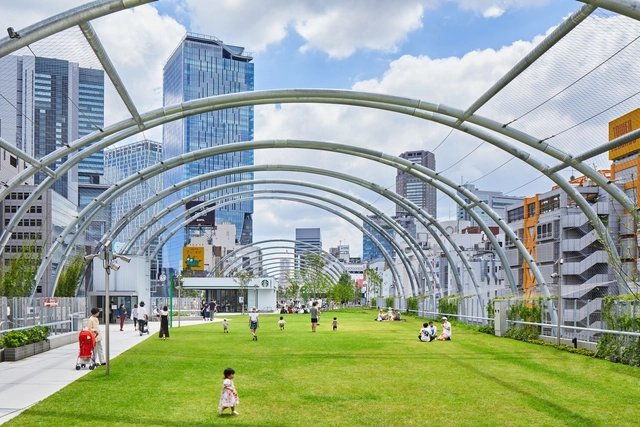
With escalating land values in urban centers, there has been a growing trend to float public spaces from ground level to elevated locations, such as rooftops or podiums between buildings. From a development perspective, maximizing floor area has become crucial as urban environments expand. Ground-level spaces are highly sought after for retail use due to their strategic location, which attracts foot traffic and potential customers and drives city development and economics.

This financial consideration, which often guides building activities and directions in urban centers, contradicts design principles advocated during the modernist era for the benefits of better outdoor space for the public, such as the concept of 'Freeing the Ground'. Architects like Le Corbusier championed this concept through projects like Villa Savoye and Unite d' Habitation. These modernist designs envisioned a future where buildings were elevated to restore open, accessible outdoor ground-level spaces for its users. However, for the reasons above, many contemporary projects instead seek to replicate the function of public grounds within the building's structure.

A Skyward Shift: Exploring the Social Impact of Elevated Public Spaces in Cities - Image 5 of 4A Skyward Shift: Exploring the Social Impact of Elevated Public Spaces in Cities - Image 1 of 4A Skyward Shift: Exploring the Social Impact of Elevated Public Spaces in Cities - Image 2 of 4A Skyward Shift: Exploring the Social Impact of Elevated Public Spaces in Cities - Image 3 of 4A Skyward Shift: Exploring the Social Impact of Elevated Public Spaces in Cities - More Images+ 10

The Legacy of the Sawtooth Roof, an Icon of Industrial Architecture

Subscriber Access | 

A historic symbol of the industrial age, the sawtooth roof is a lasting legacy of architectural history. Although a functional invention born from necessity nearly 200 years ago, the iconic shape is enjoying a renaissance in many contemporary projects.

Made up of many long, thin roofs with irregular pitches laid alongside each other, a sawtooth roof positions its steeper edges – filled with glass panels – away from the equator. This allows large buildings to control their solar gain by omitting direct sunlight, while still allowing uniform indirect natural light to fill an entire interior area.

The Legacy of the Sawtooth Roof, an Icon of Industrial Architecture - Image 1 of 4The Legacy of the Sawtooth Roof, an Icon of Industrial Architecture - Image 2 of 4The Legacy of the Sawtooth Roof, an Icon of Industrial Architecture - Image 3 of 4The Legacy of the Sawtooth Roof, an Icon of Industrial Architecture - Image 4 of 4The Legacy of the Sawtooth Roof, an Icon of Industrial Architecture - More Images+ 14

MVRDV Develops a Catalogue for Repurposing Rooftops

Subscriber Access | 

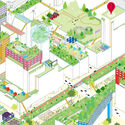
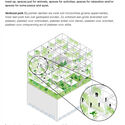
Highlighting an untapped spatial resource, MVRDV's Rooftop Catalogue, in collaboration with Rotterdam Rooftop Days, is now available online for free. Commissioned by the City of Rotterdam, the Rooftop Catalogue presents 130 innovative ideas to make use of Rotterdam's empty flat roofs, showcasing a potential new phase in the city's development and illustrating how reprogramming rooftops can help with issues such as land scarcity and climate change while also addressing the practical side of repurposing these spaces in terms of construction options and suitable sites.

MVRDV Develops a Catalogue for Repurposing Rooftops - Image 1 of 4MVRDV Develops a Catalogue for Repurposing Rooftops - Image 2 of 4MVRDV Develops a Catalogue for Repurposing Rooftops - Image 3 of 4MVRDV Develops a Catalogue for Repurposing Rooftops - Image 4 of 4MVRDV Develops a Catalogue for Repurposing Rooftops - More Images+ 13

CRA and Italo Rota Transform an 18th-Century Hospital Complex in Italy with the Addition of a Kinetic Roof

CRA - Carlo Ratti Associati and architect Italo Rota have developed a project to transform an 18th-century hospital complex in Modena, Italy, into a multidisciplinary cultural and innovation hub. The master plan for the new hub, called AGO Modena Fabbriche Culturali, includes an origami-inspired kinetic roof designed in collaboration with artist-engineer Chuck Hoberman. The feature will cover a triangular-shaped plaza in the center of the complex. The restoration plan also aims to create flexibility so that the structure can easily adapt to changing future configurations.

MVRDV, Superworld, and the City of Rotterdam Create Software for Reimagining Rooftops

Subscriber Access | 

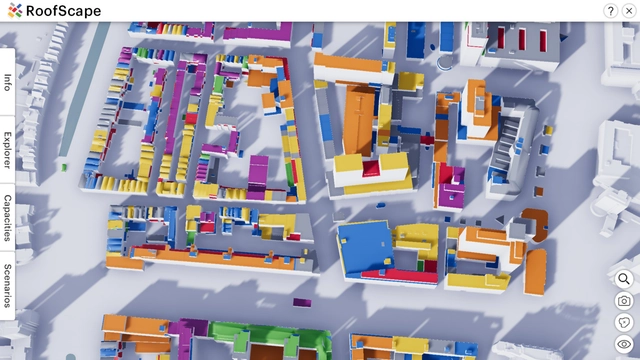
"Understanding precedes action." That is the motto of the Urban Observatory, an interactive installation and web app created by TED founder Richard Saul Wurman that compiled a wide range of urban data for over 150 cities, allowing users to compare various characteristics of those cities – from population density to traffic speed limits – side-by-side. Urban Observatory was first created in 2013, a banner year for news about urban big data; later that same year, Waag made headlines with its interactive map visualising the age of every building in the Netherlands. The emergence of such platforms allowed people to see the world around them in new ways.

With the rise of Google Earth and other GIS tools, and platforms like envelope.city, or environmental simulations based on digital twin models of cities, urban big data has quietly come to underpin a wide range of tools used by professionals who shape our cities, with both the amount of data collected and the influence it has over decision-making expanding dramatically. However, these advances typically happen behind closed doors and in undemocratic spaces. How long must we wait for software that has all the user-friendliness, accessibility, and appeal of those older platforms, but which provides the average person with the tools to shape their city? In other words, if "understanding precedes action", then why after almost a decade are we not seeing big-data-driven apps that encourage the public to actually do something?

MVRDV, Superworld, and the City of Rotterdam Create Software for Reimagining Rooftops - Image 3 of 4MVRDV, Superworld, and the City of Rotterdam Create Software for Reimagining Rooftops - Image 1 of 4MVRDV, Superworld, and the City of Rotterdam Create Software for Reimagining Rooftops - Image 2 of 4MVRDV, Superworld, and the City of Rotterdam Create Software for Reimagining Rooftops - Image 4 of 4MVRDV, Superworld, and the City of Rotterdam Create Software for Reimagining Rooftops - More Images+ 9

MVRDV's Rotterdam Rooftop Walk has Opened to the Public

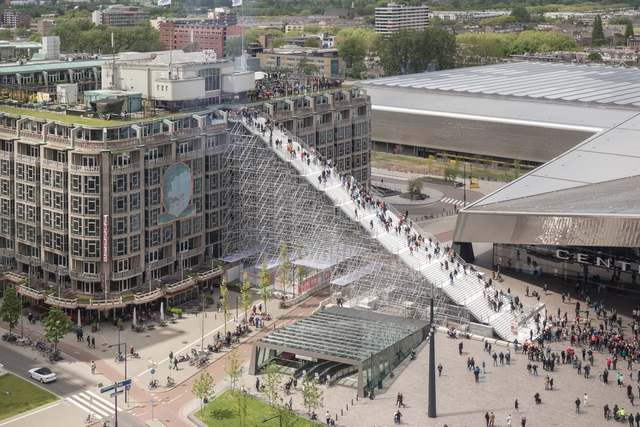
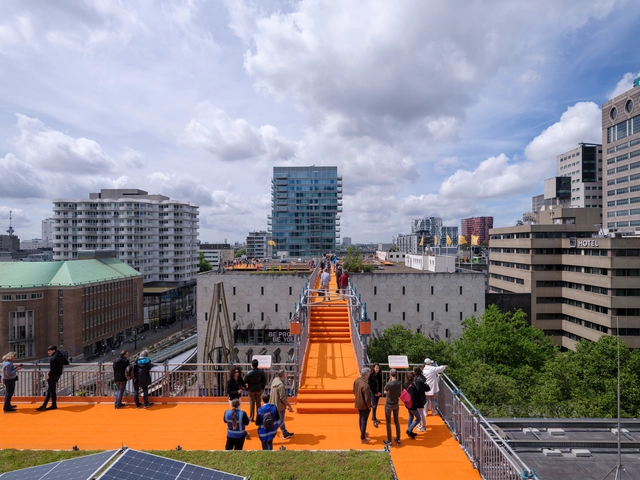
Designed by Rotterdam Rooftop Days and MVRDV, the Rotterdam Rooftop Walk has finally opened to the public. The installation offers visitors a new perspective on the city, with a 30-meter-high aerial bridge that spans across a variety of the city’s rooftops, from the roof of The Bijenkorf department store to the top of the World Trade Centre plinth. The project aims to showcase how rooftops can provide an added layer of public infrastructure in a dense city where public space is scarce. Rotterdam Rooftop Walk is open from May 26 to June 24 from 10:00 to 20:00.

MVRDV's Rotterdam Rooftop Walk has Opened to the Public - Image 1 of 4MVRDV's Rotterdam Rooftop Walk has Opened to the Public - Image 2 of 4MVRDV's Rotterdam Rooftop Walk has Opened to the Public - Image 3 of 4MVRDV's Rotterdam Rooftop Walk has Opened to the Public - Image 4 of 4MVRDV's Rotterdam Rooftop Walk has Opened to the Public - More Images+ 14

MVRDV Designs Vibrant Rooftop Installation at the Het Nieuwe Instituut in Rotterdam

Setting the stage for Rotterdam Architecture Month this upcoming June, MVRDV have designed a temporary rooftop platform on the Het Nieuwe Instituut in Rotterdam. The 600-square-meter event space titled The Podium will be elevated 29 meters and covered with a striking pink color, making it visible to all pedestrians on ground level. The installation will open to the public on June 1st, coinciding with the inauguration of the Rotterdam Architecture Month Festival, and will continue to be used for events until August 17th.

MVRDV Designs Vibrant Rooftop Installation at the Het Nieuwe Instituut in Rotterdam - Image 1 of 4MVRDV Designs Vibrant Rooftop Installation at the Het Nieuwe Instituut in Rotterdam - Image 2 of 4MVRDV Designs Vibrant Rooftop Installation at the Het Nieuwe Instituut in Rotterdam - Image 3 of 4MVRDV Designs Vibrant Rooftop Installation at the Het Nieuwe Instituut in Rotterdam - Featured ImageMVRDV Designs Vibrant Rooftop Installation at the Het Nieuwe Instituut in Rotterdam - More Images+ 6

MVRDV Highlights Once Again the Potential of Rooftops with Temporary Intervention in Rotterdam

MVRDV Highlights Once Again the Potential of Rooftops with Temporary Intervention in Rotterdam - Featured Image
Rotterdam Rooftop Walk . Image Courtesy of MVRDV

MVRDV revealed its design for a temporary intervention that takes tourists and city dwellers on a walk across several rooftops in Rotterdam, highlighting an untapped potential for expanding the public realm. Created in collaboration with Rotterdam Rooftop Days, the project will feature an aerial bridge from the roof of The Bijenkorf department store to the top of the World Trade Centre plinth and will be available to the public from May 26 to June 24 2022, during Rotterdam Architecture Month.

MVRDV Highlights Once Again the Potential of Rooftops with Temporary Intervention in Rotterdam - Image 1 of 4MVRDV Highlights Once Again the Potential of Rooftops with Temporary Intervention in Rotterdam - Image 2 of 4MVRDV Highlights Once Again the Potential of Rooftops with Temporary Intervention in Rotterdam - Image 3 of 4MVRDV Highlights Once Again the Potential of Rooftops with Temporary Intervention in Rotterdam - Image 4 of 4MVRDV Highlights Once Again the Potential of Rooftops with Temporary Intervention in Rotterdam - More Images