1. ArchDaily
  2. Robots

Robots: The Latest Architecture and News

Facing the Age of Robots? Material Innovation in Architectural Structures

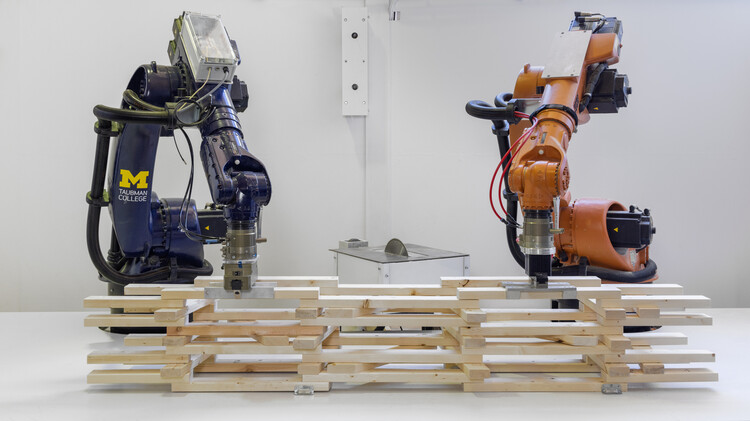
By exploring the art of robotics in construction, advances in architectural technologies are increasingly shaping multiple aspects of human life. From robotic arms and drones to robots that move across large surfaces and even 3D printing robots, their use in construction is accelerating research and the development of new working methods, as well as structural and material experimentation. In collaboration with multiple disciplines and spanning various facets of architecture, the role of robots in the contemporary landscape demonstrates a potential that extends beyond merely automating processes or reducing construction times and costs. This raises the question: Are we building architecture to serve technology, or technology to serve architecture?

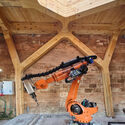
Facing the Age of Robots? Material Innovation in Architectural Structures - Image 1 of 4Facing the Age of Robots? Material Innovation in Architectural Structures - Image 2 of 4Facing the Age of Robots? Material Innovation in Architectural Structures - Image 3 of 4Facing the Age of Robots? Material Innovation in Architectural Structures - Image 4 of 4Facing the Age of Robots? Material Innovation in Architectural Structures - More Images+ 17

Historic Materials in the Digital Age: How Digitally Assisted Stone Carving Adds a New Dimension to Heritage Restoration

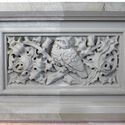
Heritage restoration has always been an intricate process that requires delicate balancing between preserving the integrity of historic materials while integrating contemporary techniques that can enhance accuracy, efficiency, and resilience. With the restoration process of Parliament Hill in Ottawa, Canada's capital city, this intersection of tradition and technology is now on full display. The East Block, built in 1865, offers a compelling example of how digital tools can support the efforts of heritage restoration and contribute to a centuries-old craft such as stone carving.

Historic Materials in the Digital Age: How Digitally Assisted Stone Carving Adds a New Dimension to Heritage Restoration  - Image 4 of 4Historic Materials in the Digital Age: How Digitally Assisted Stone Carving Adds a New Dimension to Heritage Restoration  - Image 6 of 4Historic Materials in the Digital Age: How Digitally Assisted Stone Carving Adds a New Dimension to Heritage Restoration  - Image 5 of 4Historic Materials in the Digital Age: How Digitally Assisted Stone Carving Adds a New Dimension to Heritage Restoration  - Image 2 of 4Historic Materials in the Digital Age: How Digitally Assisted Stone Carving Adds a New Dimension to Heritage Restoration  - More Images+ 8

Designing for Two Worlds: How Space Exploration is Shaping the Future of Architecture on Earth

Subscriber Access | 

Space exploration isn’t merely a testament to human ambition or a quest for new territories and resources. Our ventures beyond Earth’s atmosphere are driven by a deeper purpose: to understand better our place in the cosmos and to pioneer innovations that can transform life on our home planet.

While venturing beyond our planet captures the imagination, the true impact of space exploration may be felt much closer to home. Public perception often frames space exploration as a distant endeavor with limited relevance to terrestrial challenges. However, this perspective overlooks the substantial contributions of space programs to our world. By driving technological innovation, expanding our scientific knowledge, and inspiring future generations, space exploration has proven to be an invaluable catalyst for addressing global issues.

Designing for Two Worlds: How Space Exploration is Shaping the Future of Architecture on Earth - Image 1 of 4Designing for Two Worlds: How Space Exploration is Shaping the Future of Architecture on Earth - Image 2 of 4Designing for Two Worlds: How Space Exploration is Shaping the Future of Architecture on Earth - Image 3 of 4Designing for Two Worlds: How Space Exploration is Shaping the Future of Architecture on Earth - Image 4 of 4Designing for Two Worlds: How Space Exploration is Shaping the Future of Architecture on Earth - More Images+ 30

BIG, ICON, and Lennar Announce Community of 3D-printed Homes in Texas, USA

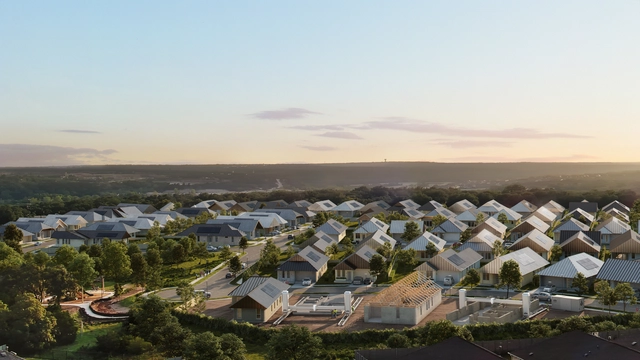
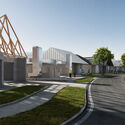
Pioneer in large-scale 3D printing, ICON announced the construction of a 3D-printed 100-Home Community co-designed by BIG – Bjarke Ingels Group and developed by Lennar. Located north of Austin, in the city of Georgetown, "The Genesis Collection at Wolf Ranch" will become the first and largest house estate in the world built by a fleet of robots integrating additive construction techniques.

Combining the digital possibilities of 3d printing with sustainable features at an affordable price, the project aims to support the housing crisis in Austin, one of the U.S.A's most dynamic and growing cities, home to the new Tesla Gigafactory and other giants such as Apple, Google, Microsoft, and Oracle.

BIG, ICON, and Lennar Announce Community of 3D-printed Homes in Texas, USA - Image 1 of 4BIG, ICON, and Lennar Announce Community of 3D-printed Homes in Texas, USA - Image 2 of 4BIG, ICON, and Lennar Announce Community of 3D-printed Homes in Texas, USA - Image 3 of 4BIG, ICON, and Lennar Announce Community of 3D-printed Homes in Texas, USA - Image 4 of 4BIG, ICON, and Lennar Announce Community of 3D-printed Homes in Texas, USA - More Images+ 1

Will Robots Ever Replace Architects? Why Designs of the Future Won't Ever be Fully Automated

Architecture and automation are two concepts that in the modern era of design and technological advancements go hand in hand- or do they? On one end, there’s a slight fear that “robots will replace designers”, making the profession more automated, and less creative. On the other, technology has made the practice of architecture more efficient in terms of process and cost. How far will technology take us, and will your job ever be lost to technology? The short answer is, probably not.

Architectural Rendering and the Slippery Slope of the Uncanny Valley

Fifty-one years ago, in 1970, a Japanese roboticist named Masahiro Mori came up with the concept of the “Uncanny Valley”. Around the same time, architectural renderings done using analog methods were still in vogue – collages and photomontages used to get ideas across to clients. A decade later, personal computers came along, and that saw the emergence of CAD and the wider adoption of digital rendering. Today’s architectural renderings are almost imperceptible from reality, with the increase in sophistication of rendering sofware. We struggle to tell the difference between what is a rendering and what is not – or rather we are able to tell a slight difference and it leaves us slightly uncomfortable, which brings us to Mori’s uncanny valley.

Architectural Rendering and the Slippery Slope of the Uncanny Valley - Image 1 of 4Architectural Rendering and the Slippery Slope of the Uncanny Valley - Image 2 of 4Architectural Rendering and the Slippery Slope of the Uncanny Valley - Image 3 of 4Architectural Rendering and the Slippery Slope of the Uncanny Valley - Image 4 of 4Architectural Rendering and the Slippery Slope of the Uncanny Valley - More Images+ 5

Project Galath3a: a Woman-Machine Collaboration at the Berlin Open Lab

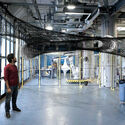
Exploring the use of innovative technologies in architecture and practicing at the crossroads between art and spatial design, Gili Ron and Irina Bogdan have imagined project Galath3a, a woman-machine collaboration. The research-based venture uses a UR5 robotic arm named Gala (short for Galatea), to speculate on what is culturally considered as "womanly behavior".

Project Galath3a: a Woman-Machine Collaboration at the Berlin Open Lab - Image 1 of 4Project Galath3a: a Woman-Machine Collaboration at the Berlin Open Lab - Image 2 of 4Project Galath3a: a Woman-Machine Collaboration at the Berlin Open Lab - Image 3 of 4Project Galath3a: a Woman-Machine Collaboration at the Berlin Open Lab - Image 4 of 4Project Galath3a: a Woman-Machine Collaboration at the Berlin Open Lab - More Images+ 4

Labour in the Documedia Age

Subscriber Access | 

In 2013, Michael Osborne and Carl Benedikt Frey ranked 702 occupations according to their probability of computerisation in the near future, from least probable (“recreational therapist”) to most probable (“telemarketers”). "Architectural and Engineering Managers” was ranked seventy-third, and “architects” eighty-second, while “architectural and civil drafters” ranked three-hundred and fifth. Clearly, technological advancements in fields such as machine learning and robotics are rapidly confronting us with issues of changing professional demand and qualifications. In this essay, Maurizio Ferraris turns the table on us: what if what we should be concerned with is not maintaining the human element in labor as production, but rather recognising human labor as consumption? Expanding on the arguments of his 2012 book, “Lasciar tracce: documentalità e architettura,” the author sees in automation an extraordinary opportunity in defining a renewed centrality of the human element, as the production of value associated with digital exchange is read through the three concepts of invention, mobilization and consumption.

The New Boston Dynamics' Spot 1.1 Revolutionizes the Construction Industry

Design:ED Podcast is an inside look into the field of architecture told from the perspective of individuals that are leading the industry. This motivational series grants unique insight into the making of a successful design career, from humble beginnings to worldwide recognition. Every week, featured guests share their personal highs and lows on their journey to success, that is sure to inspire audiences at all levels of the industry. Listening to their stories will provide a rare blueprint for anyone seeking to advance their career, and elevate their work to the next level.

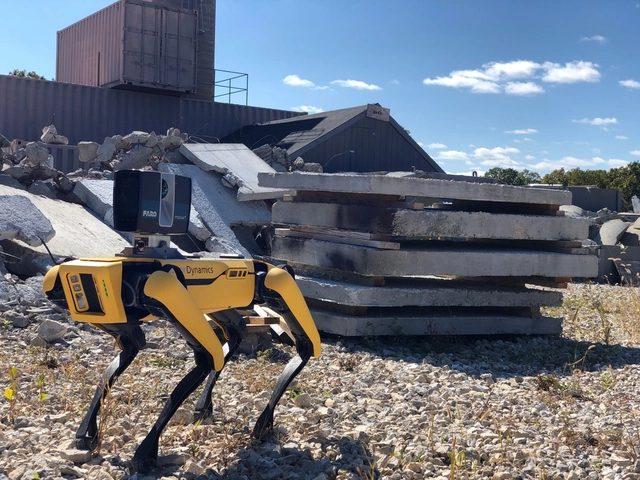
Michael Perry of the Robotics Company Boston Dynamics joins the podcast to discuss the release of Spot 1.1, and how their company is using robotics to revolutionize the construction industry.