Courtesy of ir Richard Rogers and Graham Stirk of Rogers Stirk Harbour + Partners
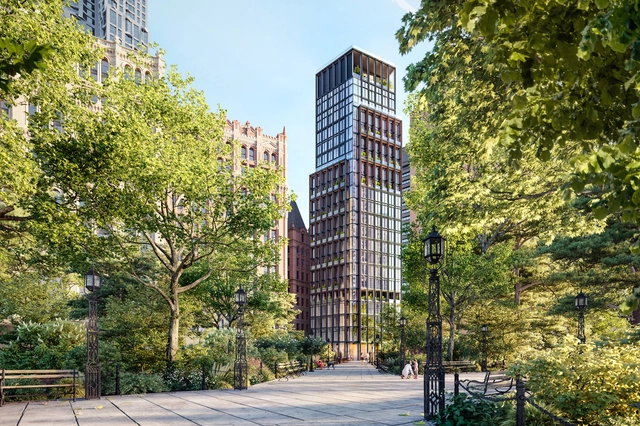
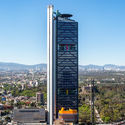
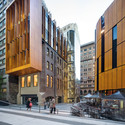
Rogers Stirk Harbour + Partners have unveiled images of their latest venture, No. 33 Park Row in New York City. Located across the street from City Hall Park in Downtown Manhattan, the project, nearing completion and set to officially launch in the spring of 2021, is the city’s first residential project designed by Sir Richard Rogers and Graham Stirk of Rogers Stirk Harbour + Partners.
This year, architecture’s highest honor, the Pritzker Prize, has been granted to Grafton Architects, a Dublin-based architectural firm mainly ran by female partners Yvonne Farrell and Shelley McNamara. For the first time ever in its 42-year history, due to the constraints set by Covid-19 global pandemic, the organizers of the Pritzker Prize decided to use Livestream the award ceremony. Having reached the end of 2020, ArchDaily has summed up what current and previous Pritzker Prize winners have accomplished during this turbulent year.
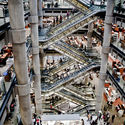
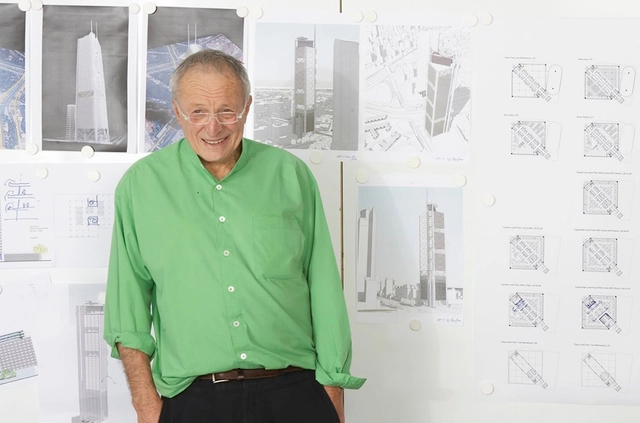
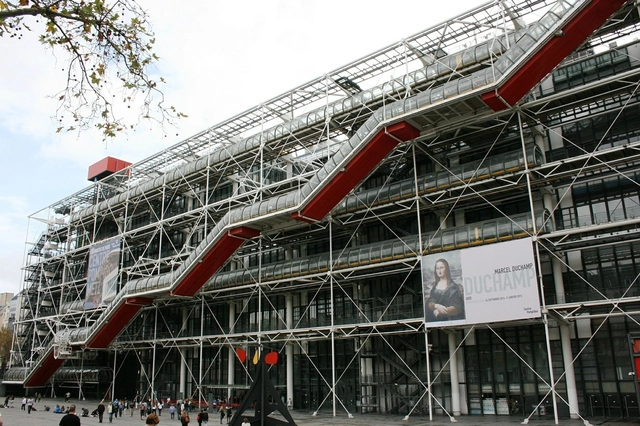
Richard Rogers has retired from Rogers Stirk Harbour + Partners after founding the practice 43 years ago. As one of Britain’s greatest living architects, he is known for iconic, hi-tech architecture, including the Lloyd’s building in London and the Pompidou Centre in Paris. The Pritzker Prize-winner has become one of the world's most distinct architects, utilizing bright colors and structural elements to create a style that is both recognizable and adaptable.
As one of the leading architects of the British High-Tech movement, Pritzker Prize-winner Richard Rogers stands out as one of the most innovative and distinctive architects of a generation. Rogers made his name in the 1970s and '80s, with buildings such as the Centre Georges Pompidou in Paris and the Headquarters for Lloyd's Bank in London. To this day his work plays with similar motifs, utilizing bright colors and structural elements to create a style that is recognizable, yet also highly adaptable.
The Architecture Academy podcast is a new architecture and design podcast which has a focus on ideas and education. The team believes that through education and better conversations they can improve how people design their buildings and cities. The Architecture Academy has just completed their first series of podcasts with conversations with world experts on topics such as beauty, happiness, education, sustainability, vernacular architecture and housing.
Harvard University Graduate School of Design has announced the 2020 Richard Rogers Fellowship cycle. Open to accomplished practitioners and scholars working in fields related to the built environment, the research-focused residency program is based in London at the Wimbledon House, designed by Lord Richard Rogers in the late 1960s. Fellows have researched a diverse series of topics, including examinations of public and affordable housing; how food and cooking transform cities; and citizen-driven urban regeneration initiatives, among others.
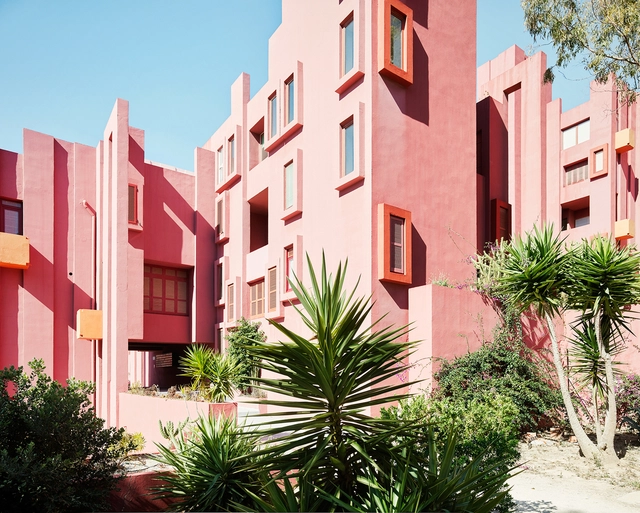
Some architects love color, some are unmoved by it, some hate it, and some love to dismiss it as too whimsical or non-serious for architecture. In an essay on the subject, Timothy Brittain-Catlin mentions the “innate puritanism among clients of architecture,” architects and their “embarrassment of confronting color,” and how “Modernism tried to ‘educate out’ bright colors.” So, while the debate on color in architecture is far from being a new one, it is not finished, and probably never will be.
In today’s world where the exhausted stereotype of the no-nonsense architect clad in black still persists, and while we quietly mull over the strange pull of the Cosmic Latte, there are some architects who haven’t been afraid of using broad swathes of color in their work at all. Read on for a list of 7 such exemplary architects both from the past and the present.
https://www.archdaily.com/881169/7-architects-who-werent-afraid-to-use-colorZoya Gul Hasan
In an exclusive half-hour interview with Graham Stirk, partner at Richard Rogers' London-based practice RSHP (Rogers Stirk Harbour + Partners), Monocle's Tom Edwards dives into discussing the complexity of some of the practice’s recent projects. Stirk is best known for designing some of the firm's iconic London buildings, such as the Leadenhall Building (or “Cheesegrater”) and the more controversial NEO Bankside.
https://www.archdaily.com/884080/graham-stirk-on-his-career-of-iconic-designs-as-part-of-rogers-stirk-harbour-plus-partnersAD Editorial Team
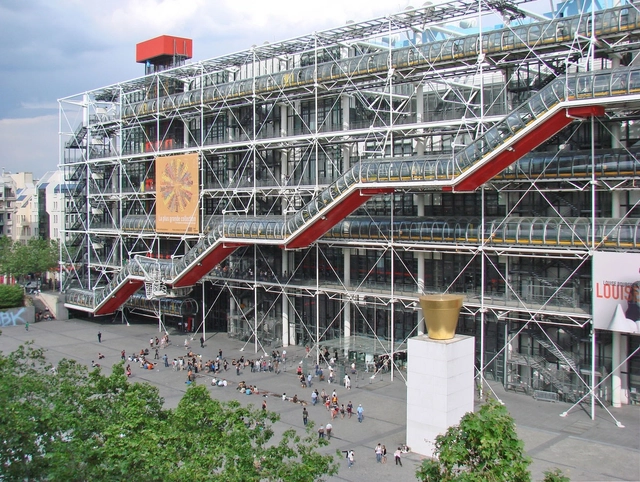
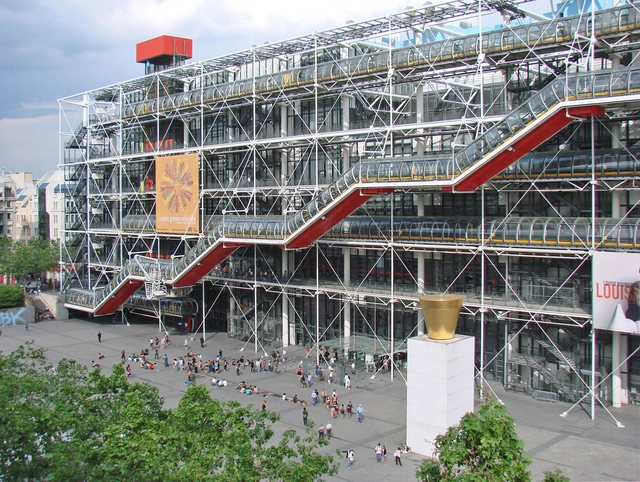
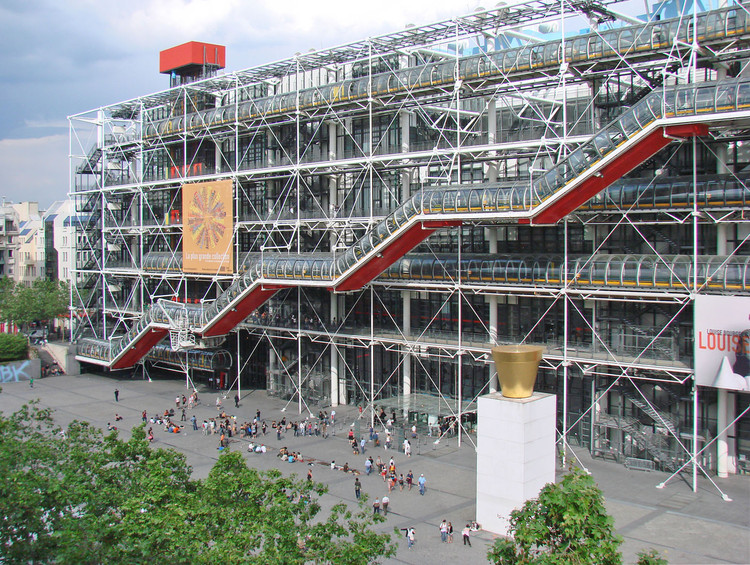
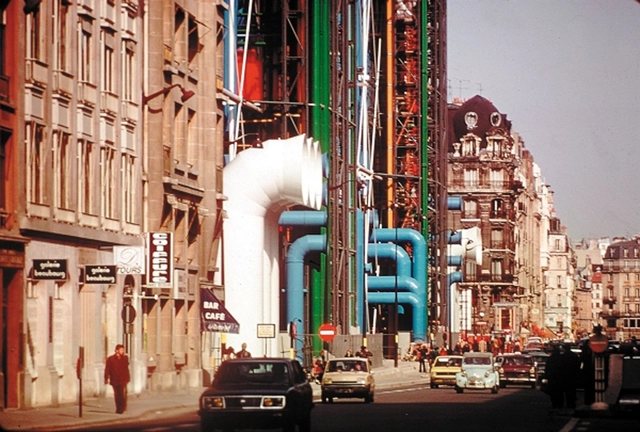
Centre Pompidou (1970s). Image via Rogers Stirk Harbour + Partners
The following is an extract from A Place for All People, a new semi-autobiographical manifesto by Lord Rogers. It is a mosaic of life, projects and ideas for a better society, ranging backwards and forwards over a long and creative life, integrating relationships, projects, stories, collaborations and polemics, with case studies, drawings and photographs.
https://www.archdaily.com/881986/richard-rogers-architecture-is-a-place-for-all-people-bookBaron Rogers of Riverside
Madrid is unfathomable. If the city itself is immense, it´s examples of interesting architecture are overwhelming. For over a half a century, Madrid has been an experimental laboratory for modern and contemporary architecture in Spain. With numerous examples of innovative and experimental architecture, as well as many failures, few of which are valued and recognized. This selection seeks to show archetypal examples of architecture that have transcended time; it does not intend to be an exhaustive list of the city´s architectural works. Many will think that the list lacks important buildings and personally, I couldn´t agree more. That is perhaps the beauty of Madrid: there is a diversity of opinion, there are thousands of sites to see, the city surprises you with every step you take.
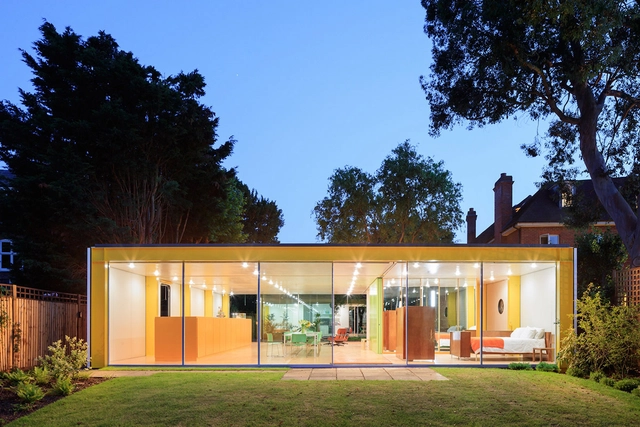
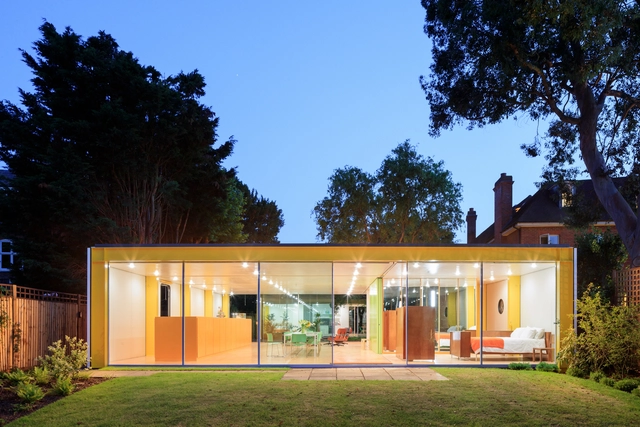
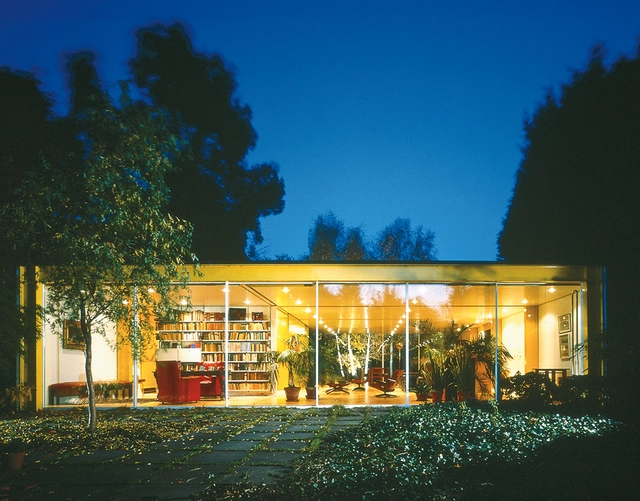
Following extensive renovations led by Philip Gumuchdjian and landscape architect Todd Longstaffe-Gowan, 'Wimbledon House'—formerly known as the Rogers House or '22 Parkside'—has reopened as the Harvard GSD's primary residence and London venue for the Richard Rogers Fellowship.
Fellows will be based at the Grade II listed Wimbledon House designed by Richard Rogers. Image Courtesy of Harvard Graduate School of Design
The Harvard University Graduate School of Design in Massachusetts has announced the winners of the Richard Rogers Fellowship 2017. Launched in October 2016, the Fellowship seeks to act as an international platform assembling experts and practitioners from a broad range of disciplines, using the built environment to positively impact on the quality of human life. The six inaugural Fellows, selected from 200 applicants worldwide, will undertake three months of research at the Wimbledon House, a Grade II listed residence in Londongifted to the School by world-renowned British architect Richard Rogers.
https://www.archdaily.com/805645/richard-rogers-fellowship-2017-winners-announcedNiall Patrick Walsh
Reviled by Parisians for its shocking inside-out appearance when it first opened in 1977, the Centre Pompidou has reached its 40th birthday, and as a gift, is set to receive to 2-year, $110 million renovation that will preserve the unique structure for years to come.
The Pritzker Prize has announced that Richard Rogers will join the ranks as the latest member of its prestigious jury. Rogers, a Pritzker Laureate himself in 2007, is known for his innovative High-Tech style, establishing his name in the 1970s and 80s with buildings such as the Pompidou Centre in Paris and Lloyds of London. Since then, he has also become known for his advocacy in a range of urban issues, being commissioned by the UK Government to produce a report on British cities entitled "Towards an Urban Renaissance," and for his active role in politics as a member of the House of Lords.
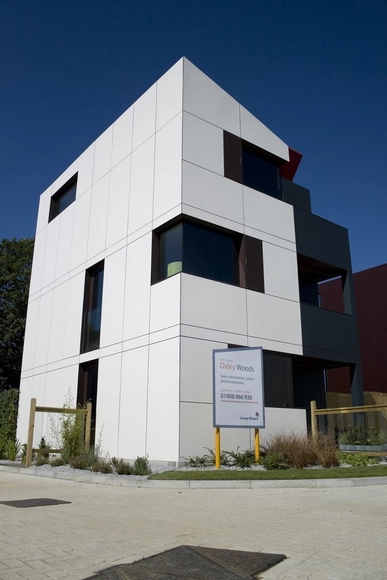
Developer Tom Bloxham has argued that problems with prefabricated homes or other unusual building techniques "must not stop innovation" in the UK housing sector. Bloxham, whose company Urban Splash was responsible for the Stirling Prize-nominated Park Hill regeneration and has worked with architects such as Norman Foster, FAT and Will Alsop, was speaking at an Archiboo event titled "Housebuilding is Ripe for Disruption." Discussing the problems that have befallen RSH+P's Oxley Woods project, he said "Whenever we innovate something inevitably goes wrong. There are risks and it is difficult. But somebody has to take these risks for the industry to move forward," reports the Architects' Journal.
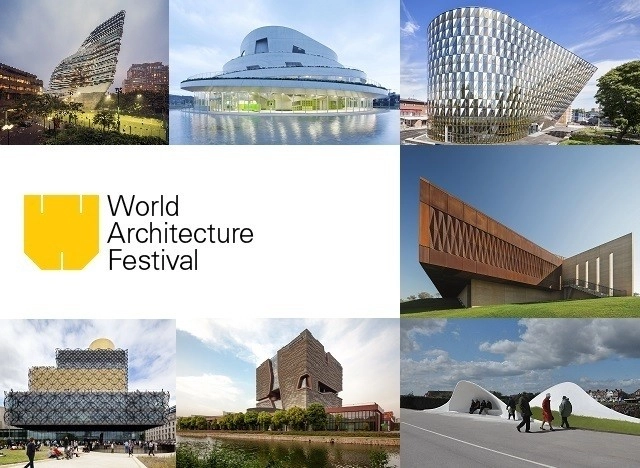
The 2014 World Architecture Festival (WAF) officially kicked off in Singapore today, and the first group of award winners were unveiled, with Vo Trong Nghia Architects and AECOM among the 16 announced winners.
The winners of the remaining 11 categories will be announced tomorrow, and the festival will culminate on Friday with the World Building of the Year and Future Project of the Year awards, which will be selected by the festival’s ‘super-jury’: Richard Rogers, Rocco Yim, Julie Eizenberg, Enric Ruiz Geli and Peter Rich.
This year’s festival is taking place from October 1-3, featuring three days of talks, key-note speakers and networking opportunities. With “Architects and the City” as the overarching theme for this year’s main conference sessions, the festival will focus on the contributions architects can make to cities and how they affect – and are affected by – politics, infrastructure, planning communities and technology.
Click here to view the full shortlist and read on after the break for the full list of WAF's day 1 winners.
Terence Conran asked nine of his friends in the design world "What have you always wanted in your home, but have never been able to find?" The result is The Wish List, a set of ten projects dreamed up by big name designers such as Norman Foster, Zaha Hadid and Richard Rogers, but designed and crafted in collaboration with emerging designers.
Sponsored by the American Hardwood Export Council, the only restriction was that the product had to be made of wood, leading to designs ranging from Foster's modest geometric pencil sharpeners to Paul Smith's dream garden shed.












.jpg?1507476262 "Casa Batlló. Image © <a href='https://commons.wikimedia.org/wiki/File:Barcelona_Casa_Batll%C3%B3_DachterrasseKamine.jpg'>Wikimedia user M.Stallbaum</a> licensed under <a href='https://en.wikipedia.org/wiki/Public_domain'>Public Domain</a>")










.jpg?1487076478&format=webp&width=640&height=580)
.jpg?1421341384&format=webp&width=640&height=580)


.jpg?1411136626&format=webp&width=640&height=580)
.jpg?1411136478 "Pencil Sharpener / Norman Foster + Norie Matsumoto. Image © Petr Krejčí")
.jpg?1411136290 "Workspace / Terence Conran + Sebastian Cox. Image © Petr Krejčí")
.jpg?1411138048 "Ladder / Richard Rogers, Ab Rogers + Xenia Moseley. Image © Petr Krejčí")
.jpg?1411138170 "Shed / Paul Smith + Nathalie de Leval. Image © Petr Krejčí")
.jpg?1411136626)