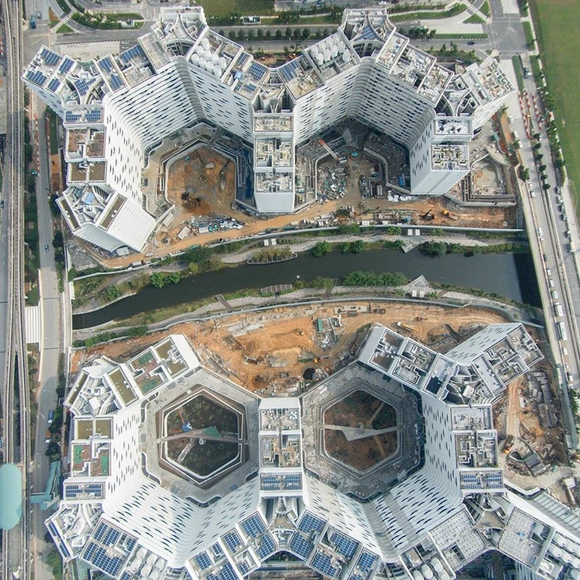
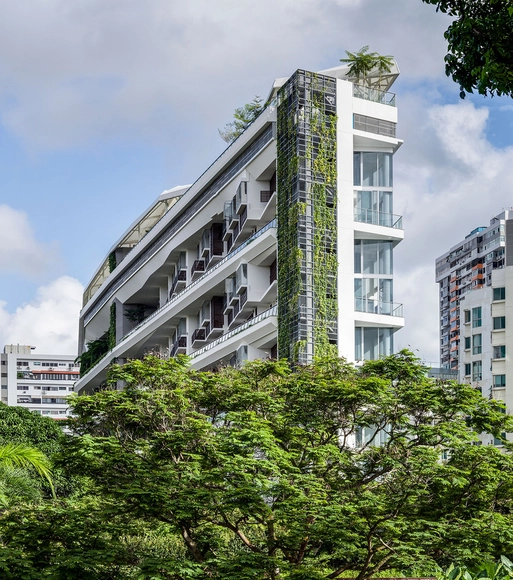
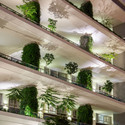
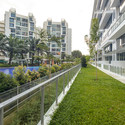
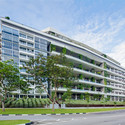
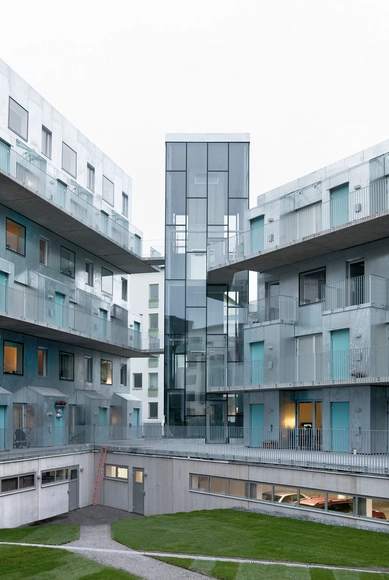
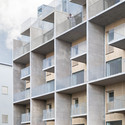
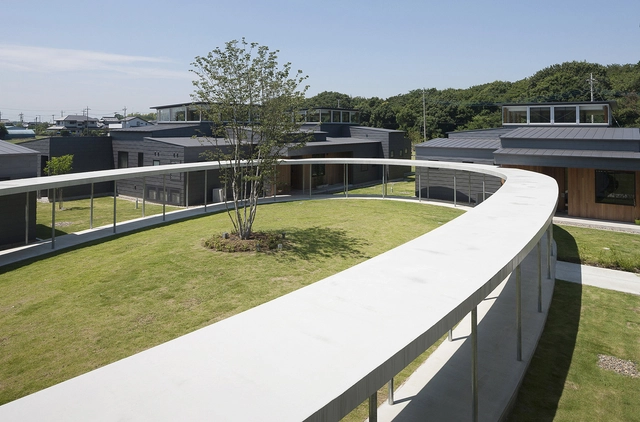
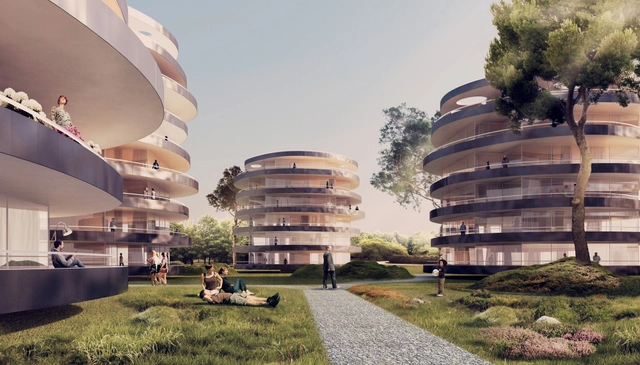
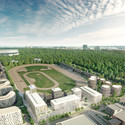
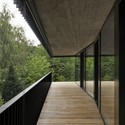
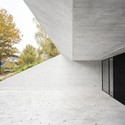
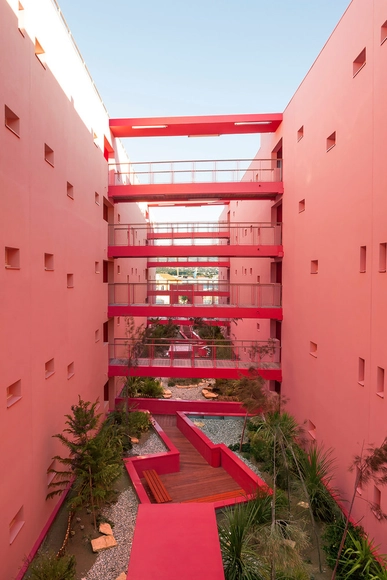
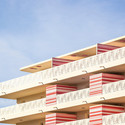
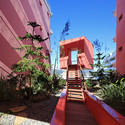
Group8asia is nearing completion on a first-prize winning proposal that is meant to revive the concept of public housing in Singapore. The Punggol Waterway Terraces, so named for the river on which they’re set, will be a sustainable community that aims to echo the utopic exuberance of Singapore’s first housing developments in the 1970s. Arranged around central courtyards, these high-rise apartments hope to create a sleek, graceful skyline that contrasts with the verdant greenery of their landscape.
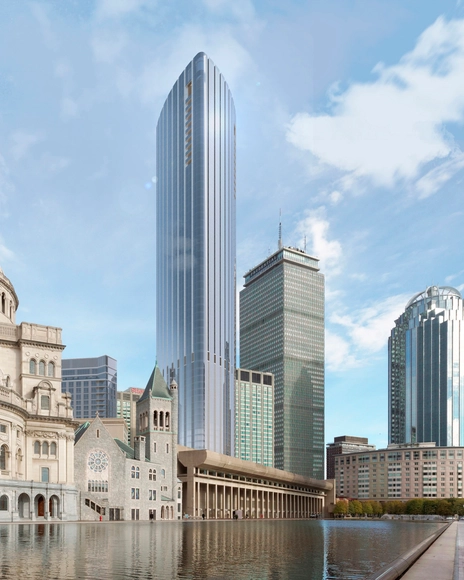
Construction has commenced on Pei Cobb Freed & Partners’ 61-story condominium tower in Boston’s historic Back Bay. The $700 million development will be the tallest residential building in the city, and the tallest tower to rise since the 1976 John Hancock Tower, also designed by Pei Cobb Freed.
“The project allows us to consider once again how a tall building, together with the open space it frames, can respond creatively to the need for growth while showing appropriate respect for its historic urban setting,” says Henry Cobb of Pei Cobb Freed & Partners.
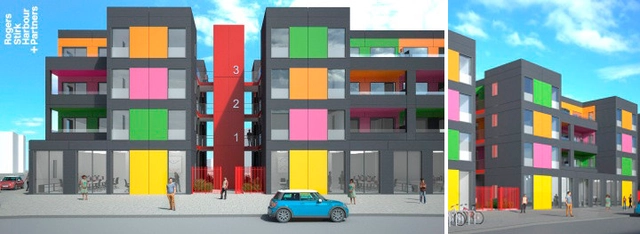
Addressing increasing housing demands in the London Borough of Lewisham, Rogers Stirk Harbour + Partners (RSHP) has unveiled their plans for the "Ladywell Pop-Up Village," which is to become one of the UK's first temporary housing villages.
The short term housing will provide accommodation for 24 families, alongside community and commercial spaces at street level. Drawing its name from the site of the former Ladywell Leisure Centre upon which it is to be located, the Ladywell Pop-Up Village is fully demountable, thanks to its volumetric construction technology. It is envisioned that the housing units will remain at the Ladywell site for up to four years, after which point they can be relocated throughout the Borough as needed.
Atelier Thomas Pucher has won first prize in an invited competition to realize a cluster of “Urban Terraces” in Vienna. Described as a product of the “modern patchwork city,” the project is designed to connect its residents to the surrounding districts and open space through the “countless sight lines” preserved by the circular nature of the mid-rise buildings. This is intended to achieve a sense of “urban porosity” within a stacked residential landscape.
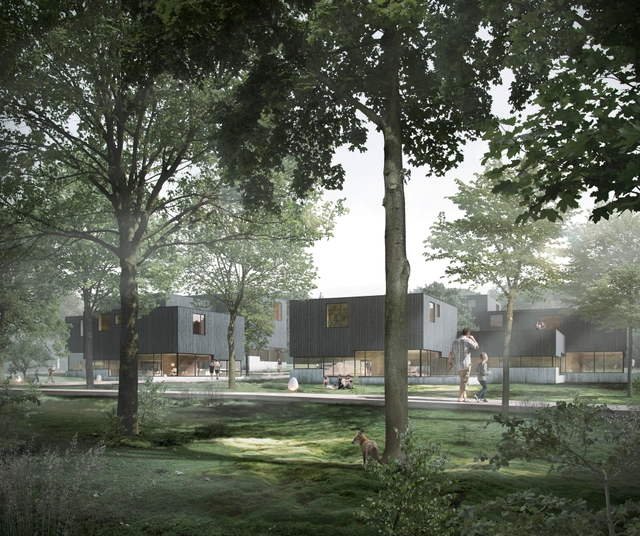
Friis & Moltke has designed a new housing project in Aarhus inspired by a Scandinavian forest. Just as “moss-covered hillocks and majestic towering trunks with crowns filter light and create shimmering patterns on the forest floor,” says the architect, the Løvhusene housing complex adapts to its natural surroundings as circulatory “boardwalks” weave between a “forest” of clustered wooden residences, all centered around a shared community “clearing.”
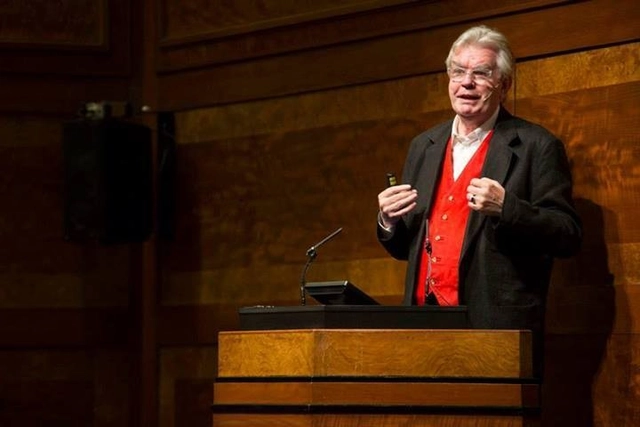
Last week the UK Government appointed a new housing design panel, intended to "ensure that new homes are not only lower-cost but also high-quality and well-designed." The panel will be led by Terry Farrell, classical architect Quinlan Terry and aesthetics philosopher Roger Scruton, as well as representatives from the Royal Institute of British Architects (RIBA), the Royal Town Planning Institute (RTPI), the UK Design Council and lobby group Create Streets. However, the profession was quick to criticize the selection of the three lead members of the panel.