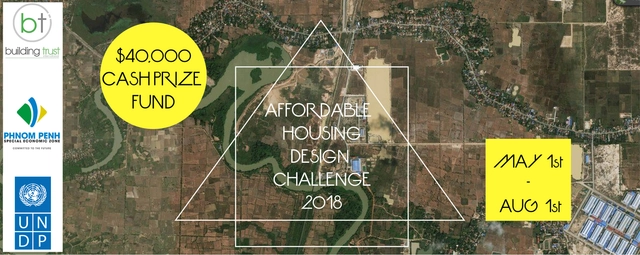
Building Trust International have just announced their 8th design competition which is in association with the United Nations Development Programme and the Phnom Penh Special Economic Zone. The competition entitled 'Affordable Housing Design Challenge' challenges architects, designers and engineers to submit an innovative design proposal for new affordable housing for low income workers in Phnom Penh, Cambodia. These new units should be well-designed, sustainable and most importantly improve the quality of life of the intended residents and the surrounding community. More than just housing, this new project should build a future for workers and their families in Cambodia.
Building Trust international will work alongside competition partners, local government and the winning team to build the winning design. The winning team will not only have their design constructed but will also receive a US$20,000 cash prize fund with 4 honourable mentions receiving US$5000 each.
As part of our 2018 Venice Architecture Biennale coverage we present the proposal for the Pakistan Pavilion. Below, the participants describe their contribution in their own words.
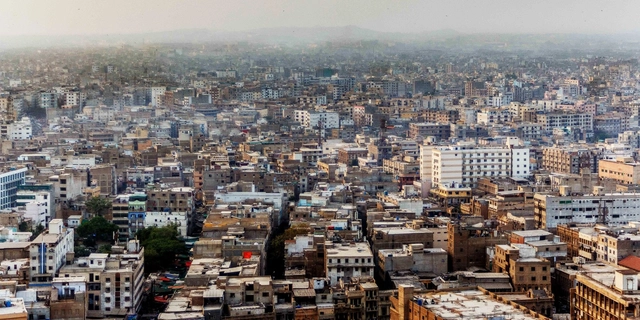
Keeping the subject of FREESPACE in perspective, the Pakistan Pavilion takes inspiration from the physical and social dimensions of the sparsely open spaces embedded within the many informal settlements of Karachi, the most populated and fastest growing city of Pakistan.
Besides sessions and roundtables, the ambitious program of the event includes the shortlist presentation of the projects submitted for the Open International Competition of Architectural Concepts for Standard Housing and Residential Buildings. Architects and bureaus from 39 countries took part in this prestigious competition with their projects of innovative residential housing for future generations of Russians. The competition announces a remarkable prize fund: 20 finalists will receive 1 million roubles (about € 13 300) each, up to five winning projects will be awarded 2 million roubles (about € 26 600) each, and up to five runners-up will receive 1.5 million roubles (about € 19 900) each.
Mercer released their annual list of the Most Livable Cities in the World last month. The list ranks 231 cities based on factors such as crime rates, sanitation, education and health standards, with Vienna at #1 and Baghdad at #231. There’s always some furor over the results, as there ought to be when a city we love does not make the top 20, or when we see a city rank highly but remember that one time we visited and couldn’t wait to leave.
To be clear, Mercer is a global HR consultancy, and their rankings are meant to serve the multinational corporations that are their clients. The list helps with relocation packages and remuneration for their employees. But a company’s first choice on where to send their workers is not always the same place you’d choose to send yourself to.
And these rankings, calculated as they are, also vary depending on who’s calculating. Monocle publishes their own list, as does The Economist, so the editors at ArchDaily decided to throw our hat in as well. Here we discuss what we think makes cities livable, and what we’d hope to see more of in the future.
C.F Møller and MT Højgaard have unveiled their vision of a new Railway Quarter in Aarhus, Denmark, transforming the area into a car-free urban district. Covering 1,180,000 square feet (110,000 square meters) of new construction, the area will predominantly contain residential buildings up to six stories high, as well as retail and recreational areas.
The idea of covering the railway site in Aarhus has existed for decades, with upcoming infrastructural upgrades to the network calling for tracks be lowered further into the ground, creating the opportunity to occupy the existing overhead site currently dividing several areas of Aarhus.
https://www.archdaily.com/893318/cf-moller-and-mt-hojgaard-propose-covering-aarhus-railway-site-with-car-free-urban-districtNiall Patrick Walsh
Architecture students use space-age materials and radical designs to imagine tomorrow’s urban housing centers. Image Courtesy of Design Research Laboratory
London has a fascinating history of urbanization that stretches back to Roman settlement in 43 AD. During the Industrial Revolution and Victorian Era, the city’s population peaked, as did its problems related to population density. The air was filled with soot and smoke, crowded slums were the norm in the inner city, and cholera and other epidemics spread quickly due to inadequate sanitation.
These conditions gave rise to modern urban planning and public-health policy, which now must define what “good density” might look like in the future of urban housing. The UN predicts that by 2050, 66 percent of the world’s population will live in metropolitan areas, up from 54 percent today.
Studio Gang has released details of their proposed condominiumtower in Downtown Brooklyn, New York City. “11 Hoyt” has been designed with an emphasis on nature and community-building, responding to a lack of comfortable outdoor space in Brooklyn through the creation of an “outdoor-indoor environment."
The Studio Gang scheme, designed in collaboration with Hill West Architects, reclaims a former parking garage site in a rapidly-densifying area, where the population has increased by 40% in twenty years. 11 Hoyt is set to transform the site into an elevated green podium anchored by a 770,000-square-foot (71,000-square-meter) residential tower featuring a “scalloped” façade.
https://www.archdaily.com/892945/studio-gang-unveils-images-of-rippling-condominium-tower-in-brooklyn-new-yorkNiall Patrick Walsh
On a hillside forest outside of Moscow, amongst 65-foot-high (20-meter-high) pine and birch trees, sits the only private house to be designed and built by Zaha Hadid in her lifetime. With a form defined by its natural surroundings, the Capital Hill Residence is divided into two components, one merging with the sloping hillside, and another “floating” 72 feet (22 meters) above ground to unlock spectacular views across the Russian forested landscape.
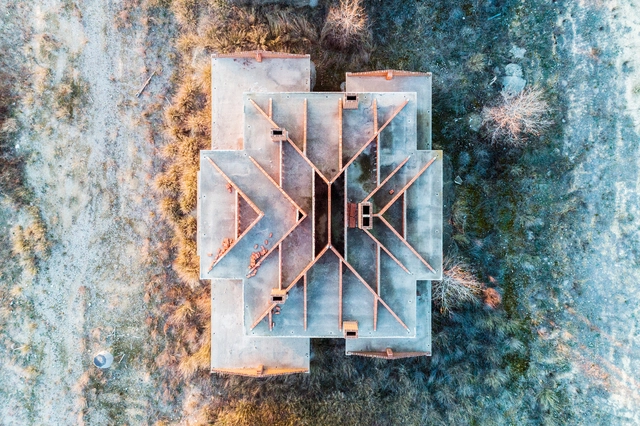
"Sand Castles (part II)" by Markel Redondo. Image Courtesy of Markel Redondo
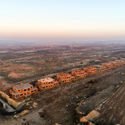
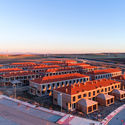
The winners of the DJI Drone Photography Award have been announced, a competition calling for ideas to make creative use of drone photography, and to explore subject matters impossible to experience on foot. This year, the two winning projects consisted of a new perspective on Spain’s 3.4 million abandoned houses, and the documentation of salt production across Europe.
https://www.archdaily.com/892004/beauty-or-tragedy-aerial-imagery-of-spains-abandoned-housing-estates-wins-dji-drone-photography-awardNiall Patrick Walsh
What if your apartment was more than just a place to live? What if it was a catalyst for social interactions? Or what if it removed the everyday tedious tasks of cleaning, paying bills, and buying furnishings? Co-living, a modern form of housing where residents share living spaces, is aiming to do just that.
Co-living is growing in popularity in major cities such as London and New York, where increasing housing prices are forcing residents to look at new and adaptive ways to rent in the city. When we discussed the ambitions and inspirations behind the co-living movement in 2016, it was still a concept that was in its relatively experimental stages. Today, co-living is more focused in its mission, and has found success by pushing people together through a collection of common themes: a yearning for social connection, participation in an increasingly shared economy, and the affordability of a convenient housing solution.
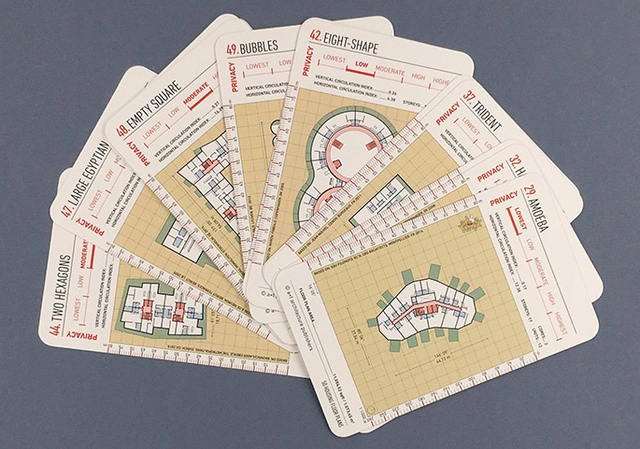
Following up on their series of urban block flashcards, Spanish publisher a+t architecture publishers recently launched a new deck of cards featuring architecture that "promote[s] the compact city and the desirable dwelling." Titled 50 Housing Floor Plans, this new version contains examples of recent collective living projects, featuring buildings constructed between 2000 and 20017.
Building and growing are two actions that should be considered more often than not at the same time. This is how the 2017 "Build to Grow" social housing competition, looked to establish bases that sustain a flexible way of living. The event took place in the Belén district in the city of Iquitos, on 3.7 hectares plot of land. The project that received first place proposed to locate 120 incremental homes, that alternatively allowed users to modify and expand it according to their needs and economic means. In short, a home with a solid nucleus formed by a structure that supports changing activities.
The MAS in Collective Housing is celebrating its 10th anniversary and they want to share their happiness for that achievement. After having 256 alumni from 38 different countries, and 70 international workshops, we are convinced that they are doing something right. The application period for the 2019 edition is already open.



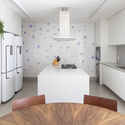
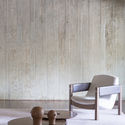
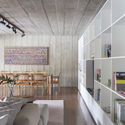
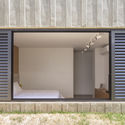



.jpg?1519828313 "© Fernando Guerra | FG+SG")
.jpg?1519827102 "© Fernando Guerra | FG+SG")
.jpg?1519827348 "© Fernando Guerra | FG+SG")
.jpg?1519827569 "© Fernando Guerra | FG+SG")





.jpg?1523378770&format=webp&width=640&height=580)
.jpg?1523378338 "Courtesy of OKO Group")

.jpg?1523379487 "Courtesy of OKO Group")
.jpg?1523379556 "Courtesy of OKO Group")
.jpg?1523378770)