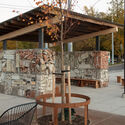
Søren Pihlmann is the curator of the Danish Pavilion at the 2025 Venice Architecture Biennale. The exhibition, commissioned by the Danish Architecture Center, is titled Build of Site, and focuses on exploring sustainable architectural practices through the lens of reuse and resourcefulness. Pihlmann's proposal transforms the existing Danish Pavilion, located within a historic building complex in the Biennale's Giardini, into an active exhibition space for material experimentation. The installation highlights techniques that incorporate recycled and bio-based elements. The Pavilion offers visitors the opportunity to observe ongoing experimental processes, witnessing how building resources are creatively reimagined for new uses. In this on-site interview, ArchDaily editors spoke with the curator about the ideas behind the project and the challenges its execution represents.
Recycled Materials: The Latest Architecture and News
"Helping the Existing to Reconfigure Itself": In Conversation with Søren Pihlmann, Curator of the Danish Pavilion


Exploring Showroom Interiors: The Art of Displaying Materials, Furniture, and Design Objects
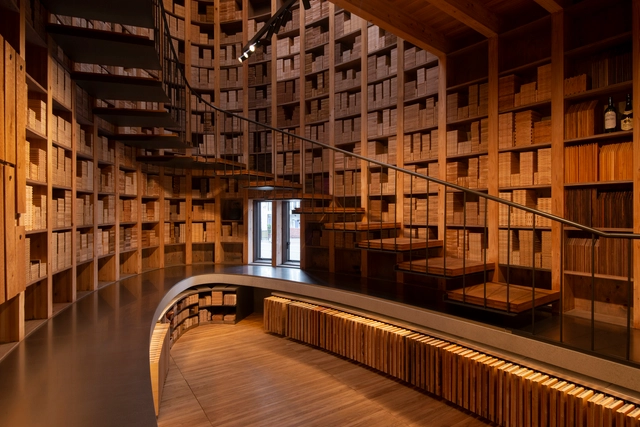
When creating exhibition spaces, the design of the experience, the proposed route, and the transmission of certain perceptions and senses contribute to establishing different bonds and connections between the displayed objects and their visitors. Understanding a showroom as a space designed to creatively and experientially showcase products and services, what design strategies could enhance users’ interior experiences? How does interior design engage in dialogue with exhibition architecture?



Between Housing Demand and Environmental Goals: Alejandro Aravena on Incremental Solutions and Net-Zero Concrete
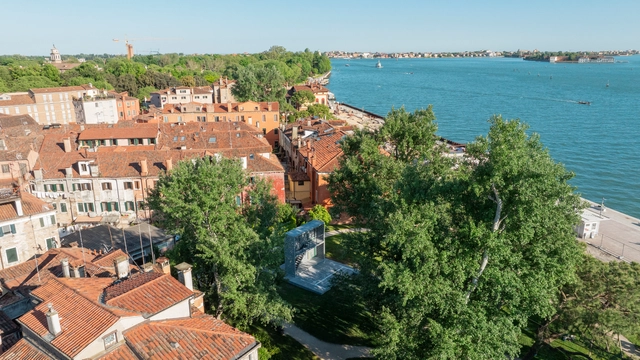
During the Time Space Existence exhibition, organized by the European Cultural Centre in Venice, Pritzker Prize-winning architect Alejandro Aravena and his firm ELEMENTAL unveiled a full-scale prototype for a new approach in incremental housing solutions. Titled the USB Core, standing for Basic Services Unit housing prototype, this proposal aims to demonstrate how efficient construction can provide all the essential housing components in a minimal space. The prototype is also the result of a collaboration between the architecture office and concrete manufacturer and researcher Holcim, and is built out of a newly developed type of net-zero concrete mix. It also incorporates fully recycled aggregates, in alignment with circular economy principles. The collaboration aims to demonstrate a more environmentally conscious yet cost-effective way of providing essential services to at-risk communities without harming the planet.
While on site in Venice, ArchDaily's managing editor Maria-Cristina Florian had the chance to sit down with Alejandro Aravena and discuss the implications of this collaboration, the urgent need for housing, and the role of the architect as the coordinator of a process involving many actors.
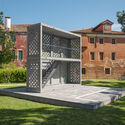
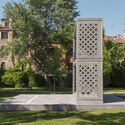

“Recycle!” Exhibition at the Danish Architecture Center Explores Creative Approaches to Material Reuse
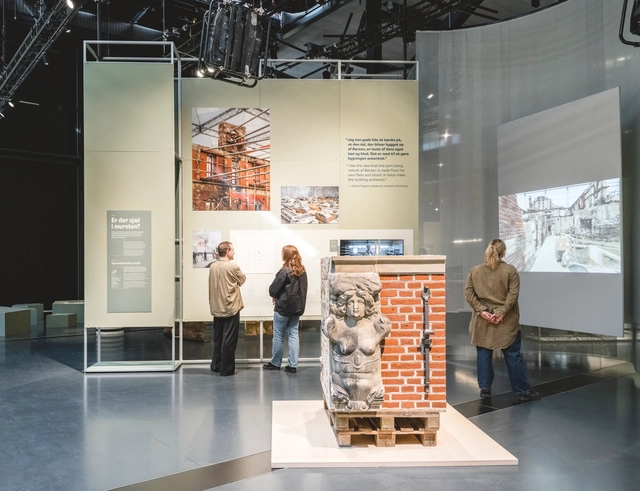
A new architecture and design exhibition opened on April 11, 2025, at the Danish Architecture Center in Copenhagen. Titled Recycle!, it explores recycling and reuse as a new way of creating, living, and building within the urgent context of the current climate crisis. The exhibition goes beyond presenting recycling and reuse as necessities; instead, it frames them as positive cultural shifts taking root in the construction industry and society at large. One of the exhibition's goals is to highlight the importance of resource awareness by posing the question: How can we increase the conservation, reuse, and transformation of what we already have?



DP Architects Completes “The Dream Sphere,” Singapore’s National Pavilion at Expo Osaka 2025

DP Architects group, in collaboration with Kingsmen Exhibits, designed the Singapore Pavilion for the Expo Osaka 2025. With the grand opening on 13th April, the pavilion is now welcoming visitors. The concept of the pavilion centers around the tagline "Where dreams take shape," aiming to offer an insight into the country's culture and impactful innovations. The pavilion, taking the shape of a 17-meter-high sphere clad in recycled disks, creates a multi-sensorial exhibition showcasing actions and innovations that encourage a more sustainable future.


LAVA Architects' German Pavilion Opens at Expo 2025 Osaka with Focus on Sustainability and Circularity
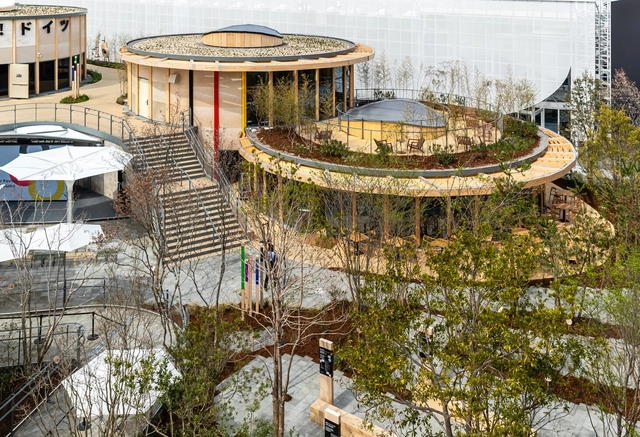
Officially open since April 13 as part of Expo 2025 Osaka, the German Pavilion, designed by LAVA Architects. brings to life the theme of the circular economy. Previously unveiled under the title "Wa! Doitsu" (translated as "Wow! Germany"), the Pavilion explores concepts around circularity, showcasing the "terminological culmination of the sustainability discussion." Focusing on returning all consumable goods to the cycle of the economy, achieving zero waste, and minimizing resource consumption, the theme is visible throughout the entire design.


Exploring MVRDV's Mega Mat: A Recycled Plastic Installation for Bangkok Design Week 2025
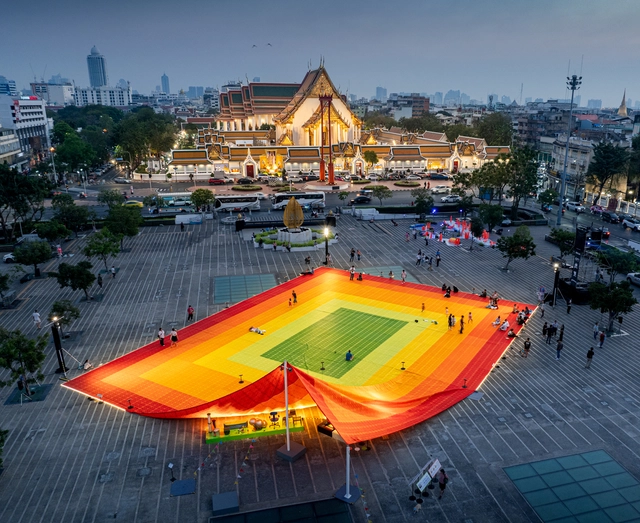
MVRDV has recently completed Mega Mat, a temporary installation for public gatherings and performances made from recycled plastic mats. Created for Bangkok Design Week, the joint goal of the architects and the Thai Creative Economic Agency was to design a space that also raises awareness about plastic waste and recycling in Thailand. The result is an infographic public space that, in addition to featuring bright, eye-catching colors, follows a color-coded system to organize information about the country's plastic waste processing. Mega Mat takes recycled plastic to reinterpret an everyday household item: the Sua, or mat, on which Thai families have been sitting for generations. This fresh take on a familiar object showcases the potential of using recycled plastic in daily life, embodied in a versatile public space now installed in the heart of Bangkok.


AFF Architekten Receives DAM Preis 2025 for Cultural Center in Berlin, Germany
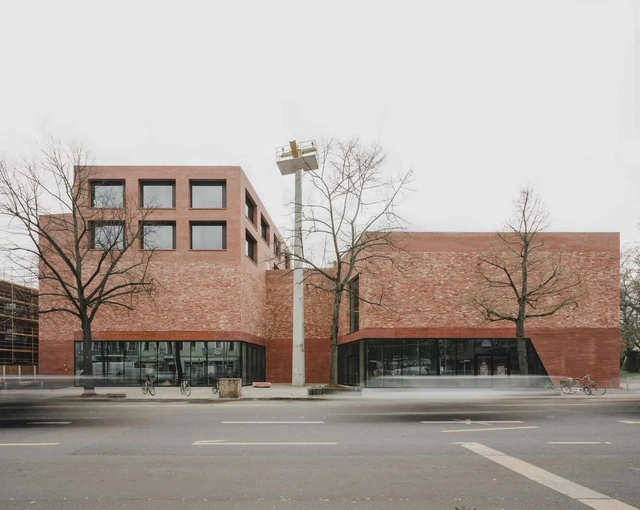
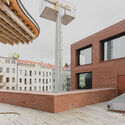
The DAM Preis 2025, presented by the Deutsches Architekturmuseum (DAM), has been awarded to AFF Architekten for their project, Spore Haus, in Berlin. As one of Germany's most recognized architecture awards, the DAM Preis highlights significant contributions to contemporary architectural practice. This year's winner, Spore Haus, was selected for its "thoughtful design and careful integration" into the urban context, as well as its contribution to public life.


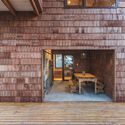
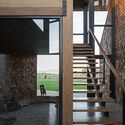
A Cultural, Architectural, and Territorial Tradition: Houses That Recycle and Showcase Wooden Shingles in Chile
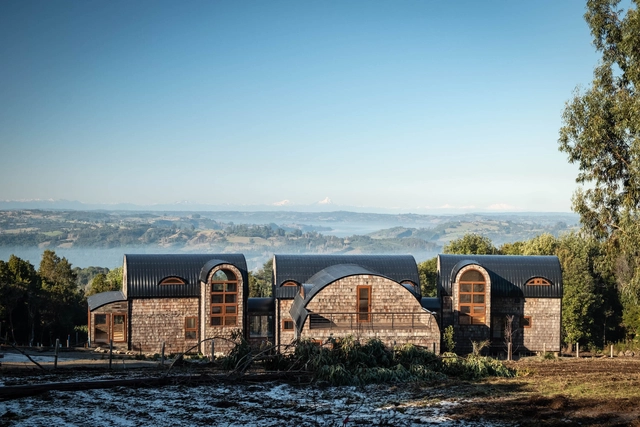
On a slope, along the banks of a river, among trees, or on an expansive hillside, each territory serves as a living testament to its local traditions. Through its architecture, the experimentation, appreciation, and use of certain materials, construction techniques, local crafts, and site-specific tools aim to preserve stories and pass on the discoveries and learnings that have shaped many of the practices still used in construction today. In Chile, the language of wooden shingles evokes a reflection rooted in history and an understanding of relationships, timelines, and life networks.


An Eden within the Workplace: Flexible Pods with Biophilic and Human-Centered Design

Winston Churchill once wisely stated, "We shape our buildings, and in turn, our buildings shape us," a reflection that highlights how architecture, in its dynamic nature, responds to functional needs and molds the experiences of its users. Workplaces have been no exception, evolving with the social and technological changes that have redefined our understanding of organizational interactions. Almost in the blink of an eye, the once-restrictive cubicles and closed offices have made way for open layouts, while hybrid models have transformed offices into destination spaces. Furniture elements like office pods are at the forefront of this change—balancing collaboration and privacy. Designed to adapt, they have continually evolved alongside the shifting demands of modern workspaces and their inhabitants.
From Home to Hotel: A Design Comparison Across 20 Bathrooms
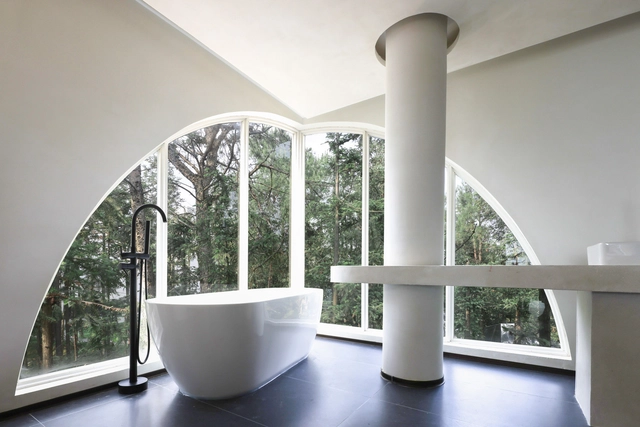
Bathrooms play a significant role in our daily lives, serving multiple functions beyond basic hygiene. Research highlights their importance as relaxation, introspection, and personal wellness spaces. A bathroom's design and comfort can profoundly influence how we begin and end our day, framing our routines with a sense of ease or disruption. When traveling, hotel bathrooms often leave a lasting impression, as a well-designed and thoughtfully executed bathroom can significantly elevate the overall experience of a stay.



On the New Life of Buildings: Concepts, Reflections, and Adaptive Reuse Projects of 2024
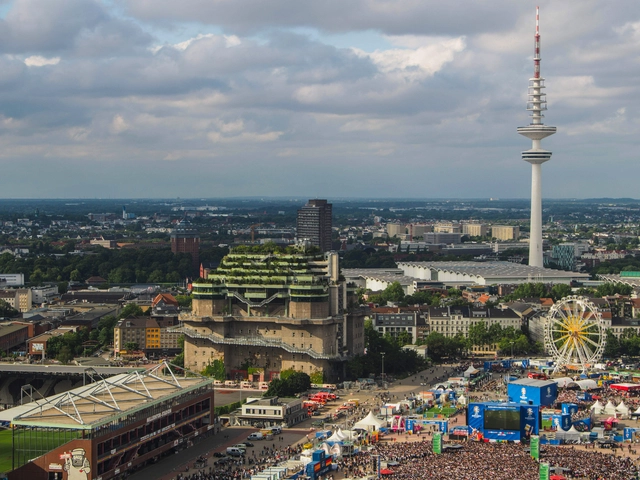
Discussing adaptive reuse involves exploring multiple fields of action and disciplines, interpreting opposing perspectives and opinions from various stakeholders, and even sparking the reactivation or revitalization of certain spaces in favor of communities. In recent years, notable projects have emerged, such as the conversion of factories and industrial warehouses, as well as the transformation of industrial structures into modern offices. Adaptive reuse of existing buildings has continued to evolve and expand globally throughout 2024, aiming to improve the quality of life for residents while also contributing to environmental sustainability.


Alvar Aalto's Finlandia Hall Reopens in Helsinki After Extensive Renovations Led by Arkkitehdit NRT
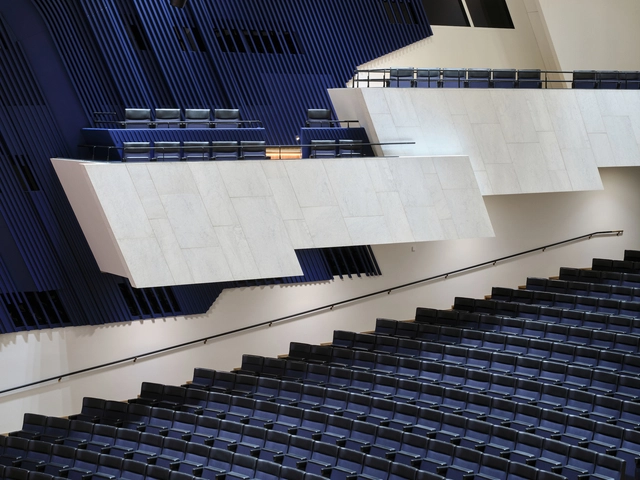
Originally designed by Modernist architect and designer Alvar Aalto in 1971, Finlandia Hall represents one of Helsinki's most important modernist works of architecture. In early 2022, an extensive renovation project began, led by Finnish architecture firm Arkkitehdit NRT, aiming to make the venue more accessible to the wider public and create additional services while respecting Alvar Aalto's original design. After three years of renovation, Finlandia Hall officially reopens on Saturday, 4 January 2025.


Interior Design Trends of 2024
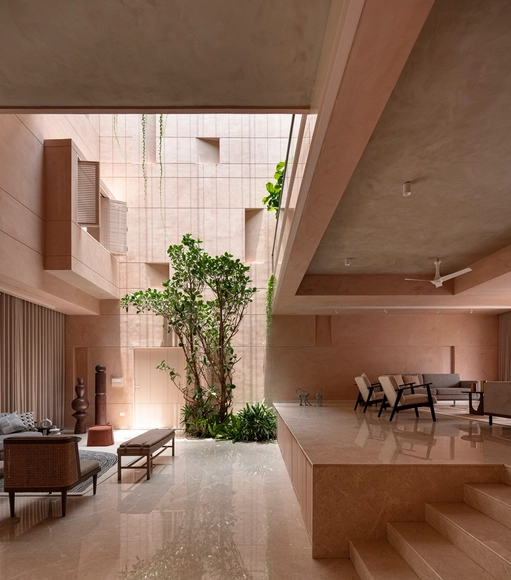
As 2024 comes to an end, a dynamic year that questioned knowledge, tradition, and innovation, we take a look at how global events and trends influenced the design of interior spaces. Last year, architecture practices sparked worldwide discussions, challenging norms and tradition, and embracing overlooked regions. Interior design, on the other hand, took a more reserved, modest approach, favoring simplicity and individuality. Fast forward a year later, the overall architecture and design themes of 2023 remain the same - reinforced if anything - but have embraced "crafted experimentations" through subtle, acupuncture-like interventions.


Spaces for Social Interaction: 5 Women-Led Argentine Practices Reflect on Community Life
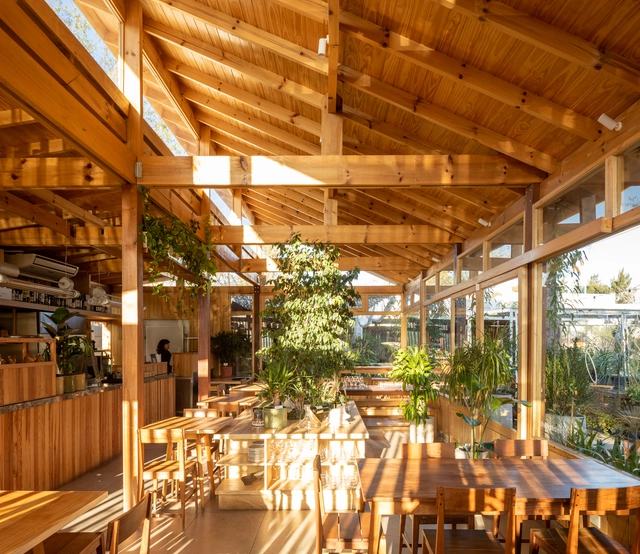
Creating spaces for social interaction involves design processes aimed at countering the individualization of people by fostering bonds and connections between them. While advancements in information and communication technologies provide new tools that optimize the development of certain activities and functions, their societal impact often tends to increase individual practices, such as remote work, virtual fitness activities through apps, or the digital consumption of goods, services, and events, among others. From architecture and interior design to urban planning, many emerging practices face the challenge of consolidating spaces for social interaction through design strategies, uses, and natural connections that prevent the replacement of physical space with virtual alternatives.


Heimtextil Takes Center Stage in Frankfurt: Exploring Textile Trends and Design Dialogues
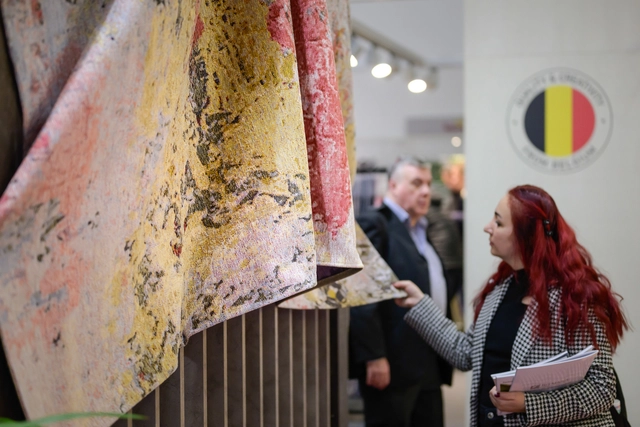
The exhibitors' stands are one aspect of a trade fair. But what would the spectacle be without an informative supporting programme? And… which exhibition hall will you head for first when Heimtextil opens its doors in Frankfurt am Main from January 14 to 17, 2025? Admittedly: It's not easy to keep track of more than 2,900 exhibitors spread across 16 hall levels. But we have a few ideas. Use well-known brands as orientation anchors and be curious to discover new, young and innovative newcomers in the midst of it all. Mark your calendar for exciting talks and tours, and look out for certain signs on the stands. Which ones? We'll tell you now.
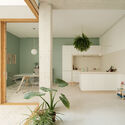
Vibrancy and Utility: Embracing Color in Urban Apartment Kitchens
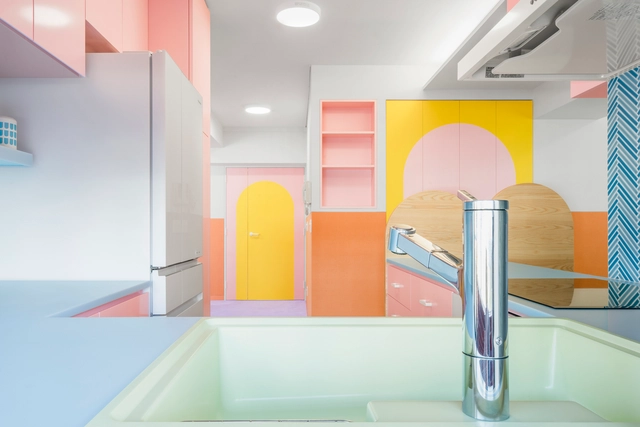
Urban apartments are frequently praised for their clever use of space, but what of their approach to color? Thoughtfully incorporating color is more than an aesthetic decision; it has the potential to shape emotional responses, influence mood, and create spatial illusions. Research in color psychology shows that colors affect our social, cultural, and psychological reactions, making them powerful design tools. Variations of blue, for instance, have been shown to slow melatonin production, keeping people more awake and alert, while shades of green relieve strain on our nervous systems, helping us feel calmer and more grounded. Color in architectural spaces can even alter our perception, creating illusions of depth, movement, and texture that influence how we experience space. Warmer hues like oranges and reds tend to make a room feel more intimate and cozy, while cool whites and blues lend a sense of openness, making spaces appear taller and more expansive.


Focused on Future Resources, the Tallinn Architecture Biennale 2024 Opens in Estonia
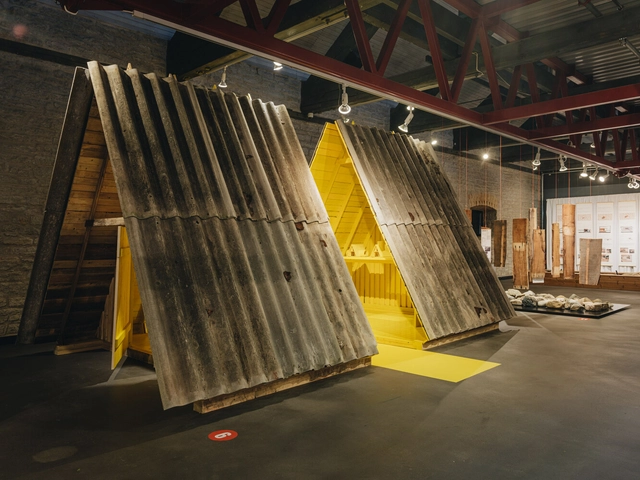
Tallinn Architecture Biennale 2024 has officially opened to the public. Hosted at the Museum of Estonian Architecture and across multiple venues in the center of the city, the event is centered around the theme "Resources For a Future." The head curator Anhelina L. Starkova along with co-curators Daniel A. Walser and Jaan Kuusemets hope to open up conversations about emerging approaches to designing and building architecture, including the potential of reused and repurposed materials. The event is held between October and November 2024, with free participation.