1. ArchDaily
  2. Recycled Materials

Recycled Materials: The Latest Architecture and News

Ceramics Forged in Light: A Spatial Translation of Circular Material Processes

 | In Collaboration

Can one of architecture's oldest materials still inform how sustainability and manufacturing are approached today? What shifts when ceramic is viewed beyond its surface, as a process shaped by light, water, and clay? At Milan Design Week 2026, VitrA, a brand producing bathroom and ceramic surfaces and working across sanitaryware and tiles, and international design practice Snøhetta explore these questions through Ceramics Forged in Light, an immersive installation created for the INTERNI MATERIAE exhibition. Positioned within a broader discourse on material experimentation and circular production, the project treats ceramic as an architectural material defined by continuous transformation, shaped through light, water, heat, reflection, and reuse.

Fired clay has been used in construction for over 9,000 years, evolving from vernacular craft into one of the most widely applied materials in the built environment. Its durability, water resistance, thermal performance, and adaptability have made it a staple for facades, sanitaryware, flooring, architectural surfaces, and structural systems. Today, new manufacturing technologies are extending these possibilities as architects and manufacturers confront the environmental implications of material extraction and production.

Plastic That Is Not a Plastic: Redefining Circularity in Open-Plan Design

 | In Collaboration

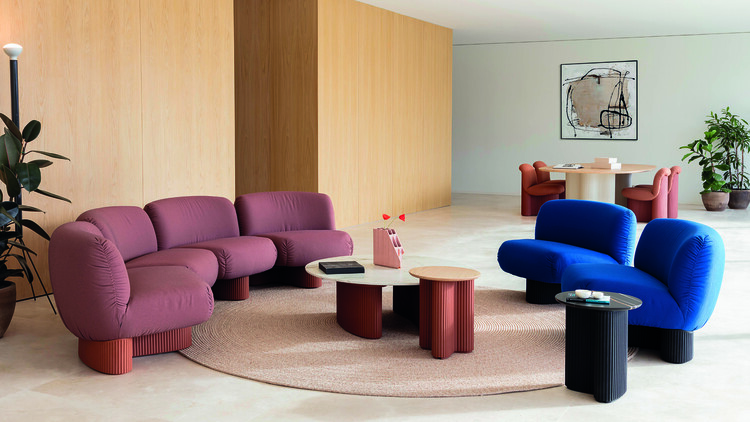
When walking into a large living space, a hotel lobby, or an open-plan workplace, the first thing that can be noticed is not what divides the space, but what holds it together. There are rarely clear boundaries, no obvious rooms, no strict partitions, yet the space still feels organized. Some areas invite a pause; others dictate movement; others foster community. The transitions are subtle, but legible.

At the same time, these interiors are expected to do more. They must accommodate constant change, withstand intensive use, and respond to environmental pressures by reducing waste, extending lifespans, and avoiding frequent replacement. The question is not only how a space looks, but how it performs over time. What is actually doing the heavy lifting?

How to Measure the Life Cycle of a Construction Material?

Subscriber Access | 

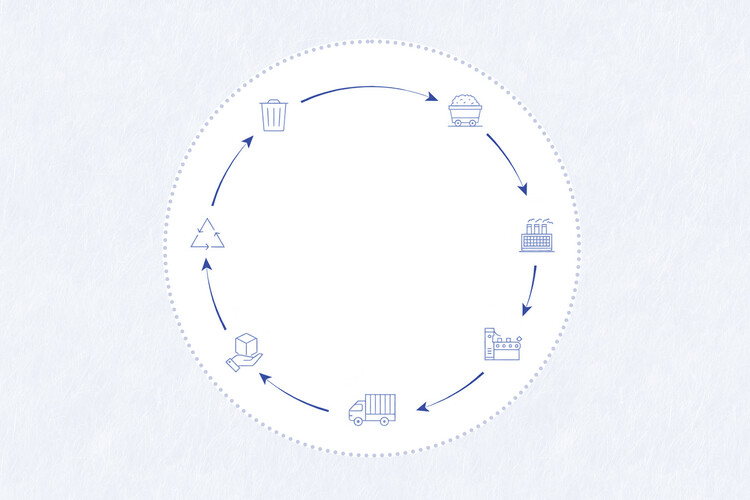
As a major driver of natural resource consumption, energy use, and greenhouse gas emissions, the construction industry has a significant impact on the environment, consuming 32% of global energy and contributing to 34% of global CO₂ emissions. Building materials play a crucial role in shaping the built environment. Through principles of circular economy, renewable and self-sufficient solutions, and technological innovations, analyzing the environmental performance of each material highlights the opportunity to review and assess the different stages of its life cycle.

By establishing a common framework for measuring and managing the environmental impact of building materials, Life Cycle Assessment (LCA) emerges as a key approach. This methodology provides a comprehensive evaluation of the environmental impacts associated with products, processes, or activities throughout their entire life cycle. From raw material extraction, manufacturing, and transportation to construction, use, and end-of-life treatment, the analysis considers the environmental burdens linked to each stage. In the context of building materials, LCA offers a holistic and systematic approach to assessing environmental performance and identifying opportunities for design optimization, among other improvements. In this way, it quantifies impacts such as carbon emissions, energy consumption, water use, air pollution, waste generation, and ecosystem depletion.

How to Measure the Life Cycle of a Construction Material? - Image 1 of 4How to Measure the Life Cycle of a Construction Material? - Image 2 of 4How to Measure the Life Cycle of a Construction Material? - Image 3 of 4How to Measure the Life Cycle of a Construction Material? - Image 4 of 4How to Measure the Life Cycle of a Construction Material? - More Images+ 12

Barbara Buser Recognized With the 2026 Jane Drew Prize for Her Work In Circular Construction

The AJ and The Architectural Review have named architect Barbara Buser as the winner of the 2026 Jane Drew Prize. The prize, named after English modernist architect and urban designer Jane Drew, is part of the W Awards and the W Programme, which recognise women's contributions to the architectural profession. Swiss-based architect Barbara Buser is known as an innovator in the field of recycling and reuse, and as an expert in circular construction, recognised for pioneering repurposing practices in Switzerland. The award, therefore, recognises not only her contribution to architecture itself, but above all her efforts to reduce the industry's environmental impact through socialisation initiatives. The recognition follows Anne Lacaton's award in 2025, as well as other prominent figures in the field, such as Kazuyo Sejima in 2023, Farshid Moussavi in 2022, and Yasmeen Lari in 2020.

A Responsible Addition: HIMACS Shapes Achieve SCS Certification for Recycled Content

 | Sponsored Content

In a balance of aesthetics, performance, and versatility, HIMACS shows a solid surface material of choice for many architects and designers. Taking a further step forward, the entire range of standard HIMACS sinks and basins is now officially SCS certified, containing a minimum of 8% pre-consumer recycled content. This certification enhances the material's technical and visual appeal by providing a more sustainable option without compromising quality or functionality.

From bathroom vanities with integrated basins to kitchen islands with flush-mounted sinks, HIMACS shapes offer a seamless balance of style and function. Each component integrates effortlessly with the surrounding HIMACS surface, creating a continuous, grout-free finish that is both elegant and easy to maintain.

From Material Intelligence to Circularity: Lessons from Architecture in 2025

Which materials have taken center stage in the architectural discourse of 2025? Which projects have rediscovered new construction practices and methods through material innovation? While the future of building materials still appears uncertain, year after year, experimentation and research continue to reveal diverse practices, initiatives, and efforts dedicated to understanding their value and responsibility within the built environment. From agricultural waste that reduces carbon footprints to recycled plastics given new life, and living materials that engage with emerging technologies while reconnecting with nature, 2025 has highlighted and strengthened the role of architects as mediators between materials, disciplines, knowledge, and interests from diverse origins.

From Material Intelligence to Circularity: Lessons from Architecture in 2025 - Image 1 of 4From Material Intelligence to Circularity: Lessons from Architecture in 2025 - Image 2 of 4From Material Intelligence to Circularity: Lessons from Architecture in 2025 - Image 3 of 4From Material Intelligence to Circularity: Lessons from Architecture in 2025 - Image 4 of 4From Material Intelligence to Circularity: Lessons from Architecture in 2025 - More Images+ 17

Extending the Lifespan of Materials: Circularity and Recyclability as Part of the Design

 | In Collaboration

What is the current global outlook on the recyclability of materials used in architecture? To what extent are contemporary societies truly committed to reducing environmental impact? In the effort to live in balance with nature, replacing fossil fuels with renewable energy sources is one of the key strategies for cutting greenhouse gas emissions and addressing global warming. Looking to nature for inspiration as a way to protect it means creating designs that incorporate sustainability, circularity, and recyclability from the very first sketch. From building systems to surface finishes, the use of biomaterials in architecture reflects a mindset rooted in long-term responsibility for a material's full life cycle.

Extending the Lifespan of Materials: Circularity and Recyclability as Part of the Design - Image 1 of 4Extending the Lifespan of Materials: Circularity and Recyclability as Part of the Design - Image 2 of 4Extending the Lifespan of Materials: Circularity and Recyclability as Part of the Design - Image 3 of 4Extending the Lifespan of Materials: Circularity and Recyclability as Part of the Design - Image 15 of 4Extending the Lifespan of Materials: Circularity and Recyclability as Part of the Design - More Images+ 25

Computational Soundscapes: Sculpting the Visual and Invisible Dimension

 | Sponsored Content

What defines a space first when entering: the sound or the visual impression? Architecture is often communicated through structure and surfaces, yet one of its most essential components moves unseen through the air: sound. It shapes how a space feels long before a wall or ceiling is noticed. Computational design brings these dimensions together, allowing architects and designers to create unique structures where acoustics and aesthetics inform one another rather than exist in parallel. By leveraging advanced algorithms, complex design processes transform into intuitive, accessible solutions that shape bespoke acoustic and visual highlights for every project. This approach combines parametric logic with material innovation, balancing efficiency, sustainability, and expressive design in equal measure.

Make Materials Matter: Louisiana Channel Releases New Documentary on Danish Architect Søren Pihlmann

Louisiana Channel, a web TV platform based at the Louisiana Museum of Modern Art in Denmark, is launching a new film titled Søren Pihlmann: Make Materials Matter. Over the course of 54 minutes, Marc-Christoph Wagner and Simon Weyhe offer a glimpse into the work and mind of the founding architect of Pihlmann Architects, presenting his vision of Danish architecture, the practice of architecture itself, and, in particular, his sensitivity to materials. The film provides a behind-the-scenes look at the process and thinking behind the Danish exhibition at this year's Venice Architecture Biennale. Led by Søren Pihlmann, the team used the opportunity to renovate and conduct material research on Denmark's permanent building in the Giardini, transforming it into a material laboratory and experimental construction site. The result is a process exhibition that highlights how rethinking and reusing existing structures and materials can address critical architectural challenges. As of today, November 20, the documentary is available to watch online for free.

Make Materials Matter: Louisiana Channel Releases New Documentary on Danish Architect Søren Pihlmann - Image 1 of 4Make Materials Matter: Louisiana Channel Releases New Documentary on Danish Architect Søren Pihlmann - Image 2 of 4Make Materials Matter: Louisiana Channel Releases New Documentary on Danish Architect Søren Pihlmann - Image 3 of 4Make Materials Matter: Louisiana Channel Releases New Documentary on Danish Architect Søren Pihlmann - Image 4 of 4Make Materials Matter: Louisiana Channel Releases New Documentary on Danish Architect Søren Pihlmann - More Images+ 37

From Overlooked Waste to Circular Opportunity: Plastics in Construction

Subscriber Access | 

Like the famous Russian Matryoshka doll, opening a package often feels like uncovering endless layers. Inside a cardboard box, there might be molded Styrofoam, then several plastic air pillows, and finally, individual plastic wrapping around each piece. Even a small product can leave behind a trail of plastic waste far larger than its size. Now imagine this logic applied to a construction site where every component, every delivery of materials, often arrives wrapped in multiple layers of protection. What already seems excessive in retail becomes monumental when repeated daily on large construction projects.

From Overlooked Waste to Circular Opportunity: Plastics in Construction - Image 1 of 4From Overlooked Waste to Circular Opportunity: Plastics in Construction - Image 2 of 4From Overlooked Waste to Circular Opportunity: Plastics in Construction - Image 3 of 4From Overlooked Waste to Circular Opportunity: Plastics in Construction - Image 4 of 4From Overlooked Waste to Circular Opportunity: Plastics in Construction - More Images+ 3

Interiors of Pastry Shops and Bakeries: Design Strategies that Integrate Functions, Users, and Materials

Subscriber Access | 

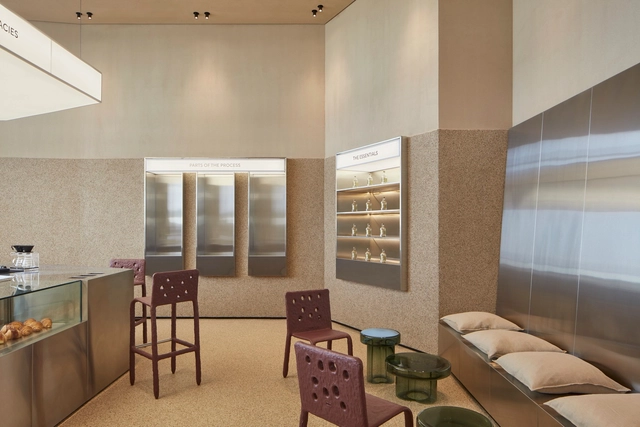
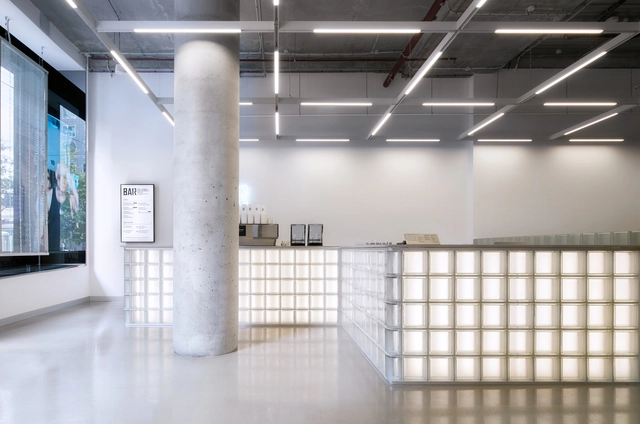
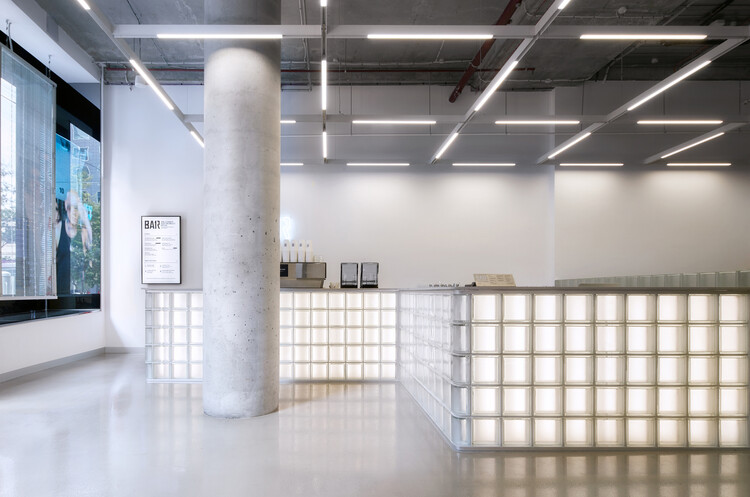
What is the link between architecture and pastry? What design strategies are applied in the contemporary interiors of bakeries and pastry shops? While architecture can serve as inspiration for the design of forms and configurations of edible elements, it also contributes the techniques of descriptive drawing, architectural composition, and staged planning to the culinary language. Focusing their thinking on people and their needs, both disciplines strive for precision, with interior design being a broad field where the use of figures, colors, materials, and various equipment can be explored to enhance user experiences.

Interiors of Pastry Shops and Bakeries: Design Strategies that Integrate Functions, Users, and Materials - Image 1 of 4Interiors of Pastry Shops and Bakeries: Design Strategies that Integrate Functions, Users, and Materials - Image 2 of 4Interiors of Pastry Shops and Bakeries: Design Strategies that Integrate Functions, Users, and Materials - Image 3 of 4Interiors of Pastry Shops and Bakeries: Design Strategies that Integrate Functions, Users, and Materials - Image 4 of 4Interiors of Pastry Shops and Bakeries: Design Strategies that Integrate Functions, Users, and Materials - More Images+ 36

The Gym-Bar Hybrid: Interiors That Integrate Sports and Healthy Habits Through Architecture

Subscriber Access | 

From the interior design of sports facilities to wellness spaces, contemporary architecture continues to experiment with incorporating different uses, installations, and materialities that make it possible to reach broader audiences, generate new spatial experiences, and enhance the simultaneous development of various activities. While each sport requires its own type of architecture, such as climbing training, for example, architecture and design professionals are striving to create atmospheres where exercise becomes more than just a physical experience, but also a psychological one, connecting mind and body through a state of physical renewal, relaxation, and sociability.

The Gym-Bar Hybrid: Interiors That Integrate Sports and Healthy Habits Through Architecture - Image 1 of 4The Gym-Bar Hybrid: Interiors That Integrate Sports and Healthy Habits Through Architecture - Image 2 of 4The Gym-Bar Hybrid: Interiors That Integrate Sports and Healthy Habits Through Architecture - Image 3 of 4The Gym-Bar Hybrid: Interiors That Integrate Sports and Healthy Habits Through Architecture - Image 4 of 4The Gym-Bar Hybrid: Interiors That Integrate Sports and Healthy Habits Through Architecture - More Images+ 14

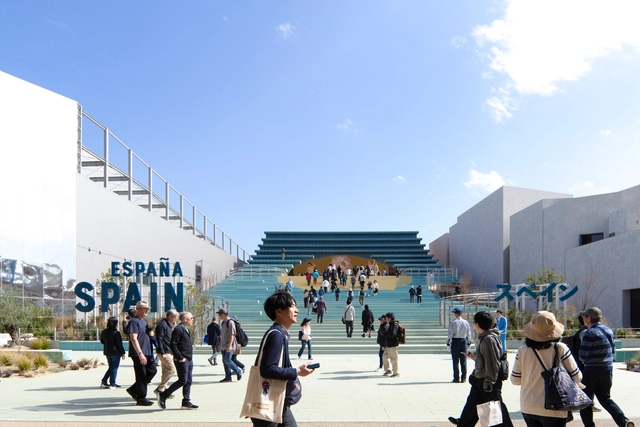
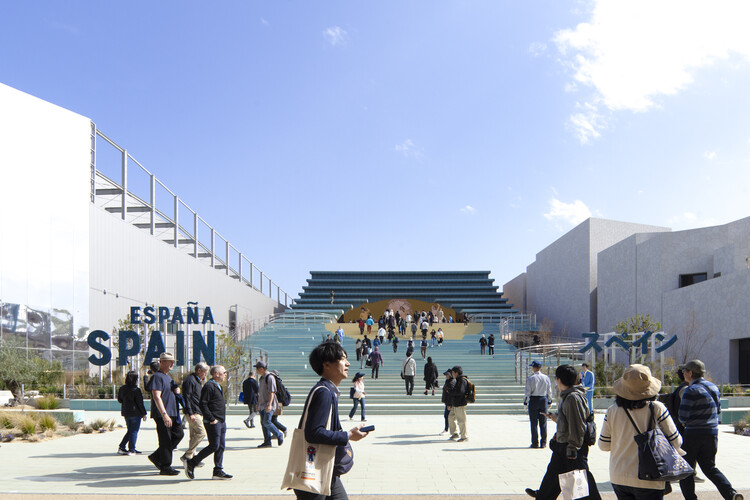
From Symbols to Architecture: In Conversation with EXTUDIO, ENORME Studio, and Smart and Green Design, Authors of the Spanish Pavilion at Expo Osaka 2025

Subscriber Access | 

Since its opening in April, Expo Osaka has welcomed millions of visitors from around the world, standing as a true showcase of innovation, architecture, and design. Among its highlights is the Grand Ring, designed by Japanese architect Sou Fujimoto, considered the largest timber architectural structure in the world. Under the theme of Expo 2025 — “Designing Future Society for Our Lives”, along with Saving Lives, Empowering Lives, and Connecting Lives — more than 150 countries have used their pavilions to address key topics in contemporary architecture, such as circular construction, cultural memory, and innovation and technology aimed at shaping a sustainable built environment for the future.

From Symbols to Architecture: In Conversation with EXTUDIO, ENORME Studio, and Smart and Green Design, Authors of the Spanish Pavilion at Expo Osaka 2025 - Image 1 of 4From Symbols to Architecture: In Conversation with EXTUDIO, ENORME Studio, and Smart and Green Design, Authors of the Spanish Pavilion at Expo Osaka 2025 - Image 2 of 4From Symbols to Architecture: In Conversation with EXTUDIO, ENORME Studio, and Smart and Green Design, Authors of the Spanish Pavilion at Expo Osaka 2025 - Image 3 of 4From Symbols to Architecture: In Conversation with EXTUDIO, ENORME Studio, and Smart and Green Design, Authors of the Spanish Pavilion at Expo Osaka 2025 - Image 4 of 4From Symbols to Architecture: In Conversation with EXTUDIO, ENORME Studio, and Smart and Green Design, Authors of the Spanish Pavilion at Expo Osaka 2025 - More Images+ 26

Apartments in Brazil: Interiors with Reused and Recovered Materials

Subscriber Access | 

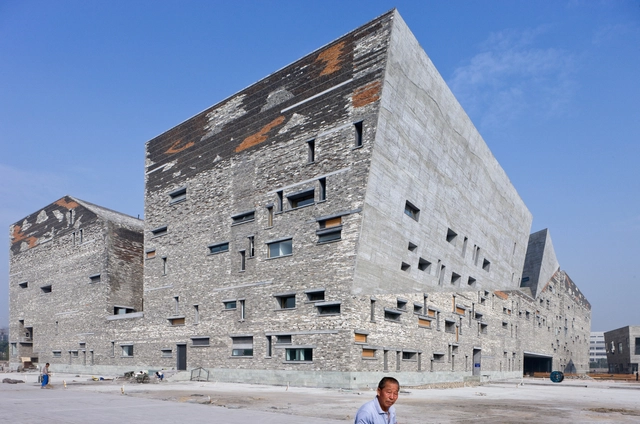
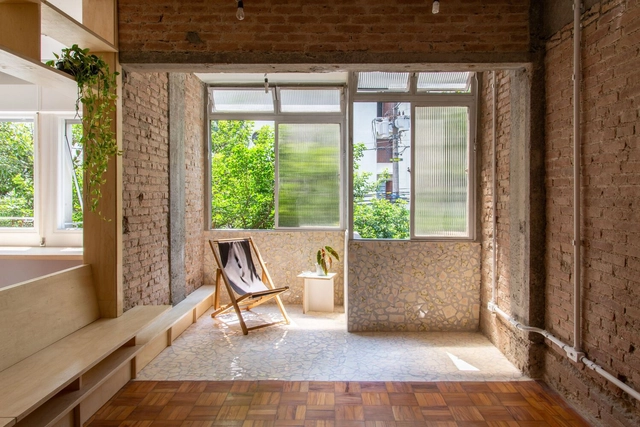
From the field of architecture and construction, the concept of material reuse is closely tied to circular economy and the reduction of carbon footprints, paving the way toward a more sustainable and responsible future. By incorporating recycling practices, recovery, restoration, and/or the reuse of demolition materials, resource efficiency along with the reduction of energy consumption makes it feasible to experiment with techniques, applications, and new materials that honor the memory of spaces while also bringing new life to both interiors and exteriors.

Apartments in Brazil: Interiors with Reused and Recovered Materials - Image 1 of 4Apartments in Brazil: Interiors with Reused and Recovered Materials - Image 2 of 4Apartments in Brazil: Interiors with Reused and Recovered Materials - Image 3 of 4Apartments in Brazil: Interiors with Reused and Recovered Materials - Image 4 of 4Apartments in Brazil: Interiors with Reused and Recovered Materials - More Images+ 7

TAC! 2025 Urban Architecture Festival: Winning Pavilions Celebrate Local Materials and Coastal Culture in Spain

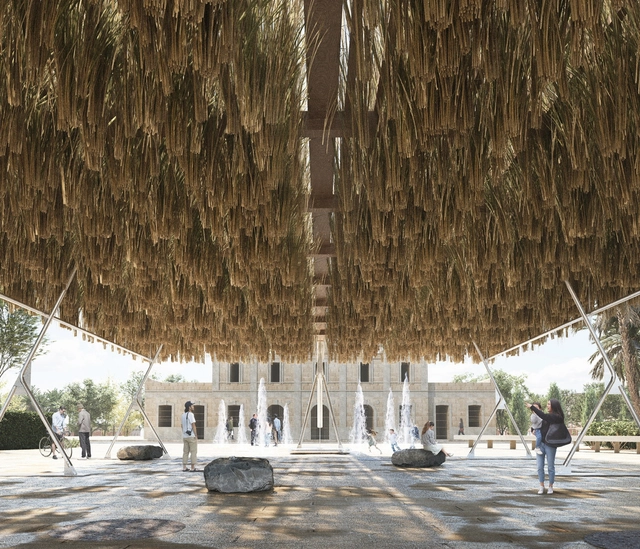
The TAC! Urban Architecture Festival is held annually in Spain with the aim of bringing contemporary architecture closer to the public through installations in various cities, including Granada, San Sebastián, Valencia, Vigo, and San Fernando. Organized by the Ministry of Housing and Urban Agenda in collaboration with Fundación Arquia, the festival seeks to promote experimentation in architecture by constructing temporary pavilions for cultural events and gatherings. The 2025 edition of the festival will take place in two locations: Casa Mediterráneo in Alicante and Plaza Stagno in Las Palmas de Gran Canaria. The pavilions are selected each year through an open call for young architects up to 45 years old. This year's winners have already been announced: the ESPARTAL project by ELE Arkitektura, GA Estudio, Florencia Galecio, and Juan Gubbins; and DE ROCA MADRE by Alejandro Carrasco Hidalgo, Eduardo Cilleruelo Terán, Alberto Martínez García, and Andrea Molina Cuadro.

TAC! 2025 Urban Architecture Festival: Winning Pavilions Celebrate Local Materials and Coastal Culture in Spain - Image 1 of 4TAC! 2025 Urban Architecture Festival: Winning Pavilions Celebrate Local Materials and Coastal Culture in Spain - Image 2 of 4TAC! 2025 Urban Architecture Festival: Winning Pavilions Celebrate Local Materials and Coastal Culture in Spain - Image 3 of 4TAC! 2025 Urban Architecture Festival: Winning Pavilions Celebrate Local Materials and Coastal Culture in Spain - Image 4 of 4TAC! 2025 Urban Architecture Festival: Winning Pavilions Celebrate Local Materials and Coastal Culture in Spain - More Images+ 14

Copenhagen Architecture Biennial 2025 Reveals 'Slow Pavilion' Designs Built from Reused Materials

The first edition of the Copenhagen Architecture Biennial will take place from 18 September to 19 October 2025. Organized by CAFx (Copenhagen Architecture Forum), the event marks a transition from the previous annual Copenhagen Architecture Festival to a more expansive platform for architectural exploration. The theme of the inaugural edition, "Slow Down," invites participants to reflect on how the rapid pace of modern life affects the built environment. According to the organizers, this thematic shift encourages the envisioning of spaces that promote sustainability, longevity, and mindful engagement with our surroundings. In line with this vision, the organization launched an open call earlier this year for pavilion proposals that embody principles of circular design while serving as hubs for public programming during the event. Two winning proposals, modular structures by Slaatto Morsbøl and Tom Svilans x THISS Studio, were selected, each offering an approach to architectural deceleration.

Copenhagen Architecture Biennial 2025 Reveals 'Slow Pavilion' Designs Built from Reused Materials - Image 1 of 4Copenhagen Architecture Biennial 2025 Reveals 'Slow Pavilion' Designs Built from Reused Materials - Image 2 of 4Copenhagen Architecture Biennial 2025 Reveals 'Slow Pavilion' Designs Built from Reused Materials - Image 3 of 4Copenhagen Architecture Biennial 2025 Reveals 'Slow Pavilion' Designs Built from Reused Materials - Image 4 of 4Copenhagen Architecture Biennial 2025 Reveals 'Slow Pavilion' Designs Built from Reused Materials - More Images+ 5

Museum and Gallery Cafés: 10 Examples That Enhance the Cultural Experience

Subscriber Access | 

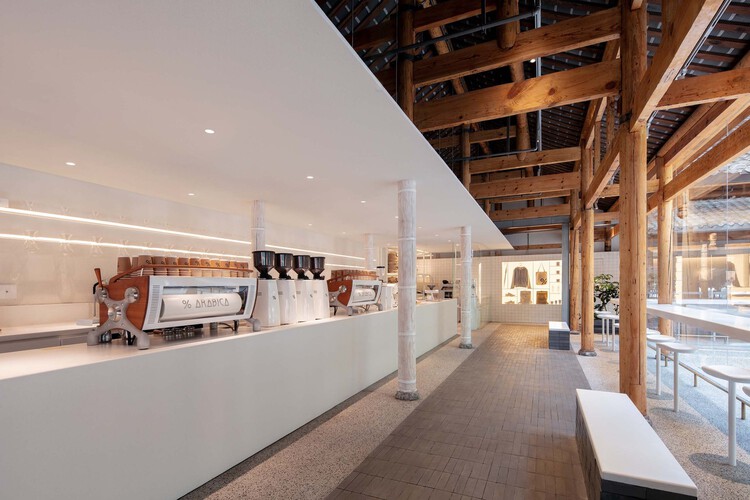
Cafés in museums and galleries do more than provide convenience — they have become an essential part of today’s cultural experience. As Claire Bishop explains in her idea of the “expanded aesthetic experience,” cultural spaces now include hybrid environments that encourage new ways of engaging, socializing, and reflecting. In this context, cafés are not just places to rest; they extend the visit on both sensory and symbolic levels, offering moments of interaction and contemplation in carefully designed settings. By blending architecture, art, and hospitality, they help create immersive and welcoming atmospheres — a concept already hinted at by Brian O’Doherty, who viewed exhibition spaces as an integral part of the artwork itself.

Museum and Gallery Cafés: 10 Examples That Enhance the Cultural Experience - Image 1 of 4Museum and Gallery Cafés: 10 Examples That Enhance the Cultural Experience - Image 2 of 4Museum and Gallery Cafés: 10 Examples That Enhance the Cultural Experience - Image 3 of 4Museum and Gallery Cafés: 10 Examples That Enhance the Cultural Experience - Image 4 of 4Museum and Gallery Cafés: 10 Examples That Enhance the Cultural Experience - More Images+ 15

Understanding Soft Architecture: The Shift from Monument to Moment

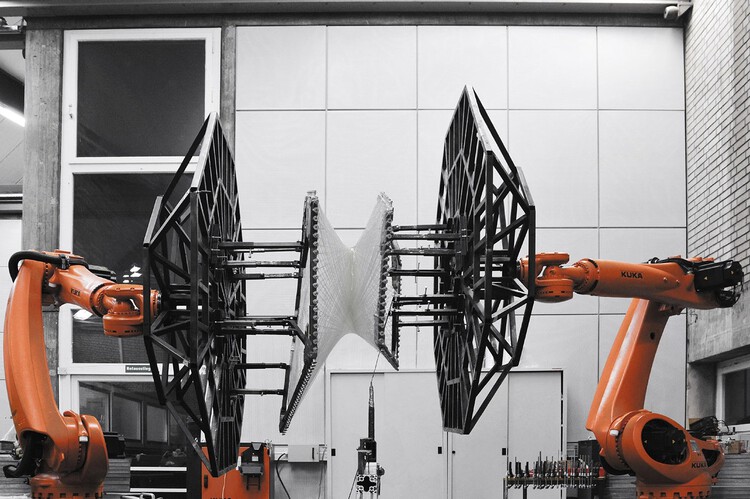
In recent years, architecture has increasingly embraced adaptability, flexibility, and responsiveness as core design principles. This evolution reflects a shift from traditional notions of static, permanent structures to dynamic environments that can adjust to changing needs and conditions. Central to this transformation is the concept of "soft architecture", which leverages pliable materials and innovative systems to create spaces that are functional, sustainable, and user-centric. Soft architecture takes shape through membranes that breathe, façades that move, structures that inflate or fold, and surfaces that bend rather than break. It involves designing for transformation — not only in how a building performs environmentally, but also in how it can accommodate shifting functions, user interactions, or temporary occupations. This approach to building challenges traditional notions of durability and control, proposing instead a more responsive and open-ended architecture. It reflects a growing awareness that buildings, like the societies they serve, must be able to evolve.

Understanding Soft Architecture: The Shift from Monument to Moment - Image 1 of 4Understanding Soft Architecture: The Shift from Monument to Moment - Image 2 of 4Understanding Soft Architecture: The Shift from Monument to Moment - Image 3 of 4Understanding Soft Architecture: The Shift from Monument to Moment - Image 4 of 4Understanding Soft Architecture: The Shift from Monument to Moment - More Images+ 53