1. ArchDaily
  2. MDF

MDF: The Latest Architecture and News

From Tradition to Innovation: How Modern Technologies are Transforming the Potential of Wood

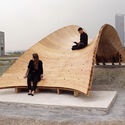
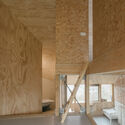
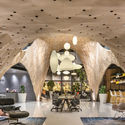
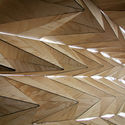
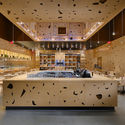
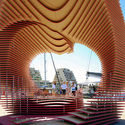
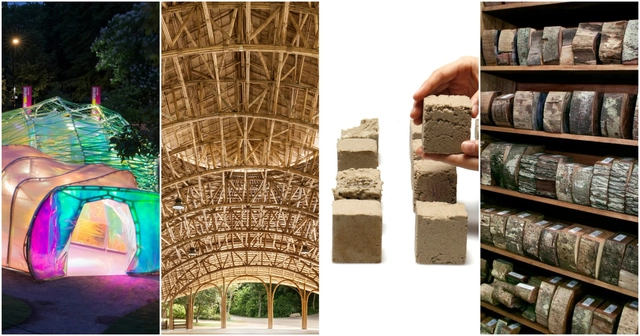
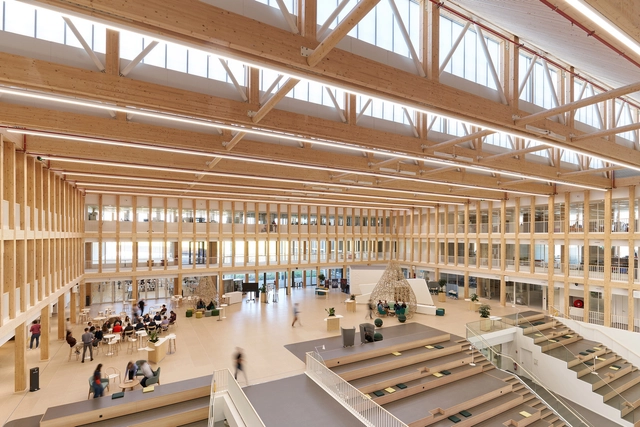
Wood, one of the oldest building materials, has been continuously reinvented throughout history. As contemporary architecture becomes more and more concerned with sustainability and environmental responsibility, the popularity of the material has also increased. As trees absorb carbon dioxide during their growth, their wood stores that carbon, keeping it out of the atmosphere. The materials derived from wood are thus associated with less greenhouse gas emissions on the condition of trees being harvested from sustainably managed forests. But in order to capture the full potential of this material, a plethora of techniques and modifications have evolved with the purpose of adapting and customizing wood's characteristics to the demands of modern design and construction. From thermal modification to engineered wood or versatile particle boards, these methods not only enhance wood's suitability for the rigors of contemporary architecture but also expand the usability of this sustainable material to an unprecedented scale.

From Tradition to Innovation: How Modern Technologies are Transforming the Potential of Wood - Image 1 of 4From Tradition to Innovation: How Modern Technologies are Transforming the Potential of Wood - Image 2 of 4From Tradition to Innovation: How Modern Technologies are Transforming the Potential of Wood - Image 3 of 4From Tradition to Innovation: How Modern Technologies are Transforming the Potential of Wood - Image 4 of 4From Tradition to Innovation: How Modern Technologies are Transforming the Potential of Wood - More Images+ 5

How to Use Fluted Cladding on Interior Walls

 | Sponsored Content

How we perceive space is a crucial aspect of architecture and interior design, profoundly influencing our interaction with the environment. Consequently, spatial perception is shaped by elements such as furniture arrangement, lighting, color choices, and materials. The latter is particularly significant, as the same material can be employed in various ways, resulting in atmospheres with unique characteristics.

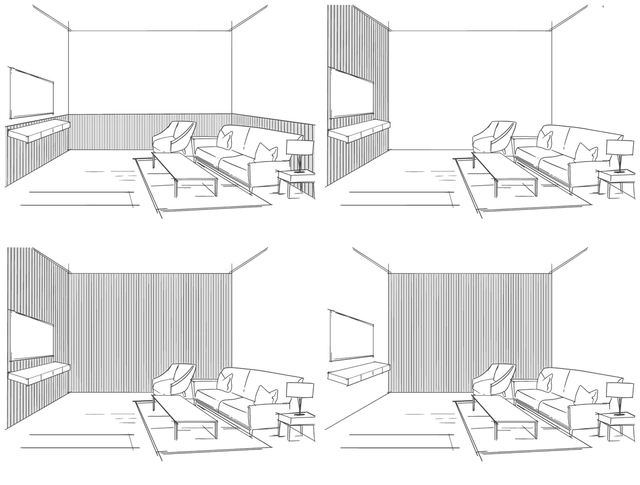
Fluted cladding is a good example of the potential for variations in material use. These are milled MDF surfaces with a linear pattern designed to decorate interior walls and ceilings. They can be applied to a variety of surfaces, though they should only be used in areas not exposed to humidity. The system is notable for its ability to accentuate space through different configurations. Depending on their arrangement and type of fluting, these configurations can modify the spatial experience by highlighting, directing, enveloping, and achieving visual balance in homes, offices, commercial spaces, and more.

Update: SLEEPBOX / Arch Group

Subscriber Access | 
Update: SLEEPBOX / Arch Group - Image 17 of 4
© Arch Group

Back in late 2009 Arch Group shared with us their proposal for an urban relaxation pod – SLEEPBOX. Their concept has been realized, with production of the modular 2.5×1.6m x 2.5-3m high unit high moving ahead.