1. ArchDaily
  2. Reconstruction

Reconstruction: The Latest Architecture and News

Notre Dame Update: Restoration Work Advances and US Students Rebuild One of Its Roof Trusses Using Medieval Techniques

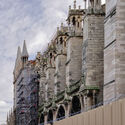
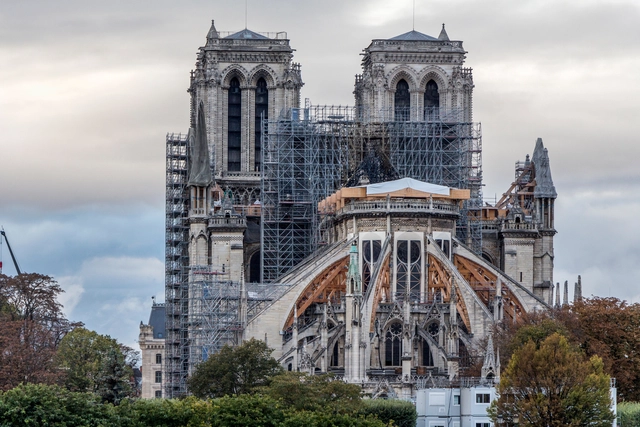
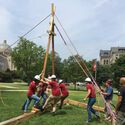
With three more years to go until the 2024 Paris Summer Olympics and the re-opening date announced by French President Emanuel Macron, Notre Dame's restoration work progresses. After a long safety phase and months of work interruption last year due to the pandemic, all burned timber from the roof has been removed, and scaffolding has been installed inside the cathedral. As a homage to the heritage structure and "the collective effort to rebuild Notre Dame", the Catholic University of America is building a replica of one of the cathedral's roof trusses in Washington D.C., using medieval techniques.
Notre Dame Update: Restoration Work Advances and US Students Rebuild One of Its Roof Trusses Using Medieval Techniques - Image 1 of 4Notre Dame Update: Restoration Work Advances and US Students Rebuild One of Its Roof Trusses Using Medieval Techniques - Image 2 of 4Notre Dame Update: Restoration Work Advances and US Students Rebuild One of Its Roof Trusses Using Medieval Techniques - Image 3 of 4Notre Dame Update: Restoration Work Advances and US Students Rebuild One of Its Roof Trusses Using Medieval Techniques - Image 4 of 4Notre Dame Update: Restoration Work Advances and US Students Rebuild One of Its Roof Trusses Using Medieval Techniques - More Images

Reconstruction Proposal for an Abandoned Brewery Wins the 2021 CANactions Youth Competition

Reconstruction Proposal for an Abandoned Brewery Wins the 2021 CANactions Youth Competition - Image 1 of 4Reconstruction Proposal for an Abandoned Brewery Wins the 2021 CANactions Youth Competition - Image 2 of 4Reconstruction Proposal for an Abandoned Brewery Wins the 2021 CANactions Youth Competition - Image 3 of 4Reconstruction Proposal for an Abandoned Brewery Wins the 2021 CANactions Youth Competition - Image 4 of 4Reconstruction Proposal for an Abandoned Brewery Wins the 2021 CANactions Youth Competition - More Images+ 20

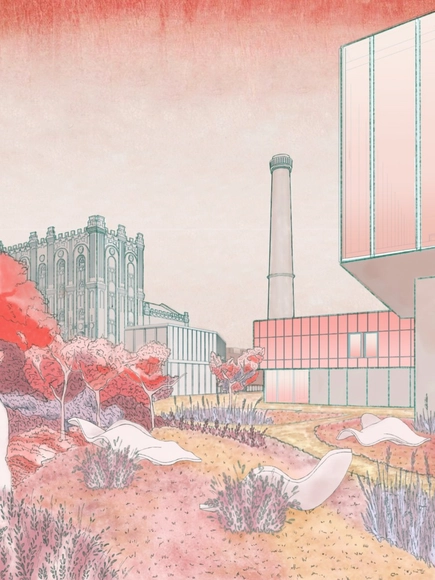
The CANactions youth competition was launched in 2009 by the Dessau Institute of Architecture (DIA / Germany) and CANactions School. The competition has become a professional "path to Europe" for Ukrainian students and young professionals. Since its launch, more than 1,200 projects have been received, among which 129 finalist projects have been selected by members of the international jury. This year's winner was Dmytro Yahodin with a reconstruction proposal for the Rikhert brewery in Kyiv.
The Contemporary Approach to Rebuilding Cities Post-Disaster: The Case of Beirut

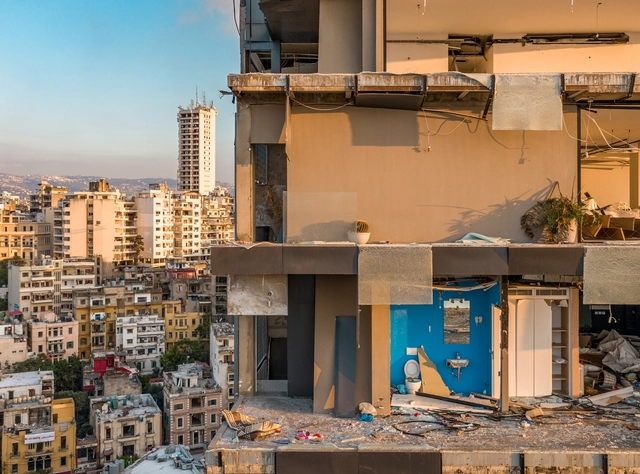
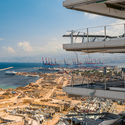
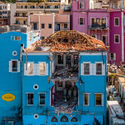
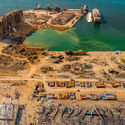
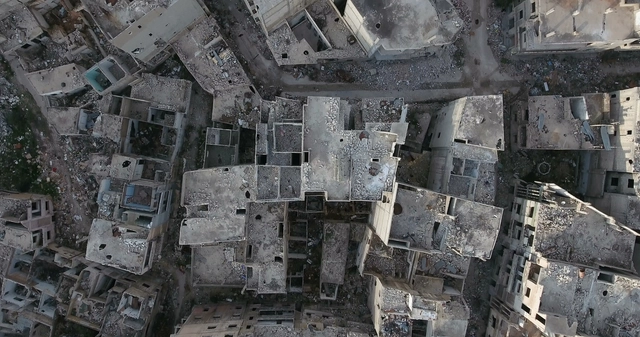
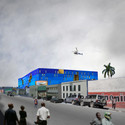
Almost 6 months ago, on August 4th, 2020, the city of Beirut was shaken by one of the biggest non-nuclear blasts in history. Leaving the northern side of the capital in ruins, the explosion damaged around 40,000 buildings. New contemporary structures completed recently by local international architects are now facing reconstruction dilemmas, raising existential questions such as: How should reconstruction efforts of “new” damaged buildings look like? Should architects rebuild them as they were before the blast, erasing what has happened or should they leave scars and portray new realities?

In order to explore ideas and highlight different perspectives, ArchDaily had the chance to sit with three architects whose buildings were impacted by the blast. Bernard Khoury, Paul Kaloustian, and Lina Ghotmeh talked about their projects and their vision of the reconstruction of Beirut with ArchDaily's Managing Editor, Christele Harrouk, alongside Architectural Photographer Laurian Ghinitoiu, who documented in a featured photo series the extent of the destruction.

The Contemporary Approach to Rebuilding Cities Post-Disaster: The Case of Beirut - Image 1 of 4The Contemporary Approach to Rebuilding Cities Post-Disaster: The Case of Beirut - Image 2 of 4The Contemporary Approach to Rebuilding Cities Post-Disaster: The Case of Beirut - Image 3 of 4The Contemporary Approach to Rebuilding Cities Post-Disaster: The Case of Beirut - Image 4 of 4The Contemporary Approach to Rebuilding Cities Post-Disaster: The Case of Beirut - More Images+ 15

Beirut: Between a Threatened Architectural Heritage and a Traumatized Collective Memory

It only took a couple of seconds to destroy 40% of the city of Beirut on August 4th, 2020. A couple of trivial seconds were enough to determine the fate of the urban and social fabric of the Lebanese capital and its architectural heritage. Years and years of accumulated cultural assets fell instantly in distress, causing more harm than the infamous 15-year civil war. These seconds have erased the past, present, and destroyed future aspirations.

Hit right in its rich cultural center, the blast of the port shook the northeastern side of the Lebanese capital, leaving the neighborhoods of Mdawar, Rmeil, Gemmayze, Achrafieh, Mar Mkhayel, Karantina, and Geitawi, severely hurt. According to the UN Development Programme (UNDP), 200,000 housing units were affected by the explosions, with an estimated 40,000 buildings damaged, of which 3,000 were severely damaged.

Beirut: Between a Threatened Architectural Heritage and a Traumatized Collective Memory - Image 1 of 4Beirut: Between a Threatened Architectural Heritage and a Traumatized Collective Memory - Image 2 of 4Beirut: Between a Threatened Architectural Heritage and a Traumatized Collective Memory - Image 3 of 4Beirut: Between a Threatened Architectural Heritage and a Traumatized Collective Memory - Image 4 of 4Beirut: Between a Threatened Architectural Heritage and a Traumatized Collective Memory - More Images+ 20

How Community Participation can Assist in Architectural and Urban Post-Disaster Reconstruction

The concepts of autonomy, collaboration, and participation have gained relevance in architecture and urbanism through collaborative actions involving the community, architects, urban planners, and designers. As the number of climate disasters has significantly increased - doubling in the last 40 years according to a report released in 2016 by CRED (Centre for Research on the Epidemiology of Disasters) - in addition to conflicts and other tragedies, the demand for the rebuilding of houses and infrastructure in affected areas has grown simultaneously. This has called for a major collaborative effort in architectural and urban reconstruction.

The Fundamental Role of AI in Current Post-War Reconstruction

In a world devastated by war and destruction, new ideas for future reconstruction of cities are emerging. The latest technologies are creating opportunities to shape better built environments and better urban experiences. While the world has had its fair share of failed attempts of post-war reconstruction, the 21st century is promising concepts more in touch with culture, integration, and sustainability.

As we all know, technology is the game-changer of this century. It has ultimately modified how we design and build, and with the development of Artificial Intelligence, boundaries have been pushed furthermore. Able to transform the environment we live in, AI can also help shape a better version of the environment we have lost.

The Fundamental Role of AI in Current Post-War Reconstruction - Image 1 of 4The Fundamental Role of AI in Current Post-War Reconstruction - Image 2 of 4The Fundamental Role of AI in Current Post-War Reconstruction - Image 3 of 4The Fundamental Role of AI in Current Post-War Reconstruction - Image 4 of 4The Fundamental Role of AI in Current Post-War Reconstruction - More Images+ 6

How Cities have Rebuilt from the Ashes

Subscriber Access | 

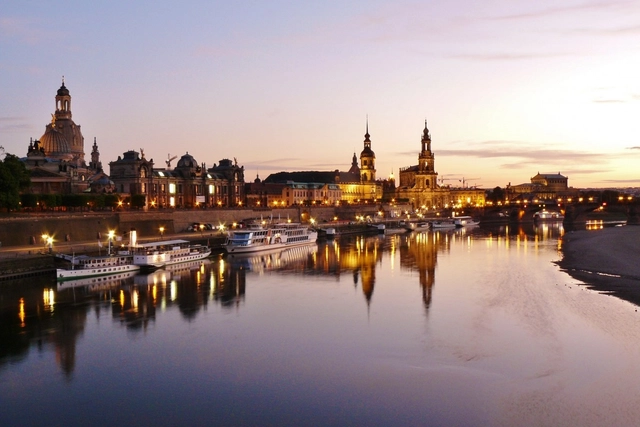
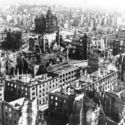
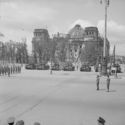
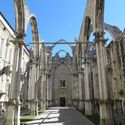
Every city has a story. Throughout history, many natural and man-made changes have altered the way cities were originally laid out. For some, the urban form developed as a result of political disputes, religious separations, or class divides. For others, a more mixed approach has allowed for uniquely mixed cultural atmospheres. And while development of cities is typically slow, occasionally cities experience dramatic and immediate changes to the urban fabric - the results of natural disaster, military conflict, or industrial catastrophe.

What happens next - if anything - can reveal a great deal about not just the city itself, but the local culture. Do cities rebuild exactly as they were? Or do they use disaster as an opportunity to reinvent themselves? The following is a roundup of cities that have moved past catastrophe to be reborn from the ashes.

How Cities have Rebuilt from the Ashes - Image 1 of 4How Cities have Rebuilt from the Ashes - Image 2 of 4How Cities have Rebuilt from the Ashes - Image 3 of 4How Cities have Rebuilt from the Ashes - Image 4 of 4How Cities have Rebuilt from the Ashes - More Images+ 37

Call for Entries: ETAR Museum Hotel Architectural Competition

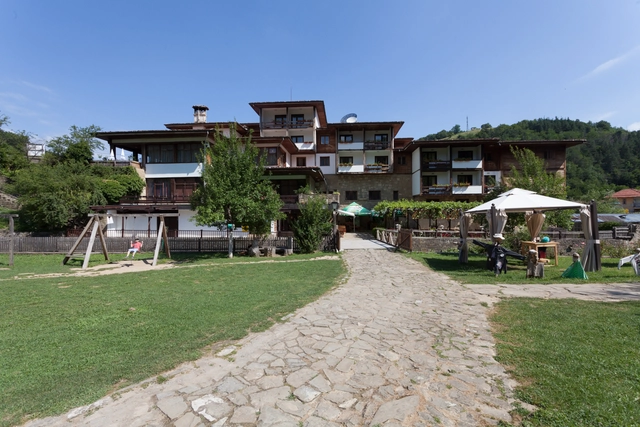
ETAR MUSEUM HOTEL
Architectural Competition for Reconstruction of the Strannopriemnitsa Hotel,
part of Open Аir Ethnographic Museum "Etar", Gabrovo

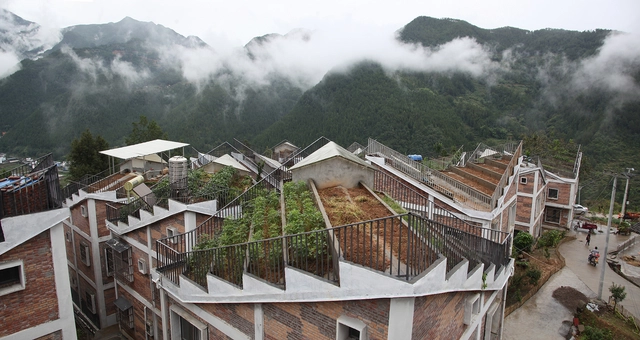
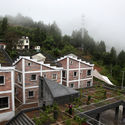
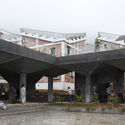
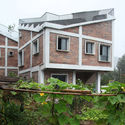
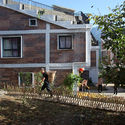
Jintai Village Reconstruction / Rural Urban Framework

Jintai Village Reconstruction / Rural Urban Framework - Restoration, Facade, ForestJintai Village Reconstruction / Rural Urban Framework - Restoration, Facade, BeamJintai Village Reconstruction / Rural Urban Framework - Restoration, Garden, Facade, Fence, BalconyJintai Village Reconstruction / Rural Urban Framework - Restoration, Garden, Facade, Fence, DoorJintai Village Reconstruction / Rural Urban Framework - More Images+ 22

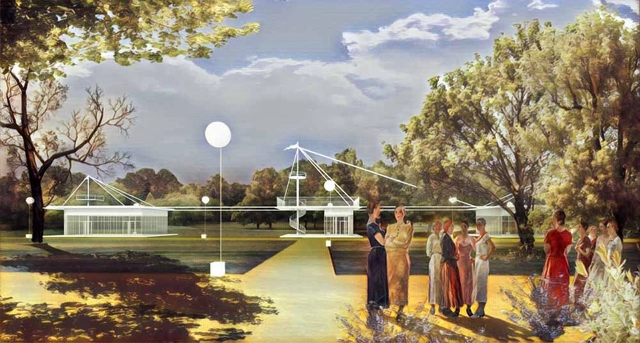
Kleinewelt Architekten and Citizenstudio Envision Moscow's Gateway to the Five Seas

Kleinewelt Architekten in partnership with Citizenstudio / Gorozhane Group, created a re-design proposal for the Northern River Boat Station Park, also known as the Park of Five Seas, in Moscow. Built in the 1930’s, the current park is supposed to act as the city’s gateway to the five seas: the White, Baltic, Black, Azov, and Caspian Sea. However, the park is removed from city life and separates Moscow from it’s historic waterways.

Kleinewelt Architekten and Citizenstudio Envision Moscow's Gateway to the Five Seas - MonumentsKleinewelt Architekten and Citizenstudio Envision Moscow's Gateway to the Five Seas - MonumentsKleinewelt Architekten and Citizenstudio Envision Moscow's Gateway to the Five Seas - MonumentsKleinewelt Architekten and Citizenstudio Envision Moscow's Gateway to the Five Seas - MonumentsKleinewelt Architekten and Citizenstudio Envision Moscow's Gateway to the Five Seas - More Images+ 15

Lecture: Atelier Bow-Wow, "Architects in Post-Disaster Reconstruction"

“I came to the conclusion that recovery from Great East Japan Earthquake should be compared to Japan’s recovery from the World War II.” —Yoshiharu Tsukamoto, Co-founder, Atelier Bow-Wow and member of ArchiAid

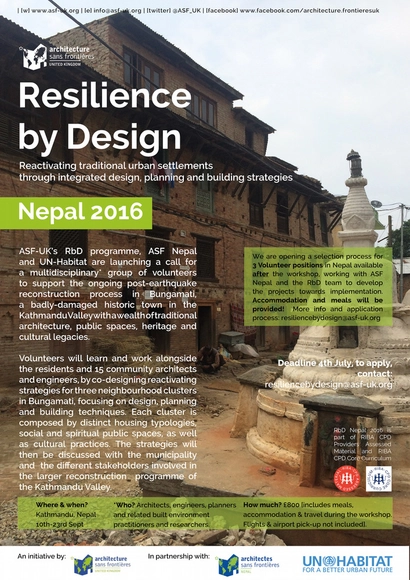
Resilience by Design Nepal 2016

Resilience by Design Nepal 2016
Reactivating traditional urban settlements through integrated design, planning and building strategies.

Conference: Iraq Architecture and Planning 2016

Al-Kindi Society for Engineers will be holding its annual engineering forum in London, titled “Iraq Architecture and Planning 2016”.

The Challenges of Post-Disaster Design

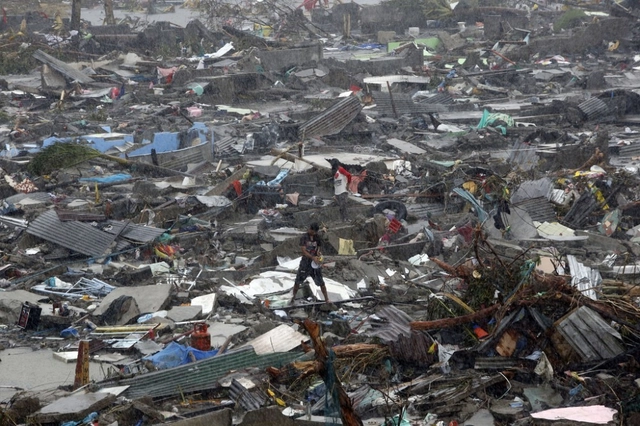
In the wake of the destruction of Typhoon Haiyan, architects were asking: "couldn't we have avoided this?" Technically, yes. But while the opportunity to build better exists, such measures are often expensive - and in poverty-stricken areas like the Philippines - cost-prohibitive. A recently published article by Carey Dunne on Co.Design breaks down why disaster-proof construction is such a complex challenge.

Reconstruction of the Hospital of the State University of Haiti / Model of Architecture Serving Society (MASS)

Reconstruction of the Hospital of the State University of Haiti / Model of Architecture Serving Society (MASS) - Hospital
© Model of Architecture Serving Society (MASS)

Reconstruction of the Hospital of the State University of Haiti / Model of Architecture Serving Society (MASS) - Hospital Reconstruction of the Hospital of the State University of Haiti / Model of Architecture Serving Society (MASS) - Hospital Reconstruction of the Hospital of the State University of Haiti / Model of Architecture Serving Society (MASS) - Hospital Reconstruction of the Hospital of the State University of Haiti / Model of Architecture Serving Society (MASS) - Hospital Reconstruction of the Hospital of the State University of Haiti / Model of Architecture Serving Society (MASS) - More Images+ 1

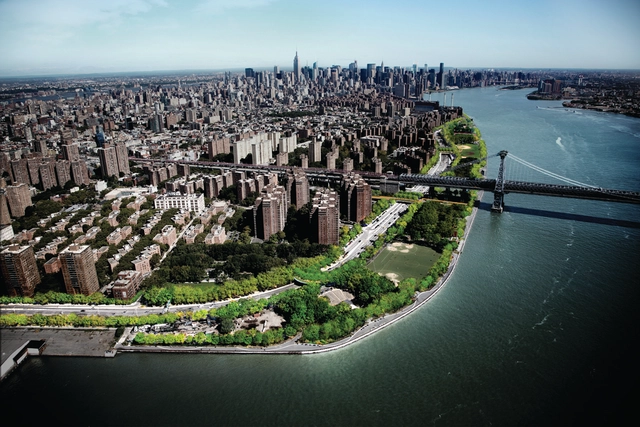
East River Blueway Plan / WXY Studio: New York City's Plan for Flood Barrier Along East River

The City of New York has long awaited renovations to the East River Greenway; squeezed between the FDR Drive to the west and the river to East, there are a few scattered public parks connected by a path that has been weathered and torn apart over the years.  The proposed Blueway is a coordinated collaboration between Manhattan Borough President Scott Stringer, Community Boards 3 and 6, State Assembly  Member Brian Kavanaugh and architecture and urban design firm WXY along that takes suggestions from the general public to develop a scheme that works within the framework of the existing Greenway and provides specific sites of waterfront access, development of wetlands and connectivity to the city and its waterways.  The stretch along the greenway that is the focus of the scheme developed by WXY runs from Midtown East at 38th street to the Brooklyn Bridge.