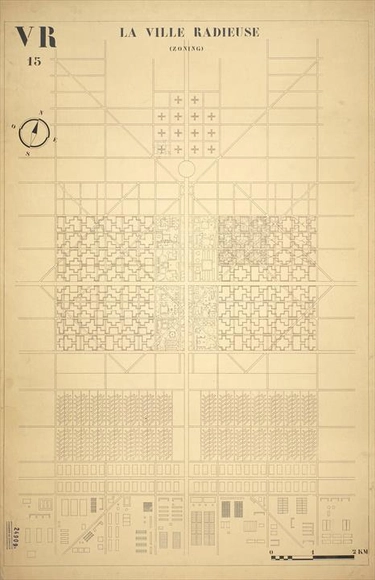
The Master Plan of the Radiant City. Image Courtesy of LE CORBUSIER FOUNDATION
Throughout history, religious reformers and visionary starchitects have attempted to envision the future of our cities: from the Venetian model city of Palmanova to the multi-story housing complex for 5,000 people drafted by Italian architect Paolo Soleri, from Frank Lloyd Wright’s Broadacre City to Le Corbusier’s Radiant City, numerous masterplans have been crafted to illustrate some of the most unprecedented ambitions.
As we are entering 2021 after a year of anxiety and uncertainties, what are your expectation for our future? The UN75 survey reports that most people around the world hold greater optimism for the future: “Globally, many more respondents believe people will be better off in 2045 than today (49%) compared to those who believe people will be worse off (32%).”
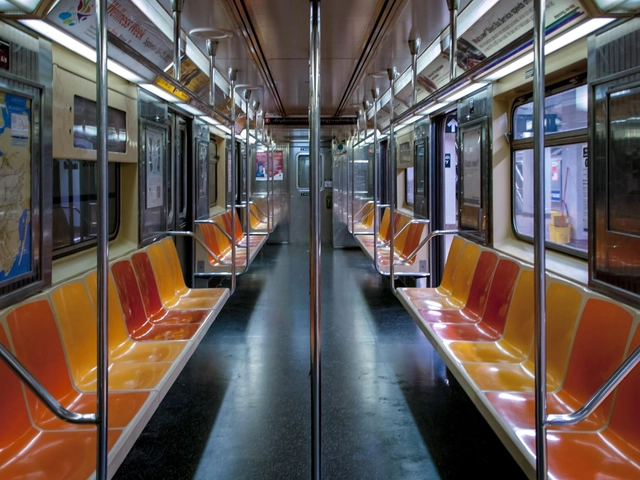
With the promising news of a potential vaccine that could soon return the world to a semi-normal way of life, questions are being raised about what the future of public transit might look like. While some predict that it will be years before we revert back to the muscle memory ways of packing like sardines into crowded subway cars during rush hour commutes, it’s not just about how individuals feel being within close proximity of one another while moving about the city. It has more to do with how our other daily habits, which have been reshaped as a result of the pandemic, might change the overall goals for public transit systems around the globe. What strategies might be implemented to bring ridership back to normal levels and to bring the mobility landscape back to where it once was as society continues to undergo major fundamental shifts?
Around the world, cities are the “ground zero” of inequality and unsustainability. The two largest cities in the United States, New York City and Los Angeles, are also the two most unequal cities, and one-third of the United Kingdom’s poorest 10% of families live in London. Meanwhile, two-thirds of the world’s energy and 70% of global carbon emissions are attributed to cities. This leads to the question of how the evolution of public policy, and urban design, can strategically combat these two growing issues. Around the world, cities are looking to mobility as part of the solution, and in particular, asking a simple question: what if public transport was free?
https://www.archdaily.com/932193/should-cities-make-public-transport-freeNiall Patrick Walsh
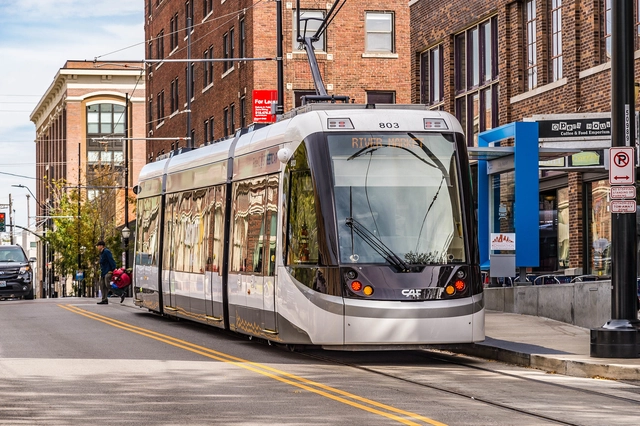
Kansas City has become the first major city in the United States to approve free public transit. Last week, the City Council voted unanimously to make the city’s bus system fare-free alongside the existing streetcar system that was launch in 2016. The Zero Fare Transit proposal aims to be a universal and system-wide fare-free scheme.
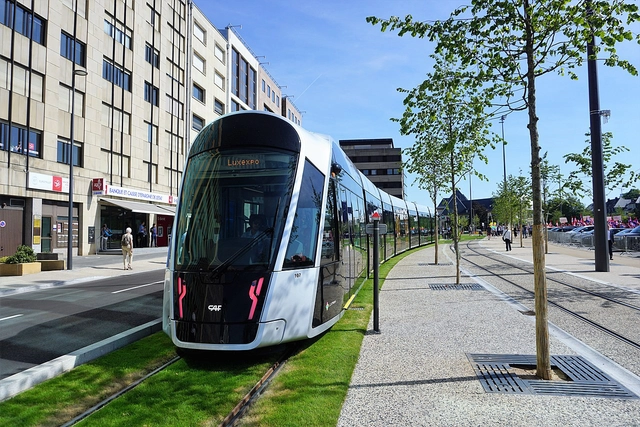
Luxembourg is set to become the world's first country to make all of its public transportation free. The newly re-elected prime minister Xavier Bettel and the coalition government have announced that they will lift all fares on trains, trams and buses next summer. Taking aim at long commutes and the country’s carbon footprint, the new move hopes to alleviate some of the worst traffic congestion in the world.
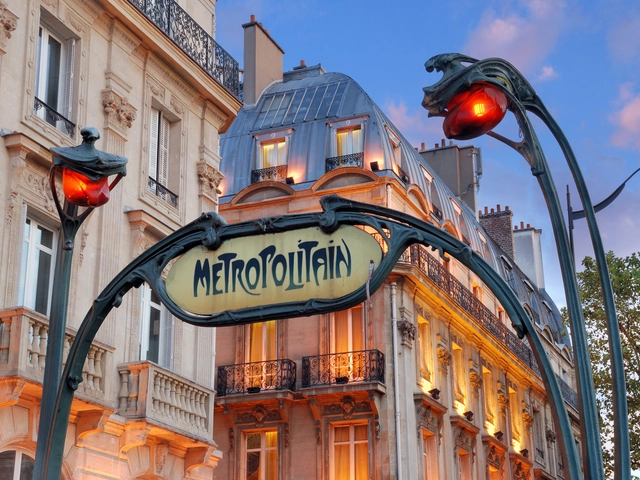
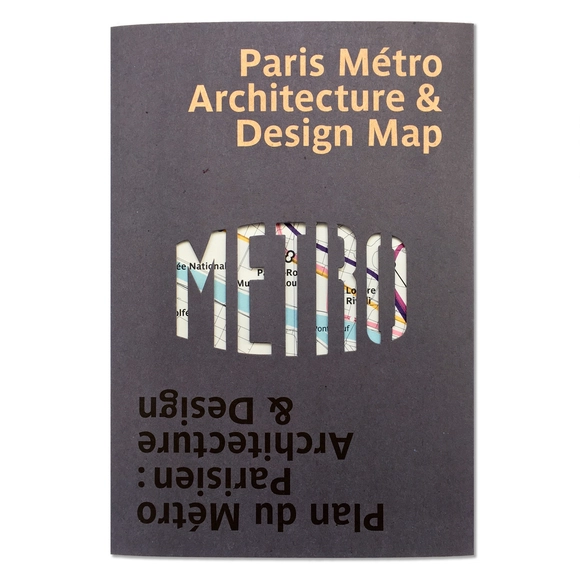
New Bilingual Guide Celebrates Architecture and Design of Paris Metro
Transport design historian and broadcaster Mark Ovenden has curated ParisMetro Architecture & Design Map, the fourth in Blue Crow Media’s new series of cartographic guides dedicated to the architecture and design of the world’s finest public transport systems. With original photography by Nigel Green this two-sided guide is an original and fascinating insight into the architecture and graphic design of the Paris Metro for transport lovers, students of design and anyone interested in the history of London.
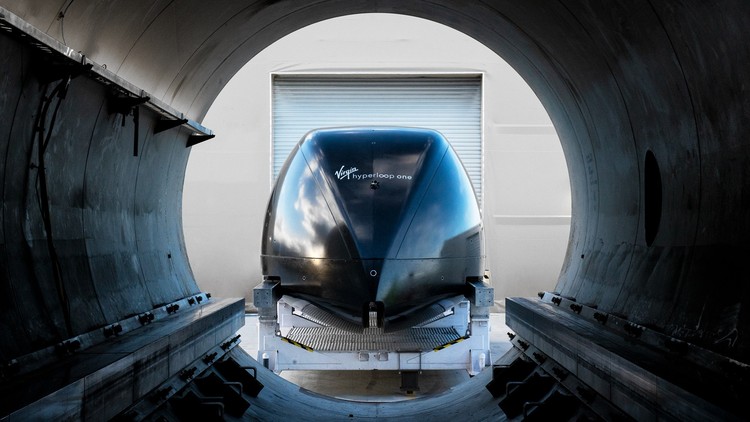
Between advances in autonomous technology and urban population growth, transit is being reimagined on the street and in the air. From public transit transforming to more user-centric mobility services, to rethinking regulatory and organizational status quos, advances in technology are expanding transit opportunities in cities around the world.
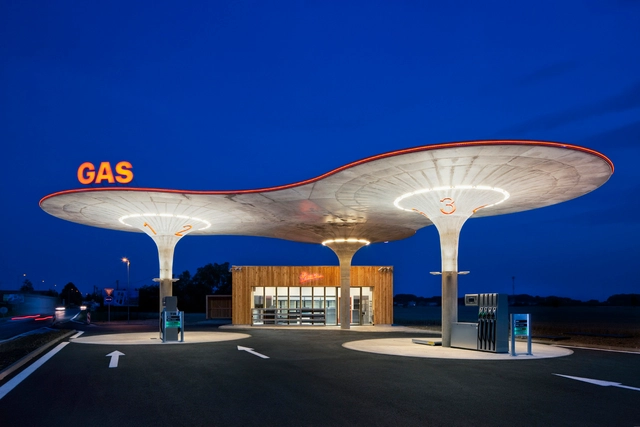
For decades, the gas station has been a staple of both urban and rural landscapes. As the 20th century saw the democratization of automobiles, the gas station became arguably one of the most generic, universal architectural typologies. Today in the USA alone, there are 130,000 gas stations serving 268 million cars. However, as populations move to condensed, urban areas with ever-improving public transit systems, and as the internal combustion engine evolves into electric alternatives, it is time to either redesign or retire the gas station.
It is, once again, the time of year where we look towards the future to define the goals and approaches that we will take for our careers throughout the upcoming year. To help the millions of architects who visit ArchDaily every day from all over the world, we compiled a list of the most popular ideas of 2018, which will continue to be developed and consolidated throughout 2019.
Over 130 million users discovered new references, materials, and tools in 2018 alone, infusing their practice of architecture with the means to improve the quality of life for our cities and built spaces. As users demonstrated certain affinities and/or demonstrated greater interest in particular topics, these emerged as trends.
https://www.archdaily.com/910525/the-trends-that-will-influence-architecture-in-2019Pola Mora
Paris is set to make public transport free for all children under the age of 11. As detailed by Le Parisien, September 2019 will see new concessions rolled out across the Greater Paris region including free metro and bus travel for people under 11, including non-nationals, and free travel for people with disabilities under the age of 20. In addition, high school students between 14 and 18 will receive a 50% concession, as well as a free bike share account on the city’s Vélib scheme.
The scheme is expected to cost €15 million ($17 million) per year, only a fraction of the €10.1 billion ($11.5 billion) annual budget for the region’s public transport system, and is part of a broader strategy to make public transport more affordable for Parisians. In Spring 2018, the city also introduced free annual travel passes for low-to-medium income citizens with disabilities, and people over 65.
https://www.archdaily.com/910324/paris-to-make-public-transport-free-for-childrenNiall Patrick Walsh
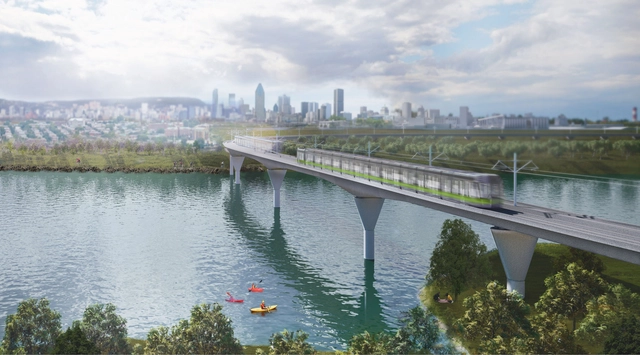
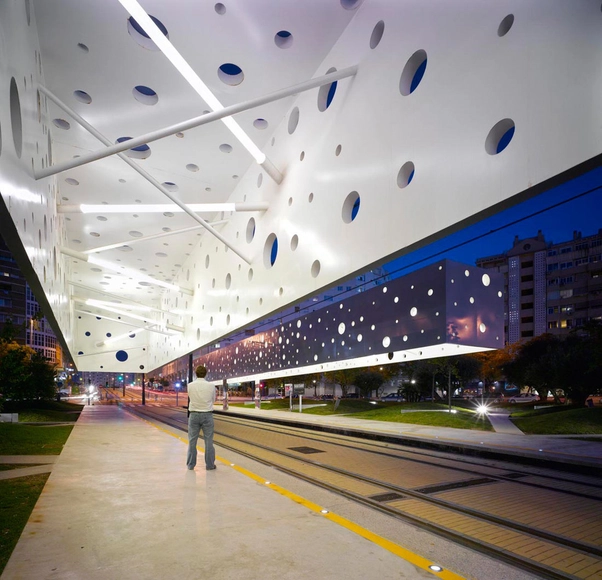
Three award-winning architecture firms, Lemay, Perkins+Will, and Bisson Fortin, will design a new 67-km sustainable system of light-rail train stations for one of North America’s largest public transportation projects, the Réseau Express Métropolitain (REM) in Montreal. This system of train stations will be designed as part of NouvLR General Partnership’s recently won contract and will connect Montréal-Trudeau International Airport with the city’s downtown area, as well as the north and south shores of the region.
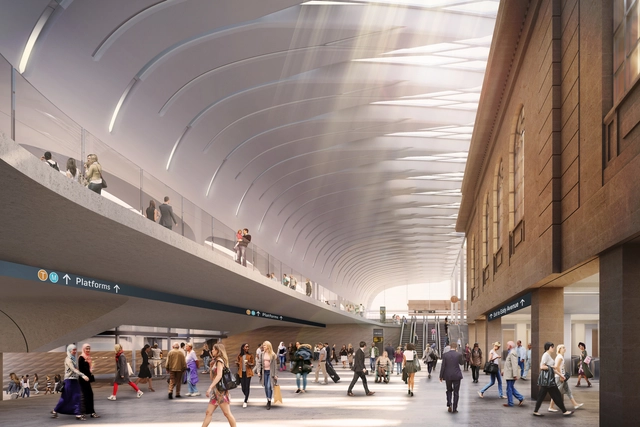
John McAslan + Partners and Woods Bagot are the architectural partners delivering the Sydney Metro upgrade to Central Station, a key component of Australia’s largest public transport project. The multi-disciplinary, international design team have revealed a design that will preserve heritage qualities of the 112-year-old station while adding contemporary and innovative touches to create wider civic and commercial renewal within the space.
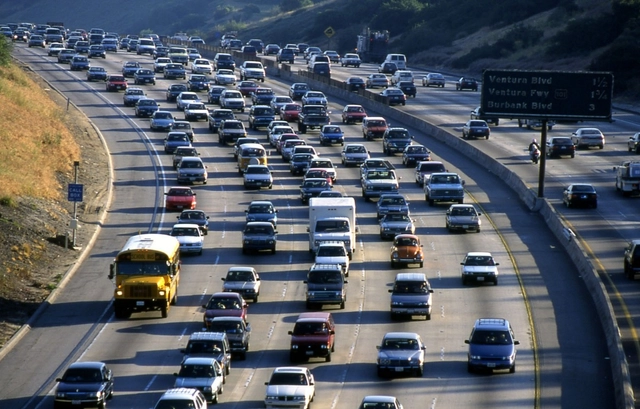
Despite being heralded as services that will reduce congestion on our streets, ride-hailing companies like Uber and Lyft actually are making traffic problems worse, a new study from Boston’s Northeastern University has revealed.
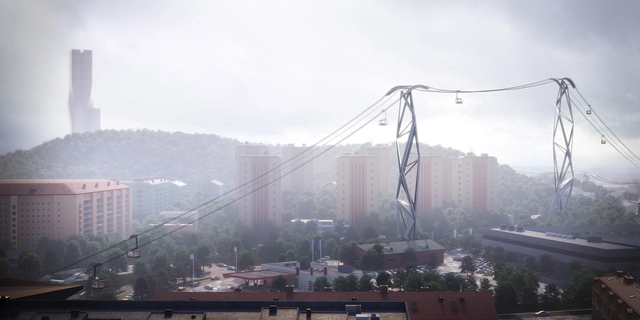
UNStudio has won a competition to design a new, 3-kilometer long cable car in the Swedish city of Gothenburg. The cable car's route, which will connect the old city on the south of the river with three locations to the north, will feature a total of six towers which have been designed around an adaptable, asymmetrical structural system intended to mimic the cranes in the city's shipyards. The expected opening date for the cable car is in 2021, with the new transportation system being inaugurated as part of the celebrations of Gothenburg's 400th anniversary.
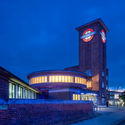
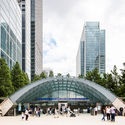
Your obsession with transit-oriented design has been answered with the newest map series by Blue Crow Media. The first in this series, London Underground Architecture and Design Map curates original content by transport design historian, Mark Ovenden paired with photography by Will Scott to depict the London Underground. Mark Ovenden is a specialist in graphic design, cartography, and architecture in public transport with an emphasis on underground rapid transit, making him the natural fit for the design of this map.
American graphic designer Peter Dovak is passionate about urban transportation. He has creates colorful designs that represent transit systems in a much more instructive way so that people can interpret them more easily.
One of his last projects, called 220 Mini Metros, was based on metro and light rail networks from 220 cities of the world.
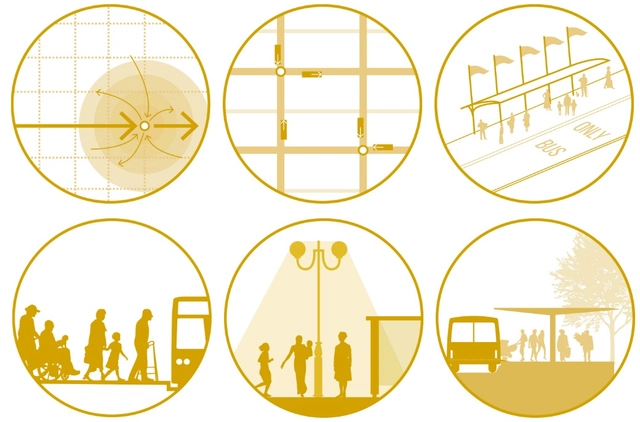
Designing urban spaces to improve mobility for all inhabitants is one of the main objectives of NACTO, the National Association of City Transportation Officials. Founded in 1996, this non-profit organization brings together more than 40 US and Canadian cities to share their advice and design practices seeking to raise the design standards in public policies for public spaces, mobility, and transportation.
They’ve developed a series of guides in which they propose design guidelines to make streets, cycle paths, intersections and other urban spaces more accessible and safe for all road users. One of the most recent is the "Transit Street Design Guide" in which they offer, among other things, 6 recommendations to take into account when designing bus stops. Find out what these recommendations are below.







.jpg?1548884950&format=webp&width=640&height=580)