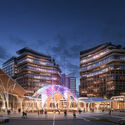
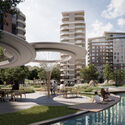
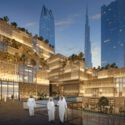
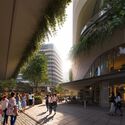
Urban masterplans remain an exploratory ground for unbuilt speculation, offering insight into how cities might recalibrate mobility, ecology, and collective life in response to accelerating environmental and social pressures. In this Unbuilt edition, submitted by the ArchDaily community, the selected projects bring together a range of large-scale proposals that examine urban centers, waterfront districts, infrastructural corridors, and cultural landscapes as spatial frameworks for reconnection and resilience. Rather than treating the masterplan as a rigid blueprint, these projects approach urbanism as an adaptive system shaped by climate, topography, infrastructure, and public space.
Across varied geographies, from Northern European town centers and Mediterranean coastal districts to Central Asian polycentric hubs and Gulf megacities, the proposals explore diverse architectural and urban strategies. They range from park-led civic transformations built over highway tunnels to elevated pedestrian networks above active transport systems, mixed-use blocks structured by historic planning logics, marina developments integrating environmental stewardship, and research-driven models for equitable landscape urbanization.
Architecture is often evaluated through finished forms, yet some practices operate in a different register, one where design unfolds through relationships, time, and use rather than through a single outcome. For CatalyticAction, participation is not a parallel social activity, but the means through which spaces are conceived, constructed, and sustained over time.
Based between Beirut and London, the practice has worked across the Middle East and Europe, developing public spaces, schools, playgrounds, and everyday urban infrastructures through long-term collaboration with local communities. Grounded in participatory research and collective decision-making, this approach was recognized through ArchDaily's 2025 Next Practices Awards, highlighting a mode of practice where architecture is understood as a shared, evolving process rather than a fixed object. In this context, architectural value is measured through continuity, use, and collective ownership, rather than through form alone.
Concéntrico is an urban innovation laboratory that invites reflection on the city through architecture and design. Since 2015, it has carried out more than 180 interventions in Logroño, Spain. The new 2025/2026 season of the festival expands on this experimental spirit with three international calls for proposals that bring the ideas in the book Concéntrico: Laboratorio de Innovación Urbana (Park Books, 2025) into action. Through these calls, the organization seeks to explore further three lines of research, the ephemeral, the ecological, and the symbolic, to imagine different ways of inhabiting the city. The winning projects from this edition's calls for entries will be developed, built as urban installations, and presented in the exhibition during the festival, taking place in Logroño from June 18–23, 2026.
Cities around the world share a common goal: to become healthier and greener, supported by civic infrastructure that restores ecosystems and strengthens public life. The question is how to reach this. Global climate targets, local building codes, and municipal standards increasingly guide designers and planners toward better choices. Still, many cities struggle to translate these frameworks into everyday, street-level comfort and long-term ecological protection. What happens if the city is no longer treated as a traditional city, but as a national park?
National parks operate through systems of protection that treat land as a network of ecological relationships rather than a collection of isolated sites. They establish a shared baseline for what must be preserved, maintained, and made accessible over time. When this logic is applied to the urban environment, success can inspire pride and a sense of shared responsibility among designers, policymakers, and residents, fostering a collective commitment to health, habitat, and civic infrastructure.
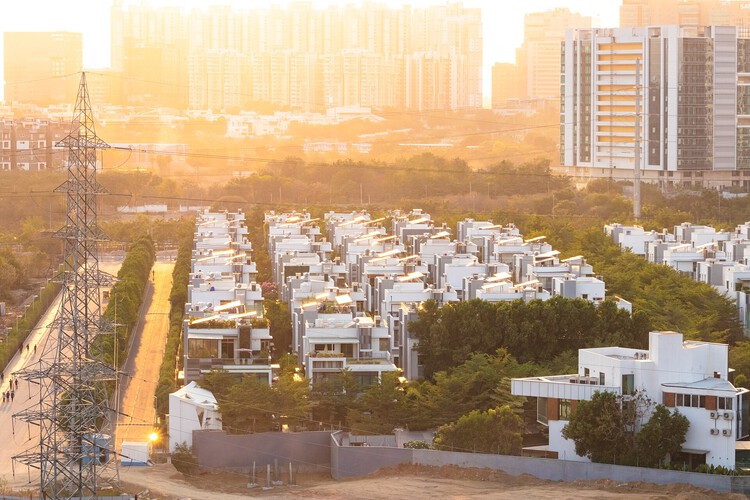
Sunset panorama of a large residential gated community (Aparna’s Elixir) viewed from Khajaguda hills, India. Photo by iMahesh. License Creative Commons Attribution-Share Alike 4.0 International
You learn how to behave long before you arrive home. At the gate, you slow down and wait. You are watched, then waved through. A badge is checked, a barrier lifts, a camera blinks. Nothing dramatic happens, and that is precisely the point. The most consequential work of gated communities is not done by their walls, but by the choreography of entry that quietly teaches residents what to expect, whom to trust, and where they belong.
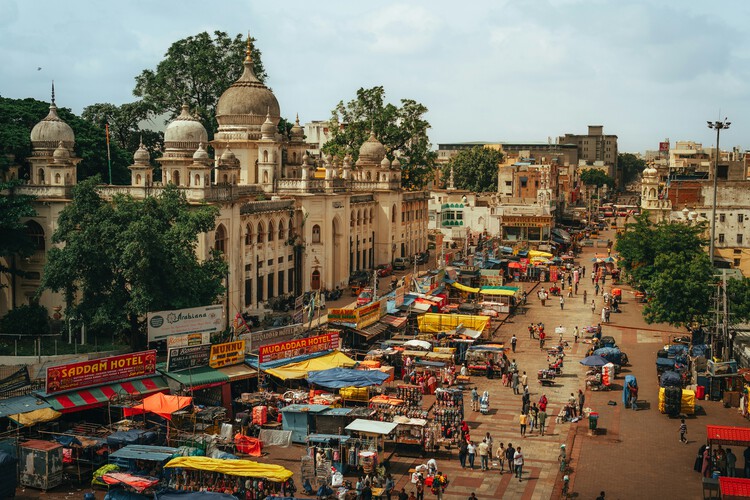
Bazaar in Hyderabad, India. Photo by Kanishq Kancharla on Unsplash
Architecture is most often represented as a stable object: a building captured at a moment of visual clarity, isolated from surrounding contingencies. Plans, sections, and photographs promise legibility by suspending time. Yet many of the world's most enduring public environments resist this mode of representation altogether. They are not designed to be read instantaneously, nor do they reveal their logic through form alone. Their spatial intelligence emerges gradually, through repetition, occupation, and duration.
The bazaar belongs firmly within this category. It cannot be understood through a single drawing or a finished elevation. Its organization is not fixed but rehearsed. What sustains it is not purely architectural composition, but shared timing, collective memory, and long-standing patterns of use. Togetherness in the bazaar does not arise from formal design decisions; it is produced through repeated encounters, negotiated proximities, and social familiarity accumulated over time.
Reflecting on the modern city, Walter Benjamin described the flâneur, a figure who walks without a defined destination, attentive to details, chance encounters, and the narratives that emerge from urban space. This way of being in the city, shaped by observation and openness to the unexpected, has long been in tension with the rationalist and functionalist ideals that came to guide urban planning throughout the twentieth century. Streets designed primarily for efficiency and flow rarely leave room for detours, pauses, or the coexistence of different rhythms of life.
Jane Jacobs was also one of the voices that challenged this predominantly rationalist logic, arguing that truly vibrant streets are those capable of sustaining the diversity of everyday life, its informal exchanges, and the forms of care and natural surveillance that emerge from them. What these authors share is a fundamental insight: streets are not merely infrastructures for circulation, but social ecosystems, shaped by the relationships, uses, and encounters that take place within them.
This week's news compilation brings together current discussions around public and collective space, cultural infrastructure, and long-term urban transformation across diverse geographic contexts. From shared management models redefining public space ownership in cities such as Paris and New York, to large-scale event-driven initiatives linked to Milano Cortina 2026 and the World Urban Forum in Baku, the selected projects and initiatives highlight how governance, culture, and infrastructure intersect in contemporary practice. These themes are further developed through a mix of strategic planning processes, including international test planning efforts in Northern Lviv, and built projects spanning education, culture, and temporary architecture, from a new dental teaching facility in Blantyre, Malawi, to restored and newly opened cultural venues in the United States and Taiwan, and adaptive reuse interventions showcased at the ChicagoArchitecture Biennial. The international examples outline an architectural landscape shaped by reuse, public engagement, and the evolving role of design in responding to social, cultural, and institutional frameworks.
Courtesy of [applied] Foreign Affairs, Institute of Architecture, University of Applied Arts Vienna
Long before architecture took the form of walls, roofs, or cities, it gathered people around fire. The simple fire pit was one of humanity's earliest spatial devices: a place for warmth, food, storytelling, and ritual. Around it, space took shape through proximity rather than enclosure, through shared presence rather than prescribed use. The fire organized bodies in a circle, fostered alliances, and turned survival into collective life. Today, this ancestral logic persists: architecture has the potential of bringing people together not by commanding how they gather, but by creating the conditions that make togetherness possible.
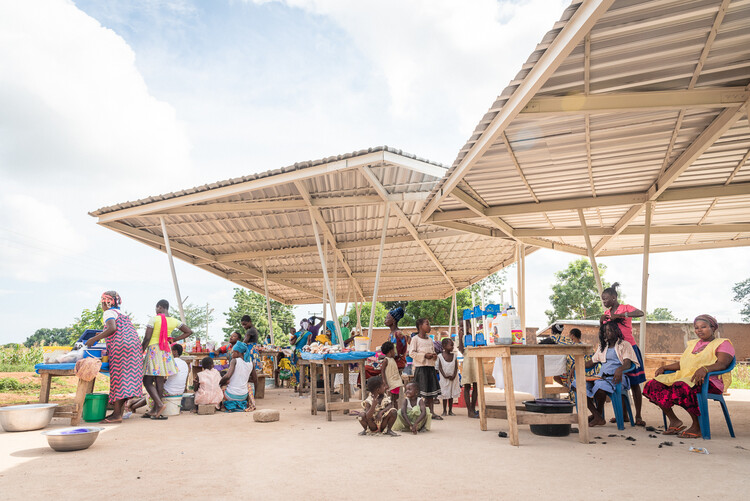
This month, ArchDaily explores Coming Together and the Making of Place, a topic that examines architecture as a framework for inclusion, care, and belonging. The theme aligns with the first edition of the ArchDaily Student Project Awards, which approach care from a collective perspective by focusing on spaces that nurture better ways of living together. Looking beyond iconic gathering spaces, the coverage considers everyday environments, from food markets, communal tables, and neighborhood plazas to third spaces, domestic settings, and digital or hybrid environments of remote togetherness. Rather than treating togetherness as a fixed program, it asks how spatial design can support openness, diversity, and collective life without enforcing uniform ways of gathering.
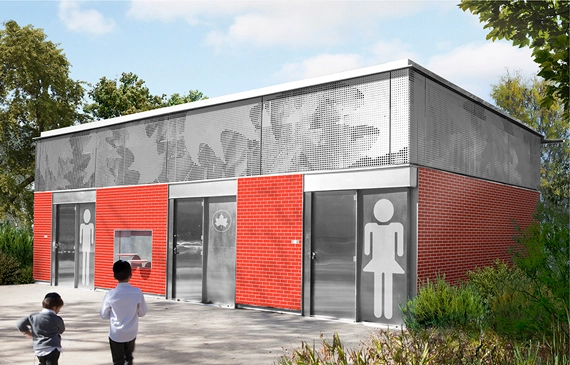
Fairview Park Comfort Station, Staten Island. Image via NYC Parks, Design by Sage and Coombe Architects
In the realm of design, we often talk about ensuring that there are enough public spaces to serve a community. We discuss the need for public parks so that people have access to outdoor spaces. We think about public transportation, and how our dwindling reliance on cars will help to ensure that we have a healthier planet. But what about the public spaces we lack? What happens when we don’t have enough public restrooms?
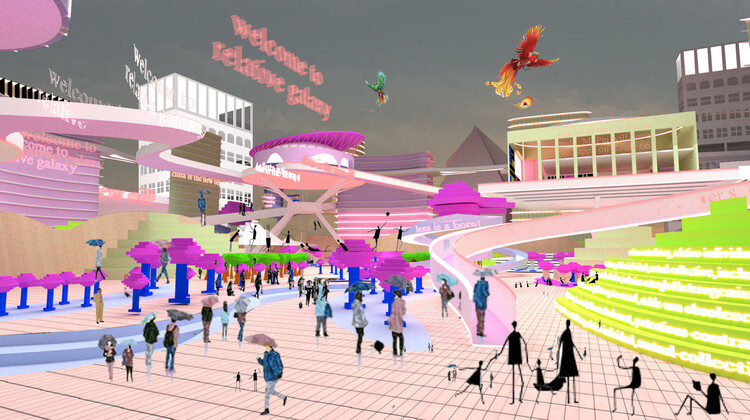
The metaverse promises to revolutionize our way of life. By integrating immersive technologies like virtual and augmented reality (VR and AR), it hopes to add another layer to the way we experience everyday life. It is suggested that the metaverse will create virtual spaces where people can meet and share experiences regardless of geographical constraints. The possibilities seem endless: exchanging knowledge, encouraging professional collaboration, developing and democratizing art, education, culture, and even enabling political engagement. Social interactions are at the core of the idea of a metaverse. This raises the question: how can the new, virtual spaces acquire the properties of public spaces?
In the book Design of Childhood, architect and researcher Alexandra Lange states that children were considered nonpersons throughout almost the entire history of ancient and modern architecture, being excluded from the process of creating urban and interior spaces. This process has caused and is still causing several problems when children reach adulthood, since these children grew up being constantly watched by fear of movement and the eyes of adults.
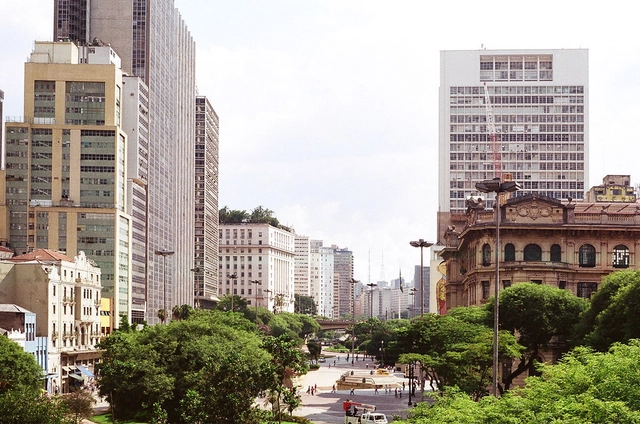
Recently, the city of São Paulo witnessed two events involving spaces that were previously public and are now under private concession. The already renowned Virada Cultural Paulistana took place again after the initial years of the covid-19 pandemic, and had as one of its stages the new Vale do Anhangabaú. In addition, the Pacaembu complex - which recently ceased to be a public facility, became a concession and has been undergoing a series of renovations and transformations - hosted the ArPa Fair, an event that brought together a series of important galleries for exhibition, purchase and sale of artworks. Despite the different nature of these events, their processes arouse reflections upon the privatization model we are experiencing in cities today.
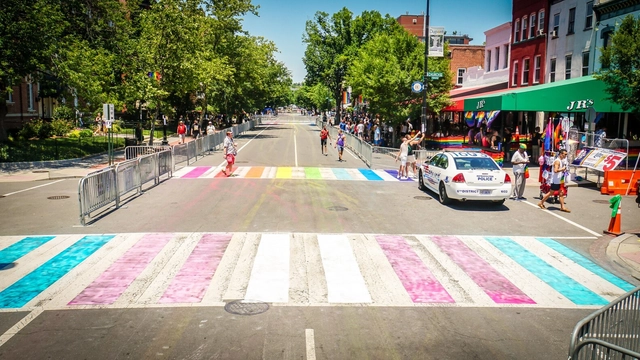
#DCRainbowCrosswalks Washington, DC USA. Flickr by Ted Eytan Attribution-ShareAlike 2.0 Generic (CC BY-SA 2.0)
In the 1970s, in Berkeley, California, a group of disability rights activists called the Rolling Quads began dismantling curbs and improvising sidewalk ramps, demanding access for wheelchair users. But what people did not expect was that wheelchair users would not be the only ones to benefit from the intervention. Soon, pedestrians with baby strollers, heavy suitcases or simply with reduced mobility started using the ramps. Likewise, a gender-inclusive city works better for everyone. A city where all gender minorities of different ages and abilities can move around easily and safely, participate fully in the workforce and public life, live healthy, sociable and active lives, is a city that improves everyone's lives.
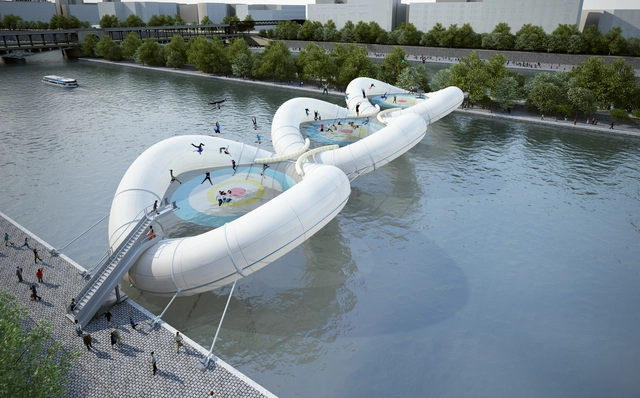
Trampoline Bridge / AZC Architects. Image Courtesy of AZC Architects
Humane cities center around the relationships between people and places. Communities thrive on shared resources, public spaces, and a collective vision for their locality. To nurture happy and healthy cities, designers and the public apply methods of placemaking to the urban setting. Placemaking—the creation of meaningful places—strongly relies on community-based participation to effectively produce magnetic public spaces.
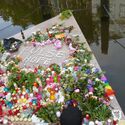
While walking through the city, have you ever felt afraid to be yourself? As strange as the question may sound to some, it is a reality for most LGBTQIA+ people, who at some point have been victims of hostility when they were noticed performing outside the "heteronormative standards" of public spaces. If violence comes from social layers that go beyond the designed space, this does not exempt the importance of thinking about projects that can integrate the physical sphere and insert a symbolic or representational factor to include and educate its citizens. This is the case of Homomonument, which for more than three decades, has become a platform for queer celebration and protest in the heart of Amsterdam.
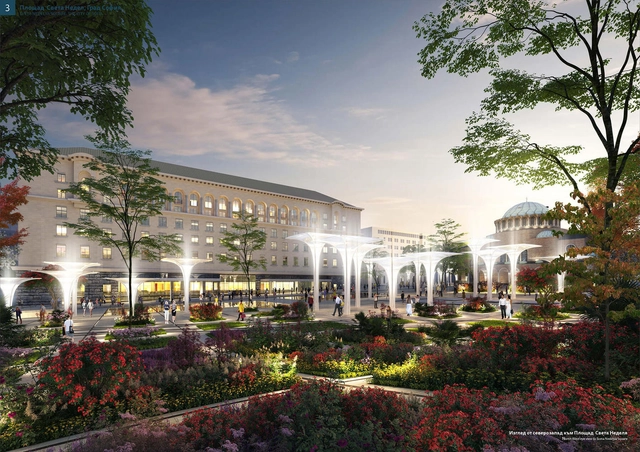
The Sveta Nedelya Square Competition in Sofia, Bulgaria unveiled that the proposal presented by Studio Fuksas was selected as the winning project. 6 other international teams reached the final stage of the contest, including One Works, Maofficina, Cracknell, Studio Wilmotte, Paola Vigano, and AI Architects LLD, CLAB Architettura, Yuri Sheredega, Dina Dridze, Evgeniy Shirinyan.
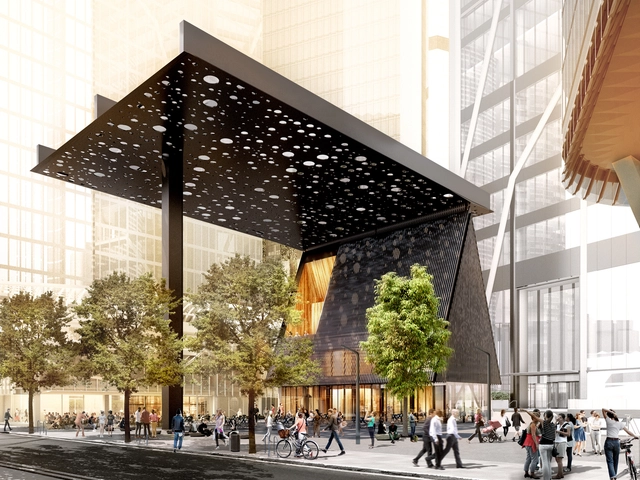
The City of Sydney has chosen Adjaye Associates and contemporary Aboriginal artist Daniel Boyd to design a new public square, plaza building, and public artwork. The project attempts to uncover the lost history of the site, reconcile cultures and define identities.