1. ArchDaily
  2. Public Pool

Public Pool: The Latest Architecture and News

Public Pools as Public Spaces: The Role of Swimming and Bathing in Cities

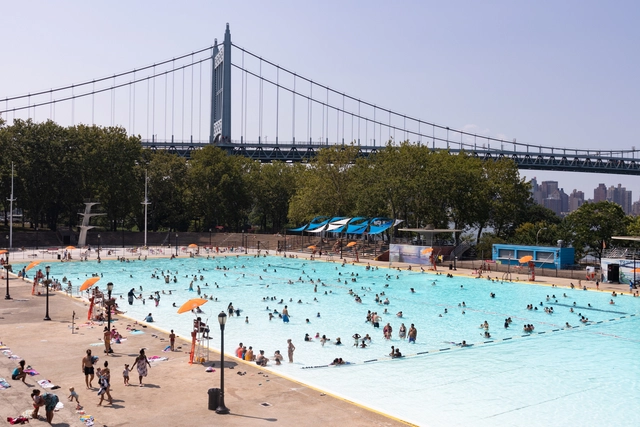
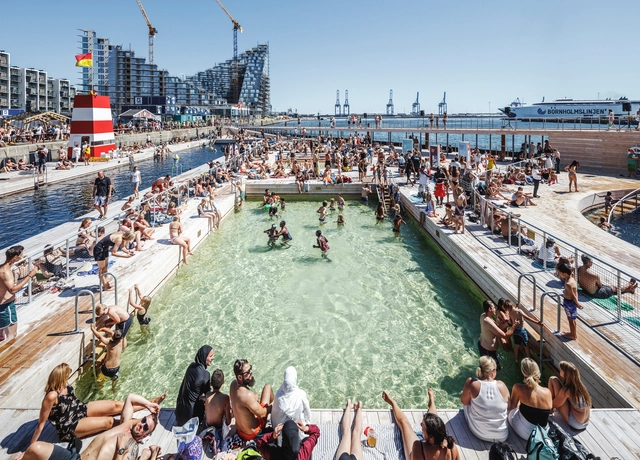
When one thinks of public spaces, the image of a pool rarely comes to mind. Public spaces are the center of civic life, places where most interactions, activities, and behaviors follow strict social and cultural norms to ensure the safety and comfort of all users. In contrast, swimming and bathing represent something more intimate and primordial, a sensorial experience distinct from any other. In addition to the health benefits, the act of floating in space creates a break from everyday life and its constraints.

As social spaces, public baths, and pools offer an even more unusual experience. Here, regular conduct rules and norms no longer apply. Social nudity becomes the new norm, and, as people strip off their clothes, they also lose their status markers, transforming the pool into an egalitarian oasis. Across history, these often-discredited spaces offered a heightened social experience, fostering connections and bringing a new element to dense urban environments. As a typology present since antiquity, public baths and pools have also been a disputed space, as a manifestation of difficult topics such as gender and racial segregation, gentrification, and surveillance in contrast to the freedom they promise.
Public Pools as Public Spaces: The Role of Swimming and Bathing in Cities - Image 1 of 4Public Pools as Public Spaces: The Role of Swimming and Bathing in Cities - Image 2 of 4Public Pools as Public Spaces: The Role of Swimming and Bathing in Cities - Image 3 of 4Public Pools as Public Spaces: The Role of Swimming and Bathing in Cities - Image 4 of 4Public Pools as Public Spaces: The Role of Swimming and Bathing in Cities - More Images+ 13

NYC’s First River-Based, Water-Filtering Pool Takes Shape at Pier 35

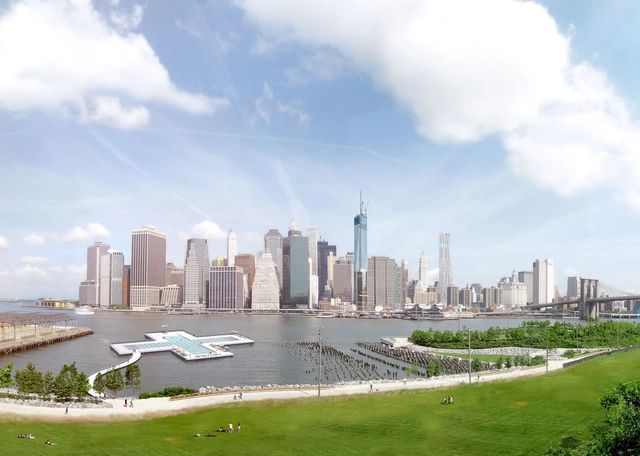
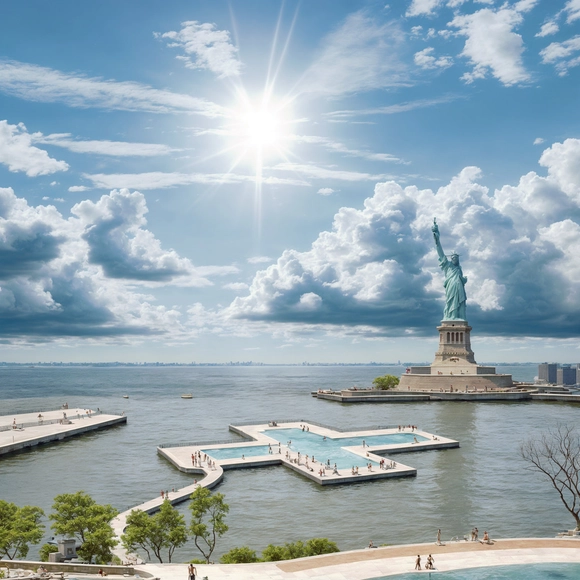
Friends of + POOL has announced the next steps in the realization of New York City's first water-filtering floating swimming pool, to be installed at Pier 35, north of the Manhattan and Brooklyn Bridges. The project seeks to provide safe public access to swimming in the city's rivers by integrating a custom-designed filtration system into a floating pool structure. Installation at Pier 35 is scheduled for May 2026, when the pool will enter its final phase of evaluation. Public access will be contingent on the successful completion of large-scale filtration testing and the full build-out of the facility for safe public use.
NYC’s First River-Based, Water-Filtering Pool Takes Shape at Pier 35 - Image 1 of 4NYC’s First River-Based, Water-Filtering Pool Takes Shape at Pier 35 - Image 2 of 4NYC’s First River-Based, Water-Filtering Pool Takes Shape at Pier 35 - Image 3 of 4NYC’s First River-Based, Water-Filtering Pool Takes Shape at Pier 35 - Image 4 of 4NYC’s First River-Based, Water-Filtering Pool Takes Shape at Pier 35 - More Images+ 4

MVRDV and Zecc Architecten to Transform Vacant Church into Public Swimming Pool in Heerlen, the Netherlands

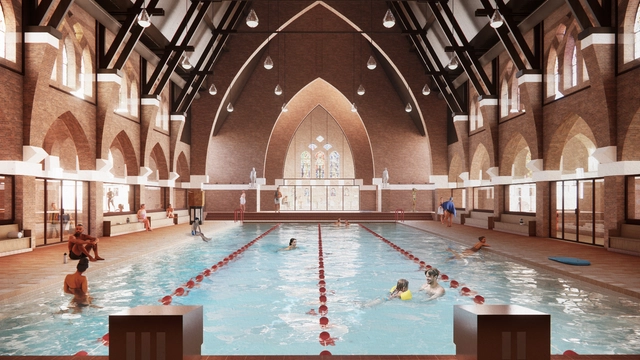
MVRDV and Zecc Architecten have won the competition to transform the St. Francis of Assisi Church in Heerlen into a public swimming pool. Originally built over 100 years ago, the church stopped hosting services in 2023, presenting the municipality with the opportunity to repurpose the building for community use. Nicknamed Holy Water, the adaptive reuse project is meant to give this listed national monument, with its recognizable silhouette, a new social function while preserving its historic elements. The design was created through a collaboration between MVRDV, Zecc Architecten, IMd Raadgevende Ingenieurs, Nelissen Ingenieursbureau, and construction economics consultancy SkaaL, and is expected to be completed at the end of 2027.
MVRDV and Zecc Architecten to Transform Vacant Church into Public Swimming Pool in Heerlen, the Netherlands - Image 1 of 4MVRDV and Zecc Architecten to Transform Vacant Church into Public Swimming Pool in Heerlen, the Netherlands - Image 2 of 4MVRDV and Zecc Architecten to Transform Vacant Church into Public Swimming Pool in Heerlen, the Netherlands - Image 3 of 4MVRDV and Zecc Architecten to Transform Vacant Church into Public Swimming Pool in Heerlen, the Netherlands - Image 4 of 4MVRDV and Zecc Architecten to Transform Vacant Church into Public Swimming Pool in Heerlen, the Netherlands - More Images+ 12

Here's How to Level-up Indoor Pools with Daylight Solutions

 | Sponsored Content

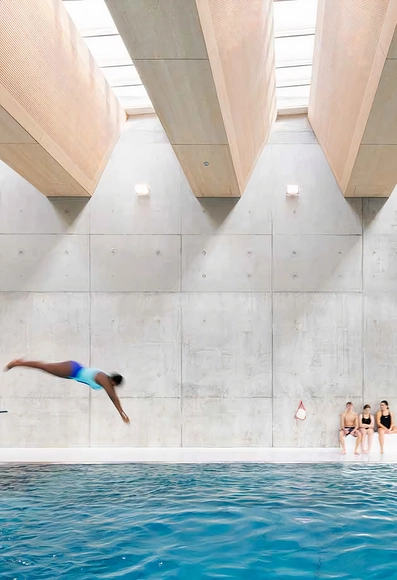
Water and daylight? At first glance, they seem like distant concepts: one is tangible, while the other, —though intangible—, manifests itself through its effects and perceptible qualities. Both are powerful and recurring resources in architectural design, often employed only for compositional purposes. However, in the context of indoor pools, this combination is frequently functionally oriented, prioritizing 'protection' from external stimuli. This one-dimensional approach can restrict the dynamic interaction between water and natural light, leading to aesthetic, functional, and operational challenges.

First-Ever +POOL to Open in New York City This Summer, with Plans to Expand Swimming Access across the State

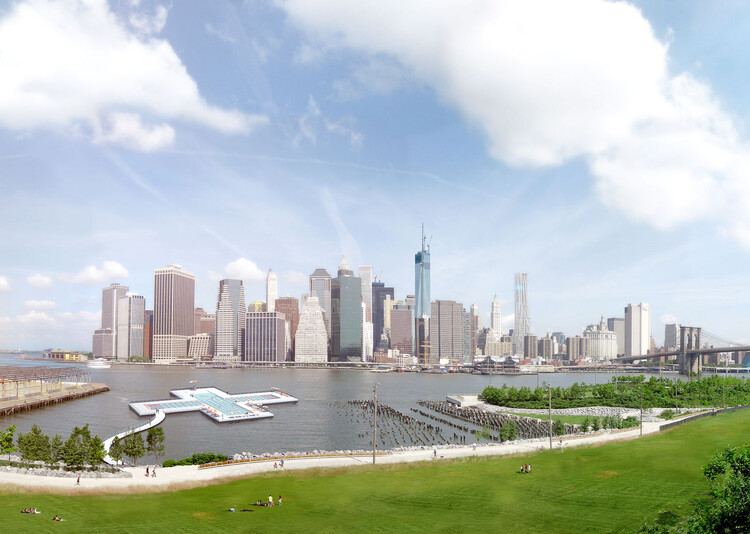
New York Governor Hochul has announced a partnership with the nonprofit Friends of + POOL to open the first urban river-sourced swimming facility in the United States. Utilizing + POOL’s design and technology, the 2,000-square-foot plus-shaped swimming pool is set to open in New York City’s East River in the summer of 2024. In 2010, four young designers, Archie Lee Coates IV, Dong-Ping Wong, Jeffrey Franklin, and Oana Stanescu, established + POOL with the goal of providing New Yorkers with access to free and safe river swimming. Now the state promised to invest $16 million to pilot and scale the system, hoping to expand it across the state of New York.

First-Ever +POOL to Open in New York City This Summer, with Plans to Expand Swimming Access across the State - Image 1 of 4First-Ever +POOL to Open in New York City This Summer, with Plans to Expand Swimming Access across the State - Image 2 of 4First-Ever +POOL to Open in New York City This Summer, with Plans to Expand Swimming Access across the State - Image 3 of 4First-Ever +POOL to Open in New York City This Summer, with Plans to Expand Swimming Access across the State - Image 4 of 4First-Ever +POOL to Open in New York City This Summer, with Plans to Expand Swimming Access across the State - More Images+ 8

What is a Waffle Ceiling? 47 Interiors That Live Life Under the Grid

Subscriber Access | 

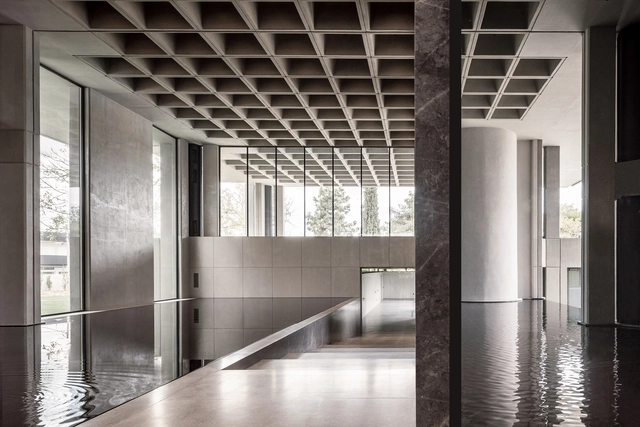
Hidden in plain sight, ceilings are often the final surface interior designers and architects think about, but the expansive plane of unobstructed plaster or concrete offers mar more creative freedom than we realize. Modern design rules demand that the ceiling is kept clean. Not with a telescopic mop attachment, but by stripping off the popcorn spray, wood-chip wallpaper, or plaster patterning that haunt my own memories of ceilings-past.

While many clients greet this contemporary need for clean lines with acquiescence, choosing smooth, skimmed plaster finishes with unobtrusive yet forgetful recessed spots, other bolder clients recognize the ceiling’s potential for the creative outlet it is.

What is a Waffle Ceiling? 47 Interiors That Live Life Under the Grid - Image 1 of 4What is a Waffle Ceiling? 47 Interiors That Live Life Under the Grid - Image 2 of 4What is a Waffle Ceiling? 47 Interiors That Live Life Under the Grid - Image 3 of 4What is a Waffle Ceiling? 47 Interiors That Live Life Under the Grid - Image 4 of 4What is a Waffle Ceiling? 47 Interiors That Live Life Under the Grid - More Images+ 91

A Tropical Resort in Indonesia and a Countryside Villa in Birmingham: 9 Unbuilt Interiors Submitted by the ArchDaily Community

Subscriber Access | 

Architects play an important role in creating healthy, functional and aesthetically pleasing environments. Interior design represents a natural continuation of the same prerogative, and its importance has been accentuated in recent years, from the lockdown forcing many people to remain indoors for extended periods of time, to the rise of remote work. The task of the interior designer is not decorating spaces, but planning for an effective use of space, understanding the needs of the user and highlighting the intrinsic qualities of a space. Acoustics, lighting, material properties and proportions all play a role in achieving a coherent and enjoyable interior space.

This week’s curated selection of Best Unbuilt Architecture highlights interior design projects submitted by the ArchDaily community. From a pastel-colored library in Turkey to a renovated symphony hall in San Diego, US, this selection of unbuilt projects showcases how architects design interior spaces by integrating textures, materials, light, and color in well-proportioned spaces. The article includes projects from Turkey, US, Switzerland, Indonesia, UK, and Denmark.

A Tropical Resort in Indonesia and a Countryside Villa in Birmingham: 9 Unbuilt Interiors Submitted by the ArchDaily Community - Image 9 of 4A Tropical Resort in Indonesia and a Countryside Villa in Birmingham: 9 Unbuilt Interiors Submitted by the ArchDaily Community - Image 30 of 4A Tropical Resort in Indonesia and a Countryside Villa in Birmingham: 9 Unbuilt Interiors Submitted by the ArchDaily Community - Image 45 of 4A Tropical Resort in Indonesia and a Countryside Villa in Birmingham: 9 Unbuilt Interiors Submitted by the ArchDaily Community - Image 6 of 4A Tropical Resort in Indonesia and a Countryside Villa in Birmingham: 9 Unbuilt Interiors Submitted by the ArchDaily Community - More Images+ 64

Under the Surface: The Complicated History of Public Swimming Pools

Subscriber Access | 

The end of the summer season is usually marked by crowds rushing to public pools to enjoy their final days splashing around the water. Public pools are much more complex than the fenced-in, chlorinated, and noisy bodies of water that they may seem to be. A delicate history and many socio-economic influences lie beneath the surface and dictate who gets to go for a swim. What happens when pools shift towards becoming private property and a sort of status symbol, and when these public spaces aren’t intended for everyone?

How Swimming Pools Evolved into a Modern Status Symbol

Subscriber Access | 

Few architectural typologies have the power to invoke a sense of being dual-natured quite as the modernist swimming pool can. The design of pools themselves implies that there are moments of activity both above and below the water. Above, and in the more obvious and visible sense, pools act as a space for leisure and athletic training. But underneath the surface, swimming pools have a long-standing history of acting as symbols of surveillance, death, and social conditions associated with an economic class.

Brooks + Scarpa Reveals Proposal for Miami’s Aquatic Center and Park

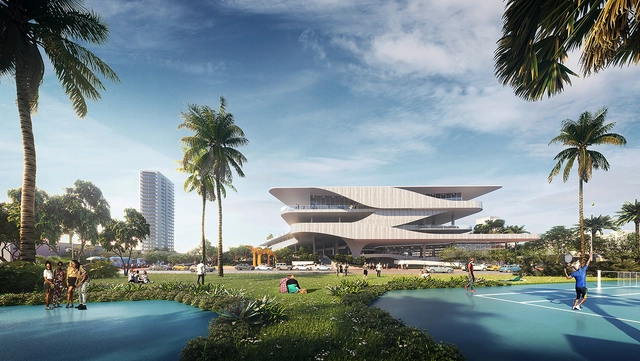
Brooks + Scarpa along with PCL and BEA, design/build team is one of three finalists selected for a new community mixed-use complex. Located in the heart of Miami Beach, just one block west of the beach, the structure that replaces a municipal surface parking lot, will include pools, libraries, retail, a community center, and a 3-acre park. Designed as a resiliency hub, the building can accommodate future residential and office use when less parking is needed.

Brooks + Scarpa Reveals Proposal for Miami’s Aquatic Center and Park - Image 1 of 4Brooks + Scarpa Reveals Proposal for Miami’s Aquatic Center and Park - Image 2 of 4Brooks + Scarpa Reveals Proposal for Miami’s Aquatic Center and Park - Image 3 of 4Brooks + Scarpa Reveals Proposal for Miami’s Aquatic Center and Park - Image 4 of 4Brooks + Scarpa Reveals Proposal for Miami’s Aquatic Center and Park - More Images+ 20