1. ArchDaily
  2. postcolonial

postcolonial: The Latest Architecture and News

Tropical Modernism Beyond Aesthetics: The Politics of Shade and Air

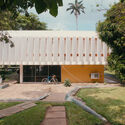
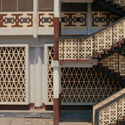
The image is familiar, a façade layered with brise-soleil, light softened into a patterned shadow, interiors kept cool without machines. It appears as intelligence made visible, architecture that understands the sun. This image is rarely examined closely. The same devices that temper heat also organize access, distribute comfort, and depend on particular forms of labor. What looks like a climatic response is also a decision about who gets relief from heat, and how. Tropical modernism, often reduced to a visual language of shade and porosity, emerges instead as a set of situated practices where climate, labor, and power are negotiated differently across contexts.

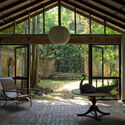
At the scale of the element, tropical modernism begins as a technical problem. In hot climates, solar radiation is not incidental but constant, requiring buildings to mediate light, heat, and air before they reach the interior. Architects like Maxwell Fry and Jane Drew approached this with a level of precision that resists any reading of these elements as decorative. Shading devices are calibrated according to solar angles, orientation, and seasonal variation. Brise-soleil are dimensioned to block high-angle sun while admitting diffuse light; overhangs extend just enough to prevent direct gain at peak hours; openings are aligned to encourage cross-ventilation. Mid-century research further tested these strategies, measuring temperature reductions and airflow improvements. In this sense, the language of tropical modernism is not symbolic. It is performative: each projection, void, and screen is part of an environmental system.

Tropical Modernism Beyond Aesthetics: The Politics of Shade and Air  - Image 1 of 4Tropical Modernism Beyond Aesthetics: The Politics of Shade and Air  - Image 2 of 4Tropical Modernism Beyond Aesthetics: The Politics of Shade and Air  - Image 3 of 4Tropical Modernism Beyond Aesthetics: The Politics of Shade and Air  - Image 4 of 4Tropical Modernism Beyond Aesthetics: The Politics of Shade and Air  - More Images+ 7

Dakar, A City in Constant Reinvention

Subscriber Access | 

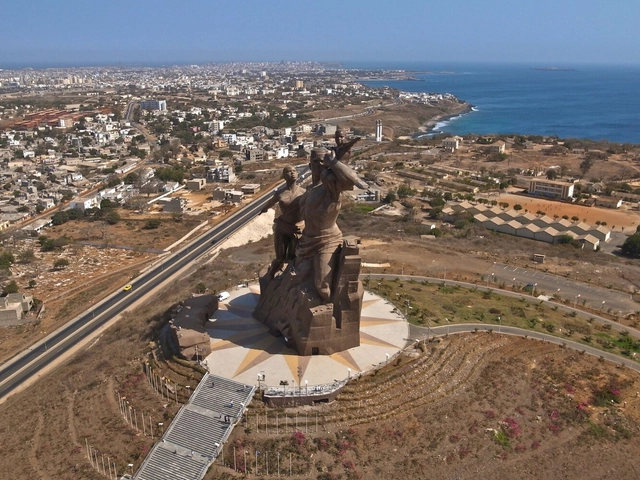
Dakar is a city of constant development. From colonial times, and on, the capital of Senegal has seen a lot of shifts in its societal definition which has, in turn, affected its architectural and urban fabric. Ever since the French mandate which somewhat forced a shift of local living traditions into a more 'European' lifestyle, the wheels of change have been set in motion. Afterward, a notable post-colonial attempt at re-defining Dakar was inevitable. It came about in many ways, still seen today, and it built a city of mixed architectural languages that defies most visitors' expectations.

Though the renowned African mid-century modernism was certainly present in the years after Senegal's independence in 1960, this was mostly due to its popularity with practicing architects in the region, not its relevance for the capital's rebuilding efforts. The modernist approach, which was mainly seen in the public, institutional, and cultural buildings, and which persists today in a more undefined contemporary style, was always aimed at showcasing Dakar to the world. It did not, however, reflect the reality of the city's development nor the way its dwellers live.

In an effort to refocus on Dakar, some of our more recent ArchDaily coverage has highlighted the many development and design efforts that look to provide a better means of living to inhabitants.

Victoria and Albert Museum Investigates Tropical Modernism Movements in West Africa, Modern India, and Ghana

The Victoria & Albert Museum is set to present an expansive exhibition focused on Tropical Modernism, an architectural movement that emerged in the late 1940s. British architects Jane Drew and Maxwell Fry were instrumental in developing this approach, combining modernism’s functional goals with local climate adaptations in warm and humid weather. This movement, which embodies Britain's unique contribution to international modernism, evolved against a backdrop of anti-colonial resistance, blending colonial architectural principles with local needs.

Victoria and Albert Museum Investigates Tropical Modernism Movements in West Africa, Modern India, and Ghana - Image 1 of 4Victoria and Albert Museum Investigates Tropical Modernism Movements in West Africa, Modern India, and Ghana - Image 2 of 4Victoria and Albert Museum Investigates Tropical Modernism Movements in West Africa, Modern India, and Ghana - Image 3 of 4Victoria and Albert Museum Investigates Tropical Modernism Movements in West Africa, Modern India, and Ghana - Image 4 of 4Victoria and Albert Museum Investigates Tropical Modernism Movements in West Africa, Modern India, and Ghana - More Images+ 17

Care Beyond Biopolitics

Subscriber Access | 

What would it mean to design buildings that exceed the economic accountings of liberal biopolitics, that instead offer an entirely different rationale for supporting health? In the years that Michel Foucault conceptualized the term biopolitics, he was part of a constellation of researchers and architects who developed care praxes that defined the value of life and its maintenance through a desire-based calculus. The welfare state institutions of architect Nicole Sonolet in particular—mental hospitals, public housing complexes, and new village typologies built mainly in postwar France and postcolonial Algeria from the 1950s to the 1980s—were designed not only to support but to center the needs of people often excluded from design processes. Sonolet’s mental health centers for residents of Paris’s 13th arrondissement, in particular, were key projects for discovering a design practice tied to the provision of care for its own sake.

Care Beyond Biopolitics - Image 1 of 4Care Beyond Biopolitics - Image 2 of 4Care Beyond Biopolitics - Image 3 of 4Care Beyond Biopolitics - Image 4 of 4Care Beyond Biopolitics - More Images+ 3