1. ArchDaily
  2. post-war building

post-war building: The Latest Architecture and News

Upper Lawn: A Manifestation of Alison and Peter Smithson's Architectural Vision

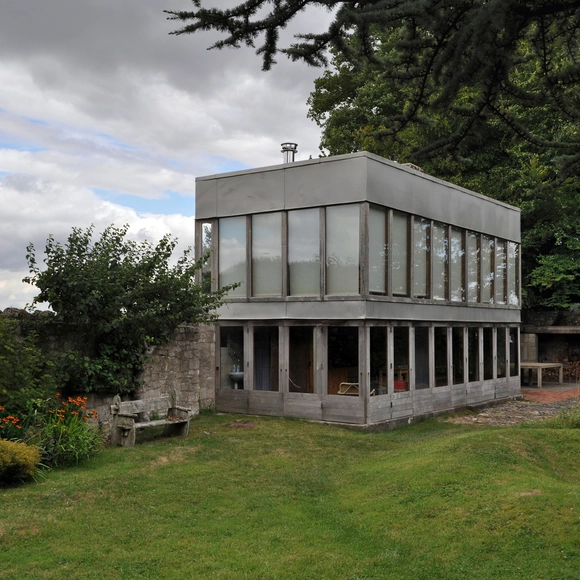
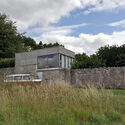
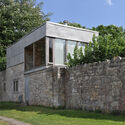
Nestled near the ruins of Fonthill Abbey in the English countryside, Upper Lawn Pavilion — also known as the Solar Pavilion — is a modest yet profound architectural experiment by Alison and Peter Smithson. Built between 1959 and 1962 as a weekend retreat and laboratory for ideas, the pavilion embodies their ethos of economy, material honesty, and respect for context, reflecting the pioneering spirit of New Brutalism.

Upper Lawn's thoughtful interplay between the new and the existing is particularly compelling. Built on the remains of an 18th-century English farmhouse, the pavilion repurposes thick masonry walls from the original structure, incorporating elements such as the well, trees, and lawn into its design. Using prefabricated materials like timber, glass, and aluminum, the Smithsons constructed a light-filled space that harmonizes with its surroundings, embodying their principle of "as found architecture" — a concept rooted in honoring and adapting to preexisting conditions rather than imposing on them.

Upper Lawn: A Manifestation of Alison and Peter Smithson's Architectural Vision - Image 1 of 4Upper Lawn: A Manifestation of Alison and Peter Smithson's Architectural Vision - Image 2 of 4Upper Lawn: A Manifestation of Alison and Peter Smithson's Architectural Vision - Image 3 of 4Upper Lawn: A Manifestation of Alison and Peter Smithson's Architectural Vision - Image 4 of 4Upper Lawn: A Manifestation of Alison and Peter Smithson's Architectural Vision - More Images+ 11

A Woman Architect in the Mad Men Era: The Story of Natalie De Blois

On January 21, 1958, three women sat down as contestants for an episode of the popular television show "To Tell the Truth", a quiz game in which a panel tries to guess which of the three contestants is who they say they are by asking them a series of questions. The announcer reveals the true identity of the person is a registered architect, has so far designed a Hilton hotel, and is a married mother of four. Each of the women, dressed formally in pencil skirts and blouses, introduces themselves as Natalie De Blois. As the panelists reveal their lack of knowledge about architecture, only firing off questions about Frank Lloyd Wright, one asks "What is the name of the building that was torn down to build Union Carbide?" The real Natalie De Blois, at the time a senior designer at SOM, firmly answers, "Hotel Margery."

Architecture is one of the oldest recorded professions, dating back to ancient eras when builders designed historic huts and constructed some of the great wonders of the world. When we think about women who have been known as trailblazers of the industry, it's astonishing that we often talk about women who we may interact with in the workplace day to day, or who our mentors may have learned from. Natalie De Blois was a modern-day pioneer of women in the design workforce, and although her legacy began only seventy years ago, it has significantly changed the way that women can participate in the profession today.

Norman Foster Foundation and Arup Deliver Kharkiv Reconstruction Masterplan

Norman Foster Foundation and Arup office in Berlin schemed a master plan for Kharkiv, Ukraine, to guide future urban regulations and prepare professionals for the city's reconstruction. In collaboration with a local advisory board, the outline is defined by a series of pilot projects to develop aspects such as heritage, infrastructure, and rivers. The initiative follows a request from the Kharkiv Mayor to the Foster Foundation through the United Nations Economic Commission for Europe, weeks after the Ukraine War started in February 2022.

Norman Foster Foundation and Arup Deliver Kharkiv Reconstruction Masterplan - Image 1 of 4Norman Foster Foundation and Arup Deliver Kharkiv Reconstruction Masterplan - Image 2 of 4Norman Foster Foundation and Arup Deliver Kharkiv Reconstruction Masterplan - Image 3 of 4Norman Foster Foundation and Arup Deliver Kharkiv Reconstruction Masterplan - Image 4 of 4Norman Foster Foundation and Arup Deliver Kharkiv Reconstruction Masterplan - More Images

WZMH Develops Modular System to Save Partially or Fully Destroyed Structures

Today’s cities have been substantially reshaped to correspond with environmental and social needs or to reconstruct themselves after natural disasters or war. Whereas master plans and regulations take years, millions of people remain trapped in the crossfire and urgently need aid in their cities. With this pressing issue in mind, WZMH Architects developed a prefabricated- modular system for salvaging thousands of structures across Ukraine that have been partially or fully destroyed during the war. This system aims to integrate building technology into new buildings to create more sustainable communities.

WZMH Develops Modular System to Save Partially or Fully Destroyed Structures  - Image 1 of 4WZMH Develops Modular System to Save Partially or Fully Destroyed Structures  - Image 2 of 4WZMH Develops Modular System to Save Partially or Fully Destroyed Structures  - Image 3 of 4WZMH Develops Modular System to Save Partially or Fully Destroyed Structures  - Image 4 of 4WZMH Develops Modular System to Save Partially or Fully Destroyed Structures  - More Images+ 25

Dirk Denison Renovates the Mies Van Der Rohe Bailey Hall

The Mies van der Rohe residential building, the Bailey Hall built in 1955, at Illinois Institute of Technology will be subject to renovation works by Dirk Denison Architects. The Chicago-based firm will modernize the mechanical, structural, and interior works, modifying its original function, and introducing a new configuration to host up to 330 first- and second-year students, while the exterior will remain faithful to the original design and the ground floor lobby will still hold on to the Mies’ iconic recessed glass lobby.