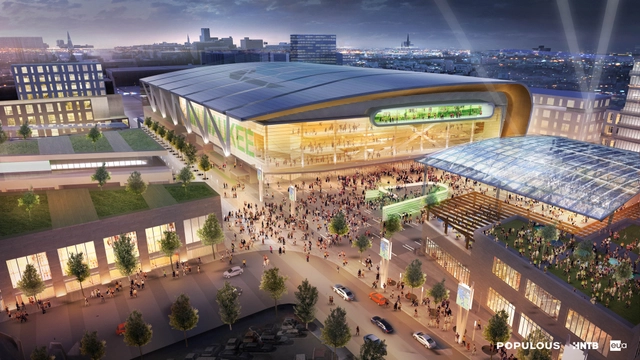
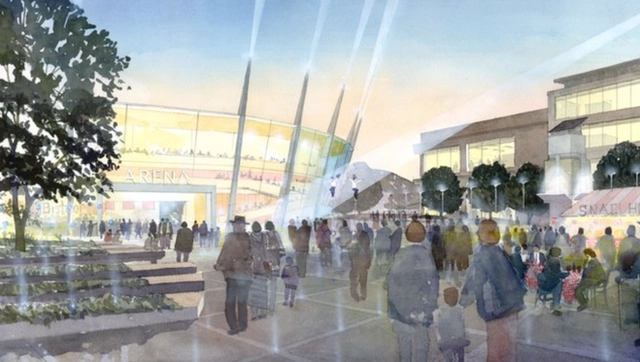
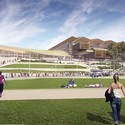
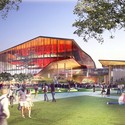
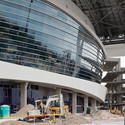
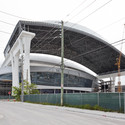
View from Entertainment District Live Block. Image Courtesy of Populous
The Milwaukee Bucks have just unveiled Populous' initial renderings of their downtown revitalization plan for Milwaukee’s sports and entertainment district, anchored by a multi-purpose arena. The first step in their vision, the arena hopes to be a modern expression of Wisconsin’s heritage and a vibrant cornerstone to the growth of downtown Milwaukee.
A total of eleven projects have been shortlisted for RIBA Yorkshire 2015 Awards, featuring buildings by Populous, HLM, and Studio Gedye. All shortlisted buildings will now be assessed by a regional jury. Regional winners will then be considered for a RIBA National Award in recognition of their architectural excellence, the results of which will place some projects in the running for the 2015 RIBA Stirling Prize.
See the complete list of shortlisted projects after the break.
“Our design for Bristol Arena is unique,” says Populous principal Nicholas Reynolds. “It delivers a world-class live concert venue for 12,000 fans, and with seamless conversion the atmosphere and intimacy of a 4,000 seat amphitheater.”
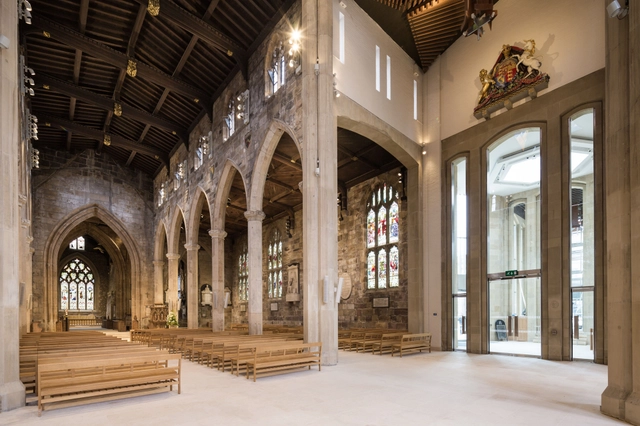
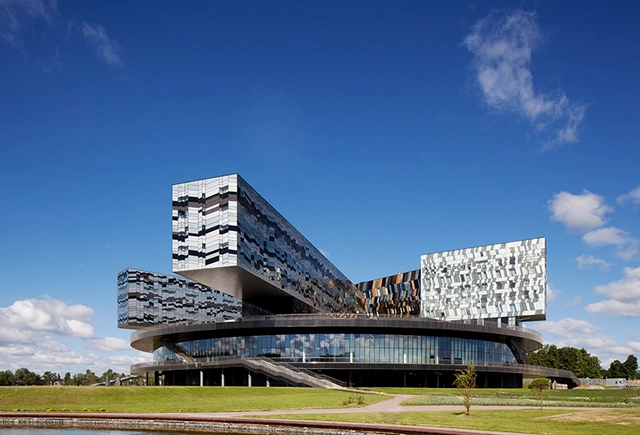
Given the country's rich architectural history spanning almost the entirety of the 20th century, you'd be forgiven for thinking that the fall of Russian Communism in the early 1990s might have sparked an exciting new era in design. That promise hasn't exactly been fulfilled, but as The Calvert Journal reports, a few promising recent projects are hinting at a Russian Renaissance.
The last twenty years of architecture has added little but bog-standard steel-and-glass office blocks to the limited palate of the Russian cityscape — the usual glinting onion domes, pompous Stalinist neoclassicism and crumbling tower blocks. But lately some architects have dared to differ and turned bold blueprints into bricks and mortar. Read on after the break for our pick of the best Russian buildings of the last decade.
Videos
Vision of the masterplan (commissioned in 2007). Image Courtesy of Bristol Temple Quarter
Five practices have been shortlisted to put forward designs for the Bristol Arena, a cultural and sporting hub which is set to have a 12,000 seating capacity and is due to open towards the end of 2017. The city's Mayor, George Ferguson (who is himself an architect-turned-politician), has said that "we now have five very capable and talented design teams with a wealth of experience between them drawing up proposals" that will contribute to the regeneration of the city's Temple Quarter Enterprise Zone (a site close to Temple Meads Station). The five shortlisted multi-disciplinary design teams are consortiums experienced in delivering major cultural venues in the UK or overseas. A team led by Populous, who completed the London 2012 Olympic Stadium, are running in collaboration with Feilden Clegg Bradley, who were shortlisted for the 2014 RIBA Stirling Prize. They are competing against teams led by Grimshaw and Wilkinson Eyre, who recently installed a cable-car across London's Millennium Dome.
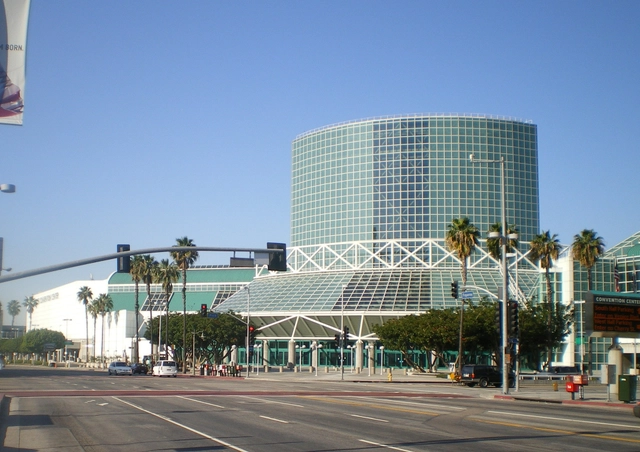
The Los Angeles Bureau of Engineering has selected three teams for the next phase of the competition to redevelop and expand the Los Angeles Convention Center. The teams, consisting of AC Martin + LMN; Gensler + Lehrer Architects; and HMC + Populous, will now receive $200,000 to develop detailed proposals to be submitted on December 8th.
However, according to The Architect's Newspaper, the redevelopment of the Convention Center outlined by the brief is not yet guaranteed to happen; with the city under contract with AEG to build a football stadium on a portion of the site until October 18th, the Convention Center's Executive Director Bud Ovrum confirmed that, if the city can secure an NFL team by then, the stadium is still the city's first choice.
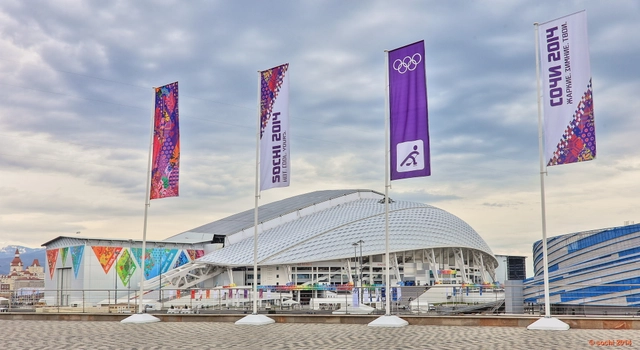
The 2014 Winter Olympics has commenced in Sochi within the shell of Populous’ Fabergé egg-inspired stadium. Built solely to host the opening and closing ceremonies, the Fisht Olympic Stadium's translucent polycarbonate roof bears a slight resemblance to the nearby, snow-capped peaks of the Caucasus Mountains. Once the Games are complete, the stadium’s 40,000-seat capacity will be expanded to accommodate the 2018 FIFA World Cup, before retiring as a scaled-down, 25,000-seat home venue for the local football team.
Populous’ stadium is just one of eleven purpose-built venues within the “Coastal Cluster” Olympic park. Check out a few others that caught our eye, after the break...
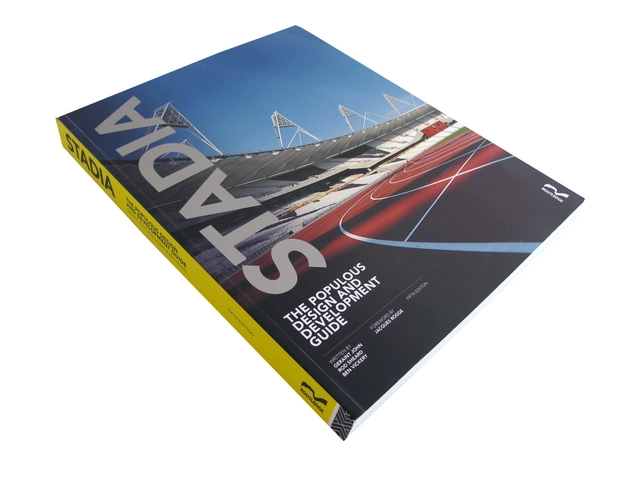
Thanks to the courtesy of our good friends at Populous we are giving you the chance to win a signed copy of 'Stadia: The Populous Design and Development Guide', the fifth edition on this essential and long-established guide to stadia design (see our review here). All you have to do to participate is become a registered user (if you’re not one already) and answer the following question in our comments:
The London 2012 Olympic Stadium is one of several landmark international sports venues to feature in a fully-updated and redesigned fifth edition of Stadia, the essential and long-established guide to stadia design.
Almost 20 years since it was first published in 1994, Stadia remains the most comprehensive guide to all aspects stadium design, from local club buildings to iconic international venues.
The French Rugby Federation (FFR) recently announced they will use the proposal by Populous and Ateliers 2/3/4/ for the design of the Grand Stade. After several months of discussions with three competing groups, the FFR has made its choice of designers and has issued the first computer-rendered images. The FFR Grand Stade will be much more than a stadium; the 82,000 capacity venue will become the ‘national stadium of rugby’. It will host all the French rugby home matches, and also accommodate conventions, shows and a broad range of sporting events thanks to its multi-purpose design. More images and architects’ description after the break.
Australian firm HASSELL Studio, OMA and Populous have been announced as the winners for the redevelopment of Sydney’s new convention, exhibition and entertainment precinct (SICEEP) at Darling Harbour.
The 20-hectare, billion (Australian) dollar project, which will stretch from Cockle Bay to Haymarket and Ultimo, will include Australia's largest convention and exhibition facilities, Sydney’s largest red carpet entertainment venue, a hotel complex with up to 900 rooms, and a new urban neighborhood in Haymarket.
As the world turns its eyes to London in 2012, Design Stories examines the architecture and engineering behind the 2012 sporting venues. It provides a unique Olympic experience – a place where people can explore and view drawings, images, videos and amazingly detailed models of London’s key new sporting venues.
The London 2012 Olympics start today, and once again architecture is on the spotlight. With a big focus on reusable and adaptable structures, the lineup includes renowned architecture firms such as Wilkinson Eyre Architects, Hopkins Architects, Populous and Zaha Hadid Architects.
Architect Magazine‘s third-annual ranking of American architecture firms takes a look at three factors: profitability, sustainability, and design quality. This whole picture approach provides an opportunity for small and large firms to go head to head, with a result of the best architecture firms, not necessarily the biggest.
Some of these practices have been featured on ArchDaily like Perkins + Will, Skidmore Owings & Merrill, Cannon Design, and Frank Harmon Architect.
Take a look at the complete rankings after the break.
This week our Architecture City Guide is headed to Frank Lloyd Wright’s winter retreat. Taliesin West first made the “Valley of the Sun” an architectural destination by itself, but now Phoenix overflows with world-class architecture. We have provided a list of twelve, but there are plenty more that could be added. We want to hear from you, so take a minute to add your favorite can’t miss buildings in Phoenix in the comment section below.
Aviva Stadium, Dublin, Ireland, designed as a result of a collaboration between global architects Populous and Dublin‐based architects, Scott Tallon Walker was officially opened Friday by An Taoiseach, Brian Cowen, TD. Aviva Stadium, previously called the Lansdowne Road Stadium, hosted its first game of international rugby in 1878. The 50,000 seat stadium will be used for international rugby and soccer fixtures and as a concert and events venue.