1. ArchDaily
  2. Placemaking Network

Placemaking Network: The Latest Architecture and News

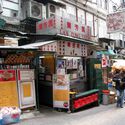
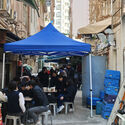
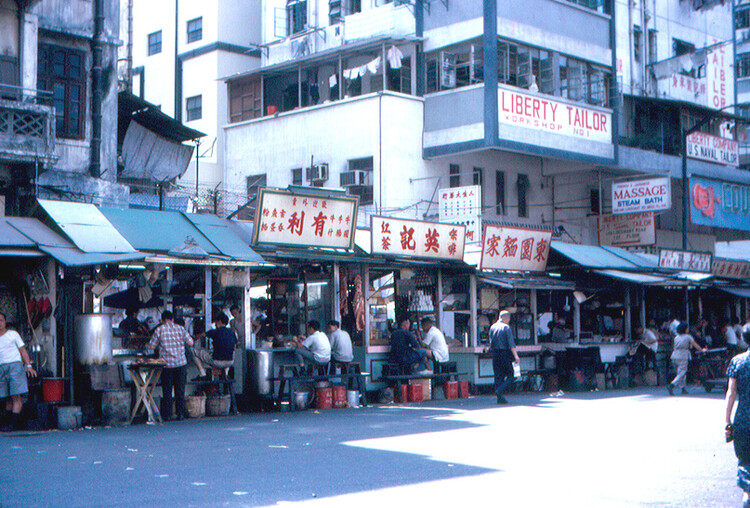
Urban Banquet at the Curb: Hong Kong’s Third-Space Dining

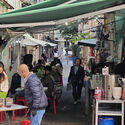
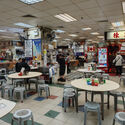
Across cities worldwide, architecture unfolds continuously at the scale of people and community—not only through new buildings, renovations, or monumental works. "Third spaces" are especially revealing. Consider the street-side culinary realm: how seating, serving, and lingering occupy the edge of the street often discloses a city's cultural codes and spatial habits. What forms of dining and inhabitation have emerged in response to local climate, regulation, and social custom—and how have they evolved over time?

In parts of Europe, for instance, al fresco in Italy and en terrasse in France name culturally specific ways of dining in public, drawing the meal into the urban field—attuned to weather, air, and the passive sociability of people-watching. Since COVID-19, New York City has similarly expanded outdoor dining, reflecting a community-driven desire to engage the streetscape while eating—an everyday, street-level "third place" within a dense metropolis.
Urban Banquet at the Curb: Hong Kong’s Third-Space Dining - Image 1 of 4Urban Banquet at the Curb: Hong Kong’s Third-Space Dining - Image 2 of 4Urban Banquet at the Curb: Hong Kong’s Third-Space Dining - Image 3 of 4Urban Banquet at the Curb: Hong Kong’s Third-Space Dining - Image 4 of 4Urban Banquet at the Curb: Hong Kong’s Third-Space Dining - More Images+ 7

Placemaking: Movement, Manifesto, Tool, Buzzword—or What?

Subscriber Access | 

Amongst other placemaking-related news this year, the Boston Society of ArchitectsPlacemaking Network celebrated its 10-year anniversary by launching the Placemaking Manifesto in November. Co-authored by Christina Lanzl, Robert Tullis, and Anne-Catrin Schultz, the document set down six key ideas: “quality of life,” “sense of place,” “community identification,” “collaboration and communication” between “individuals of all backgrounds, interests and talents,” “inclusivity” and “greater civic engagement,” and “awareness of tradition with an embracing of new and emerging technologies.” While the basic principles that placemaking espouses are often hard to question, this manifesto in particular begs one question: Is placemaking understood and defined clearly enough for it to be a useful tool for urbanists?

In the past decade or so, placemaking has gained considerable momentum, spewing forth an array of approaches, countless lists of best practices (including, in essence, this new manifesto), and complicated sub-categorizations. It is simultaneously a much-lauded global movement, an academic discipline, a field, discourse, process, and tool, but is also, among other charges, heavily criticized for being an “ill-defined buzzword.”