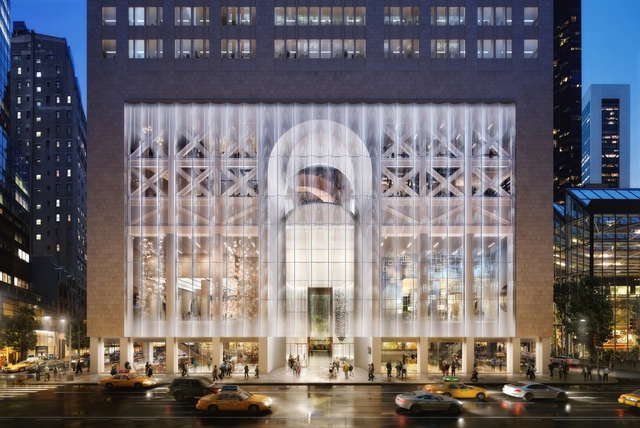
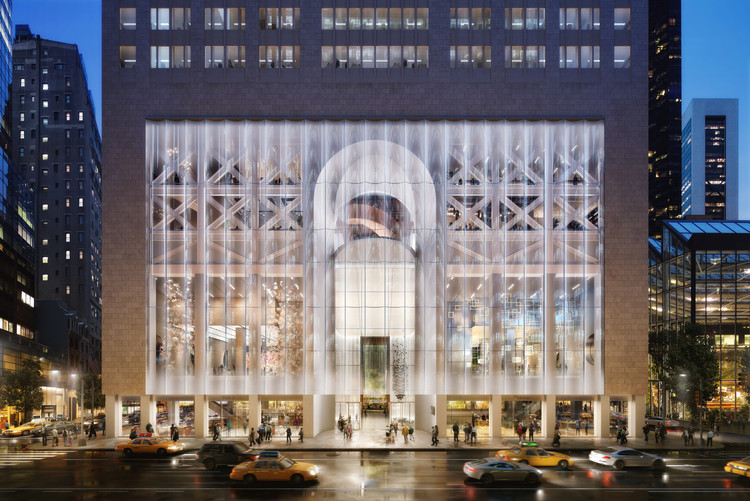
Designed by Snøhetta, the project centers on improving the transparency of its street presence. To do this, the stone facade at the building base will be replaced with a undulating glass curtain wall intended to be more inviting and attractive toward pedestrians, while the existing mid-block public passageway will be opened into a much larger outdoor landscape.
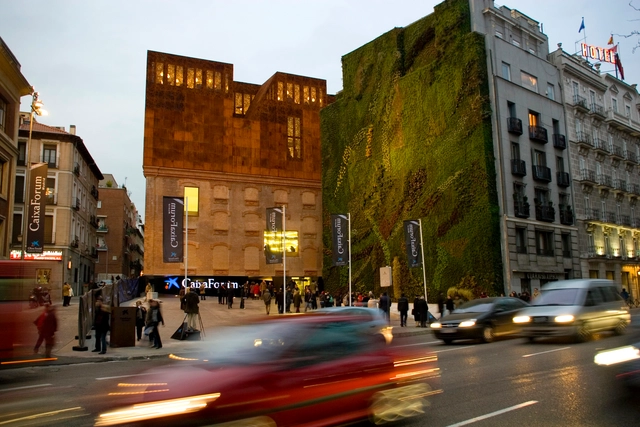
Madrid is unfathomable. If the city itself is immense, it´s examples of interesting architecture are overwhelming. For over a half a century, Madrid has been an experimental laboratory for modern and contemporary architecture in Spain. With numerous examples of innovative and experimental architecture, as well as many failures, few of which are valued and recognized. This selection seeks to show archetypal examples of architecture that have transcended time; it does not intend to be an exhaustive list of the city´s architectural works. Many will think that the list lacks important buildings and personally, I couldn´t agree more. That is perhaps the beauty of Madrid: there is a diversity of opinion, there are thousands of sites to see, the city surprises you with every step you take.
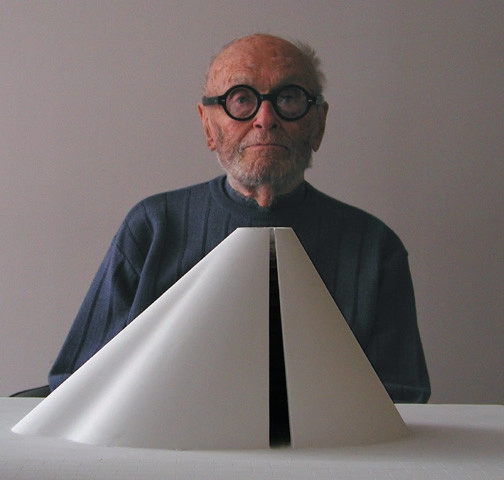
When he was awarded the first ever Pritzker Architecture Prize in 1979, the jury described Philip Johnson (July 8, 1906 – January 25, 2005) as someone who “produced consistent and significant contributions to humanity and the environment," adding that "as a critic and historian, he championed the cause of modern architecture and then went on to design some of his greatest buildings.” However, even after winning the Pritzker Prize at age 73, Johnson still had so much more of his legacy to build: in the years after 1979, Johnson almost completely redefined his style, adding another chapter to his influence over the architecture world.
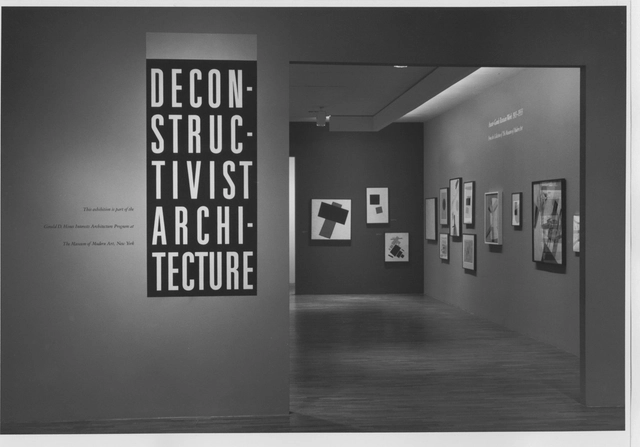
View into the exhibition (1988). Photographer unknown. Image via MoMA
When Philip Johnson curated the Museum of Modern Arts’ (MoMA) 1932 “International Exhibition of Modern Architecture,” he did so with the explicit intention of defining the International Style. As a guest curator at the same institution in 1988 alongside Mark Wigley (now Dean Emeritus of the Columbia GSAPP), Johnson took the opposite approach: rather than present architecture derived from a rigidly uniform set of design principles, he gathered a collection of work by architects whose similar (but not identical) approaches had yielded similar results. The designers he selected—Peter Eisenman, Frank Gehry, Zaha Hadid, Rem Koolhaas, Daniel Libeskind, Bernard Tschumi, and the firm Coop Himmelblau (led by Wolf Prix)—would prove to be some of the most influential architects of the late 20th Century to the present day.[1,2]
The architectural legacy of the Rockefeller family in Manhattan is well-known, most obviously demonstrated in the slab-like Art Deco towers of the Rockefeller Center and the ever-expanding campus of the MoMA. But in a city that is filled with landmarks and historic buildings, it's easy for even the most remarkable projects to go unrecognized. Philip Johnson's Rockefeller Guest House in Manhattan was completed in 1950, just one year after the construction of his better known Glass House in New Canaan. The Glass House is an obvious cousin to the later guest house: both feature largely empty glass and steel boxlike forms, where structural work is exposed and celebrated.
The "architectural pilgrimage" is much more than just everyday tourism. Studying and admiring a building through text and images often creates a hunger in architects, thanks to the space between the limitations of 2D representation and the true experience of the building. Seeing a building in person that one has long loved from a distance can become something of a spiritual experience, and architects often plan vacations around favorite or important spaces. But too often, architects become transfixed by a need to visit the same dozen European cities that have come to make up the traveling architect's bucket list.
The list here shares some sites that may not have made your list just yet. Although somewhat less well known than the canonical cities, the architecture of these six cities is sure to hold its ground against the world's best. The locations here make ideal long weekend trips (depending of course on where you are traveling from), although it never hurts to have more than a few days to really become immersed in a city. We have selected a few must-see buildings from each location, but each has even more to offer than what you see here—so don't be afraid to explore!
As an unavoidable art form, “architecture is one of humanity’s most visible and long-lasting forms of expression,” writes Complex Media. Within the past 150 years—the period of modern architecture—a distinct form of artistry has developed, significantly changing the way we look at the urban environments around us. To highlight some of the key figures in architecture over the past 150 years, Complex Media has created a list of “25 Architects You Should Know,” covering a range of icons including Zaha Hadid, Ieoh Ming Pei, Philip Johnson, Oscar Neimeyer, SOM, Daniel Libeskind, and more. Read the full list to learn more about each iconic architect, here.
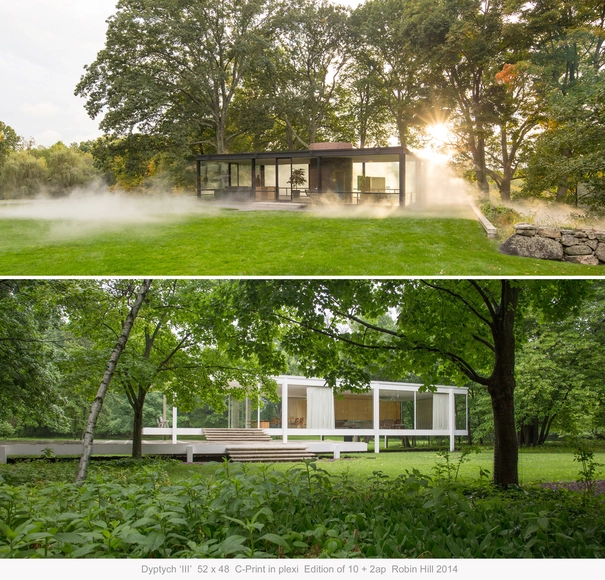
Exhibition print for Side by Side. Top: The Glass House. Bottom: The Farnsworth House
Side by Side is an exhibition by photographer Robin Hill that explores the similarities and differences between two of America's most iconic houses. The Glass House by Philip Johnson and The Farnsworth House by Mies van der Rohe. Through a series of dyptychs, Mr. Hill's lens explores both the geometry of the structures and their place in the environment. Tellingly the exhibition is housed in the Seagram Building designed by Mies van der Rohe and assisted by Philip Johnson. The lobby of The Four Seasons is an ideal venue for this exhibition as much of the design aesthetic of both architects is prevalent in the space as well as in the photographs.
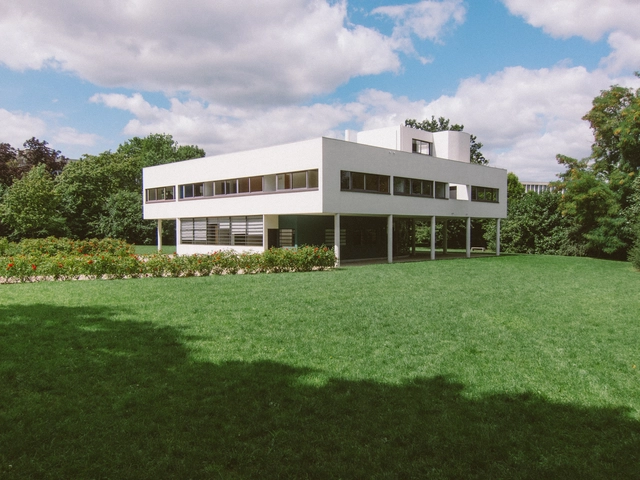
Five of history's most iconic modern houses are re-created as illustrations in this two-minute video created by Matteo Muci. Set to the tune of cleverly timed, light-hearted music, the animation constructs the houses piece-by-piece on playful pastel backgrounds. The five homes featured in the short but sweet video are Le Courbusier's Villa Savoye, Gerrit Rietveld's Rietveld Schröder House, Ludwig Mies van der Rohe's Farnsworth House, Philip Johnson's Glass House and Frank Lloyd Wright's Fallingwater.
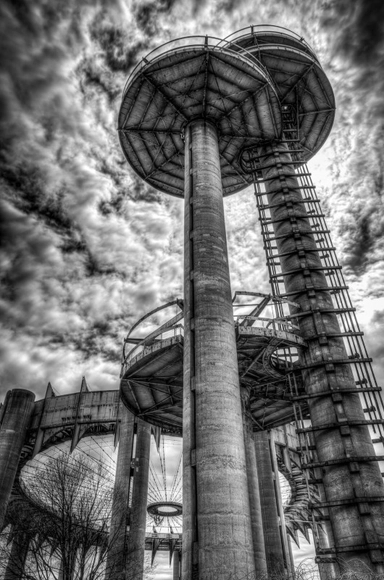
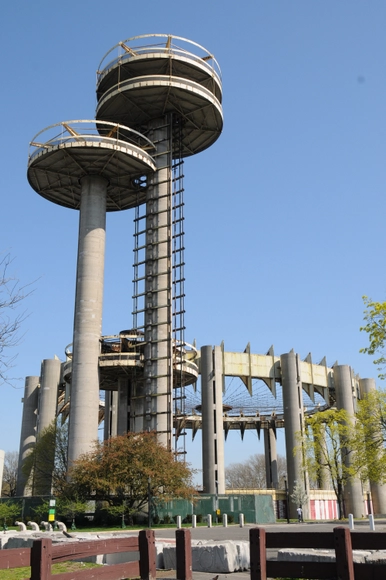
If you haven't heard of CyArk yet, make sure to check out their recent Kickstarter project. The not-for-profit company digitally preserves some of the world's most important sites: including Easter Island, Mt. Rushmore and The Pantheon, to name a few. Now the group is headed to New York to preserve Philip Johnson and Lev Zetlin's 1964 World’s Fair New York State Pavilion. Since the fair ended, the pavilion has fallen into disrepair and been heavily vandalized. With assistance from the University of Central Florida, they plan to release the digitally preserved 3D files to the public, for free. To help preserve this "National Treasure," check out their Kickstarter page.
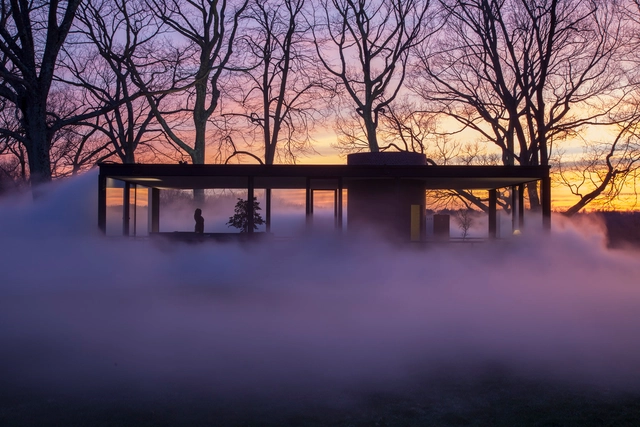
Celebrating the 65th anniversary of Philip Johnson's iconic Glass House, artist Fujiko Nakaya has created the building's first ever site-specific art installation. The installation, titled "Veil", will shroud the glass house in fog for 10 minutes every hour, creating a dialogue with Johnson's design intentions by breaking the visual connection between inside and out, and covering the building's sharp, clean lines with misty indeterminacy. At the same time it will make literal Johnson's ideal of an architecture that vanishes.
Read after the break for more information and images
“In the last 50 years, Flushing Meadows Corona Park has grown from the site of the World’s Fair to the home of the World’s Park,” said Queens Parks Commissioner Dorothy Lewandowski. “As we celebrate this anniversary, it is just as important that we look to the next 50 years and plan for the Park’s future. I would like to thank the National Trust for Historic Preservation for honoring the New York State Pavilion as a ‘National Treasure’. This designation will highlight the importance of the Pavilion as a national icon, and help us to continue the conversation about how it can best serve Queens’ residents.”
The Pavilion's "Tent of Tomorrow" photographed during the fair. Image via People for the Pavillion website. Image
For the first time in decades, Philip Johnson’s New York State Pavilion will open to the public tomorrow (April 22) in celebration of its 50th anniversary. Built for the 1964-65 World’s Fair, “the Pavilion represents a pivotal time in American history when the allure of putting a man on the moon inspired renowned architect Philip Johnson to create this emblem for Space Age enthusiasm,” described Stephanie Meeks, president of the National Trust for Historic Preservation.
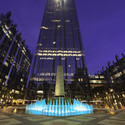
The design of PPG Place, by Philip Johnson and John Burgee, melds the notion of the modern corporate tower with a neo-gothic monument. Clad in almost a million square feet of glass manufactured by the anchor tenant PPG industries, the architects ingeniously rethought accepted practices in curtain wall design to create "the crown jewel in Pittsburgh's skyline." (1) The 1.57 million square foot complex was one in a series of high profile corporate projects completed during Johnson's controversial foray into postmodernism.
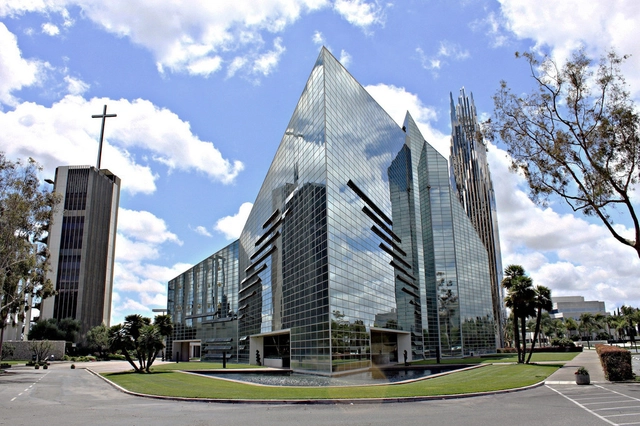
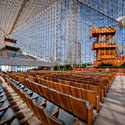
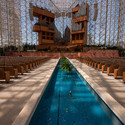
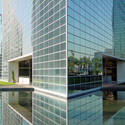
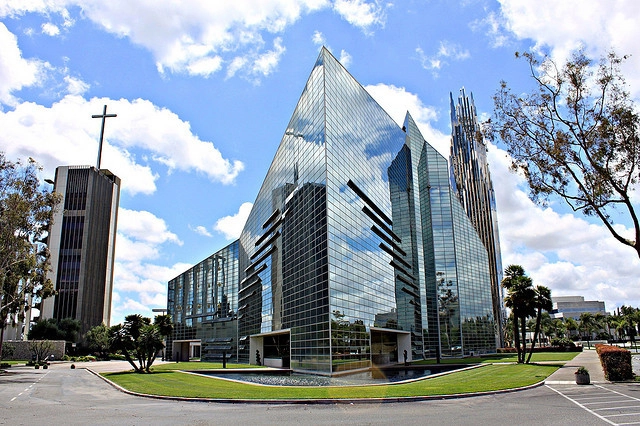
The Crystal Cathedral was designed as a religious theater of sorts, acting as both television studio and stage to a congregation of 3,000. It was commissioned by renowned televangelist Robert Schuller and completed in 1980 near Los Angeles, California. Philip Johnson and John Burgee devised the glass enclosure in response to Schuller’s request that the church be open to the "sky and the surrounding world."
Johnson Fain and Rios Clementi Hale Studios have been selected to transform Philip Johnson's 1981 Crystal Cathedral, originally a Protestant mega-church, to make it more in keeping with its new, Catholic identity.
The Cathedral, which had filed for bankruptcy in October 2010, was bought in early 2012 by the Roman Catholic Diocese of Orange. Earlier this month, the architects were chosen for the renovation: Johnson Fain will focus on the interior, while Rios Clementi Hale Studios will oversee the masterplan of its 34-acre campus.
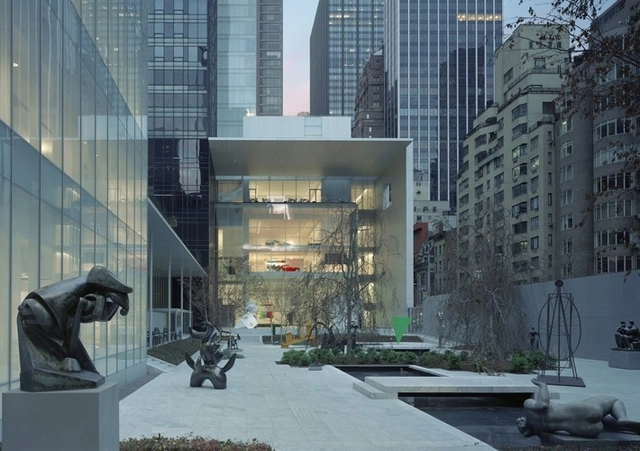
The entrance to the Museum of Modern Art is tucked beneath a demure facade of granite and glass in Midtown Manhattan. Its clean, regular planes mark Yoshio Taniguchi's 2004 addition to the MoMA's sequence of facades, which he preserved as a record of its form. Taniguchi's contribution sits beside the 1984 residential tower by Cesar Pelli and Associates, followed by Philip Goodwin and Edward Durell Stone’s original 1939 building, then Philip Johnson’s 1964 addition. Taniguchi was hired in 1997 to expand the Museum’s space and synthesize its disparate elements. His elegant, minimal solution presents a contemporary face for the MoMA while adhering to its Modernist roots.
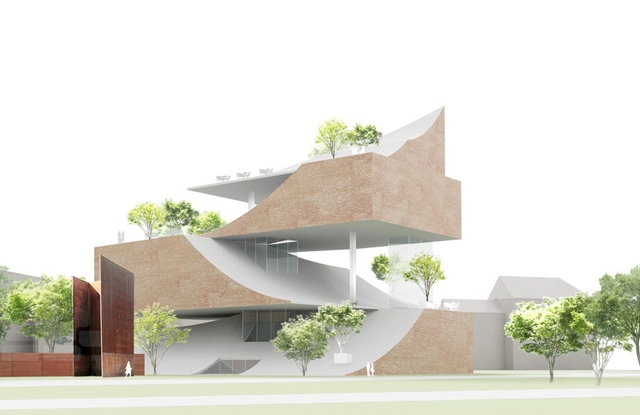
Sou Fujimoto has unveiled three design proposals for an extension to Philip Johnson’s Kunsthalle Bielefeld in Germany. Since its completion in 1968, the museum has built a reputation for hosting temporary exhibitions. However, with the construction of the new wing, Kunsthalle Bielefeld will expand their services to accommodate a contemporary art gallery.
Read on to review Sou Fujimoto’s three proposals...