1. ArchDaily
  2. Peter Rich Architects

Peter Rich Architects: The Latest Architecture and News

Shaping Architectural Continuity: 25 Revitalization Projects Across Historic, Industrial, and Natural Sites

Heritage sites constitute complex spatial archives in which architecture, history, and collective memory converge. They encompass a wide spectrum of contexts—from archaeological remains, ancient and historic townscapes, UNESCO-listed landscapes, to early modern civic structures and industrial infrastructures. Yet these environments confront challenges: climate change, urban transformation, disaster, shifting social needs, and the gradual erosion of material fabric. Revitalization and restoration projects respond to these conditions by positioning architectural and spatial practice as an active mediator between preservation and the contemporary topologies.

In current practice, conservation is understood as a creative process of adaptation and reinterpretation that serves both communities and inhabitants. At the same time, monumental architecture continues to define the identity and landscape of a place for wider audiences and future generations. Architects and planners are called upon to negotiate sensitive historic contexts while introducing new programs, techniques, and spatial experiences. They exemplify diverse design approaches, including precise structural interventions, climate-responsive strategies, and meticulous material restoration, alongside the thoughtful insertion of new architectural elements. Equally important is their engagement with vernacular knowledge and materiality, which preserves the locality and cultural specificity of each site.
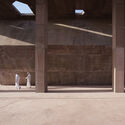
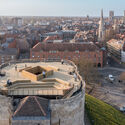
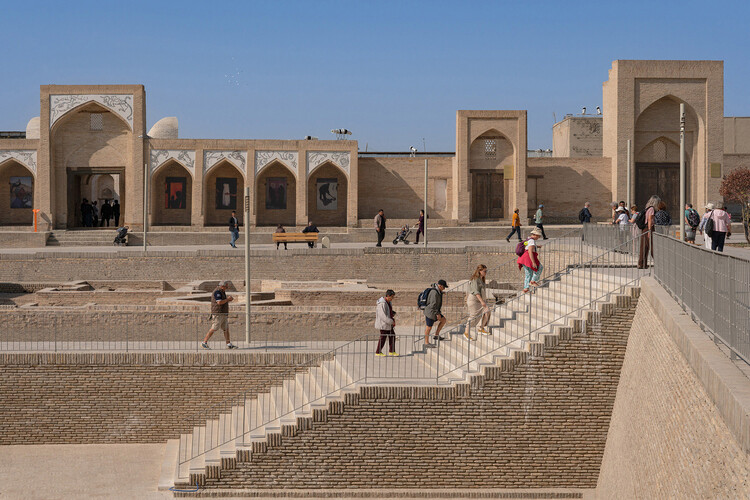
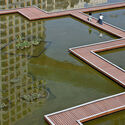
Shaping Architectural Continuity: 25 Revitalization Projects Across Historic, Industrial, and Natural Sites - Image 1 of 4Shaping Architectural Continuity: 25 Revitalization Projects Across Historic, Industrial, and Natural Sites - Image 2 of 4Shaping Architectural Continuity: 25 Revitalization Projects Across Historic, Industrial, and Natural Sites - Image 3 of 4Shaping Architectural Continuity: 25 Revitalization Projects Across Historic, Industrial, and Natural Sites - Image 4 of 4Shaping Architectural Continuity: 25 Revitalization Projects Across Historic, Industrial, and Natural Sites - More Images+ 21

Rethinking Sustainability Through Site-Specific Strategies

Subscriber Access | 

Sustainability in architecture is often framed as a universal challenge, leading to standardized solutions that prioritize efficiency over context. However, architecture is inherently tied to its environment — buildings interact with climate, topography, and cultural history in ways that demand specificity. Instead of relying on standardized sustainability checklists, how can architecture embrace site-specific solutions? This conversation is deeply connected to the concept of Genius Loci, or the spirit of a place, introduced by Christian Norberg-Schulz and embraced by architects advocating for designs that resonate with their surroundings. It suggests that architecture should not be imposed upon a site but rather emerge from it, informed by its materials, climate, and cultural significance. This philosophy challenges the widespread application of generic sustainable technologies, instead proposing that sustainability must be inherently tied to the location in which it operates.

Rethinking Sustainability Through Site-Specific Strategies - Image 1 of 4Rethinking Sustainability Through Site-Specific Strategies - Image 2 of 4Rethinking Sustainability Through Site-Specific Strategies - Image 3 of 4Rethinking Sustainability Through Site-Specific Strategies - Image 4 of 4Rethinking Sustainability Through Site-Specific Strategies - More Images+ 81

National Parks: An Architectural Journey

Subscriber Access | 

The world is home to thousands and thousands of national parks – spaces allocated for conservation, hosting land usually left in its natural state for people to visit. The term “national park” itself differs in meaning around the world. In the United Kingdom, for example, the phrase simply describes a relatively undeveloped area that attracts tourists. In the United States, this terminology is a lot more rigid, describing 63 protected areas operated by the United States National Park service.

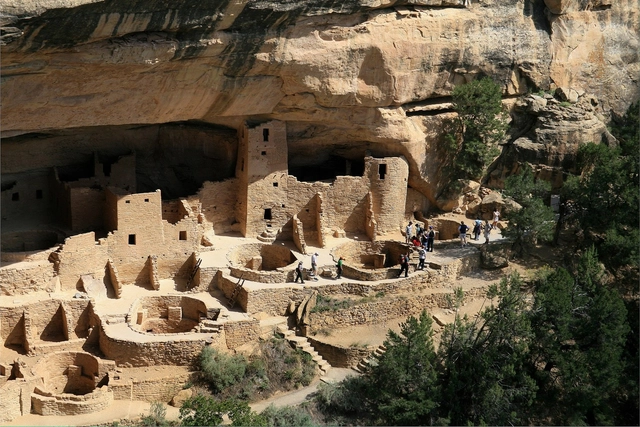
National Parks: An Architectural Journey - Image 1 of 4National Parks: An Architectural Journey - Image 2 of 4National Parks: An Architectural Journey - Image 3 of 4National Parks: An Architectural Journey - Image 4 of 4National Parks: An Architectural Journey - More Images+ 5

Pancho Guedes, Sculpting a New Africa

Subscriber Access | 

Amancio d'Alpoim Miranda Guedes, known as Pancho Guedes was an architect, painter, sculptor, and educator that is revered as one of the earliest post-modernist architects in Africa. Throughout his career, he has contributed to more than 500 building designs which were often characterized as eclectic, bringing together Lusophone African influence with his unique surrealist and experimental artistic style. It is said that having worked mainly in Mozambique, Angola, South Africa, and Portugal, Pancho Guedes was less well known than he ought to have been in the rest of the world, as he is a leading figure in modern African architecture.

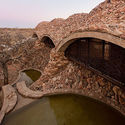
Pancho Guedes, Sculpting a New Africa - Image 1 of 4Pancho Guedes, Sculpting a New Africa - Image 2 of 4Pancho Guedes, Sculpting a New Africa - Image 3 of 4Pancho Guedes, Sculpting a New Africa - Image 4 of 4Pancho Guedes, Sculpting a New Africa - More Images+ 27

The Technology Before the Wheel: A Brief History of Dry Stone Construction

Subscriber Access | 

A collection of stones piled one on top of the other, dry stone is an iconic building method found just nearly everywhere in the world. Relying solely on an age-old craft to create sturdy, reliable structures and characterised by its rustic, interlocking shapes, the technique has deep roots that stretch back even before the invention of the wheel. Its principles are simple: stack the stones to create a unified, load-bearing wall. But the efficient, long-lasting results, coupled with the technique’s cultural significance, have lead to continued use and updated interpretations all the way to contemporary architecture today.

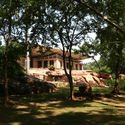
The Technology Before the Wheel: A Brief History of Dry Stone Construction - Image 1 of 4The Technology Before the Wheel: A Brief History of Dry Stone Construction - Image 2 of 4The Technology Before the Wheel: A Brief History of Dry Stone Construction - Image 3 of 4The Technology Before the Wheel: A Brief History of Dry Stone Construction - Image 4 of 4The Technology Before the Wheel: A Brief History of Dry Stone Construction - More Images+ 6

Thom Mayne, Wang Shu and Lu Wenyu among the RIBA's 2015 Fellowships

The Royal Institute of British Architects (RIBA) has announced 13 Honorary Fellowships and 11 International Fellowships which it will award at an event on February 3rd, along with the recently announced RIBA Royal Gold Medal.

Among others, the Honorary Fellowships include Director of Architecture at the British Design Council Vicky Richardson and academic Dalibor Vesely; the International Fellowships include Pritzker Prize Winners Thom Mayne and Wang Shu and his Partner Lu Wenyu. The Honorary and International Fellowships entitle winners to use the initials 'Hon FRIBA' and 'Int FRIBA,' respectively after their names.

Read on after the break for the full Fellowship lists