CHART ARCHITECTURE competition, a key element of CHART SOCIAL, was launched in 2014 to promote young Nordic architects and explore the crossover between art and architecture. In 2017 CHART is extending the call for applications to young and newly established architectural practices, as well as welcoming students and recent graduates from the Nordic architecture schools.
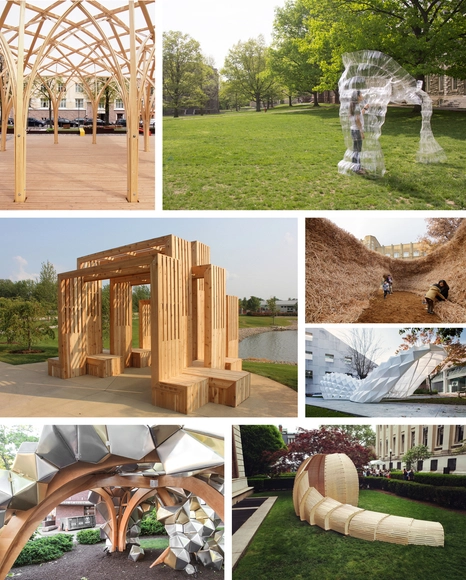
Building Trust international have announced their 7th international design competition which seeks to find an innovative design proposal for a landmark pavilion structure made from bamboo. The bamboo piece will be the centre of a Bamboo Festival Building Trust are hosting in Phnom Penh, Cambodia this March. The competition challenges architects, designers and engineers to provide a design solution which has the chance to shape the future of building with bamboo globally.
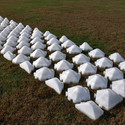
At Autodesk's 2016 conference in Las Vegas, a team from Autodesk's BUILD Space led by principal research engineer Andrew Payne collaborated with manufacturer Quarra Stone, engineers Simpson Gumpertz and Heger, and University of Michigan assistant professor Sean Ahlquist to unveil its new Generative Design Pavilion. The project is an exploration of materiality, with stalagmite stone forms that rise up from geometric floor panels to meet fabric that stretches down from a canopy above. The junction of textile and stone aims to emphasize the distinct behaviors of the two materials.
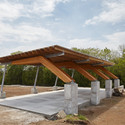
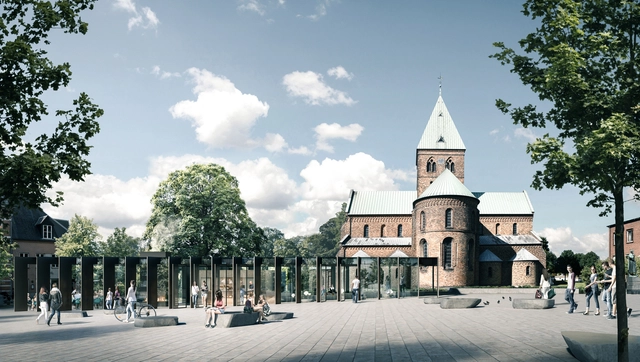
There is so much history in and around Ringsted Square, said Hvidesten. I am therefore delighted that the winning project gives us a pavilion that will not just integrate with the overall architecture of the square; it will also forge a link with history, retain a clear view of St. Bendt’s Church, and provide a new focal point of the square and its many functions, which will appeal to both young and old.
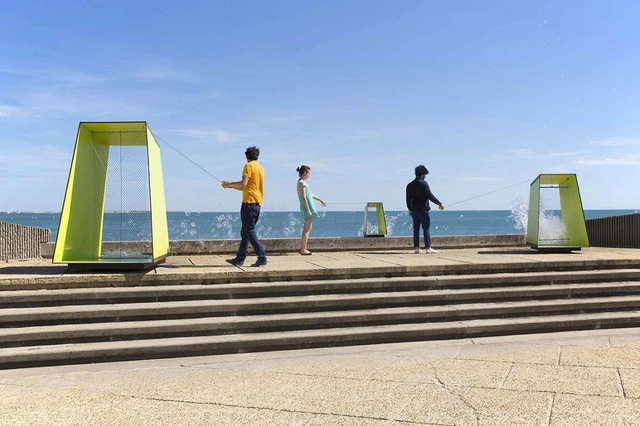
The south of France is known for its endless beaches, nineteenth century architecture, lush greenery, and monuments to its storied history. For nearly a decade, Le Festival des Architectures Vives (Festival of Lively Architecture) has been infusing contemporary architecture into the staid Southern French landscape through the creation of an array of artful temporary pavilions. Beginning in 2006 and 2013 respectively, the towns of Montpellier and La Grande Motte have played host to a series of structures designed to animate historical segments of the two cities. Founded with a mission to celebrate the seminal work of burgeoning architects, the festival aims to produce meaningful and interactive works designed to activate the historic centres of the two ageing cities.
Explore the bizarre and inspired installations of Le Festival des Architectures Vives after the break.
Courtesy of The Sherman Contemporary Art Foundation (SCAF)
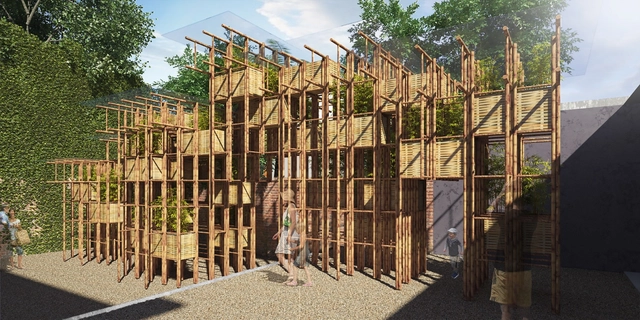
The Sherman Contemporary Art Foundation (SCAF) has announced the fourth iteration of its annual pavilion series Fugitive Structures. Designed by Vo Trong Nghia Architects, the pavilion centers around “the innovative use of bamboo, and [the architect’s] passion and self-imposed duty to green the world’s urban landscapes with plants and vegetation.”
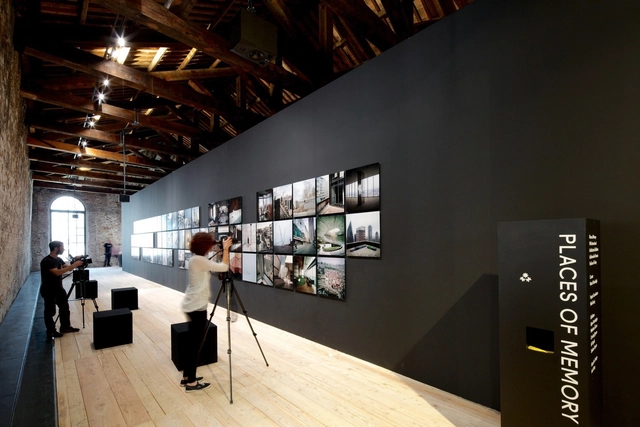
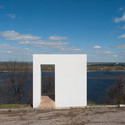
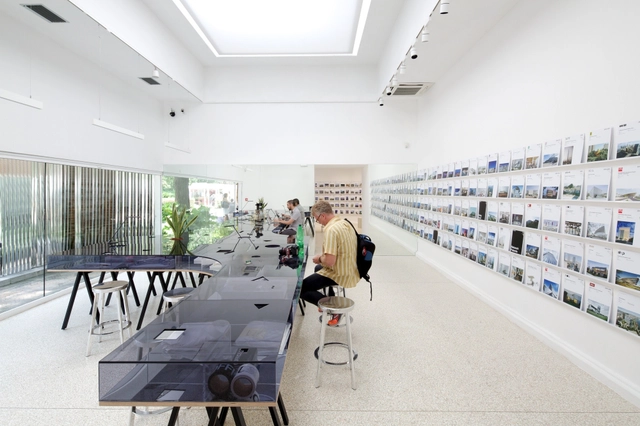
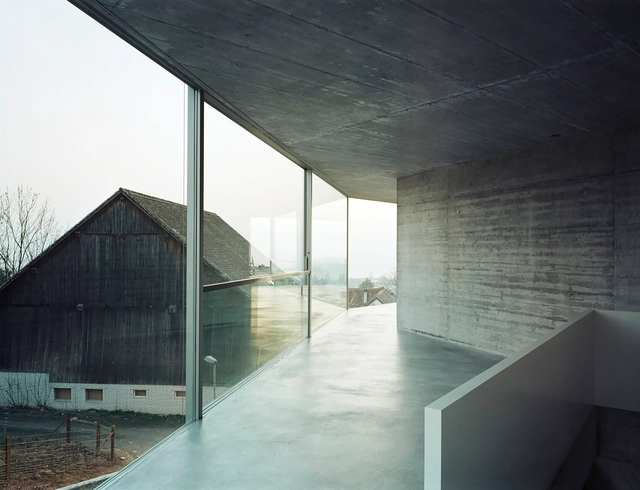
The Swiss Arts Council Pro Helvetia has nominated Christian Kerez, a Venezuela-born, Swiss architect, to represent Switzerland at the 15th Architecture Biennial in Venice in 2016. The exhibition will be curated by Swiss art historian Sandra Oehy, and will be on display at the Biennial from May 28 to November 27, 2016. Switzerland will also be represented by <<Salon Suisse>>, a platform for discussion and debate on contemporary art and architecture.
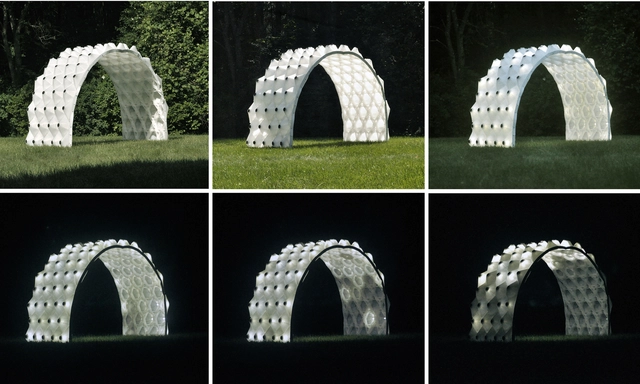
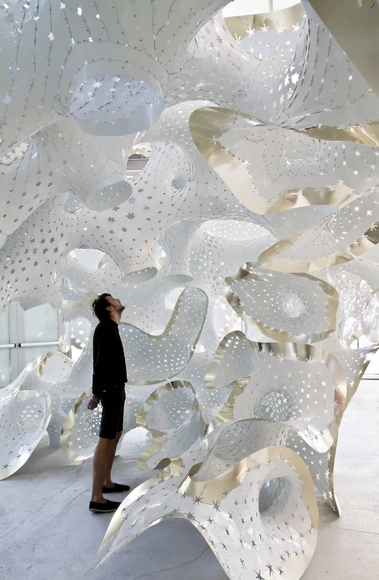
In light of the recent kickoff of Art BaselMiami, Marc Fornes / THEVERYMANY has shared its Labrys Frisae Pavilion, which was installed at Art Basel Miami from 2011 to 2014. Constructed from aluminum less than one millimeter thick, the installation sought to blur the distinction between edge and space through “an immersive, multisensorial experience.”
“The structure’s interior leads a visitor to lose their time as they peruse the curves and try to understand the space,” which changes as viewers move throughout, especially at night, when shadows emerge through the shell’s intricate perforation.
Simon Battisti, Leah Whitman-Salkin, and design collective Åbäke have been selected to represent Albania at the 15th International Biennale in Venice in 2016, with their project entitled, “I Have Left You the Mountain.” The project was selected from an open call for proposals from the Albanian Ministry of Culture that was held earlier this fall.
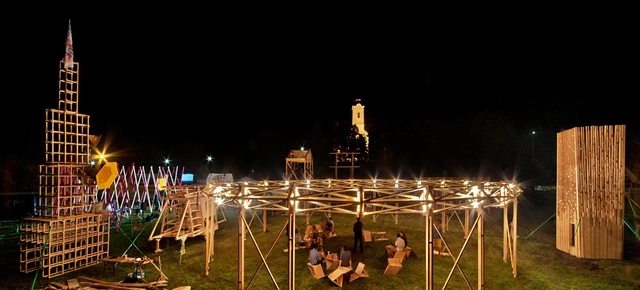
Set in the depths of rural Hungary, Hello Wood has emerged from the landscape for its 2015 edition, entitled 'Project Village'. Since 2010, the Hungarian-led collective of architects, designers, students and artists have gathered from around the world to create temporary wooden installations. Now in its sixth year, Hello Wood was realized with the help of 150 volunteers from 30 countries, and co-curated by Johanna Muszbek, with the shared vision to build a series of community-driven pavilions. Together the teams created fifteen unique wooden pavilions, each centred on a different component of the architecture of a village.
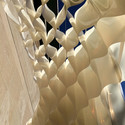
Kengo Kuma & Associates has unveiled its latest project for the Galerie Philippe Gravier in Paris. Entitled Yure, a Japanese expression for a nomadic habitat moving in the wind, the project is made from identical wooden pieces, seeking to blur the lines between art and architecture with its organic structural geometry.
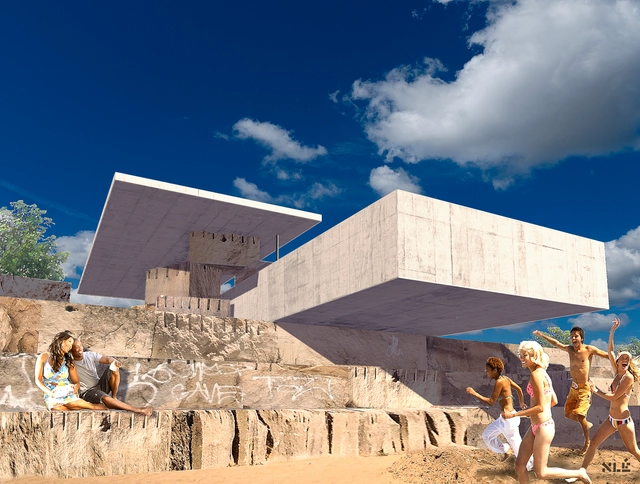
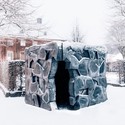
With its Lakefront Kiosk competition, the Chicago Architecture Biennial is hoping to leave a long-lasting impact and legacy for its city. The ROCK, a submission from NLÉ Architects in collaboration with School of the Art Institute of Chicago, is giving the public the opportunity to shape that legacy. Throughout the course of the event, which opened on October 3rd, eventgoers are invited to Millennium Park to add value to the 1930s limestone rocks that will create the pavilion through carving, painting, performances and other unimagined processes.
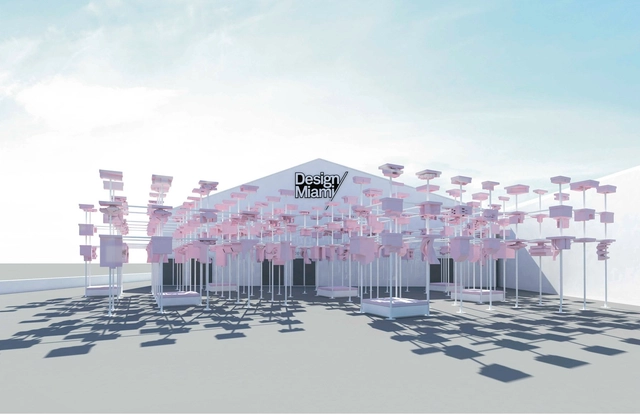
Uncountable hours, and piles of failed sketches and models to go with them – much of the architecture process is left unseen, held behind locked doors, but Harvard Graduate School of Design (GSD)’s Pavilion for Design Miami exposes this process for the first time. After a school-wide competition involving over 100 students in 32 teams, a judging panel of GSD faculty and representatives of Design Miami selected “UNBUILT” to represent the school at this year’s fair.
The Istanbul Foundation for Culture and Arts (IKSV) is hosting an open call for proposals for the Pavilion of Turkey's exhibition at the 2016 Venice Biennale. The call is open to all people and institutions of relevant fields, including architects, designers, artists, historians, curators, theoreticians and critics.
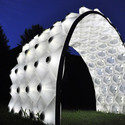
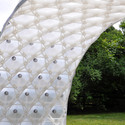
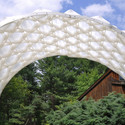
The Solar Bytes pavilion, designed by assistant professor at Kent State UniversityBrian Peters, is a temporary structure which highlights the potential of new techniques available to architecture: robotic arms, 3D printing, smart technologies such as lighting sensors, and solar energy.
Leveraging the strength and range of motion of a robotic arm, the pavilion was printed in three dimensions with an experimental extruder, resulting in a structure composed of 94 unique modules that capture energy during the day, and shine at night. After their initial function, the plastic modules making up the pavilion will be completely crushed and reused in a new structure.
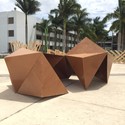
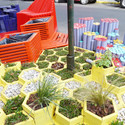
Almost two months ago we put a request out to all of our readers who were completing the academic year to send us any built work that they may have completed as part of their studies. Our hope was to display the fantastic diversity of ideas and styles that is emerging from institutions across the globe, and the response that we got was fantastic. With almost 100 submissions, we received projects from countries as far afield as Chile, the United States, Norway and Japan. We also received everything from pragmatic projects such as a chapel for a disadvantaged community in Mexico or a low-budget sidewalk parklet, to wondrously bizarre constructions such as a steel worm that connects spaces through sound and an inhabitable haystack.
With the help of our colleagues at ArchDaily Brasil andallofArchDailyen Español, we've compiled a selection of 26 of the most interesting, elegant or unusual projects from around the world - join us after the break to see what your international peers have been up to.






.jpg?1485891056&format=webp&width=640&height=580)
_(1).jpg?1485891189 "Courtesy of Quarra Stone")
.jpg?1485891118 "Courtesy of Quarra Stone")

.jpg?1485891081 "Courtesy of Quarra Stone")
.jpg?1485891056)






.jpg?1448636619&format=webp&width=640&height=580)


Stefan_Tuchila_007_K3_2623.jpg?1447183979&format=webp&width=640&height=580)
Stefan_Tuchila_019_K3_2672.jpg?1446606943 "© Stefan Tuchila")
Stefan_Tuchila_016_K3_2675.jpg?1447184094 "© Stefan Tuchila")
Stefan_Tuchila_003_K3_2682.jpg?1447183936 "© Stefan Tuchila")
Stefan_Tuchila_017_K3_2687.jpg?1447184104 "© Stefan Tuchila")
Stefan_Tuchila_007_K3_2623.jpg?1447183979)