1. ArchDaily
  2. Limestone

Limestone: The Latest Architecture and News

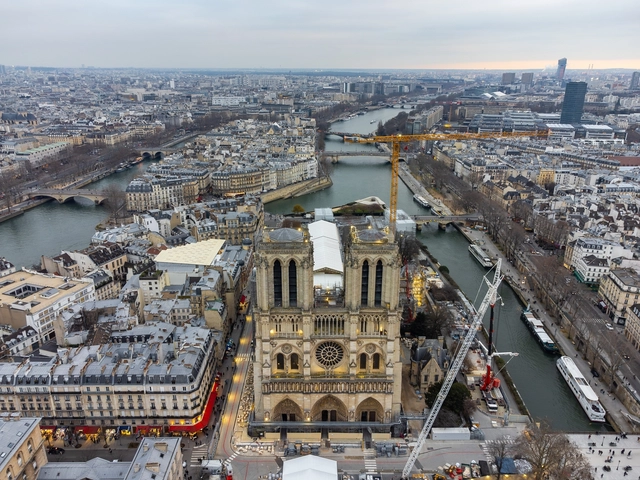
Notre Dame Rebuilt: A Journey of Restoration for France's Iconic Cathedral

Notre Dame Cathedral reopened on December 7th, 2024, welcoming visitors for the first time since the 2019 fire. The restoration of Notre Dame Cathedral was a massive undertaking, led by chief architect Philippe Villeneuve, assisted by Rémi Fromont and Pascal Prunet. The project involved approximately 2,000 craftspeople, 250 companies, and about $900 million, demonstrating the immense scale and complexity of the work on a tight deadline. Despite the major milestone of opening before the end of the year, the restoration works are not yet complete, as they are scheduled to continue through 2026.

Notre Dame Rebuilt: A Journey of Restoration for France's Iconic Cathedral - Image 1 of 4Notre Dame Rebuilt: A Journey of Restoration for France's Iconic Cathedral - Image 2 of 4Notre Dame Rebuilt: A Journey of Restoration for France's Iconic Cathedral - Image 3 of 4Notre Dame Rebuilt: A Journey of Restoration for France's Iconic Cathedral - Image 4 of 4Notre Dame Rebuilt: A Journey of Restoration for France's Iconic Cathedral - More Images+ 11

The New Stone Age: 12 Contemporary Houses in Latin America and the Diversity of Their Natural Stones

Subscriber Access | 

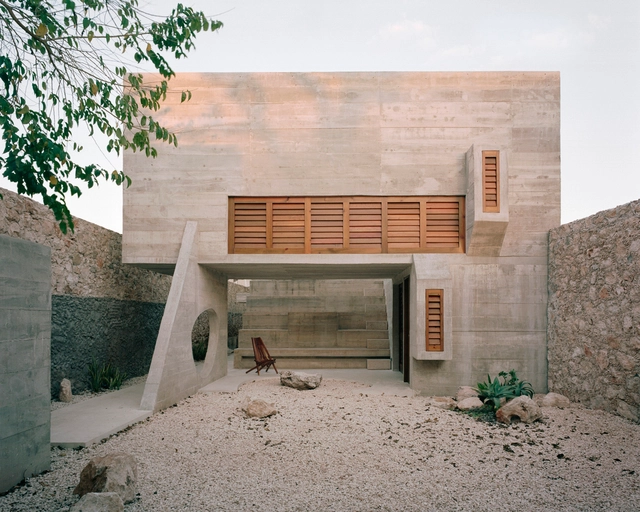
Latin American architecture is rich and diverse. This is reflected in the various stones used across different regions over the centuries. These materials highlight the varied geology of Latin America and illustrate how local cultures have adapted their construction methods to natural conditions, resulting in unique and meaningful architecture. In contemporary architecture, stone aligns with sustainability principles due to its durability, low carbon footprint, and local availability. Additionally, stone's aesthetic appeal enhances the creation of timeless spaces that strengthen the connection with nature and the surrounding landscape.

The New Stone Age: 12 Contemporary Houses in Latin America and the Diversity of Their Natural Stones - Image 1 of 4The New Stone Age: 12 Contemporary Houses in Latin America and the Diversity of Their Natural Stones - Image 2 of 4The New Stone Age: 12 Contemporary Houses in Latin America and the Diversity of Their Natural Stones - Image 3 of 4The New Stone Age: 12 Contemporary Houses in Latin America and the Diversity of Their Natural Stones - Image 4 of 4The New Stone Age: 12 Contemporary Houses in Latin America and the Diversity of Their Natural Stones - More Images+ 12

A New Museum in Cyprus and A Private Residence in Greece: 8 Unbuilt Projects Championing Stone and Submitted by the ArchDaily Community

Subscriber Access | 

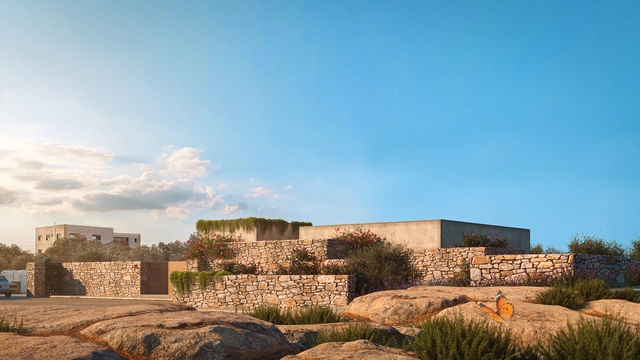
Throughout history, stone has been a vital building material because of its strength, beauty, and inherent appeal. Stone has been used to build long-lasting constructions for ages, from historic monuments to contemporary residences. Because of its resilience, it is suitable for both interior and exterior design projects, providing a diverse array of appearances. There are numerous varieties of stone, each with a distinct texture and color, including marble, granite, and limestone. Because of this diversity, stone may be creatively used by architects and builders to create accents or entire buildings. This curated selection of Unbuilt Architecture, submitted by the ArchDaily community, showcases how stone is still a dependable and adaptable building material that can combine old-world craftsmanship with contemporary style.

A New Museum in Cyprus and A Private Residence in Greece: 8 Unbuilt Projects Championing Stone and Submitted by the ArchDaily Community - Image 31 of 4A New Museum in Cyprus and A Private Residence in Greece: 8 Unbuilt Projects Championing Stone and Submitted by the ArchDaily Community - Image 42 of 4A New Museum in Cyprus and A Private Residence in Greece: 8 Unbuilt Projects Championing Stone and Submitted by the ArchDaily Community - Image 43 of 4A New Museum in Cyprus and A Private Residence in Greece: 8 Unbuilt Projects Championing Stone and Submitted by the ArchDaily Community - Image 36 of 4A New Museum in Cyprus and A Private Residence in Greece: 8 Unbuilt Projects Championing Stone and Submitted by the ArchDaily Community - More Images+ 39

How Lime Enhances Contemporary Architecture

Subscriber Access | 

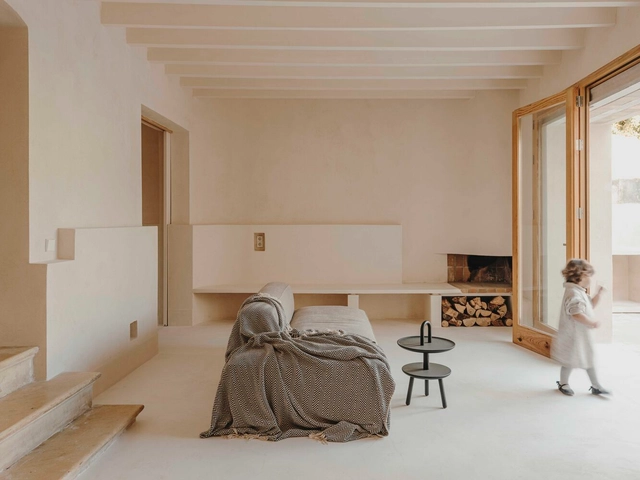
The history of the use of lime in the construction industry dates back thousands of years, spanning cultures and communities worldwide. In fact, around 4000 B.C., the ancient Egyptians used quicklime mixed with water as a building material for their pyramids. Although lime has multiple applications in the food and agricultural industries, as well as in chemical, mining, and steel industries, in architecture it is one of the main construction materials due to its versatility, adhesion, waterproofing, workability, performance, setting, and durability, which allow for the creation of masonry mortars, interior or exterior plasters, among other functions.

How Lime Enhances Contemporary Architecture - Image 1 of 4How Lime Enhances Contemporary Architecture - Image 2 of 4How Lime Enhances Contemporary Architecture - Image 3 of 4How Lime Enhances Contemporary Architecture - Image 4 of 4How Lime Enhances Contemporary Architecture - More Images+ 25

10 Start-ups Creating Innovative and Sustainable Building Materials, from Mycelium Bricks to Water Purifying Tiles

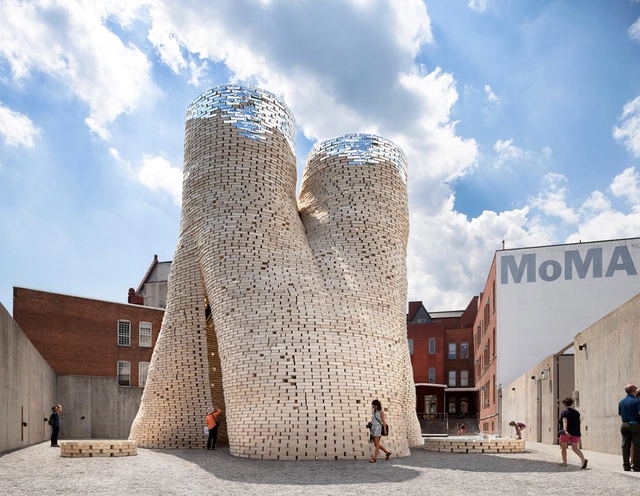
The building industry is one of the biggest generators of carbon emissions, with some estimates suggesting that 38% percent of all CO2 emissions are linked to this field. As a response to the current crisis, architects, designers, and researchers are taking measures to reduce their carbon footprint during and after construction. Many initiatives and research teams are looking at building materials to find low-carbon solutions and reduce the impact of building materials during production.

One of the most prominent fields of research is concerned with biofacture, the type of process that involves using biological organisms to manufacture materials. By understanding the abilities of organisms such as algae of fungi, alternatives to widely used materials can become carbon neutral or even carbon negative. Other initiatives are researching novel ways to use untapped, yet readily available resources such as desert sand, soil, or waste from demolitions.

10 Start-ups Creating Innovative and Sustainable Building Materials, from Mycelium Bricks to Water Purifying Tiles - Image 1 of 410 Start-ups Creating Innovative and Sustainable Building Materials, from Mycelium Bricks to Water Purifying Tiles - Image 2 of 410 Start-ups Creating Innovative and Sustainable Building Materials, from Mycelium Bricks to Water Purifying Tiles - Image 3 of 410 Start-ups Creating Innovative and Sustainable Building Materials, from Mycelium Bricks to Water Purifying Tiles - Image 4 of 410 Start-ups Creating Innovative and Sustainable Building Materials, from Mycelium Bricks to Water Purifying Tiles - More Images+ 7

Groupwork Architects Investigate the Sustainable Advantage of Structural Stone

Groupwork, in collaboration with Jackson Coles, Eight Associates, Webb Yates, The Stonemasonry Company and Polycor, is investigating the possibilities to build large commercial buildings in stone, through the Stone Tower Research project and The New Stone Age exhibition.

Groupwork Architects Investigate the Sustainable Advantage of Structural Stone - Image 1 of 4Groupwork Architects Investigate the Sustainable Advantage of Structural Stone - Image 2 of 4Groupwork Architects Investigate the Sustainable Advantage of Structural Stone - Image 3 of 4Groupwork Architects Investigate the Sustainable Advantage of Structural Stone - Image 4 of 4Groupwork Architects Investigate the Sustainable Advantage of Structural Stone - More Images+ 17

6 Materials That Age Beautifully

Subscriber Access | 

Often as architects we neglect how the buildings we design will develop once we hand them over to the elements. We spend so much time understanding how people will use the building that we may forget how it will be used and battered by the weather. It is an inevitable and uncertain process that raises the question of when is a building actually complete; when the final piece of furniture is moved in, when the final roof tile is placed or when it has spent years out in the open letting nature take its course?

Rather than detracting from the building, natural forces can add to the material’s integrity, softening its stark, characterless initial appearance. This continuation of the building process is an important one to consider in order to create a structure that will only grow in beauty over time. To help you achieve an ever-growing building, we have collated six different materials below that age with grace.

This Stone Vault Prototype Creates Almost No Material Waste

Subscriber Access | 

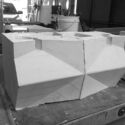
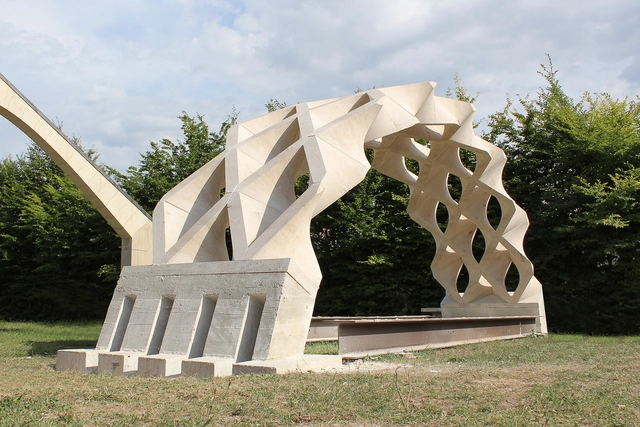
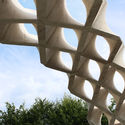
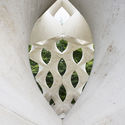
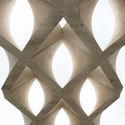
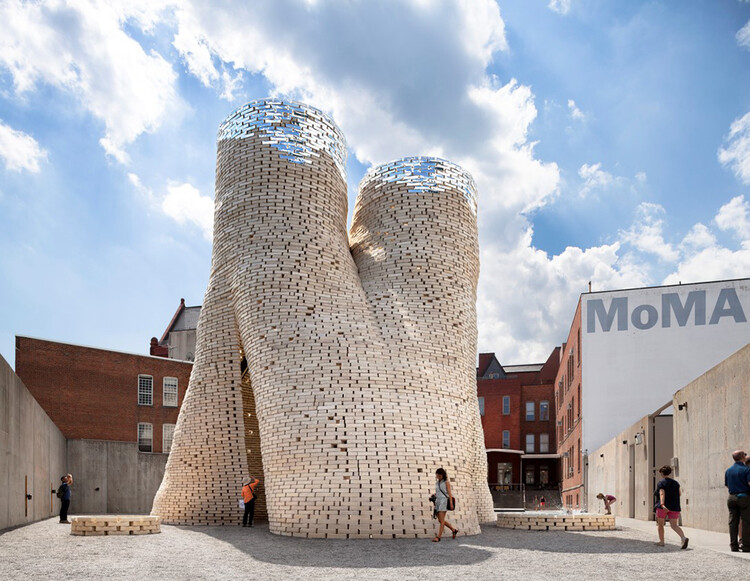
Italy-based New Fundamentals Research Group recently designed and built a full-scale prototype of an experimental barrel-vaulted stone structure for SNBR, a French company that specializes in cutting-edge stone construction. The structure is named Hypar Vault in a reference to the geometry of its constituent blocks; it uses two types of prefabricated stone modules—one type is the mirror image of the other—whose designs are based on the hypar (hyperbolic paraboloid), one of the only "doubly-ruled" surfaces in geometry. The use of these configurations allowed the vault to be constructed with almost zero wasted stone.
This Stone Vault Prototype Creates Almost No Material Waste - Image 2 of 4This Stone Vault Prototype Creates Almost No Material Waste - Image 5 of 4This Stone Vault Prototype Creates Almost No Material Waste - Image 6 of 4This Stone Vault Prototype Creates Almost No Material Waste - Image 8 of 4This Stone Vault Prototype Creates Almost No Material Waste - More Images+ 24

Autodesk's Generative Design Pavilion Plays with Properties and Fabrication Processes in Stone and Fabric

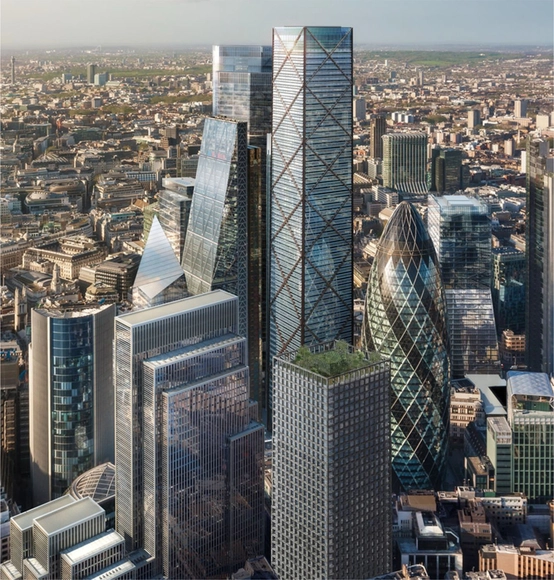
At Autodesk's 2016 conference in Las Vegas, a team from Autodesk's BUILD Space led by principal research engineer Andrew Payne collaborated with manufacturer Quarra Stone, engineers Simpson Gumpertz and Heger, and University of Michigan assistant professor Sean Ahlquist to unveil its new Generative Design Pavilion. The project is an exploration of materiality, with stalagmite stone forms that rise up from geometric floor panels to meet fabric that stretches down from a canopy above. The junction of textile and stone aims to emphasize the distinct behaviors of the two materials.
Autodesk's Generative Design Pavilion Plays with Properties and Fabrication Processes in Stone and Fabric - Image 1 of 4Autodesk's Generative Design Pavilion Plays with Properties and Fabrication Processes in Stone and Fabric - Image 2 of 4Autodesk's Generative Design Pavilion Plays with Properties and Fabrication Processes in Stone and Fabric - Image 3 of 4Autodesk's Generative Design Pavilion Plays with Properties and Fabrication Processes in Stone and Fabric - Image 4 of 4Autodesk's Generative Design Pavilion Plays with Properties and Fabrication Processes in Stone and Fabric - More Images+ 15

How Rebuilding Britain’s Houses of Parliament Helped Create Clean Air Laws

MIT has published new research revealing how the reconstruction of the British Houses of Parliament paved the way for legislation to tackle air pollution in Victorian London. Through original archival work into the 1840-1870 reconstruction, MIT architectural historian Timothy Hyde has revealed that work on the Parliament building was so hindered by air pollution that the British government ordered an inquiry into the effects of the atmosphere on new buildings.

How Rebuilding Britain’s Houses of Parliament Helped Create Clean Air Laws - Featured ImageHow Rebuilding Britain’s Houses of Parliament Helped Create Clean Air Laws - Image 1 of 4How Rebuilding Britain’s Houses of Parliament Helped Create Clean Air Laws - Image 2 of 4How Rebuilding Britain’s Houses of Parliament Helped Create Clean Air Laws - Image 3 of 4How Rebuilding Britain’s Houses of Parliament Helped Create Clean Air Laws - More Images

NLÉ Architects' “Rock and the Bean” Invites the Public to Leave a Mark on their Lakefront Kiosk

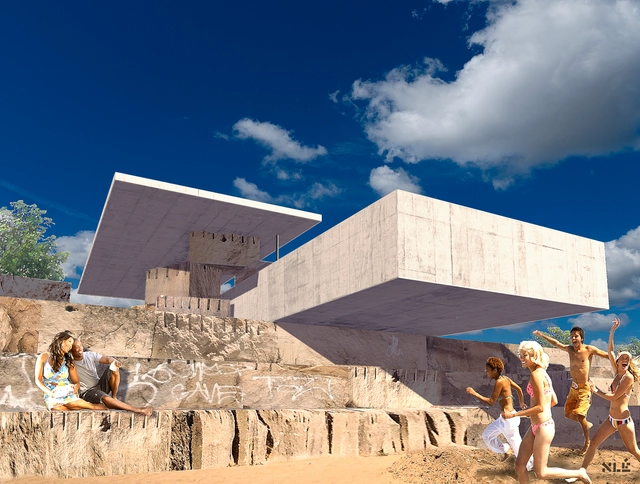
With its Lakefront Kiosk competition, the Chicago Architecture Biennial is hoping to leave a long-lasting impact and legacy for its city. The ROCK, a submission from NLÉ Architects in collaboration with School of the Art Institute of Chicago, is giving the public the opportunity to shape that legacy. Throughout the course of the event, which opened on October 3rd, eventgoers are invited to Millennium Park to add value to the 1930s limestone rocks that will create the pavilion through carving, painting, performances and other unimagined processes.

Video: Robert A.M. Stern on Designing Background Buildings and The Limestone Jesus

Subscriber Access | 

"We have lots of silly buildings being built, in my opinion. The buildings should not look like Lady Gaga,” stated Robert A.M. Stern in the latest installment by the Louisiana Channel.

The Barnes Foundation on the Parkway / Tod Williams + Billie Tsien

Subscriber Access | 
The Barnes Foundation on the Parkway / Tod Williams + Billie Tsien - Featured Image
© The Barnes Foundation

The last chance to see the Barnes Foundation’s artwork in its original setting has passed. It is now being prepared for the move to its new home in downtown Philadelphia. Architects Tod Williams and Billie Tsien designed the new building for the Barnes Foundation with respect for its strong history and as a reflective addition of the foundation’s mission. The building is scheduled for completion in late 2011. More after the break.