
-
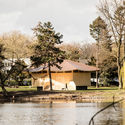
Architects: RKW Architektur +
- Area: 175 m²
- Year: 2019
-
Professionals: Krogmann Ingenieur Holzbau



Carlo Ratti Associati, working in collaboration with energy company Eni, has developed an architectural structure made of mushrooms, unveiled at Milan Design Week. “The Circular Garden” was grown from soil made over the past six weeks, and will be returned to the soil at the end of the month. The structure is composed of a series of arches adding up to a 1-kilometer-long mycelium, experimenting with sustainable structures that can grow organically.

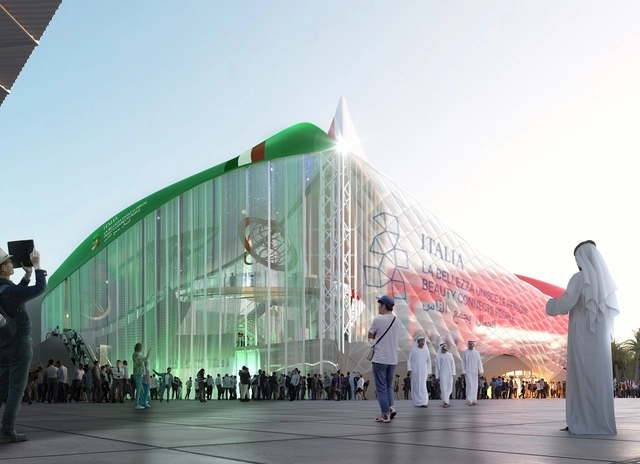
Carlo Ratti Associati has published details of their competition-winning design for the Italian Pavilion at Expo Dubai 2020, designed in collaboration with Italo Rota, Matteo Gatto, and F&M Ingegneria. Inspired by Dubai’s marine tradition, the pavilion’s construction sequence will see three boats arrive in Dubai by sea, before being raised and turned upside down to become the roof of the pavilion.
Titled “Sailing Beauty,” the pavilion seeks to explore new ways in which “beauty connects people,” embodying the theme of Italy’s participation in Dubai Expo 2020. The pavilion also pays tribute to the long history of explorers throughout the centuries who “sailed the seas and wove together a shared Mediterranean cultural heritage.”


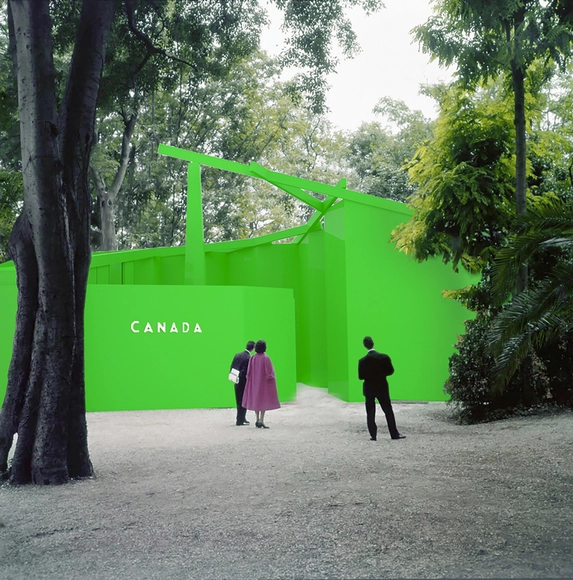
With its flashbulb neighbor to the south taking much of the spotlight, few know the extent of Canada's involvement in the film industry. The recently announced Canadian Pavilion for the 2020 Venice Biennale, curated by Montreal based practice T B A and McGill academic David Theodore, aims to change that.
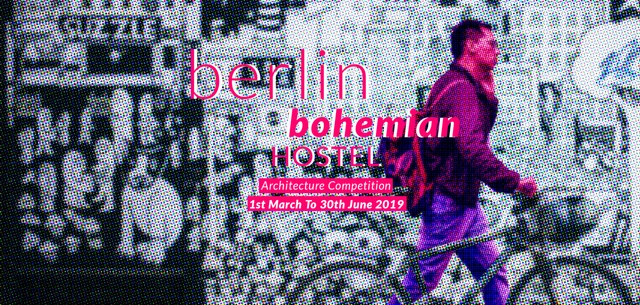
Berlin is the 21st century contemporary world’s ideal capital. The city left its torrid history behind to quickly grow and cement itself into the intellectual and cultural core of the world. Berlin is the epicenter of any new movement that starts to demolish the old-world order. Ever since the wall came down in 1989, Berlin has been known as a bohemian paradise, a place where the empty spaces between east and west could be pioneered and inhabited by the most creative types, who could create and carouse with impunity. Numerous artists from across the globe have taken full advantage of Berlin’s transition period throughout the 1990s and 2000s to find gallery and performance spaces in the most unexpected places. The underground art scene is very modern, very edgy and relatively unlimited in the city of Berlin.

MANIFESTO
Amsterdam has been one of Europe's pioneers of architecture and design, largely because of the 17th century rings of canal houses, gabled facades, windmills and drawbridges. Modern architecture developed organically in Amsterdam between the facades of historical buildings, making it one of the finest blends between Renaissance, Berlage and the Amsterdam School. The city has a very strong cultural and artistic identity. Amsterdam is the most important cultural and artistic center to the north from Paris and between London and Cologne.
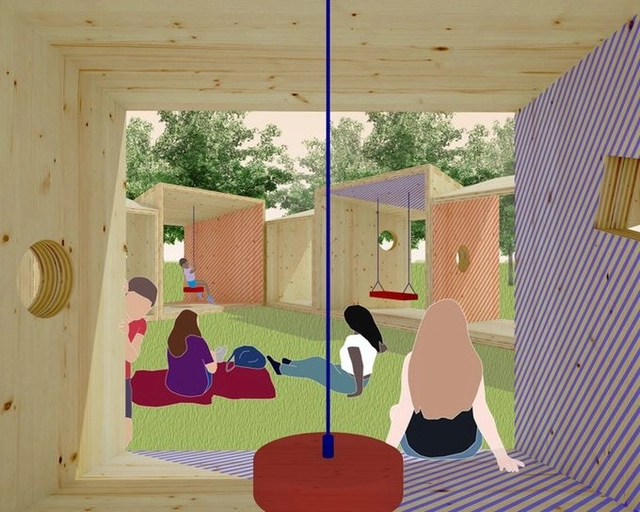
The New York chapter of the American Institute of Architects has announced “Salvage Swings” by Somewhere Studio as the winner of the 2019 City of Dreams competition. The temporary art structure is now the subject of approvals and fundraising, with the goal of constructing the scheme on Roosevelt Island in the summer of 2019.
The pavilion, to be branded the “City of Dreams Pavilion,” utilizes scrap cross-laminated timber panels recovered from a construction project at the University of Arkansas, repurposing them in an “inviting summer pavilion” featuring 12 framed swing modules.
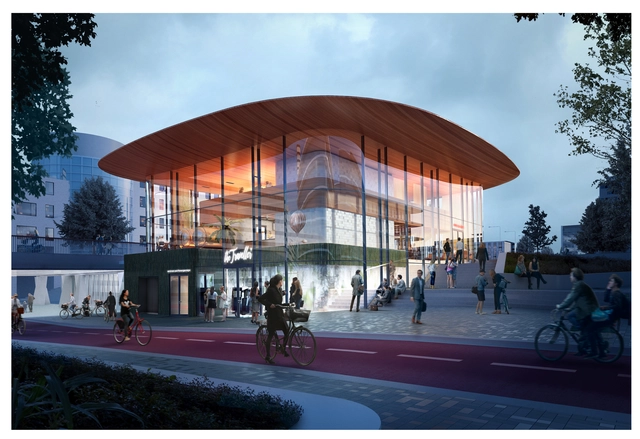
Construction has begun on the Powerhouse Company-designed pavilion for the ING campus in Amsterdam. Located in the up-and-coming district of Amsterdam Southeast, the 900-square-meter pavilion seeks to “make a bold statement while integrating with its surroundings."
The clean, minimalist pavilion will sit at the heart of the ING campus, serving as both a dining area and a multifunctional space for the community. Emphasizing the natural landscape, the pavilion offers a synergy between the built and natural environment through a friendly circular form, a timber interior, and green Tichelaar tiles on the north and east facades.
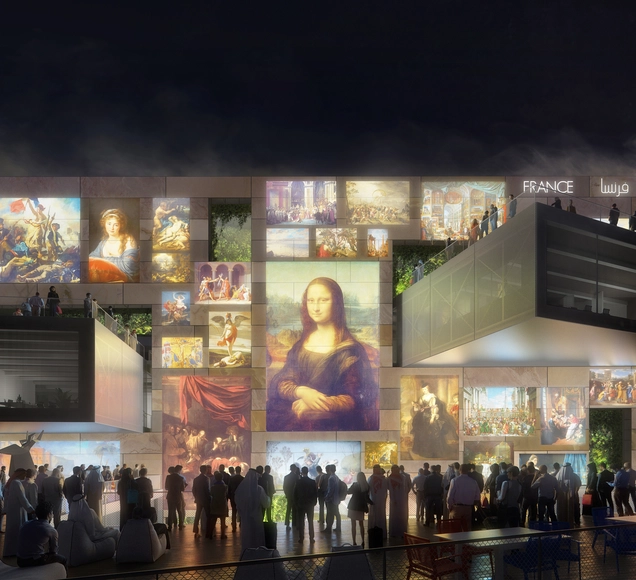
Clément Blanchet Architecture in collaboration with Etienne Tricaud (AREP) have been shortlisted for the French pavilion at Expo 2020 Dubai. The winner will be announced in February. The proposal is intended to enhance both the virtual world and the real to support human communication, cultures and interactions. The pavilion will be built around the themes of Light and Mobility to create a hidden oasis with two vertical gardens facing one another.
When learning about architecture, there is no replacement for practical experience: seeing how materials can be joined together, how structural elements respond to the stresses placed upon them, or how construction techniques can alter the finished project. For this reason, it is a good idea to give students a chance for some hands-on experience building real structures—something that, due to budgetary constraints and the academic culture of many architecture schools, has sadly been uncommon in the past.
However, in recent years, this culture has started to shift, with increasing numbers of architecture schools finding ways for students to be involved in construction projects, from small, temporary interventions and pavilions, to larger permanent buildings. In order to show the excellent work that can be done in an educational context, for the fourth time ArchDaily is calling on students and professors to submit the design-build projects they have completed in the past year. As always, we're teaming up with all of ArchDaily en Español, ArchDaily Brasil, and ArchDaily China, in the hope that we can present the best work from students worldwide to a worldwide audience. Read on to find out how you can take part.
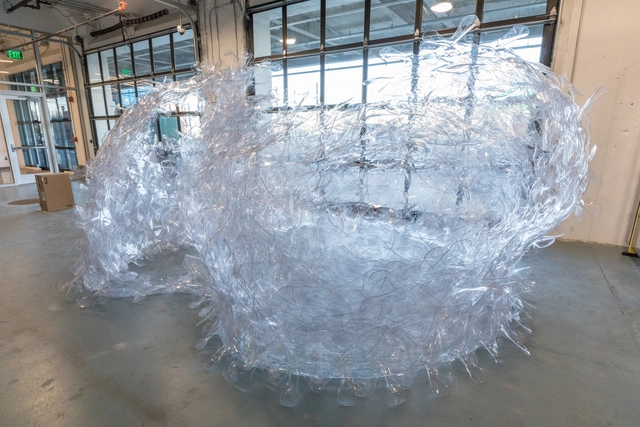
Testing the limits of structural viability and computer-based modeling, the 2017 Komorebi Pavilion used thin sheets of polyethylene terephthalate (PETG) in a unique way to develop an ethereal, self-supporting enclosure. The pavilion is the result of a collaboration between architecture students at Harvard Graduate School of Design (GSD) and engineering researchers at the University of Tokyo.
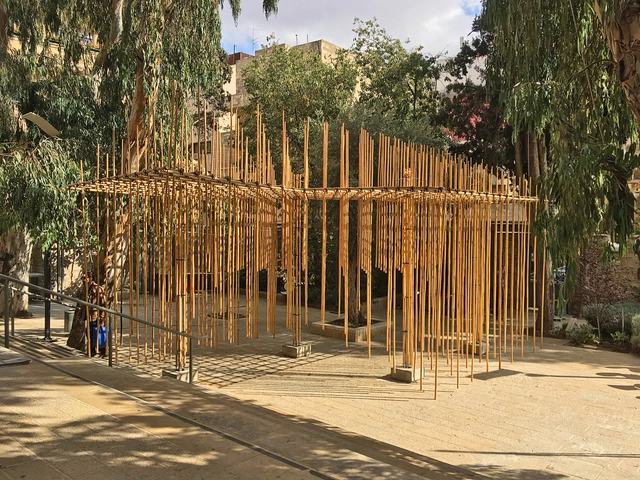
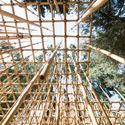
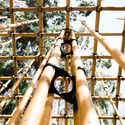
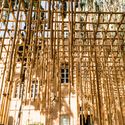
The Academy Bezalel students' bamboo project, in Jerusalem, is a proposal that approaches the construction in real scale and the experimentation with materials as an important driving force of architectural design.
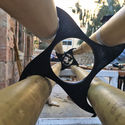
The project, a suspended bamboo pavilion, can be reused with different configurations in different places with its joints made up of ropes and 3D printed pieces.
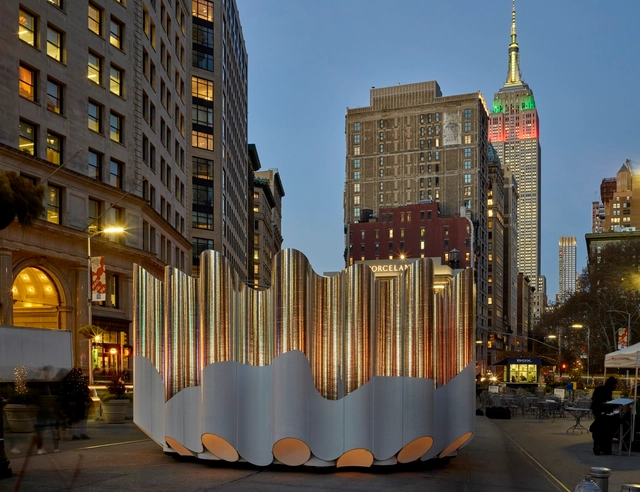
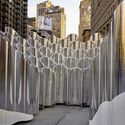
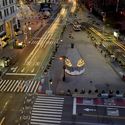
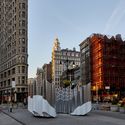
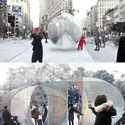
The winner of the fourth annual Flatiron Plaza Holiday Design Competition, ‘Flatiron Refelection’ by Brooklyn-based Future Expansion, has been unveiled in New York City.
Hosted by the Flatiron/23rd Street Partnership Business Improvement District (BID) and Van Alen Institute, the temporary installation will serve as the “highly-visible centerpiece” of the neighbourhood’s holiday season programming.
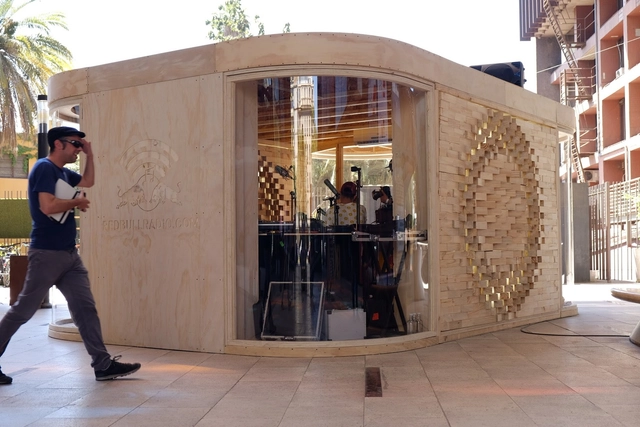
Chilean architect Verónica Arcos has been invited to design a modular wood studio that was installed in the central courtyard of the Gabriela Mistral Cultural Center. The show was part of the Red Bull Radio Pop Up Santiago, a radio event that broadcasts eight hours a day of live conversation, musical selections and live shows in the search to spread what is now known as Chilean musical identity.

The Kharayeb Archaeological Museum (KAM) was designed by Shiogumo in the agricultural lands of the coastal village Kharayeb, in the south of Lebanon. The site-specific museum was commissioned to preserve and enhance the historical, cultural, and public significance by the directors of the archeological mission and site, Dr. Ida Oggiano (Istituto di Studi sul Mediterraneo Antico of CNR, Italy) and Dr. Wissam Khalil (Lebanese University).

The fourth annual Flatiron Public Plaza Holiday Design Competition winner has been announced--Flatiron Reflection by Future Expansion. In June 2017 non-profit groups Flatiron/23rd Street Partnership and Van Alen Institute invited ten design and architecture firms to submit proposals. “The initiative has become a valuable platform for launching new practices, a visible celebration of inventive, temporary designs that enliven public space during a chillier season, and an opportunity to understand how these spaces impact our minds and bodies” states David van der Leer, Executive Director of Van Alen Institute.
Of the ten design and architecture firms invited to submit proposals, Future Expansion with their Flatiron Reflection won the competition. Other participating firms include Annie Barrett, The Principals, Kyle May, Hive Public Space, Schaum Shieh, FIRM a.d. and Practice.