1. ArchDaily
  2. Participatory Design

Participatory Design: The Latest Architecture and News

Living and Working Together, Reflections on Productivity and Empathy Post-Covid 19

ArchDaily's theme of August 2020, How We Will Live Together, invites readers to contemplate the way we inhabit spaces with those around us. In this article, we address different aspects of coexistence in a world impacted by COVID-19 and the changes that need to be made in order to create a world where everyone has the space to live, work, and grow.

Nowadays, our day to day interactions with those around us hinge on social distancing, leading many to question--is this truly the best solution for curbing the spread of COVID-19? With people worldwide still reeling from the socio-economic upheaval caused by the pandemic, the concept of forcefully distancing yourself from friends and family, especially at at time when you most need them, seems just plain inhuman. While distancing is undoubtedly necessary, it seems more optimistic words would serve to better drive home the message. For example, a slogan like 6ft of Empathy maintains the necessary safety principles without stripping away the social element that humanity thrives on.

Designers and Planners Take Note: People’s Fondest Memories Rarely Involve Technology

This article was originally published on Common Edge.

As planners who regularly engage everyday citizens in the planning process, we like to start by having people build their favorite childhood memories with found objects. Most often, these memories are joy-infused tales of the out-of-doors, nature, friends, family, exploration, freedom. Rarely do these memories have much to do with technology, shopping, driving, watching television, and so many of the other things that seem to clutter up our daily lives. But then again, these are folks who have known a world that has been—at least for part of their lives—screen- and smartphone-free. 

Socially-Organized Housing in Latin America: The Experience of Christopher Alexander

Subscriber Access | 

The series of articles developed by Nikos A. Salingaros, David Brain, Andrés M. Duany, Michael W. Mehaffy and Ernesto Philibert-Petit researches the peculiarities of social housing in Latin America. This time, the authors focus on the role of participation in design processes and in the construction of a healthy urban fabric based on the experience of Christopher Alexander.

How Community Participation can Assist in Architectural and Urban Post-Disaster Reconstruction

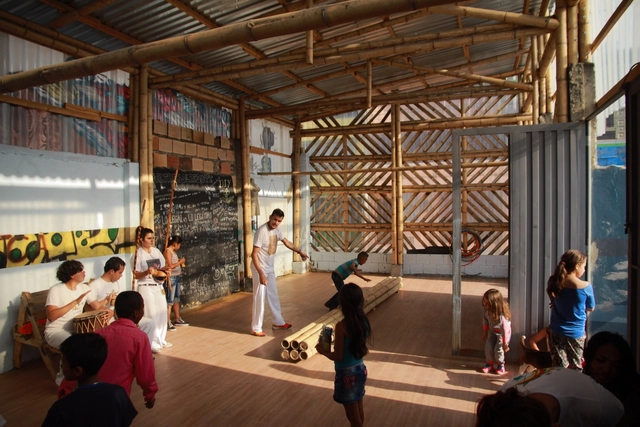
The concepts of autonomy, collaboration, and participation have gained relevance in architecture and urbanism through collaborative actions involving the community, architects, urban planners, and designers. As the number of climate disasters has significantly increased - doubling in the last 40 years according to a report released in 2016 by CRED (Centre for Research on the Epidemiology of Disasters) - in addition to conflicts and other tragedies, the demand for the rebuilding of houses and infrastructure in affected areas has grown simultaneously. This has called for a major collaborative effort in architectural and urban reconstruction.

Government and Housing in a Time of Crisis: Policy, Planning, Design and Delivery

Keynote Speakers:

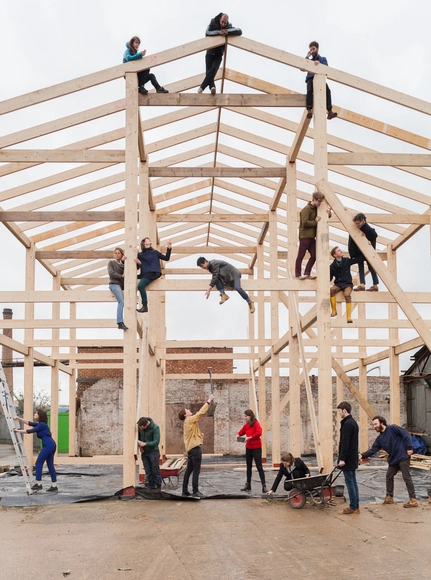
Art and Architecture Collective (Turner Prize Winners), Assemble | David Waterhouse, Commission of Architecture and the Built Environment | Andy von Bradsky, Royal Institute of British | Steve Cole, National Housing Federation | Mayor of Liverpool, Liverpool City | Charlotte Harrison, Northern Housing Consortium

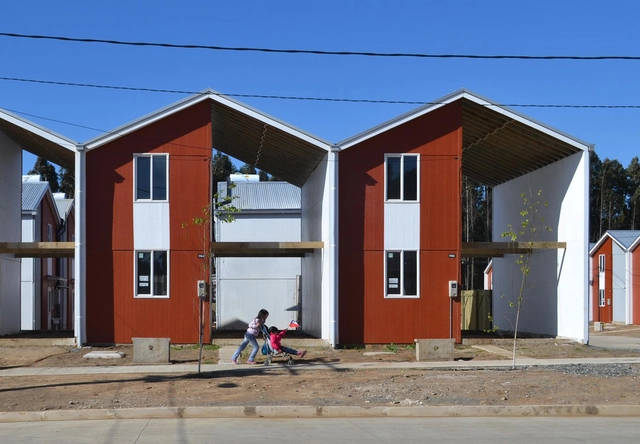
The role of government in ensuring social and affordable housing is complex. With budget cuts and shifts in political priorities changing the terrain constantly what the governments of our cities need are new long term ideas

These Churches Are the Unrecognized Architecture of Poland's Anti-Communist "Solidarity" Movement

These Churches Are the Unrecognized Architecture of Poland's Anti-Communist "Solidarity" Movement - Image 5 of 4

For nearly two millennia, European architecture was closely affiliated with and shaped by Christianity. Prior to the advent of Modernism, there was scarcely a style that was not promoted, or more likely defined, by the designs of churches. Such a hypothesis makes it difficult to imagine Medieval England outside the purview of Gothic Cathedrals, or Renaissance Italy as separate from its Basilicas. But with the Industrial Revolution and the economic and population growth that ensued, infrastructure and housing became the new symbols and necessities of cultural representation, finding their ultimate expression in the ease and simplicity of Modernism. The field of architecture, so long shaped and dominated by the church, had been subsumed by the changing concerns of a commercially driven society. Of course there were still churches being built, but the typology that once defined architecture in its ubiquity became novel and rare. Or so we’ve all been lead to believe.

Surprising as it might be, in the wake of World War II and under Soviet control, Poland built more churches than any other country in Europe. The majority were built in the 1980s, at a time when church construction was neither authorized nor forbidden, and as a result played a pronounced role in Cold War politics. The construction of these churches was a calculated affront to the proletariat-minded Modernism of the Soviets. In their project Architecture of the VII Day, Kuba Snopek, Iza Cichońska and Karolina Popera have sought to comprehensively document these Polish churches and the circumstances of their construction. Unique not only in how they defied the prefabrication and regularity of the Eastern Bloc, the churches were community-led endeavors that relied on local funding and input, long before these practices became buzzwords in 21st century architectural circles.

These Churches Are the Unrecognized Architecture of Poland's Anti-Communist "Solidarity" Movement - Image 3 of 4These Churches Are the Unrecognized Architecture of Poland's Anti-Communist "Solidarity" Movement - Image 30 of 4These Churches Are the Unrecognized Architecture of Poland's Anti-Communist "Solidarity" Movement - Image 36 of 4These Churches Are the Unrecognized Architecture of Poland's Anti-Communist "Solidarity" Movement - Image 53 of 4These Churches Are the Unrecognized Architecture of Poland's Anti-Communist Solidarity Movement - More Images+ 73