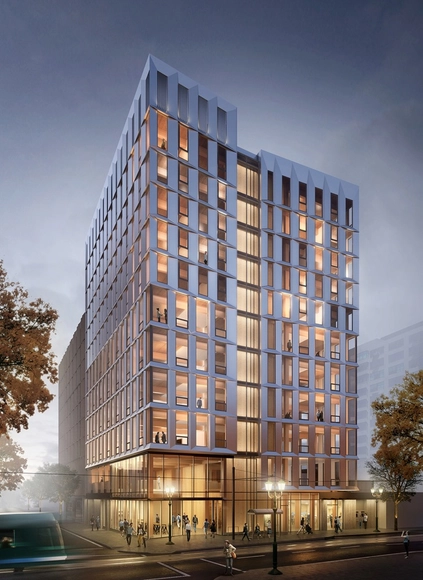
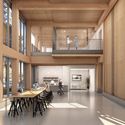
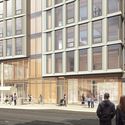
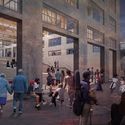
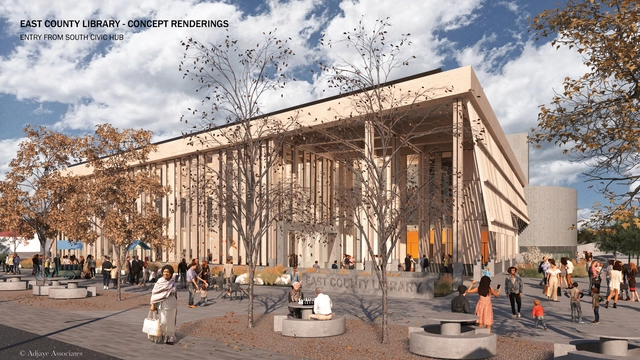
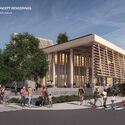
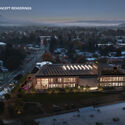
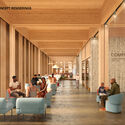
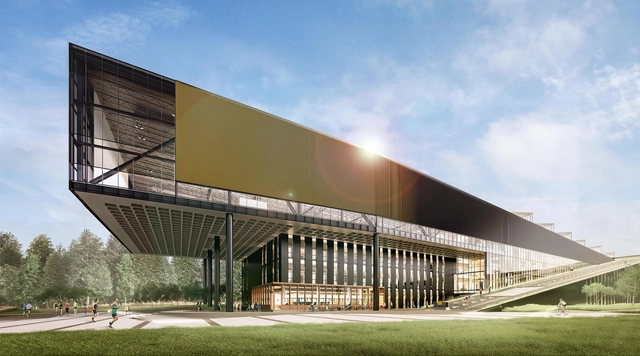
Adjaye Associates, in collaboration with Holst Architecture, the prime architect of record, have unveiled the first renderings for the new East County Library in Portland, Oregon, a new facility that will provide a diverse range of services and programming. The design of the 95,000-square-foot building is informed through extensive community engagement and feedback. Several local organizations aid these efforts by organizing public community events, focus groups, teen outreach, and surveys. As the project is currently in the schematic design phase, the images presented are early drafts, likely to change to reflect the input received.
Although it was originally published in 2019,this essay by Randy Nishimura, lightly updated, serves as a rebuttal of sorts to Duo Dickinson’s recent Common Edge piece, “The Architectural Pandemic of the ‘Stick Frame Over Podium’ Building.” Dickinson likens the building type to a plague; Nishimura offers a contrarian’s perspective.
A recent spate of articles bemoaning the proliferation of 5-over-1 apartment buildings caught my attention. Outlets such as Bloomberg, Common Edge, Crosscut, and Curbed have all commented on the building type, the common thread being a reproach for their ubiquity, sameness, and inexpensive construction. Some of the critiques rightfully point to the confluence of multiple factors—evolving building codes, a lack of developable land, rising construction costs, and an acute lack of affordable housing—that have given rise to countless examples of the type across the country. The same dynamics are in play here in my hometown of Eugene, Oregon, so we naturally have our share of 5-over-1 developments.
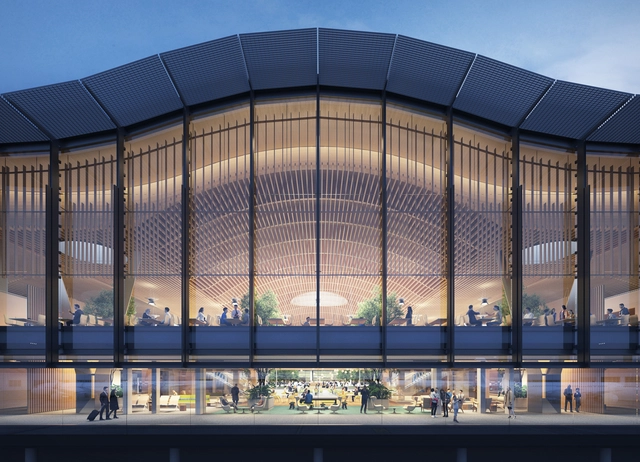
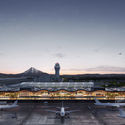
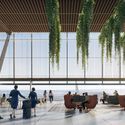
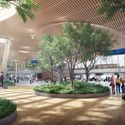
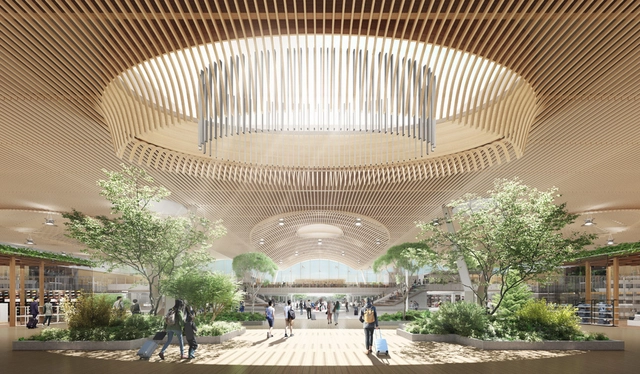
ZGF Architects has shared new visuals showcasing the main terminal of the Portland International Airport (PDX) in Oregon. Inspired by the forest landscapes of the Pacific Northwest, the terminal renovation and expansion emphasizes openness, light and connection to the region’s materials. The structure features a series of skylights and an expansive timber roof made from sustainably sourced regional wood.
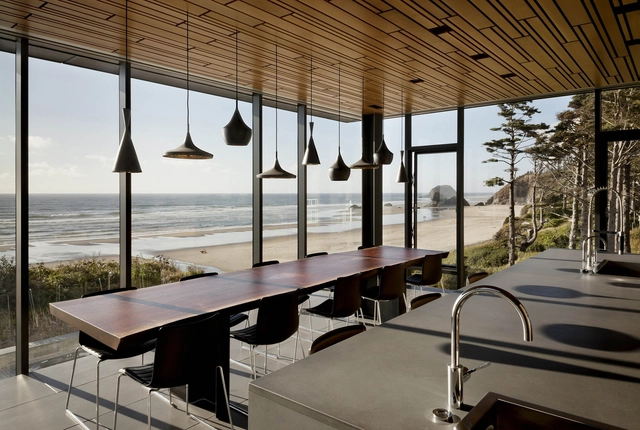
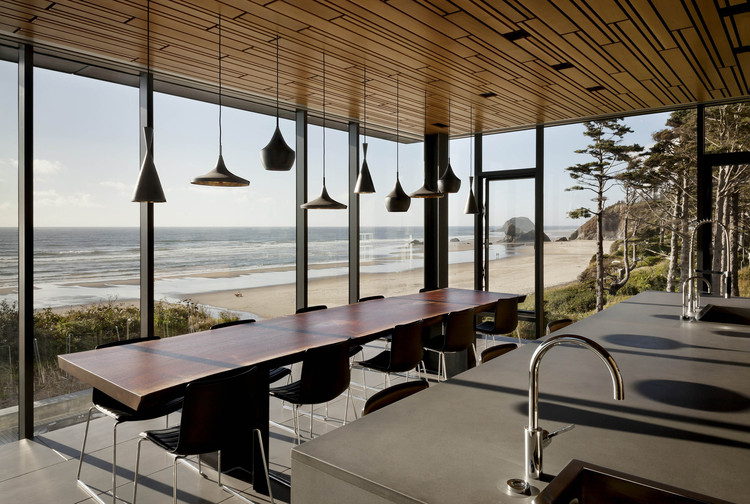
Oregon holds some the most varied geography and private developments in the United States. Home to diverse landscapes and architecture, the state is defined by the Cascade mountain range, windswept coastlines, dense forests, and a high desert environment to the east. These varied geographies have shaped the state’s construction techniques and residential design. At the heart of these building efforts are timber and glass homes found throughout the state.
ZGF Architects has shared a new look at the main terminal of the Portland International Airport (PDX) in Oregon. Scheduled for completion in 2025, the $1.5 billion terminal will be the largest of five capital improvement projects by the Port of Portland. The structure features a series of skylights and an expansive timber roof made from sustainably sourced regional wood. The design draws inspiration from nature and the "signature greenery" of Oregon.
MASS Design Group has been selected to lead the tribal engagement process of the future Willamette Falls Riverwalk. The partnership was announced by the Willamette Falls Trust, with the team working to ensure that the Riverwalk centers on indigenous experiences and educates the greater Portland community on the Native stories of the region. The project will focus on public space that celebrates the human and natural history of Willamette Falls.
Nike has announced that the latest building in its World Headquarters (WHQ) campus expansion will be named after LeBron James. The new building is designed by Olson Kundig and will be home to Nike’s Beaverton-based Advanced Innovation team. The project will include a state-of-the-art Sport Research Lab and explore the future of sports science.
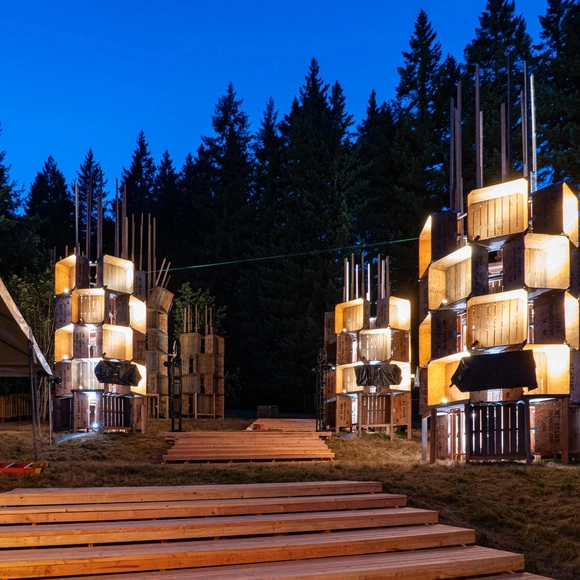
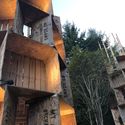
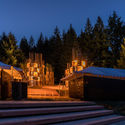
Architecture students at Portland State University have created a new stage fro Pickathon Music Festival from apple harvesting bins in Happy Valley, Oregon. The temporary performance venue was designed and built from reused materials with collaborators Howard S. Wright, Catena Engineers, and Pickathon. Dubbed the Treeline Stage, the venue features seven towers of varying heights to evoke an orchard of trees.
Oregon has become the first state in the U.S. to allow timber buildings to rise higher than six stories without special consideration. The recent addendum to the state's building code is the result of Oregon’s statewide alternate method (SAM), a program that allows for alternate building techniques to be used after an advisory council has approved the “technical and scientific facts of the proposed alternate method.” The decision stands as a precedent for future construction across the United States.
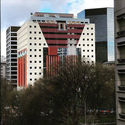
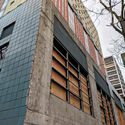
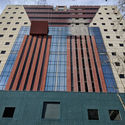
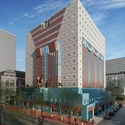
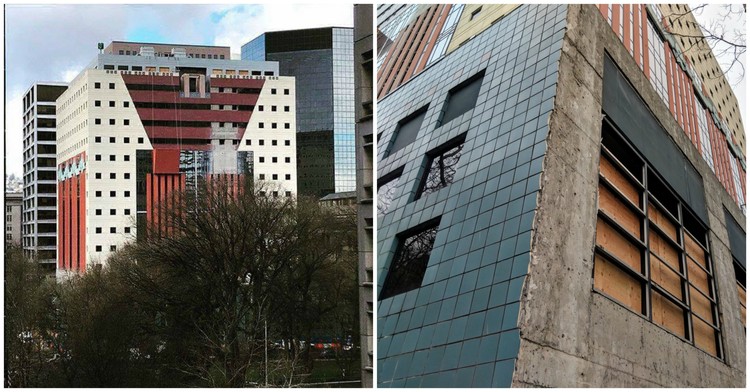
Work has begun on the dismantling of the facade of Michael Graves’ iconic Portland Building, part of a $195 million project that could see the building lose its inclusion on the National Register of Historic Places.
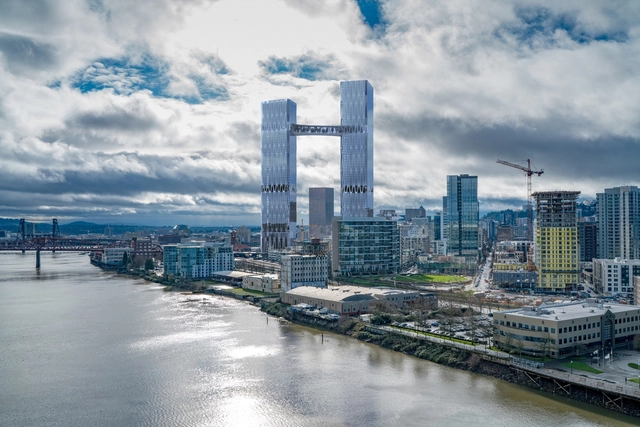
New renderings have been revealed of Kaven + Co. and William / Kaven Architecture’s plans for the new Broadway Corridor in Portland, showcasing the full masterplan for the first time. Conceived as a new mixed-use district and transportation hub connecting Union Station and the Pearl District, the Broadway Corridor will feature the city’s new tallest and one of the west coast’s tallest buildings.
William / Kaven and Kaven + Co. have unveiled plans for a bridged mixed-use skyscraper development that, if built, would become the tallest building in Portland, Oregon.
The project would replace the city’s soon-to-be-demolished USPS headquarters with a new 5-million-square-foot development consisting of multiple high-rise buildings containing facilities for retail, office, residential and a hotel.
The plan is organized around two central skyscrapers, the taller of which would top out at over 970 feet – more than foot feet taller than the city’s current tallest building, the Wells Fargo Center. The two skyscrapers would be linked at 680 feet high by a 236-foot-long glass-walled bridge housing a skygarden and offering unparallelled views of the city and the surrounding landscape.
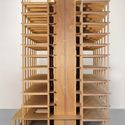
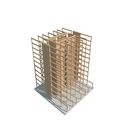
The United States’ first mass-timber highrise (defined by Emporis Building Standards as a building with an architectural height of 115-328 feet, or between 12 and 40 floors) has been granted planning permission, allowing construction on the landmark project to begin. Located in downtown Portland, Oregon, the building known as Framework will cap out at 12 floors and approximately 128 feet, ushering in a new era of tall building construction in the US.
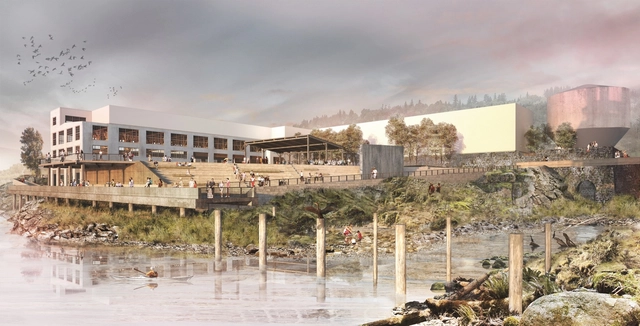
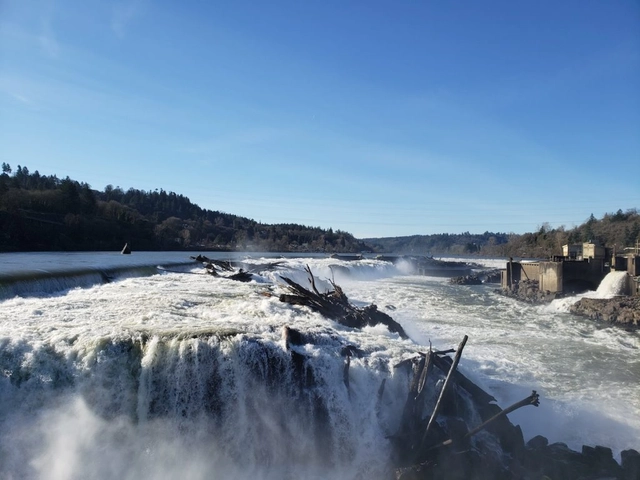
Snøhetta has unveiled plans for a new riverwalk masterplan located alongside Oregon’s Willamette Falls – the second largest waterfall by volume in North America – that will open up the attraction to public access for the first time in over 150 years. Selected to lead the project in 2015 alongside Mayer/Reed and DIALOG, Snøhetta’s scheme is the result of a 2-year design process developed as a collaboration with the city and thousands of individual community members.
The resulting plan calls for the reutilization and augmentation of existing industrial structures on the 22-acre site, giving visitors the opportunity to experience the falls and its rugged basalt shoreline and reconnecting Oregon City to its historic waterfront.
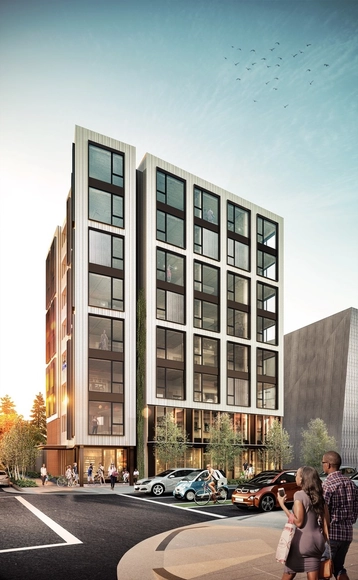
Continuing the ever-increasing growth of timber construction architecture in North America and around the world, Carbon12’s recent topping out has resulted in its newly achieved status as the tallest mass timber building in the United States. Situated in Portland and designed by PATH Architecture, the 8-storey condominium is an example of the cost-effectiveness and labor sensitivity of engineered wood products while helping regenerate Oregon’s local timber industry.
With a growing population and rapid development, much of recent focus has been on Portland’s city center, in an effort to preserve the existing natural landscape that surrounds the urban areas. Built of prefabricated cross-laminated timber panels and glu-lam beams around a steel core, Carbon12’s hybrid construction aids the city’s densification, given its off-site construction and quick assembly that help both reduce costs and respond to residential needs.
https://www.archdaily.com/872219/path-architectures-catalytic-condominium-in-portland-is-the-tallest-timber-building-in-the-usOsman Bari
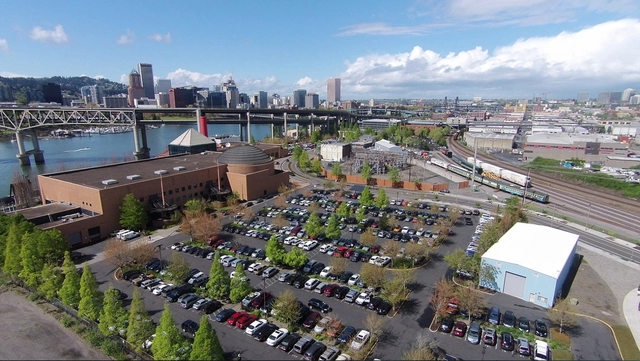
The overall goal of the master plan will be “to provide a market-driven strategy that outlines the best economic and environmental uses of OMSI’s physical property while highlighting the museum’s work as a cultural touchstone, science education resource, and trailhead to connect the community to learning and skill-building opportunities that equip them for 21st century jobs.”
Mas Subramanian. Image Courtesy of Oregon State University
After discovering a vibrant new pigment of blue by accident, chemists at Oregon State University have brought the compound to market in the form of a paint that looks promising to architectural sustainability.
While experimenting with materials to study applications for electronics in 2009, OSU chemist Mas Subramanian and his team mixed black manganese oxide with other chemicals and heated them to 2,000 degrees Fahrenheit. Little did they know, one of their samples would turn into a brilliant blue color.
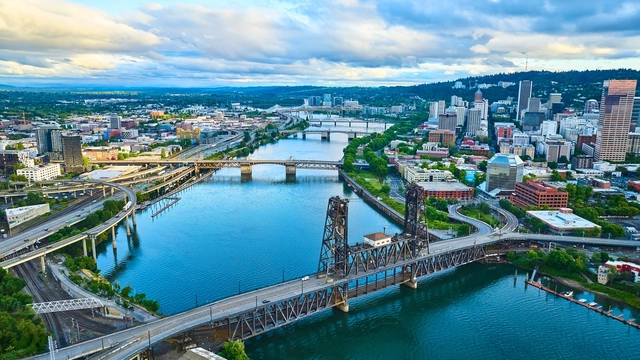







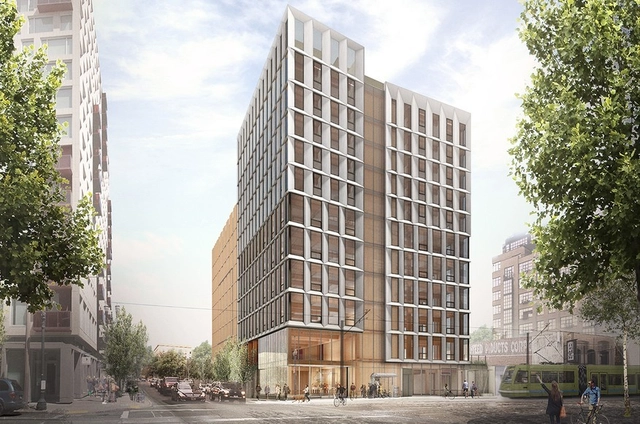

.jpg?1534475975 "Framework. Image Courtesy of LEVER Architecture")
.jpg?1534475968 "Framework. Image Courtesy of LEVER Architecture")
.jpg?1534475960 "Framework. Image Courtesy of LEVER Architecture")