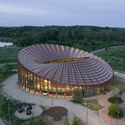
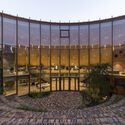
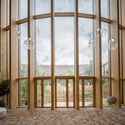
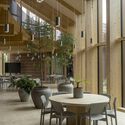
-
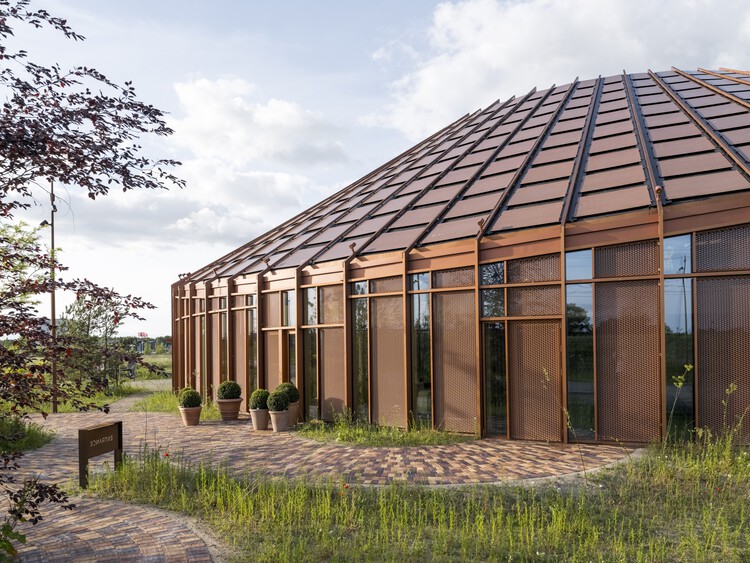
Architects: C.F. Møller
- Area: 36500 m²
- Year: 2025


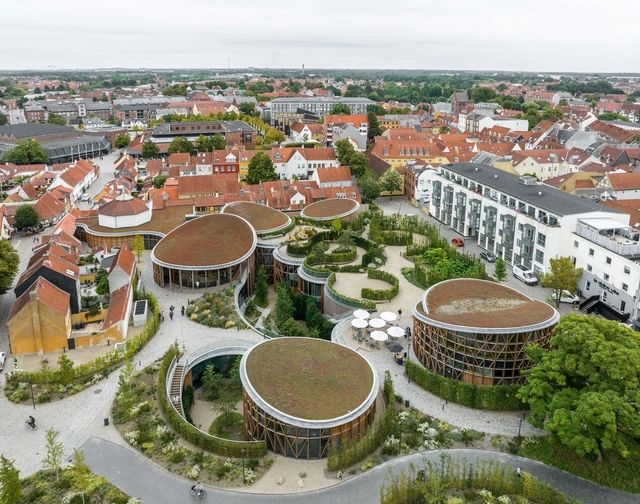
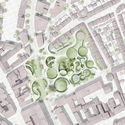
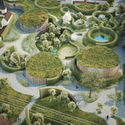
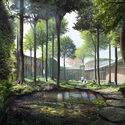
The Danish Landscape Award 2023 has been awarded to the H.C. Andersen Garden, designed by MASU Planning. The award focuses on honoring landscape architectural works with character, serving as “inspiration” for the industry. Situated in Odense in Denmark, this year’s winner was praised for reviving urban renewal in the city center by creating an escape that blends with the existing context.


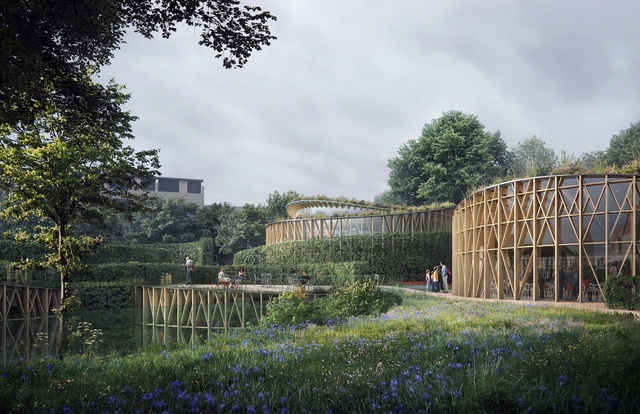
Scheduled to open in the summer of 2021, the H.C. Andersen’s House is a new museum, designed by Kengo Kuma & Associates in Odense, Denmark. Reinterpreting the story of the Danish author’s life and work, the project “will provide a unique artistic experience, which combines landscape, architecture and modern exhibition design”.
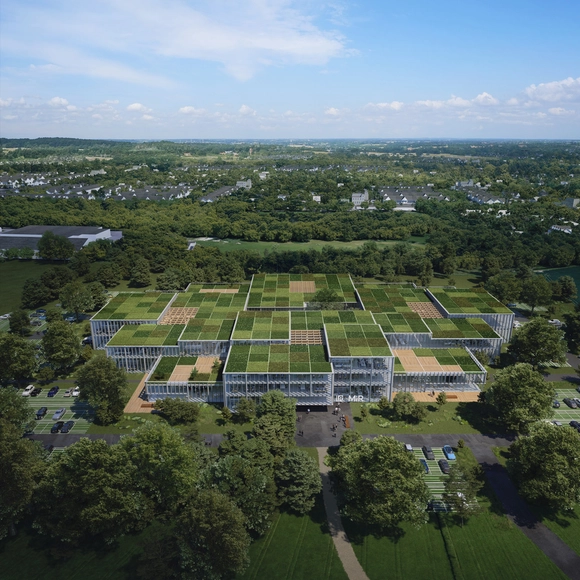
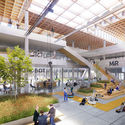
Denmark-based 3XN Architects has unveiled their design for a new Robot Developers Hub in Odense, Denmark. Designed as the new home of Universal Robots (UR) and Mobile Industrial Robots (MiR), the 20,000 square-meter hub will offer specialised environments for robot research and development.

The festival attracts between 50-100.000 audiences every year to a public program of guided tours, film screenings, debates, seminars, workshops and exhibitions focusing on architecture and urbanism.
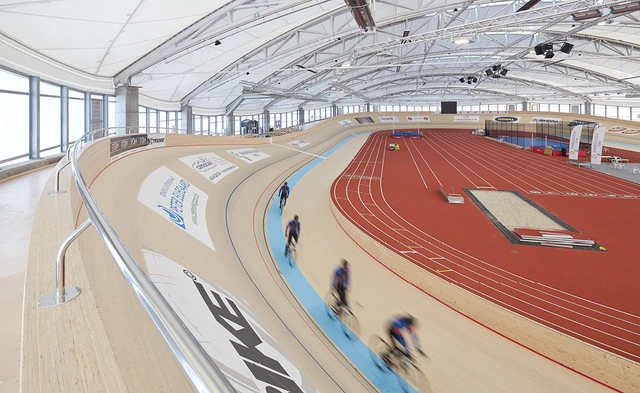
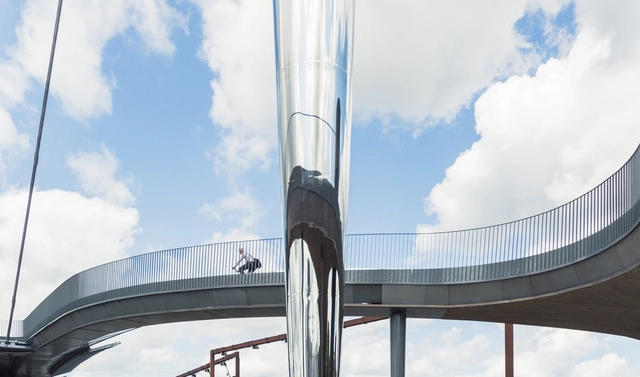


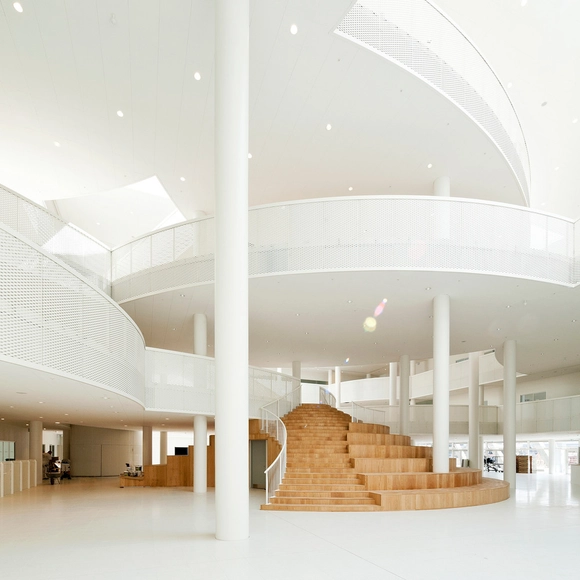
Danish firm, CEBRA, was recently awarded first prize for their new education center in Odense. The building explores how curved forms can penetrate and define the rectilinear confines of the 134,550 sqf school building. Soft curving levels open to floors below and provide a mixing of visual and auditory experiences in a dynamically changing environment. Moreover, such levels provide a flexible learning environment, with “the human-being placed at the center.”
More about the project after the break, including CEBRA’s awesome hand renderings.
Denmark's third largest city, Odense, has a major transformative plan for their city center by 2020. In the 1960s, the Thomas B Thriges Gade allowed Odense to accomodate the demands of growing vehicular traffic, but since then, the city has been hard pressed to break from this defining infrastructure. Utopian City Scape and Entasis have teamed to create a multi-stage development plan for the city center as a way to restore the cohesiveness of a city that has been fragmented by the Thomas B Thriges. The plan sees the introduction of a massive amount of building (more than 55,000 sqm!) that will provide over 300 housing opportunities and 1000 work places. By filling in the street, the smaller networks of secondary streets will be strengthened to create pedestrian passageways and prominades, creating intimate moments that become defined by the edges of the buildings. While we enjoy the light rail system that works its way around the city center, the idea of including a parking lot that accommodates nearly 1000 vehicles seems a bit contradictory. Perhaps, without it, citizens would rely move heavily upon the public infrastructure and the new "connected" feeling of the city to circulate. The absence of cars would further strengthen Odense's move away from a city defined by the vehicle and would allow the master plan to implement its sustainability theme on a macro level.
entasis shared with us their proposal for a 51,000 square-foot area of road that will become a dense and visionary city that will arise and provide the dense frame for a lively and vibrant city life. The project’s title, Thomas B. Thrigesgade, is based on the name of the street that was constructed in the 1960’s to modernize Odense, and make room for the increasing traffic. Now, the road will be closed for all thoroughfare, and a new line of sustainable transport will stretch through the area and tie Odense closer together. More images and architects’ description after the break.

Aurora is the title of Henning Larsen Architects’s entry for the new university hospital in Odense, Denmark. It was recently named among the three finalists. The iconic building complex provides an ideal framework for quality healthcare in the region of southern Denmark. The new Odense University Hospital (OUH) embodies an innovative building of high architectural quality, designed to meet the requirements and challenges of tomorrow. Like the goddess Aurora, the hospital finds renewal in the transition between old and new – and the conversion from tradition to modernity. The human scale supports the conception of the hospital as ”the good host” and a place where patients and visitors can easily orient themselves and feel at home. When approaching Aurora, you are met by an inviting and recognizable urban scale, where the complex is divided into varied units with each their clear entrance and reception area.