

-
Architects: Ben Hansen Architect
- Area: 320 m²
- Year: 2012
-
Professionals: Fulton General Contractor



As the culmination of a 14-month initiative to examine new architectural possibilities for rapid growth in six megalopolises - Hong Kong, Istanbul, Lagos, Mumbai, New York, and Rio de Janeiro - the Museum of Modern Art is preparing to open Uneven Growth: Tactical Urbanisms for Expanding Megacities on November 22. The exhibition will present mappings of emergent modes of tactical urbanism from around the globe alongside proposals for a bottom-up approach to urban growth in the highlighted cities by six interdisciplinary teams made up of local practitioners and international architecture and urbanism experts.
Curator Pedro Gadanho, in collaboration with the Austrian Museum of Applied Arts (MAK), states:
“The exhibition features design scenarios for future developments that simultaneously raise awareness of the prevailing inequalities in specific urban areas and confront the changing roles of architects vis-à-vis ever-increasing urbanization. Each team in the exhibition was asked to consider how emergent forms of tactical urbanism can respond to alterations in the nature of public space, housing, mobility, spatial justice, environmental conditions, and other major issues in near-future urban contexts.”
A synopsis of each team’s work, after the break.
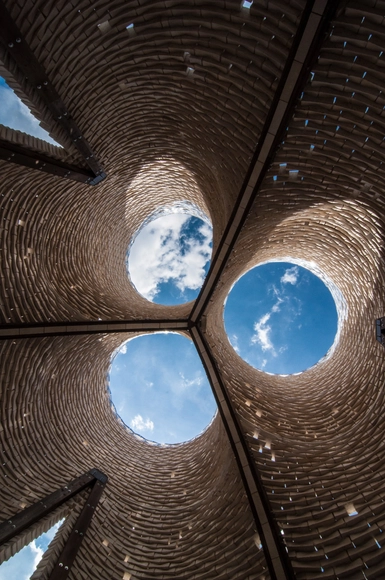
MoMA P.S.1 has announced five finalists to compete in the 2015 Young Architects Program (YAP). Now in it’s 16th edition, the competition will challenge a group of emerging architects to design a temporary installation within the walls of the P.S.1 courtyard for MoMA’s annual summer “Warm-Up” series.
The 2015 shortlist includes Office for Political Innovation (Andres Jaque; NY), brillhart architecture (Jacob Brillhart; Miami, FL), Erin Besler (LA, CA), The Bittertang Farm (Michael Loverich; NY), Studio Benjamin Dillenburger (Benjamin Dillenburger and Michael Hansmeyer; ONT, Canada). The winners will be announced in early 2015.
Previous winners include The Living (Hy-Fi), CODA (Party Wall), Interboro Partners (Holding Pattern), Work AC (Public Farm 1), MOS (Afterparty) and SO-IL (Pole Dance).

The National Council of Architectural Registration Boards (NCARB) has awarded Parsons The New School for Design and Clemson University the 2014 NCARB Award to aid the development of innovative programs that merge practice and education.
"The award honors innovative ways for weaving practice and academy together to address real-world architecture challenges," says NCARB CEO Michael J. Armstrong. "The winning proposals for 2014 explore new paradigms of practice and move students from the theoretical to applied practices working with licensed practitioners."
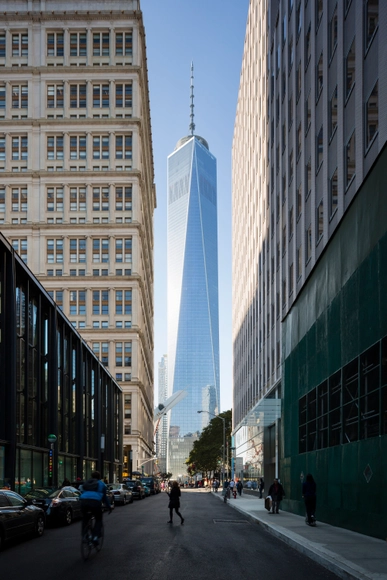
The first tenant has moved into the One World Trade Center, making Monday, November 3, the official opening of the (arguably) tallest building in the Western hemisphere 13 years after the tragedy of 9/11. The “extraordinary moment was passed in the most ordinary of ways,” described the New York Times, as employees of Conde Nast entered into the white marble lobby (taken from the same quarry that produced marble for the original twin towers) and headed straight to the elevators to start their work day.
To celebrate its completion, renowned architectural photographers Iwan Baan and James Ewing took it to the sky to capture the One World Trade Center in all its glory. The images, after the break.

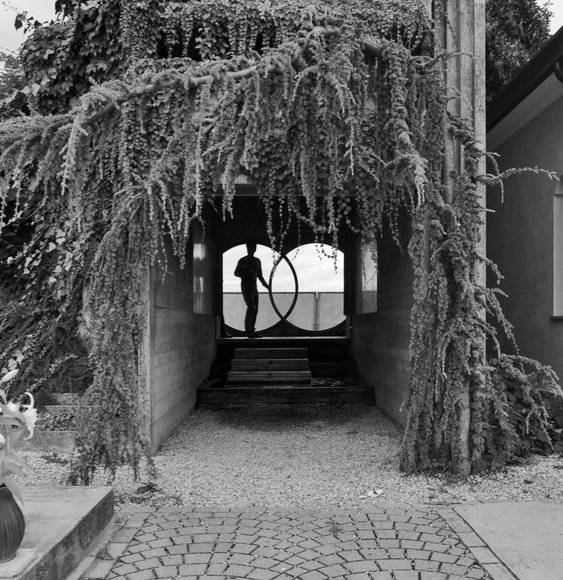
The relationship between immortality and architecture is ancient one. Writing in The New Yorker, Alexandra Lange discusses the past and future of cemetery design in relation to a new exhibition on display in New York. Featuring a selection of 1300 individual mausoleum designs stored in Columbia University's archives, Lange notes how "patrons weren’t picky about originality. In the late nineteenth century, memorial companies might just bring back a shipment of angels from Carrara to be distributed among future clients." These "rural estates in miniature" eventually gave way to more contemporary designs which dabbled in Realism and Cubism. What will the people of today house their remains in? For Lange, "the design we take personal pleasure from everyday is now less likely to be architecture and more likely to be an interface." Read the article in full here.
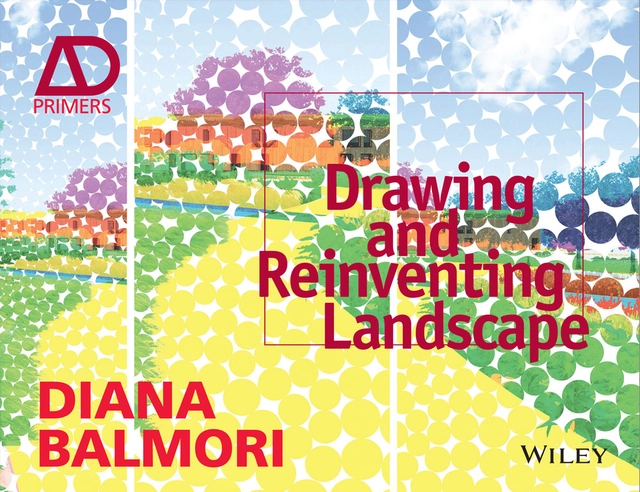
On Wednesday, November 5, Diana Balmori will visit the Strand to chat about Drawing and Reinventing Landscape with the MoMA's architecture curator, Barry Bergdoll. Diana's book examines digital, analog and hybrid methods of representing landscape and places the contemporary landscape architecture within its fascinating historical context. This exclusive Strand chat will investigate crucial aspects of the design process. Join as these two experts discuss this important design topic at a moment of increasing global environmental change. More information here.

Kean University has announced plans to open a new architecture school based on the design philosophy of Michael Graves. Following the footsteps of a man who laments the “loss of drawing,” the new Michael Graves School of Architecture will prioritize hand drawings as a key to design process.
“In our technologically savvy world, to this day, Michael Graves’ philosophy is to draw by hand first so that the students see, ‘feel’ and experience the new building spatially. Then, only after the drawing is complete will the students transfer the design to a computer so that the computer becomes an execution tool, not an ideation tool,” describes acting dean and former student of Graves, David Mohney.
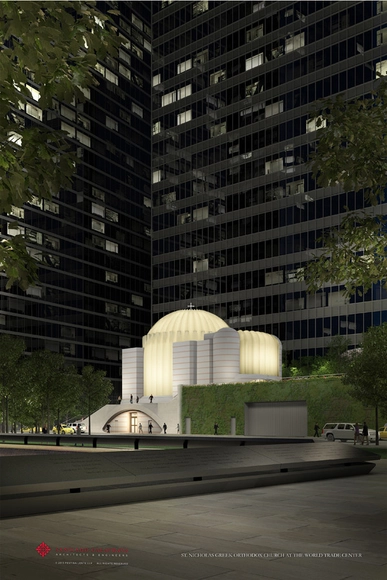
Construction has begun on Santiago Calatrava’s Saint Nicholas National Shrine on the World Trade Center site in New York. A “tiny jewel” for lower Manhattan, as referred by Calatrava, the white Vermont marble shrine will be based around a translucent central Cupola that illuminates from within.
More images and an updated construction image of Calatrava's neighboring transportation hub, after the break.

Commissioned by Sonos to create a sound reactive installation in collaboration with the musician Dev Hynes (aka Blood Orange), The Principals created a 16-foot-tall canopy, 8-feet-wide by 36-feet-long covering the performance and grand stand seating area of the private workspace collective Neuehouse. Inspired by the work of Arthur Rimbaud, The Principals chose the name Ancient Chaos, a phrase from his poem Matinée d'Ivresse which speaks to a basic force of wonder within all of us at the hidden patterns of nature. The installation, both a sonic composition and a physical structure, creates sounds that verge on the architectural and architecture that verges on the fluid.
More information and a video of the installation in motion, after the break.

Judith Edelman, FAIA, an American architect and feminist who hoped to rid architecture of its “gentleman’s club” status, has passed away at 91. Starting her career in an era when hiring “girls” wasn’t the norm, Edelman’s work to elevate women in architecture has paved the way for many of today’s leading architects; She was the first woman ever elected to the executive committee of the AIA’s New York chapter and she helped co-found the Alliance of Women in Architecture in 1972. Edelman’s built work, also highly admired, ranged from affordable housing to schools and health clinics, mostly in the New York City area. You can read Edelman’s obituary here.


Marc Fornes & THEVERYMANY has constructed a light-weight, ultra-thin self-supported shell structure augmented by artist Jana Winderen’s engineered sounds at the Storefront for Art and Architecture in New York City. Now on view through November 21, the “Situation Room” presents itself, as Storefront describes, "a vibrating sound experiment that that aims to transform architecture into animated sensible form."
“The overall form is an aggregate of twenty spheres of incremental diameters, combined to create an envelope of experiential tension, a sort of sublime dialogue between the comfort of the known and an uneasy interaction with the unknown,” described Fornes. “The resultant morphology resonates with a series of distributed transducers and lighting sources playing out through streams of porosity derived from structural stress flows across the elements.”
More images and information about the “Situation Room,” after the break.

The New York chapter of the American Institute of Architects (AIA) has awarded its 2014 Community Development Award to the Rebuild by Design competition organized by President Obama's Hurricane Sandy Rebuilding Task Force. The results of the competition were announced in June this year, with six schemes, including proposals by BIG and OMA awarded a total of $920 million to repair the damage caused by Hurricane Sandy and improve the resilience of the coastline in the region.
More on the award after the break
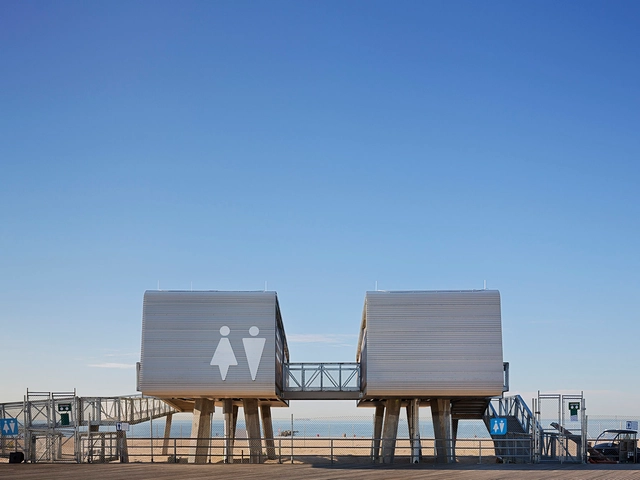

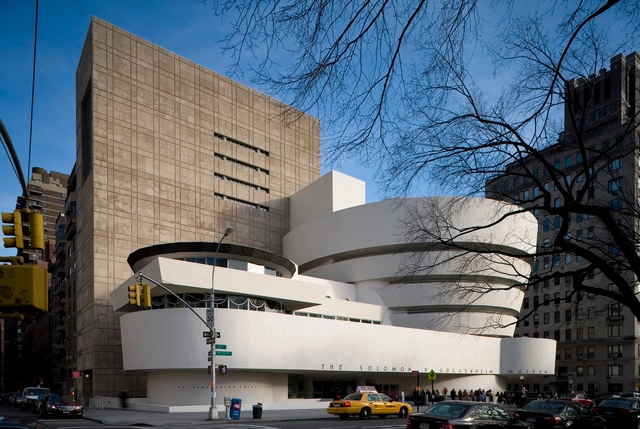
The Solomon R. Guggenheim Museum is planning to construct a second location in New York City. As reported on the Art Newspaper, the expansion project, known as the “Collection Center,” aims to “consolidate its staff and art storage into one efficient, multi-use building with a dynamic public programming component.” The news broke with the release of a curatorial job position, seeking personnel to assist in the center’s planning and a possible architecture competition that will ensure the “Guggenheim’s reputation for being a visionary architectural patron” is preserved. Meanwhile, the Guggenheim is expected to narrow its selection to six for its new Helsinki location in November.








.jpg?1413546606 "Detail of the interior courtyard façade. Image © Field Condition")