1. ArchDaily
  2. Neon

Neon: The Latest Architecture and News

Evenly Lit, Not Overlit: Rethinking Brightness in Subtropical Cities

Subscriber Access | 

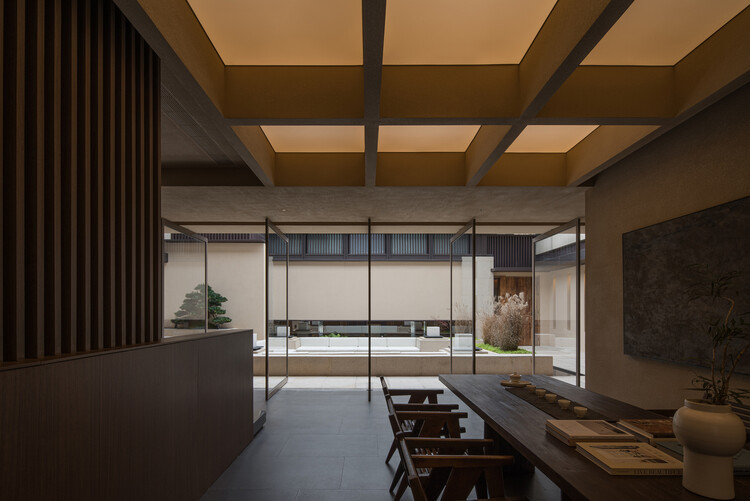
In South China, there is occasionally an urban myth—especially across Hong Kong, Shenzhen, and Guangzhou—about choosing a home that avoids western light. Over decades, the west-facing sun has proven to be a particularly difficult condition to live with: its low angle in the afternoon, its aggressive heat gain (especially in summer), and the way it penetrates deep into interiors. With global warming and longer, hotter seasons, that much-romanticized "afternoon glow" is increasingly experienced less as romance and more as glare, heat, and fatigue. Although this wisdom circulates as a community-driven rule of thumb, it carries an undeniable architectural clarity about building orientations: avoiding western light is not only about thermal comfort, but also about avoiding the sharpest, most intrusive form of direct illumination—light that strikes at the most unforgiving angle, washing surfaces, flattening depth, and turning rooms into high-contrast fields of discomfort.


Evenly Lit, Not Overlit: Rethinking Brightness in Subtropical Cities - Image 1 of 4Evenly Lit, Not Overlit: Rethinking Brightness in Subtropical Cities - Image 2 of 4Evenly Lit, Not Overlit: Rethinking Brightness in Subtropical Cities - Image 3 of 4Evenly Lit, Not Overlit: Rethinking Brightness in Subtropical Cities - Image 4 of 4Evenly Lit, Not Overlit: Rethinking Brightness in Subtropical Cities - More Images+ 8

The Line of Fragile Radiance: Neon Light as Atelier, Architecture, and Archive

Subscriber Access | 

The fragility—and temporal beauty—of neon has captivated audiences since the early 1900s. First shown commercially by French engineer Georges Claude at the 1910 Paris Motor Show, neon spread rapidly, achieving broad popularity in the United States from the 1920s through the 1950s. Mid-century America saw it everywhere: from the casinos of the Las Vegas Strip to roadside motor inns along Route 66 and the spectacle of Times Square. By the latter half of the century, however, many signs were scrapped or left to decay, and numerous municipalities restricted neon as visually garish or power-hungry—despite the technology's comparatively modest energy use. In the U.S., renewed interest in neon arguably didn't meaningfully return until the early 2000s.

In Hong Kong, by contrast, neon was embraced with unusual enthusiasm at a time when it began to lose popularity elsewhere. Even as installation slowed in recent decades—largely due to updated ordinances requiring removal of overhanging signs whose support structures failed to meet safety standards—the city's affinity for neon never fully disappeared.

The Line of Fragile Radiance: Neon Light as Atelier, Architecture, and Archive - Image 1 of 4The Line of Fragile Radiance: Neon Light as Atelier, Architecture, and Archive - Image 2 of 4The Line of Fragile Radiance: Neon Light as Atelier, Architecture, and Archive - Image 3 of 4The Line of Fragile Radiance: Neon Light as Atelier, Architecture, and Archive - Image 4 of 4The Line of Fragile Radiance: Neon Light as Atelier, Architecture, and Archive - More Images+ 16

How Neon Lighting Shapes Architecture

How Neon Lighting Shapes Architecture - Image 1 of 4How Neon Lighting Shapes Architecture - Image 2 of 4How Neon Lighting Shapes Architecture - Image 3 of 4How Neon Lighting Shapes Architecture - Image 4 of 4How Neon Lighting Shapes Architecture - More Images+ 24

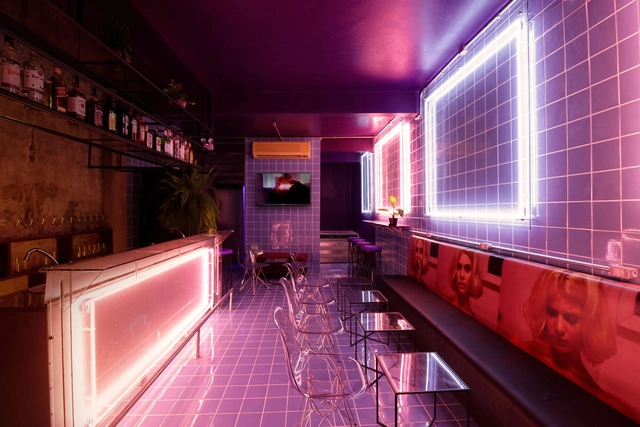
Neon lights are a bold, cosmopolitan statement that can easily revitalize or accentuate an architectural space or structure. With eye-catching brilliance, a plethora of color options, and ties to a retro aesthetic, these lighting pieces can make a space feel simultaneously modern and nostalgic. Yet few understand the scientific workings or material properties of neon, and many architects neglect its use due to its narrow association with commercial signage. Below, we explore how neon works, its architectural history, and how architects can continue to use it today.

Art Installation Links Contemporary Culture and the Historical and Archaeological Heritage of Athens

Subscriber Access | 

From NEON.
NEON
is a nonprofit organization that works to bring contemporary culture closer to everyone.

The Theater of Disappearance is a site specific, outdoor and indoor installation by Argentinian artist Adrian Villar Rojas in Greece, at the National Observatory of Athens (NOA), located on the archaeological site of the Hill of the Nymphs. Built in 1846, the National Observatory is the first scientific research institution in Greece and consolidates nearly two centuries of astronomy since Greek independence in 1832. This is a project curated by Elina Kountouri, that forms part of NEON’s work to establish a link between contemporary culture and the historical and archaeological heritage of Athens.

Art Installation Links Contemporary Culture and the Historical and Archaeological Heritage of Athens - Image 1 of 4Art Installation Links Contemporary Culture and the Historical and Archaeological Heritage of Athens - Image 2 of 4Art Installation Links Contemporary Culture and the Historical and Archaeological Heritage of Athens - Image 3 of 4Art Installation Links Contemporary Culture and the Historical and Archaeological Heritage of Athens - Image 4 of 4Art Installation Links Contemporary Culture and the Historical and Archaeological Heritage of Athens - More Images+ 18