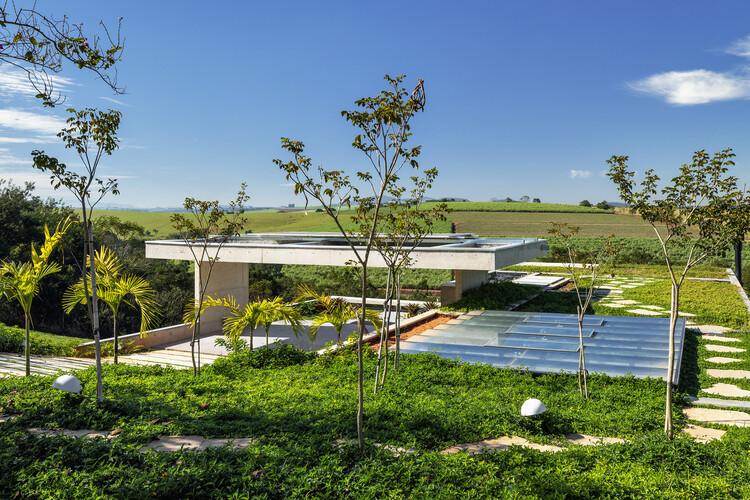
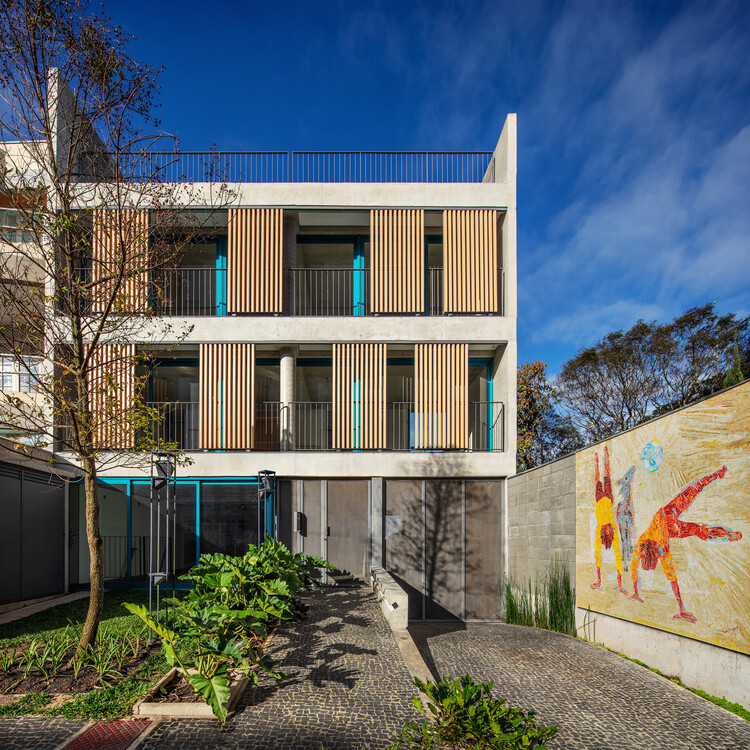
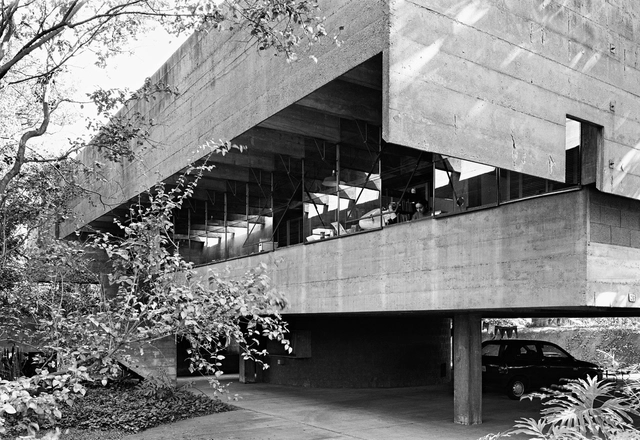
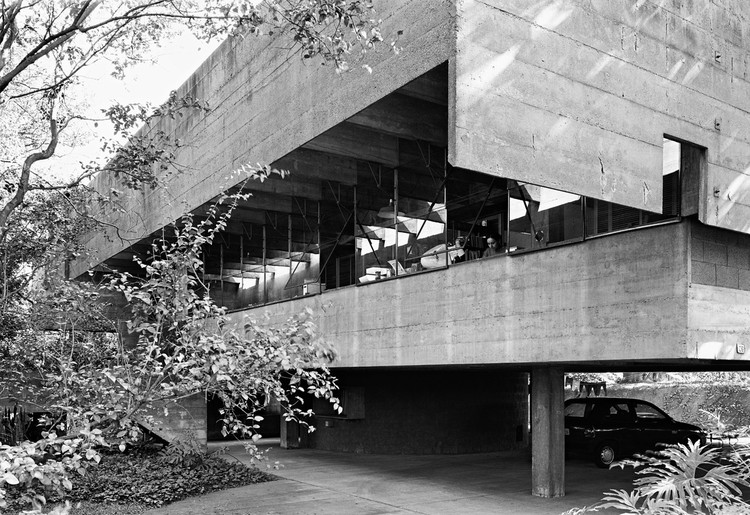
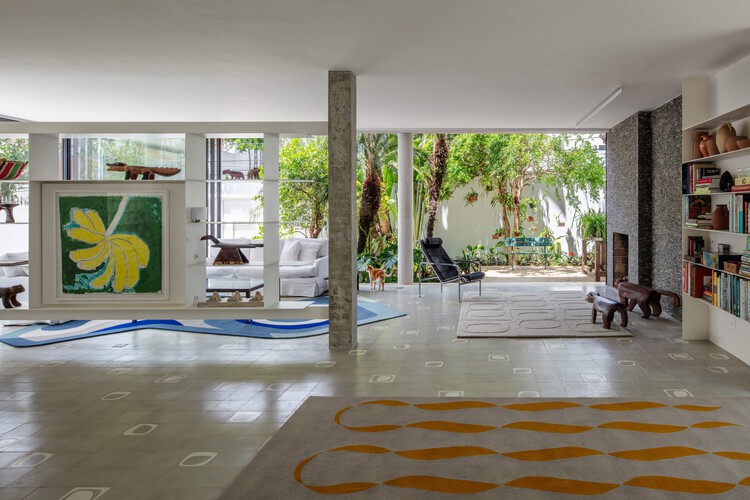
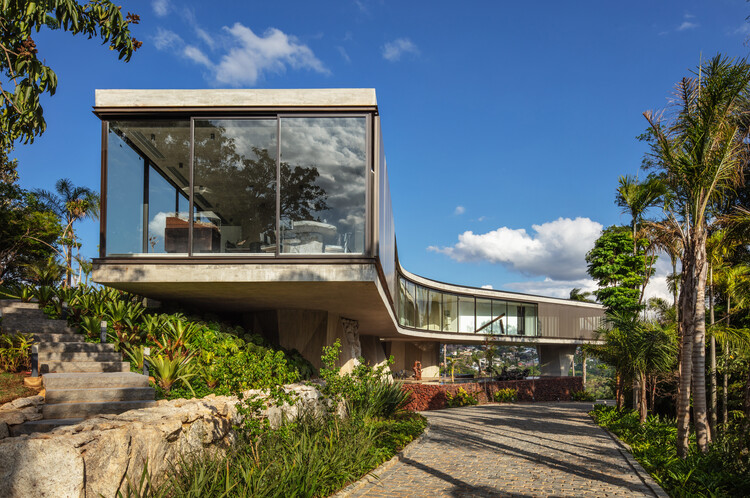
Casa TG / Obra Arquitetos

-
Architects: Obra Arquitetos
- Area: 623 m²
- Year: 2026
-
Manufacturers: Indusparquet, Excellent, ITS, Keramika, Mekal, +1
Climate and Collective Use: Architectural Permeability in Latin America

Architecture is often understood as a matter of enclosure. Walls define space, separating interior from exterior and establishing clear limits. Yet across many projects in Latin America, this distinction becomes less precise. Rather than operating as closed objects, buildings often remain open, allowing air, light, and movement to pass through them.
This condition is tied to more than form. Across the region, architecture has long responded to climates marked by heat, humidity, strong solar exposure, and seasonal rainfall, as well as to building cultures shaped by adaptation, collective labor, and direct engagement with the environment. In these contexts, fully sealed interiors are not always the most effective response. Space is often organized through shade, ventilation, and intermediate zones that regulate rather than isolate.
Renovation of the Ground Floor of the Prudência Building / Gui Paoliello Arquiteto

-
Architects: Gui Paoliello Arquiteto
- Area: 2797 m²
- Year: 2022
Caetés House / Ateliê GR
When Art Came First: Spatial Experiments That Shaped Architecture in Latin America

Many of the spatial ideas we now associate with contemporary architecture, collective use, and bodily experience did not originate in buildings alone. In Latin America, these ideas were often explored first through art, at a moment when artists were actively questioning how space could be occupied, shared, and experienced beyond traditional forms.
During the mid-20th century, the region underwent rapid urbanization and profound social change. Architecture was increasingly expected to respond to public life, collectivity, and new ways of inhabiting space. At the same time, art offered a more flexible ground for experimentation, one less constrained by function, regulation, or permanence. As a result, many spatial questions were tested through artistic practices before becoming part of architectural thinking.
Environmental Comfort as an Interior Condition in South American Architecture

Across South America, environmental comfort is understood not as an interior condition, but as one shaped through space. In regions marked by heat, humidity, intense sunlight, and seasonal variation, architecture has long relied on spatial decisions to moderate climate and support daily life. Comfort emerges from how interiors are opened, shaded, ventilated, and inhabited over time.
Rather than isolating interior spaces from their surroundings, many contemporary projects across the region cultivate comfort through depth, porosity, and intermediate zones. Light is filtered rather than maximized, air is guided through aligned openings and voids, and thresholds become active spaces of use rather than residual edges. These strategies do not seek uniform environmental control, but produce interiors that remain temperate, adaptable, and closely attuned to changing climatic conditions. In this context, environmental comfort becomes inseparable from spatial experience.
Green Interiors Trends From Around The World

There is not enough that can be said about the benefits of incorporating plants in interiors or Plantscaping. Integrating vegetation indoors serves many purposes, whether practical, aesthetic, or psychological. Although there are basic requirements for incorporating greenery into Homes, well-thought-out plant selections and placements are characteristically different across the world. By going over recent interior works, a few recurrent plantscaping design patterns arose, each reflective of distinctive climates, building styles, and traditional building techniques.
While the type of the chosen plants varies depending on favorable conditions for growth and local availability, the main distinctions are related to the direct environment and display method in which the vegetation is set, as well as its intended purpose. While plants are there to offer mental wellness to some, they are essential for cooling to others, or could even be meant for small-scale farming.
Kûara House / Obra Arquitetos + NNarq

-
Architects: NNArq, Obra Arquitetos
- Area: 627 m²
- Year: 2025
-
Manufacturers: Concresteel, Cortesia Concreto, Weiku
ArchDaily Curator’s Picks 2025: A Look Back at 12 Key Project Reviews

For the past couple of years, the project curators at ArchDaily have been revisiting architectural works they believe deserve a deeper look. Through an Instagram post called "Project Review", the curators describe what they consider to be the work's main attribute(s). Delving into the project's stories and the elements that make them truly inspiring, they underline what might otherwise be overlooked initiatives and study them closely, with attention to locality and context. The result is an array of diverse works, often from rural or suburban areas that have a public function or historic significance.
While a couple of houses are listed, the majority of the reviews veer towards cultural centers, libraries, workspaces, or commercial settings. Another thing to note is the fact that many of these works ended up coming in from Asia, with a few key projects from rural China. The picks are quite diverse in materiality and design language; however, they all suggest innovative architectural solutions and captivating narratives.
House Renda / Fernanda Neiva + Fernanda Palmieri + Paula Zasnicoff

-
Architects: Fernanda Neiva, Fernanda Palmieri, Paula Zasnicoff
- Area: 273 m²
- Year: 2021
-
Manufacturers: Alonso Mármores, GFB Marcenaria, Ladrilho Saltense, Metal Art, REKA, +2
Extending Roofs from Brazil to India: Parallel Residential Design Elements as Seen in 10 Projects

It shouldn't be too surprising that architectural concepts were traveling around the globe long before the online spread of information. While many regions share certain historical events and hence references (such as colonization and the mid-20th-century independence movement/ turn of political systems), others might have simply developed parallel solutions to similar climates and material availability. Additionally, it was only natural that with the dissemination of a more uniform architectural pedagogy acquired while studying abroad, followed by the internet boom, we would find almost twin projects from every corner of the world. While these might look nearly identical from some angles, they might bear different layers and stories. Then again, they might also display the same reasoning and prompts shared by counterparts from across the seas.
JHA Corporate Boutique / PSA Arquitetura

-
Architects: PSA Arquitetura
- Area: 37674 ft²
- Year: 2021
Floreira House / Matheus Farah + Manoel Maia Arquitetura
Toque Toque Grande II House / VD Arquitetura

-
Architects: VD Arquitetura
- Year: 2023
-
Manufacturers: Luminárias, Mazza Ceramica, Neorex, Persianas
House in Praia do Forte / Vereda Arquitetos

-
Architects: Vereda Arquitetos
- Area: 630 m²
- Year: 2023
-
Manufacturers: ETEC Esquadrias, MN Armários Design
Japi House / UNA Barbara e Valentim
Cultura Artística / Pedro e Paulo Bruna Arquitetos Associados + MLD RAI + Acústica & Sônica

- Area: 7543 m²
- Year: 2024
-
Manufacturers: Indusparquet