1. ArchDaily
  2. Mushroom Materials

Mushroom Materials: The Latest Architecture and News

From Agro-Waste to Decarbonization: The Innovative Materials Featured in 2023

Innovative materials play a crucial role in shaping the future of architecture. They offer not only novel ways to craft buildings but also sustainable and efficient solutions to address pressing environmental challenges. Architects and designers are now more than ever exploring and integrating innovative materials into their projects. By harnessing the unique properties of these materials, they create structures with new visual languages while also being environmentally friendly.

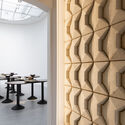
As part of our year-in-review, we reflect on the innovative materials that were featured. These materials delved into the concepts of recycling agro-waste, adapting bio-based products, transforming local materials, and decarbonizing concrete. The objective was not only to offer alternatives to traditional construction practices but also to help reduce carbon emissions and promote a more sustainable built environment. In this dynamic field, these materials demonstrate the potential to revolutionize building design and construction in diverse contexts, paving the way for a more sustainable and resilient future.


From Agro-Waste to Decarbonization: The Innovative Materials Featured in 2023  - Image 1 of 4From Agro-Waste to Decarbonization: The Innovative Materials Featured in 2023  - Image 2 of 4From Agro-Waste to Decarbonization: The Innovative Materials Featured in 2023  - Image 3 of 4From Agro-Waste to Decarbonization: The Innovative Materials Featured in 2023  - Image 4 of 4From Agro-Waste to Decarbonization: The Innovative Materials Featured in 2023  - More Images+ 5

Can Architecture and Urban Planning Fight Back Against Climate Change?

Climate change has been one of the most pressing topics of this year, and for a good reason. Its effects are visible not only in natural habitats but also in urban environments. The construction industry has an important role to play in this dynamic. Throughout the year, events such as COP27 emphasized the importance of striving to achieve net carbon zero and the challenges faced by developing countries affected by increasingly devastating natural disasters. Possible directions for development include actions at varying stages and scales, from optimizing green spaces for urban heat control to employing local and innovative building materials to minimize the carbon footprint or passing laws that help create more sustainable urban and natural environments.

This article represents a roundup of articles published on ArchDaily during the course of 2022 with themes related to climate change and architecture’s potential to make a difference. It breaks down the topic into four main questions: What Are Cities Doing to Mitigate Urban Heat? How to Tackle Rising Sea Levels? What Was COP27 and Why Does It Matter? Can Building Materials Play a Role in Achieving These Goals? The last section presents an overview of new legislation approved during 2022 as a way of understanding how state and local governments are imposing this need for change.

Can Architecture and Urban Planning Fight Back Against Climate Change? - Image 1 of 4Can Architecture and Urban Planning Fight Back Against Climate Change? - Image 2 of 4Can Architecture and Urban Planning Fight Back Against Climate Change? - Image 3 of 4Can Architecture and Urban Planning Fight Back Against Climate Change? - Image 4 of 4Can Architecture and Urban Planning Fight Back Against Climate Change? - More Images+ 25

Environmentally Friendly Materials: 8 New Products To Reduce Carbon Emission

The construction industry's future will undoubtedly include "carbon reduction" as a mandatory task. Aside from locally sourced, virgin materials, an increasing number of new materials are becoming available. New materials can be developed in several ways, including low-carbon substitution, recycling, performance enhancement, and 3D printing. New materials will not only be more environmentally friendly and enable new construction methods, but they will also influence the starting point and direction of design concepts, resulting in new buildings with new perceptions and spaces.

Environmentally Friendly Materials: 8 New Products To Reduce Carbon Emission - Image 1 of 4Environmentally Friendly Materials: 8 New Products To Reduce Carbon Emission - Image 2 of 4Environmentally Friendly Materials: 8 New Products To Reduce Carbon Emission - Image 3 of 4Environmentally Friendly Materials: 8 New Products To Reduce Carbon Emission - Image 4 of 4Environmentally Friendly Materials: 8 New Products To Reduce Carbon Emission - More Images+ 15

Returning the Building to the Soil: an Interview with the Architect and Scientist Mae-Ling Lokko

Agriculture and the food industry seem to have little in common with architecture, but it is precisely the overlap of these three areas that interests Ghanaian-Filipino scientist and architect Mae-ling Lokko, founder of Willow Technologies based in Accra, Ghana. Working with recycling agricultural waste and biopolymer materials, Lokko searches for ways to transform the so-called agrowaste into building materials.

Returning the Building to the Soil: an Interview with the Architect and Scientist Mae-Ling Lokko - Image 1 of 4Returning the Building to the Soil: an Interview with the Architect and Scientist Mae-Ling Lokko - Image 2 of 4Returning the Building to the Soil: an Interview with the Architect and Scientist Mae-Ling Lokko - Image 3 of 4Returning the Building to the Soil: an Interview with the Architect and Scientist Mae-Ling Lokko - Image 4 of 4Returning the Building to the Soil: an Interview with the Architect and Scientist Mae-Ling Lokko - More Images+ 5

Installation Made of Mushrooms Wins 2022 Tallinn Architecture Biennale Competition

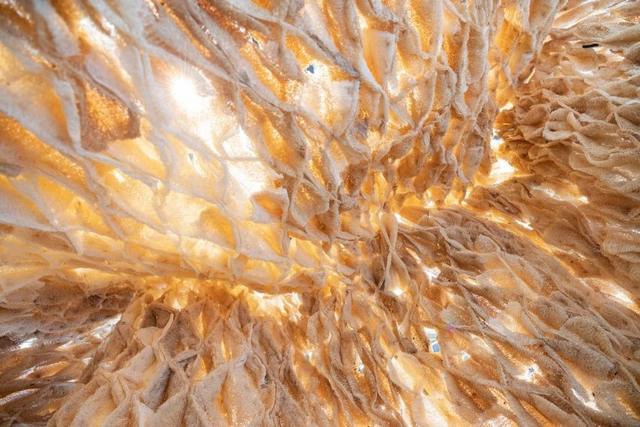
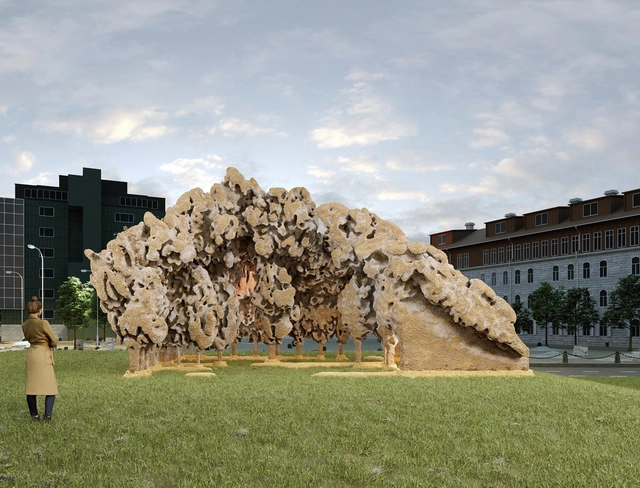
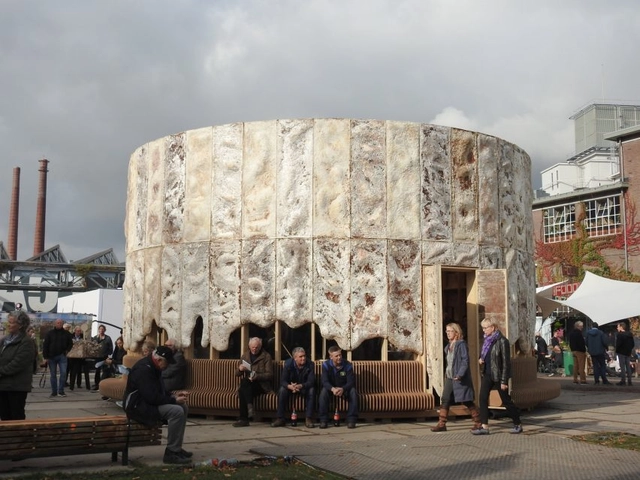
Australian duo Simulaa and Natalie Alima have won the competition for the 2022 Tallinn Architecture Biennale in Estonia with an installation made of mushrooms. Titled Burlasite, the structure's base will employ 3D printing technology that will be taken over by mycelia over time. The proposal highlights repurposing and reusing local materials, and how humans can create sustainable designs with invention and environmental adaptation. The Tallinn Architecture Biennale will open to the public on September 7th, 2022, and the installation will be on display until 2024 in front of the Museum of Estonian Architecture.

Installation Made of Mushrooms Wins 2022 Tallinn Architecture Biennale Competition - Image 1 of 4Installation Made of Mushrooms Wins 2022 Tallinn Architecture Biennale Competition - Image 2 of 4Installation Made of Mushrooms Wins 2022 Tallinn Architecture Biennale Competition - Image 3 of 4Installation Made of Mushrooms Wins 2022 Tallinn Architecture Biennale Competition - Image 4 of 4Installation Made of Mushrooms Wins 2022 Tallinn Architecture Biennale Competition - More Images+ 3

Hy-Fi, The Organic Mushroom-Brick Tower Opens At MoMA's PS1 Courtyard

Last night, the organic brick structure known as 'Hy-Fi' opened in the courtyard of MoMA's PS1 space in New York. Designed by David Benjamin of New York architects The Living, the tower was designed as part of MoMA's Young Architects Program, and its construction centers around the use of an innovative building material: organic, biodegradable bricks consisting of no more than farm waste and a culture of fungus that is grown to fit a brick-shaped mold.

Acting as the centerpiece for MoMA's Warm Up music festival on Saturdays throughout the Summer, the temporary structure will provide shade, seating and water until September 7th. Read on after the break for more on the design.

Arup Engineers Explain: How the MoMA PS1 YAP Winners Grew Ten Thousand Mushroom Bricks

Subscriber Access | 

This year's MoMA PS1's Young Architects Program opens tomorrow (you can see the schedule of events here). Find out how the innovative winning design (a tower of fungal bricks), by The Living's David Benjamin, was tested and built with this article, originally posted on as "Engineering a mushroom tower".

Soft, spongy, and delicious on pizza, mushrooms have approximately as much to do with structural engineering as alligators or lawnmowers. Or so we thought, until architect David Benjamin of New York firm The Living walked into our offices with a brick grown from fungi.

This brick was the key to his concept for an entry to MoMA PS1’s Young Architects Program competition. Every year, the museum commissions a designer to build a centerpiece for its popular outdoor Warm Up concert series.

If architectural design competitions are where brave, innovative ideas rise to the top, The Living’s mushroom tower (official name: Hy-Fi) checked all the right boxes. In addition to the novelty factor, mushroom bricks offer a host of sustainability benefits. The raw materials needed to produce them — mushrooms and corn stalks (waste material from farms) that the spores feed on — are as eco-friendly as they come. Bricks can be grown in just five days, and the process produces no waste or carbon emissions. When the structure is taken down at the end of the summer, they can be composted and turned into fertilizer.

Reflective Concrete, Wooden Textiles And More: Five Materials You Never Knew Existed

The following post is presented by ArchDaily Materials, our new US product catalog.

Recently, Interiors & Sources featured fourteen of the coolest materials they've come across in their 30-year history; the following post lists the five that most tickled our fancy. Enjoy!

Insulation Grown From Fungi

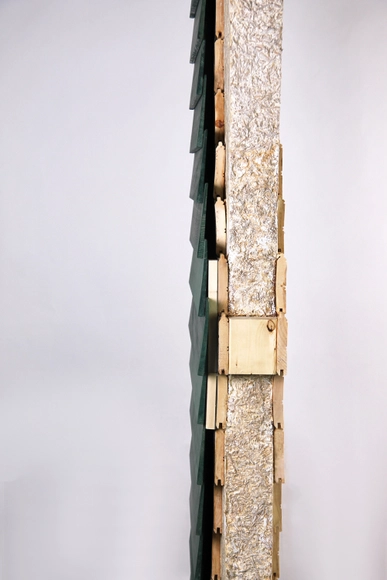
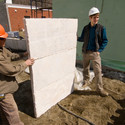
Inspired by the woods of Vermont, a US biotechnology startup have developed a system for using agricultural byproducts with fungal mycelium (a natural, self-assembling binder) to grow high performance insulation. Ecovative Mushroom® Insulation is seen as a viable competitor to plastic foams that can be found in both in packaging and building insulation, for which the project recently won second place in the Cradle to Cradle Product Innovation Challenge.

Insulation Grown From Fungi - Image 1 of 4Insulation Grown From Fungi - Image 2 of 4Insulation Grown From Fungi - Image 3 of 4Insulation Grown From Fungi - Image 4 of 4Insulation Grown From Fungi - More Images+ 1