Women have played a pivotal role in the evolution of landscape architecture, overcoming the constraints of a male-dominated profession to introduce groundbreaking ideas and fresh perspectives. From early pioneers to contemporary leaders, their work has reshaped how we interact with public and private spaces, intertwining aesthetics, functionality, and sustainability in innovative ways.
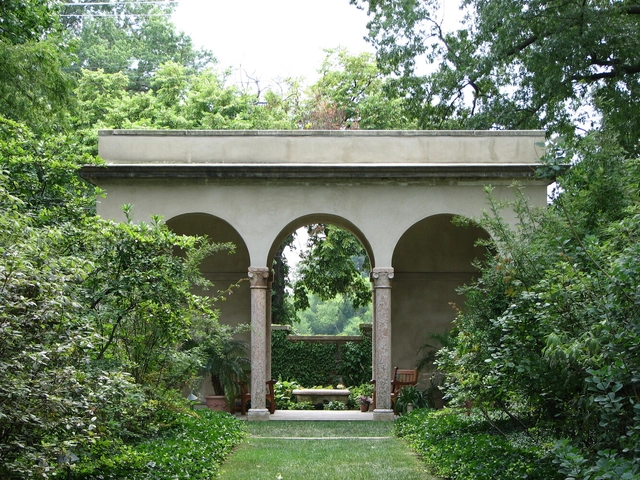
In the late 19th and early 20th centuries, female landscape architects carved out their place in the profession, emphasizing harmony between built structures and natural landscapes. Their projects showcased a deep commitment to community and ecological balance, setting the stage for an inclusive and thoughtful approach to design that continues to inspire the field today.
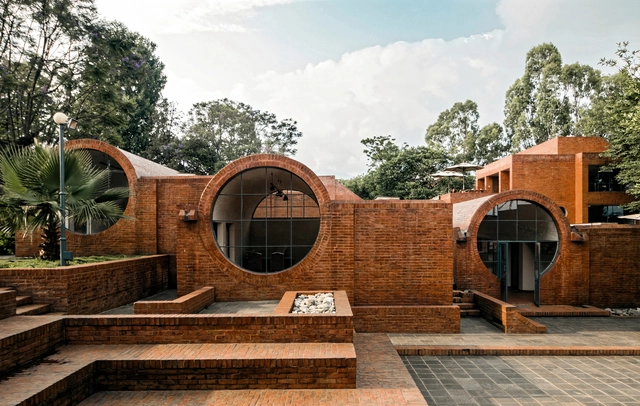
Carl Pruscha, an Austrian architect who mainly dedicated his professional career to investigating and working closely in the field of regional architecture in the Eastern world, a territory that was being overlooked at a time when the modern movement in architecture and in the rest of the world was booming. Through an overview of his life, we will highlight some of his most relevant works in Nepal and Sri Lanka and understand how Pruscha managed to stamp his unique visions of architecture and cities into his built projects.
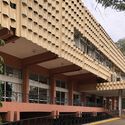
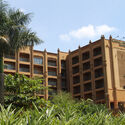
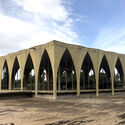
The middle of the Twentieth Century saw the independence of most countries on the African continent. Those euphoric times brought forward-looking sentiments and a wish to break with the past. As an architectural movement, Modernism was ideal for the day, and newly independent countries had extensive building programs to assert themselves as fully functioning nations.
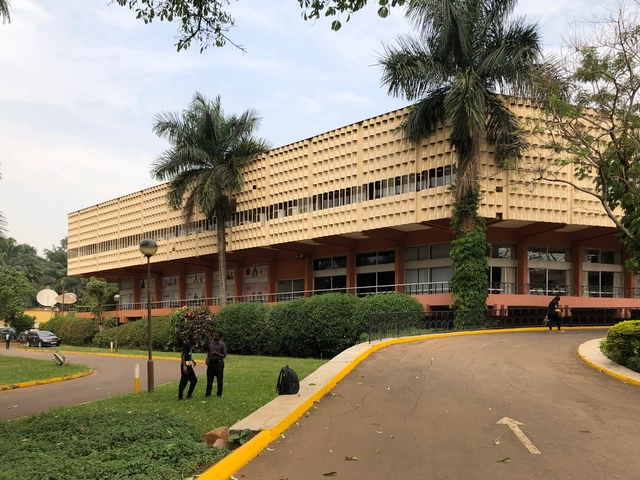
Hotels are one type of building that illustrates the complex architectural and political history of the times. Some were built specifically to host international delegations, others to boost tourism, while some were built as strong leaders' wishes. Although a marginal building type, several hotels across Africa stand as physical records of important parts of their respective country's history. Following an exploration of the histories of West Africa's Modernist Hotels, this second article turns to East Africa to uncover the ways in which this understated typology relates to larger histories of independence and national identity.
The Tamayouz Excellence Award has announced George Arbid, Lebanese architect and educator, and the founding director of Beirut's Arab Center for Architecture, as the recipient of the prestigious Mohamed Makiya Prize for Architecture 2024. Also known as the Middle Eastern Architectural Personality of the Year Award, this accolade honors Arbid's efforts in documenting, researching, and advocating for the modern architectural heritage of the Arab region. The Mohamed Makiya Prize, established in 2014 to honor the eminent Iraqi architect Dr. Mohamed Saleh Makiya, celebrates those who have profoundly influenced architecture and the built environment across the region.
The middle of the Twentieth Century saw the independence of most countries on the African continent. Those euphoric times brought forward-looking sentiments and a wish to break with the past. Modernism, as an architectural movement, was ideal for the day, and newly independent countries had extensive building programs to assert themselves as fully functioning nations.
Hotels are one type of building that illustrates the complex architectural and political history of the times. Some were built specifically to host international delegations, others to boost tourism, while some were built as strong leaders' wishes. Although a marginal building type, several hotels across Africa stand as physical records of important parts of their respective country's history.
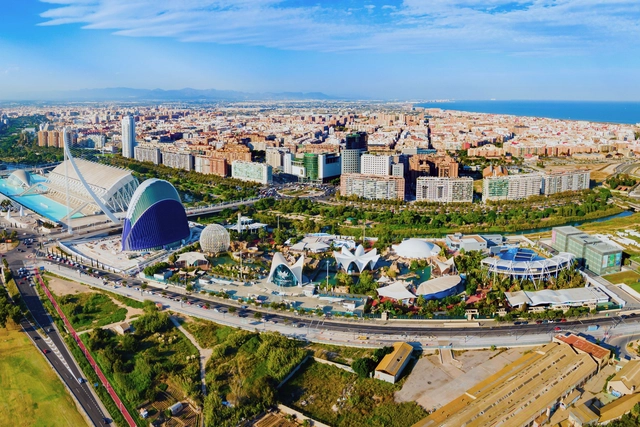
Valencia, one of Spain's most vibrant cities, boasts a rich architectural history that mirrors its cultural and historical evolution. Founded by the Romans in 138 BC, the city has been shaped by successive waves of influence, from the Visigoths and Moors to the Christian reconquest in the 13th century. Each period left a distinct architectural imprint, giving Valencia a unique blend of Gothic, Baroque, and Renaissance structures alongside modern interventions. Among the city's most prominent historic landmarks is the La Longa de la Seda, a UNESCO World Heritage site, which exemplifies late Gothic civic architecture, alongside the majestic Valencia Cathedral, where Romanesque, Gothic, and Baroque elements intertwine, illustrating the city's layered past.
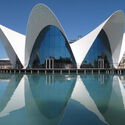
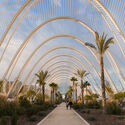
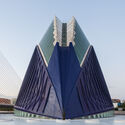
Valencia's architectural evolution did not end with its historical legacy. Today, the city is a dynamic example of how modern and contemporary architecture can coexist with ancient structures. The striking City of Arts and Sciences, designed by Valencian architect Santiago Calatrava, has become an international symbol of innovation, pushing the boundaries of futuristic design. In parallel, urban planning projects like transforming the former Turia riverbed into a lush green park have redefined public space and sustainability in the city. This balance between preservation and cutting-edge design reflects Valencia's commitment to embracing modernity while honoring its historical roots, making it not only a city steeped in history but also one at the forefront of contemporary architectural practice.
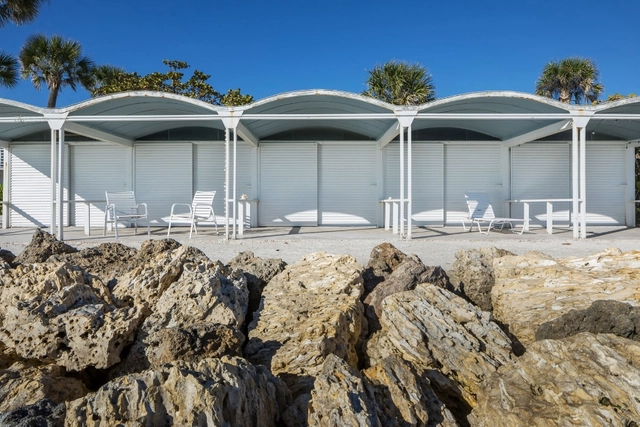
Sanderling Beach Club, Photograph by Francis Dzikowski, Archives of the Paul Rudolph Heritage Foundation.. Image via the Paul Rudolph Institute of Modern Architecture, under policy of fair use
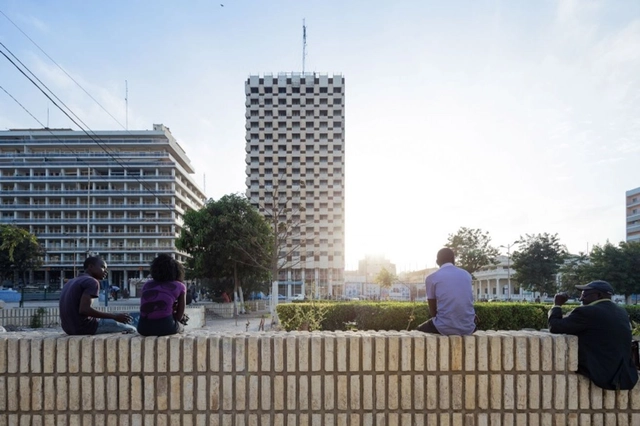
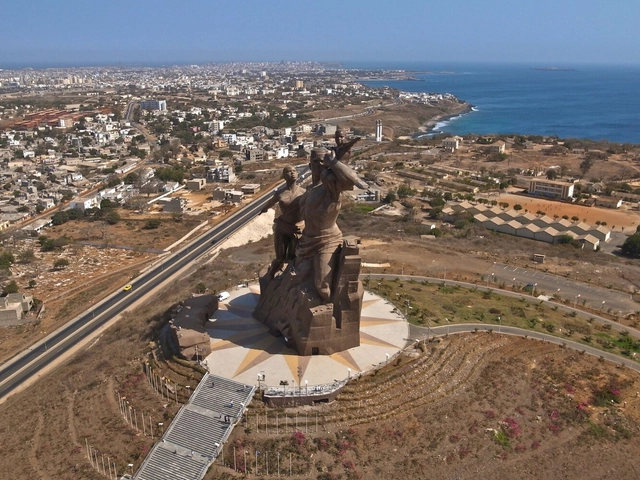
Dakar is a city of constant development. From colonial times, and on, the capital of Senegal has seen a lot of shifts in its societal definition which has, in turn, affected its architectural and urban fabric. Ever since the French mandate which somewhat forced a shift of local living traditions into a more 'European' lifestyle, the wheels of change have been set in motion. Afterward, a notable post-colonial attempt at re-defining Dakar was inevitable. It came about in many ways, still seen today, and it built a city of mixed architectural languages that defies most visitors' expectations.
Though the renowned African mid-century modernism was certainly present in the years after Senegal's independence in 1960, this was mostly due to its popularity with practicing architects in the region, not its relevance for the capital's rebuilding efforts. The modernist approach, which was mainly seen in the public, institutional, and cultural buildings, and which persists today in a more undefined contemporary style, was always aimed at showcasing Dakar to the world. It did not, however, reflect the reality of the city's development nor the way its dwellers live.
In an effort to refocus on Dakar, some of our more recent ArchDaily coverage has highlighted the many development and design efforts that look to provide a better means of living to inhabitants.
"O beautiful, for spacious skies, for amber waves of grain, has there ever been another place on earth where so many people of wealth and power have paid for and put up with so much architecture they detested as within thy blessed borders today?"
Tom Wolfe wrote this in his 1981 book From Bauhaus to Our House. The conflict between modern and traditionaldesign has barely abated since, as is evident in this recent article. In the U.S., modern buildings are often met with community aversion, for familiar reasons: their perceived coldness and lack of contextual sensitivity, the impact on local character, and the loss of historical continuity. But on another level, the critique against modern design finds even more purchase on the larger scale: the city. Modern U.S. cities reek of traffic congestion and pollution, social inequality and gentrification, a loss of community and cultural spaces, and a lack of usable open space.
https://www.archdaily.com/1020898/contemporary-architecture-and-the-modern-cityGerhard W. Mayer
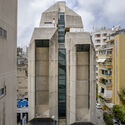
In Beirut, the Interdesign Building stands as a striking yet enigmatic structure. Never used since its conception in 1973, the building was designed by Lebanese architect Khalil Khouri and, in some ways, it represents a physical testament to the region’s hopes and struggles. During the inaugural edition of We Design Beirut, the exhibition “All Things Must(n't) Pass: A Subjective Recount Of Khalil Khouri’s Life And Career As A Designer” opened the building to the public, aiming to tell the story of its architect, Khalil Khouri, through the lens of his son and grandson, Bernard and Teymour Khoury. On this occasion, ArchDaily’s Editor in Chief, Christele Harrouk sat down with Bernard Khoury at his DW5 office to discuss the life of his father and a little-known chapter of Lebanese architectural history.
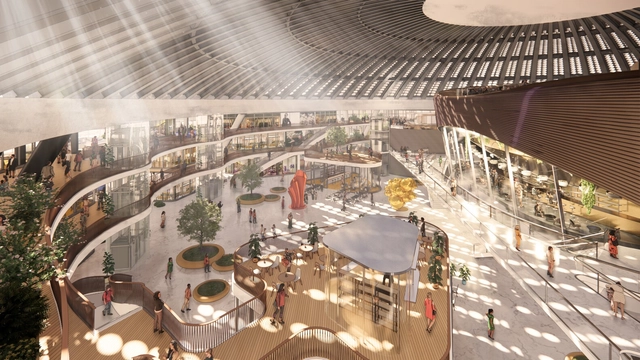
WilkinsonEyre has unveiled their proposal to revitalize the 1950s constructivist Belgrade Fair Hall 1, a landmark location overlooking the river Sava. The project is set to transform the exhibition hall into a mixed-use destination comprising three cultural venues and retail spaces, in addition to redesigning the waterfront park. WilkinsonEyre’s design incorporates light-touch interventions to the existing building, as it strives to respect and highlight the architectural qualities of the existing structure, such as the exposed concrete soffit or the unique shape of the building.
The pillar has adorned many of the greatest monumental examples of Western architecture since antiquity, from the Doric columns of the Parthenon to the Corinthian capitals of the Pantheon portico. In the West, the legacies of these classical forms have permutated over the centuries and into modern times: the Doric columns of the Lincoln Memorial, the Ionic columns of the British museum portico, and the Villa Savoye’s pilotis are just a few examples of the classical column’s continued transformation and use over the last few centuries. Today, the round pillar continues to be used in modern design, both functionally and aesthetically. Below, we look into these elements in more detail, including their materials, construction, structural qualities, and several contemporary examples of their use.
https://www.archdaily.com/948544/round-pillars-in-architecture-from-the-classical-column-to-the-modern-sculptural-supportLilly Cao
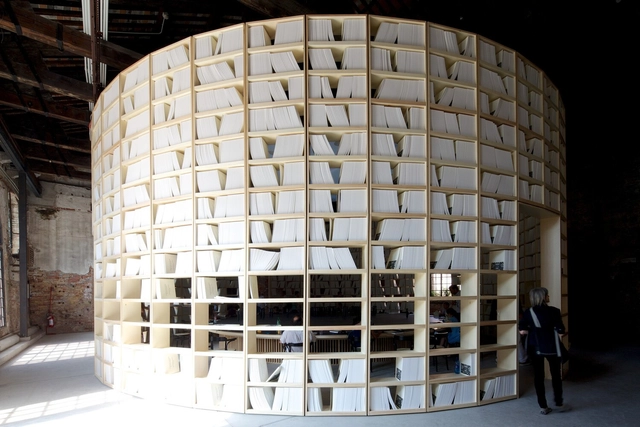
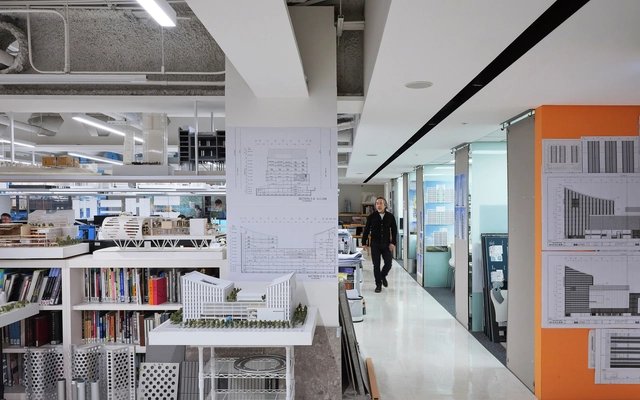
To create this collection, Marc Goodwin collaborated with Italian architect, publisher, teacher, and curator Alessandro Martinelli, who is based in Taipei. He selected the participants with the help of Mr. Chung-Hsiung Wang, the curator of the Taiwan Pavilion at the Venice Architecture Biennale 2018. The series will continue to develop with the creation of scale models for each studio, which will be exhibited alongside the photographs in the Taiwan Pavilion of the Venice Biennale.
Starting on June 30th, 2024, Edmund Sumner presents the “Traces” exhibition, a solo show at Rodic Davidson Architects in London featuring architectural photography that explores cultural identity and historical significance across diverse landscapes. The show offers a profound exploration of architecture and design across diverse landscapes, including Europe, India, and Mexico, presenting a compelling intersection between photography and the built environment. Additionally, the photographer is expected to release his fifth book with Thames & Hudson in 2025.
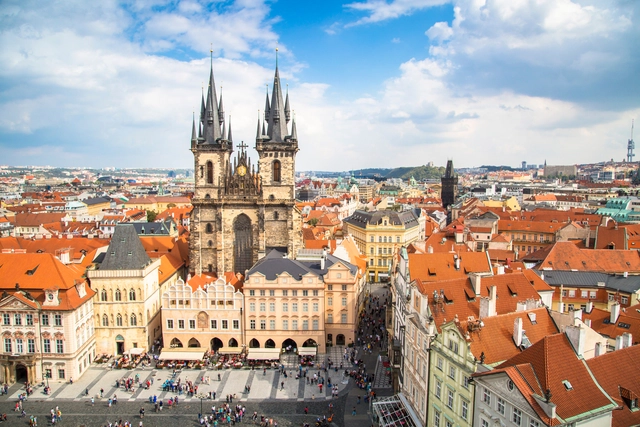
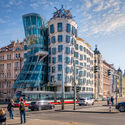
Prague, the capital of the Czech Republic, is one of Europe's best-preserved cities, having miraculously survived the widespread bombings of World War II. As the capital of the Czech Republic, Prague is home to over 1.3 million people and features an architectural heritage spanning centuries, covering a variety of architectural styles from Romanesque, Gothic, Renaissance, Baroque, and Rococo, to Modernist, Deconstructivism, and contemporary tendencies. The Old Town Square, where various architectural styles coexist, is a testament to this diversity. Known as the "Mother of all Cities," “the Golden City and “The City of a Hundred Spires,” Prague blends history and contemporary culture seamlessly. Its origins, steeped in legend, add to the city's charm.
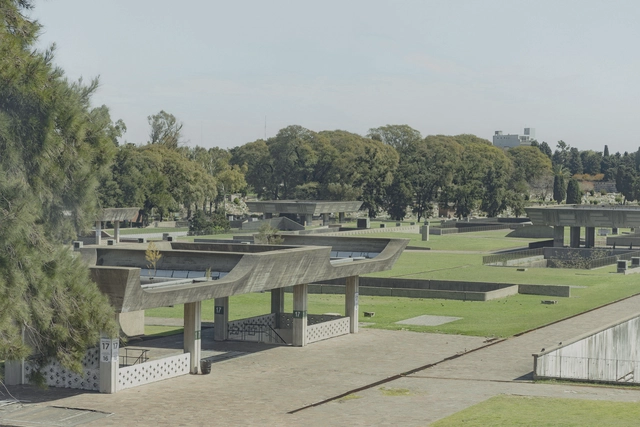
Around 1949, the city of Buenos Aires led the construction of the Sixth Pantheon in the Chacarita neighborhood. Monumental in character and brutalist in style, this underground necropolis turned out to be the first and largest experiment in modern architecture in the funerary field. Designed by Ítala Fulvia Villa, one of the first Argentine women architects and urban planners, and a pioneer of South American modernism, along with her team comprised of Leila Cornell, Raquel S. de Días, Gunter Ernest, Carlos A. Gabutti, Ludovico Koppman, and Clorindo Testa, this work was discovered by Léa Namer, who conducted an in-depth investigation reflecting on the legacy of a modern utopia and a feminist rereading of history.