1. ArchDaily
  2. MIT School of Architecture

MIT School of Architecture: The Latest Architecture and News

How Roofscapes' Paris Pilot Project is Pioneering Climate-Resilient Architecture in Europe

As record-breaking temperatures sweep across European cities, practitioners have recognized that existing infrastructure is poorly equipped to address the impacts of climate change. In response to this concern Roofscapes, a startup emerging from the MIT School of Architecture and Planning, has developed innovative solutions to amplify urban climate resilience. Their approach focuses on the strategic adaptation of underutilized spaces such as rooftops. By tackling the immediate challenges posed by extreme heat, the startup's work epitomizes how architectural innovation can directly contribute to addressing climate adaptation needs in cities. The company was recognized as one of ArchDaily's 2024 Best New Practices for their innovative approach to tackling urban issues such as affordability, lack of biodiversity, rising urban temperatures and repurposing.

How Roofscapes' Paris Pilot Project is Pioneering Climate-Resilient Architecture in Europe - Image 1 of 4How Roofscapes' Paris Pilot Project is Pioneering Climate-Resilient Architecture in Europe - Image 2 of 4How Roofscapes' Paris Pilot Project is Pioneering Climate-Resilient Architecture in Europe - Image 3 of 4How Roofscapes' Paris Pilot Project is Pioneering Climate-Resilient Architecture in Europe - Image 4 of 4How Roofscapes' Paris Pilot Project is Pioneering Climate-Resilient Architecture in Europe - More Images+ 6

Expanding the Architectural Prospects of Timber in Its Natural Form

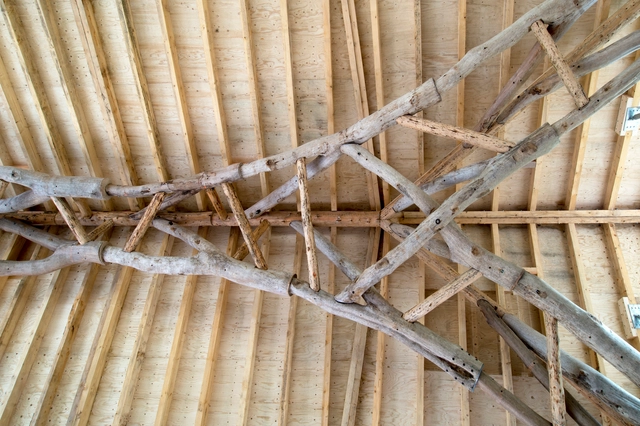
Timber has been a popular source of construction material for thousands of years. Through sawing, milling, and other engineered wood conversion processes, various wood forms have been created and applied in products, furniture, and architecture. However, these processes can sometimes alter the basic lines of wood structure. The stems can be split, grain patterns changed, and some woods, such as oak and cedar, are easily reduced while others can become intractable. This led to the exploration of whole timber forms in ancient structures, such as log cabins, which layered timber in different cross-sections to form home profiles. Through design, the use of trunks or branches of trees in their entirety can accentuate their innate mechanical properties for structural sustainability. Although these practices are fairly absent in contemporary building techniques, new technological innovations expand the prospects of timber construction in architecture.

Expanding the Architectural Prospects of Timber in Its Natural Form - Image 1 of 4Expanding the Architectural Prospects of Timber in Its Natural Form - Image 2 of 4Expanding the Architectural Prospects of Timber in Its Natural Form - Image 3 of 4Expanding the Architectural Prospects of Timber in Its Natural Form - Image 4 of 4Expanding the Architectural Prospects of Timber in Its Natural Form - More Images+ 6

Building for Sustainability: 3 Main Themes Explored at the Time Space Existence Exhibition in Venice

Subscriber Access | 

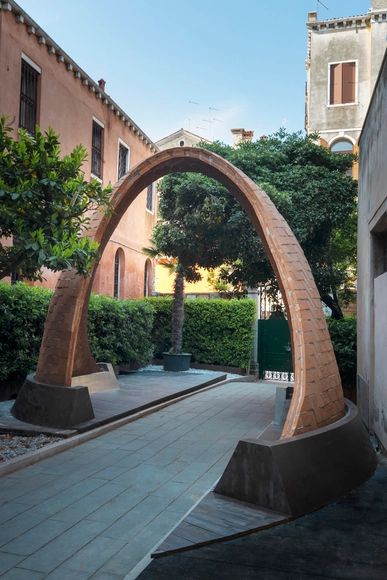
The European Cultural Centre (ECC), a non-profit organization dedicated to fostering cultural exchanges on an international scale, showcased its sixth edition of the Time Space Existence architecture exhibition alongside this year's Venice Architecture Biennale. The 2023 installment was centered on the theme of sustainability in its various forms, encompassing subjects related to migration, digital building technologies and material research, future urban developments, and housing, bringing together architects, designers, artists, academics, and photographers from 52 different countries.

Through diverse mediums and perspectives, participants have explored the philosophical concepts of Time, Space, and Existence. With a total of 217 projects on display, the exhibition is held at Palazzo Bembo, Palazzo Mora, and the Marinaressa Gardens in Venice, throughout the six-month duration of the 2023 Venice Architecture Biennale, running from May 20th to November 26th, 2023. Focusing also on emerging young architects, designers, and researchers, the 2023 edition of the exhibition is a proactive endeavor to reimagine alternative lifestyles and reconceptualize architecture within the contemporary landscape.

Building for Sustainability: 3 Main Themes Explored at the Time Space Existence Exhibition in Venice - Image 1 of 4Building for Sustainability: 3 Main Themes Explored at the Time Space Existence Exhibition in Venice - Image 2 of 4Building for Sustainability: 3 Main Themes Explored at the Time Space Existence Exhibition in Venice - Image 3 of 4Building for Sustainability: 3 Main Themes Explored at the Time Space Existence Exhibition in Venice - Image 4 of 4Building for Sustainability: 3 Main Themes Explored at the Time Space Existence Exhibition in Venice - More Images+ 22

MIT Launches New Open Access Collection of 34 Classical Architecture and Urban Studies E-books

Funded by Andrew W. Mellon and the National Endowment for the Humanities foundations as part of the Open Book Program, a collection of classic books, published between 1964 and 1998 are now available online as open access e-books through the MIT Press Open Architecture and Urban Studies book collection.

Hashim Sarkis: “I Do Not Think We Have Ever Witnessed a Moment Where We Have Relied as Much on Architecture”

Subscriber Access | 

In the second part of his interview with Archdaily, Hashim Sarkis reflects on the future of architecture as he tackles the timeless question of the 2021 Venice Biennale. The curator of the Biennale, which proposes the question of “How Will We Live Together?”, discusses the role of the profession in the midst of all these new paradigms, stating that “Architects do change the world […] by creating […] wish images for what the world could be”.

In this feature, the curator of the anticipated biennale and dean of MIT School of Architecture and Planning presents his views on the evolution of Architecture, and the new directions the academic world should take, to reflect “the complexity of the urban problems of today”. Sarkis also brings up Beirut, discussing reconstruction approaches, civil society, and the exasperating notion of resilience.

J. Meejin Yoon to Serve as First Female Dean in Cornell AAP's 122 Year History

Cornell University has named J. Meejin Yoon as the next dean for the School for Art, Architecture and Planning. Yoon, co-founder of Boston-based practice Höweler + Yoon, is the first woman to be named dean in the school’s 122-year history. She moves to Cornell after serving as dean for the architecture School at MIT, where she has been on faculty since 2001.

MIT and Google Team Up to Create Transformable Office Pods

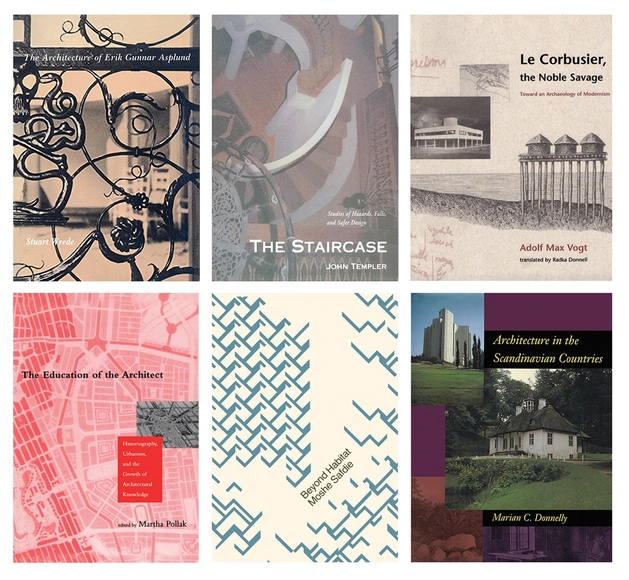
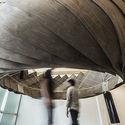
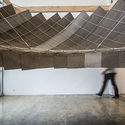
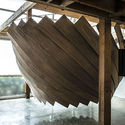
The MIT School of Architecture’s Self-Assembly Lab has teamed up with Google to create Transformable Meeting Spaces, a project that utilizes woven structure research in wood and fiberglass pods that descend from the ceiling, transforming a large space into a smaller one. Designed as a small-scale intervention for reconfiguring open office plans—which “have been shown to decrease productivity due to noise and privacy challenges”—the pods require no electromechanical systems to function, but rather employ a flexible skeleton and counterweight to change shape.

This skeleton is composed of 36 fiberglass rods, which are woven together into a sort of textile or cylindrical braid. Thus, the structure behaves “like a Chinese finger trap: The circumference of the pod shrinks when it’s pulled, and expends when relaxed.”

MIT and Google Team Up to Create Transformable Office Pods  - Featured ImageMIT and Google Team Up to Create Transformable Office Pods  - Image 1 of 4MIT and Google Team Up to Create Transformable Office Pods  - Image 2 of 4MIT and Google Team Up to Create Transformable Office Pods  - Image 3 of 4MIT and Google Team Up to Create Transformable Office Pods  - More Images+ 2