1. ArchDaily
  2. Material Sourcing

Material Sourcing: The Latest Architecture and News

Unearthing the Ground: Architecture and the Politics of Extraction

Audio available

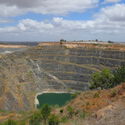
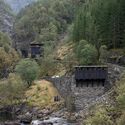
Every building begins somewhere else. The sand in its concrete, the stone on its façade, the lithium that may one day power its systems. It arrives, already stripped from a mountain, a riverbed, or a salt flat thousands of kilometers away, having passed through a chain of trucks, ships, and customs declarations that erase almost everything about where it came from. Architecture tends to treat material as a starting condition, something simply available, but extraction is where construction actually begins.

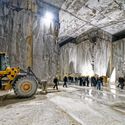
The global trade in construction sand alone now moves on a scale that rivals the illegal markets in timber, gold, and fish combined, run through networks violent enough to have cost reporters and activists their lives. A single mountain in Tuscany has yielded more marble in the past few decades than in the two thousand years before them, hollowed out by a workforce whose own history of revolt has been almost entirely forgotten. Beneath the salt flats of three South American countries and the copper belt of Central Africa, the minerals that will supposedly power a cleaner future are pulled from ground that Indigenous communities have inhabited for generations and that children, in some cases, mine by hand. Each of these is sold as ordinary commerce; each is also a territorial transaction whose terms were set somewhere far from where the material was taken.

Unearthing the Ground: Architecture and the Politics of Extraction - Image 1 of 4Unearthing the Ground: Architecture and the Politics of Extraction - Image 2 of 4Unearthing the Ground: Architecture and the Politics of Extraction - Image 3 of 4Unearthing the Ground: Architecture and the Politics of Extraction - Image 4 of 4Unearthing the Ground: Architecture and the Politics of Extraction - More Images+ 13

The Politics of Bamboo: From Vernacular Craft to Temporal Infrastructure

Audio available

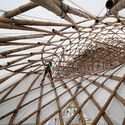
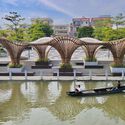
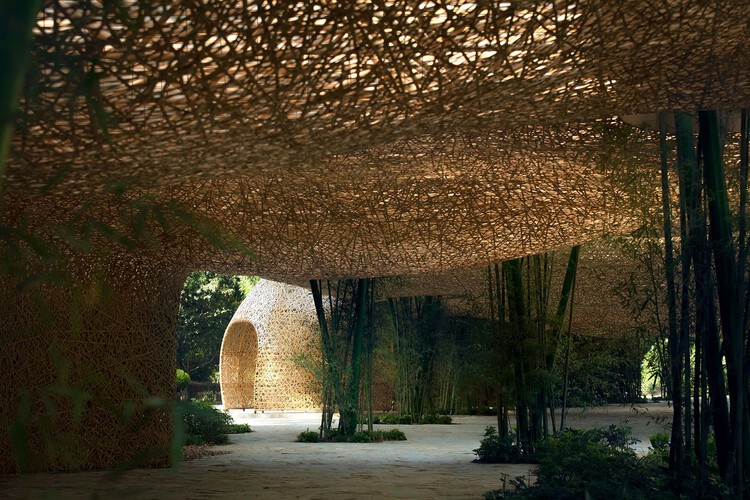
Bamboo is often praised before it is understood. It grows quickly, carries a long history of building cultures, and appears to offer architecture an immediate ecological language. In photographs, it can seem almost self-explanatory: light, natural, renewable, and already aligned with a more sustainable future. Yet this apparent clarity is also what makes bamboo difficult to discuss with precision. Once it becomes a symbol of environmental responsibility, the material itself can disappear behind the image it produces.

This is the risk of bamboo's contemporary revival. It can be imagined too easily as a green substitute for industrial materials, a regional atmosphere, or a softer alternative to the harder languages of steel and concrete. In each case, bamboo is admired before its conditions are understood. The more important question is not whether bamboo is sustainable in a general sense, but what kind of architectural culture it requires: what forms of knowledge, maintenance, regulation, labor, and time are needed for its sustainability to become real.

The Politics of Bamboo: From Vernacular Craft to Temporal Infrastructure  - Image 1 of 4The Politics of Bamboo: From Vernacular Craft to Temporal Infrastructure  - Image 2 of 4The Politics of Bamboo: From Vernacular Craft to Temporal Infrastructure  - Image 3 of 4The Politics of Bamboo: From Vernacular Craft to Temporal Infrastructure  - Image 4 of 4The Politics of Bamboo: From Vernacular Craft to Temporal Infrastructure  - More Images+ 19

Forest-to-Frame: LEVER Architecture on Regenerative Design and Material Sourcing

Subscriber Access | 

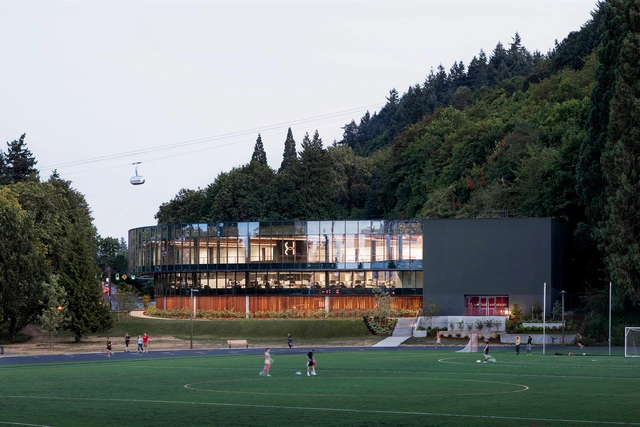
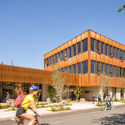
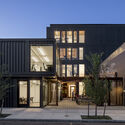
There is a renewed interest in how food is produced and how its creation affects the well-being of both the land and the communities it supports. A similar shift is occurring in architecture, where material culture is emerging as the backbone of design innovation. LEVER Architecture exemplifies this movement with its pioneering "forest-to-frame" model, an approach that reimagines architecture not as an extractive process, but as a regenerative force with positive impacts that extend well beyond the boundaries of any individual building site.

Forest-to-Frame: LEVER Architecture on Regenerative Design and Material Sourcing  - Image 1 of 4Forest-to-Frame: LEVER Architecture on Regenerative Design and Material Sourcing  - Image 2 of 4Forest-to-Frame: LEVER Architecture on Regenerative Design and Material Sourcing  - Image 3 of 4Forest-to-Frame: LEVER Architecture on Regenerative Design and Material Sourcing  - Image 4 of 4Forest-to-Frame: LEVER Architecture on Regenerative Design and Material Sourcing  - More Images+ 6