Amid the rapid build-out of data centres and AI economies across the Greater Bay Area—and alongside the celebration of AI as a tool and "author," as featured in 2025 Hong Kong–Shenzhen Bi-City Biennale of Urbanism\Architecture (Hong Kong)—a parallel question becomes unavoidable: how do the planning and construction of AI infrastructure actually begin to shape everyday life? Many of the facilities already built remain intentionally distant from daily experience. The "cloud" may be marketed as immaterial, but its architecture is profoundly physical: high-power, high-heat, service-heavy environments that are often sited in remote or low-density areas to take advantage of lower land costs and to minimize friction with nearby communities. Security and risk management further reinforce this logic. Data centres hold sensitive, privileged information—corporate assets, legal records, government and institutional data—and remoteness becomes part of their operating model, keeping the infrastructures of AI both spatially and socially out of sight.

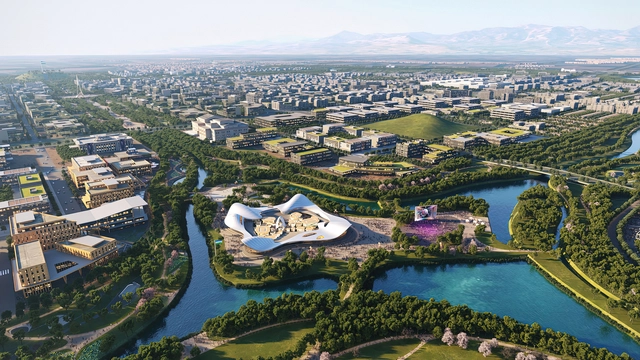
Cross Works just unveiled the plans for New Tashkent, a large-scale expansion of Uzbekistan's capital, Tashkent. The project covers 25,000 hectares to the east of the existing city, located between the Chirchiq and Karasu Rivers. Designed to accommodate an estimated 2.5 million people in the coming decades, the development aims to address population growth in a sustainable manner. The initiative follows an international design competition held in early 2023, which was won by London-based design and technology firm Cross Works. Following their selection, the firm has taken the lead on masterplanning, digital twin development, and coordination of a multidisciplinary team.
In preparation for Expo 2025 Osaka, Kansai, Japan, The "Grand Ring," designed by renowned architect Sou Fujimoto, has reached a significant milestone. As of August 2024, the wooden construction of this structure is now complete, fully connecting the 2-kilometer ring into a continuous loop. This achievement is a crucial step in the development of the Expo site on Yumeshima, an artificial island on Osaka's waterfront, where the Expo will take place from April 13 to October 13, 2025.
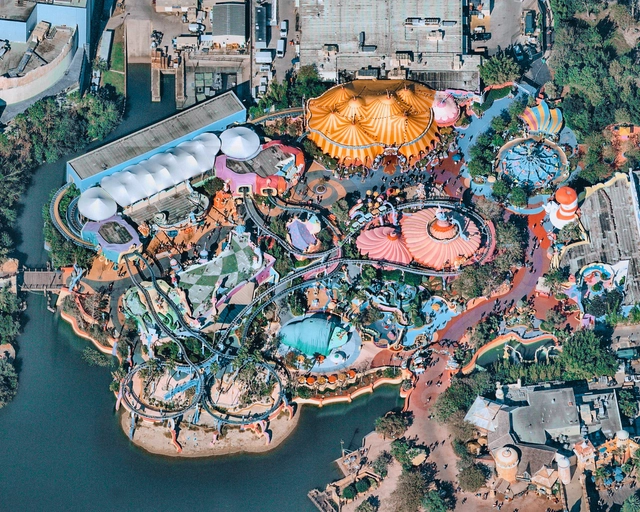
Throughout history, humans have always craved a sense of thrill and an affinity for different forms of entertainment and attraction at all different scales and sizes. Theme parks have continuously evolved, as society redefines what it means to be entertained, and have transformed from evening strolls into physics-defying twists and turns on state-of-the-art rollercoasters.
KCAP Architects & Planners won the international competition for one of the Bucheon Daejang New Town as part of the Seoul metropolitan region in South Korea. Titled Open Fields City, the proposal was made with DA GROUP to create new urban quarters characterized by "fields" and interconnected pathways.
Courtesy of UIA / International Union of Architects
Chinese architect and town planner Wu Liangyong was recently featured in a new interview from the International Union of Architects (UIA) about his life and teaching. As the former Vice-President of the UIA and the Architectural Society of China (ASC), Liangyong won the Jean Tschumi Prize back in 1996. Today, he reflects on his academic career spanning 70 years at the Tsinghua University School of Architecture.
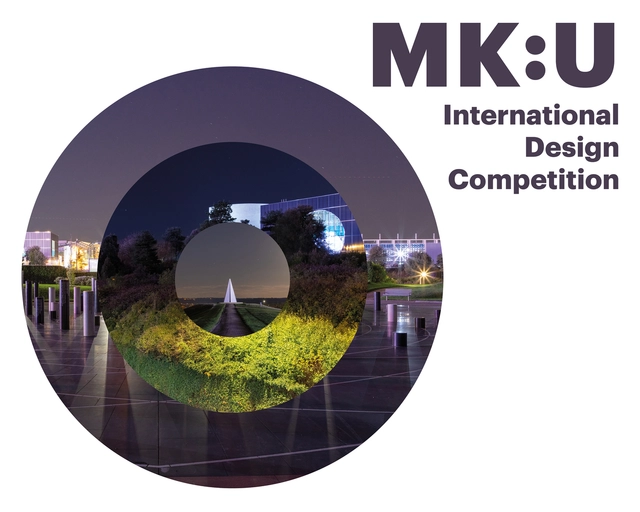
MK:U International Design Competition, images Luke Hayes
The MK:U International Design Competition seeks world-class design teams for a new model university in the Oxford to Cambridge innovation arc.
Beloved by architects as the most original and successful of the mid-twentieth century’s wave of ‘New Towns’, and famously ‘different by design’, Milton Keynes (MK) has successfully reinvented itself as a ‘Smart City’ and is a key contributor to the United Kingdom’s knowledge economy.
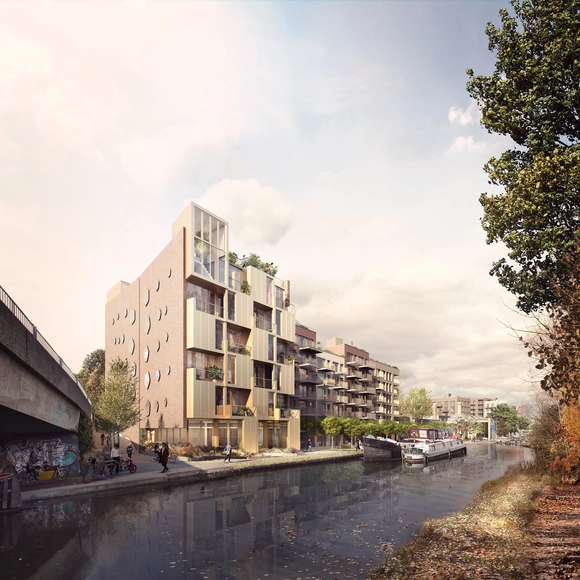
Wickside is a £120m “permeable, mixed-use neighborhood” that will provide 475 homes and 300 jobs for the surrounding community. Designed by BUJ Architects and Ash Sakula Architects, the neighborhood has recently received the all-clear from the LLDC planning committee. Almost nine years in the making, the scheme uses “urban blocks set around ordinary London streets” to create a complex, diverse townscape with a variety of uses. The neighborhood is housed within a 28,800 square meter former waste transfer site in Hackney Wick, London. Integrating the context’s existing buildings and cultural heritage, Wickside aims to develop the existing creative community through “retention and regeneration,” and is one of the largest development sites in the area.
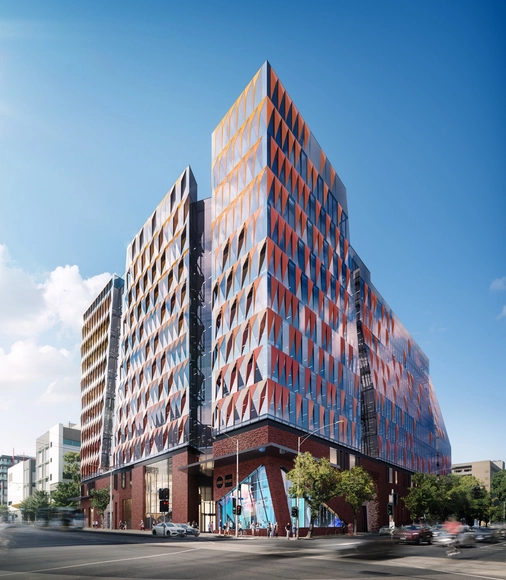
In partnership with Lendlease and the University of Melboure, Woods Bagot designed an architectural reflection of the university itself. Named the Carlton Connect Initiative, this masterplan will be a mixed-use precinct where not only university students and staff, but also international business professionals, researchers, and start-ups can come participate in idea exchange. In order to attract the best and brightest for the university, Woods Bagot is pursuing the highest standard of cutting-edge, sustainable design.
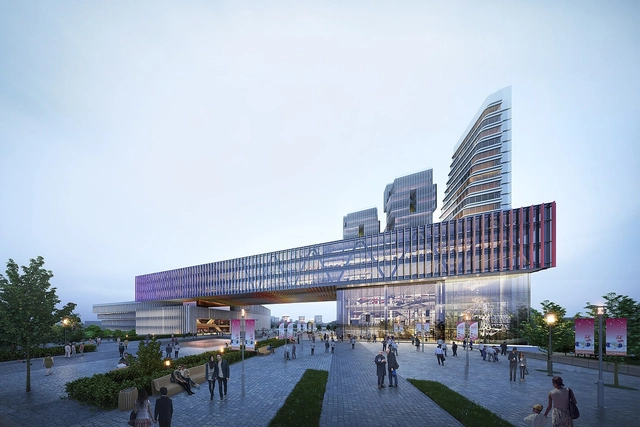
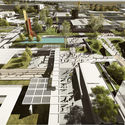
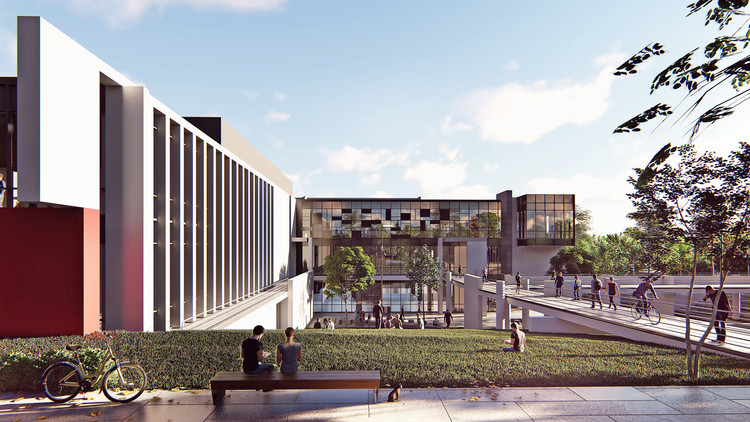
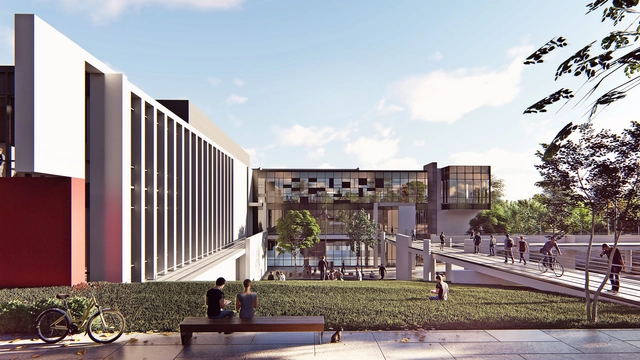
Beoffice and HSY Architects’ competition-winning proposal for Bandırma Onyedi Eylül University Campus in Turkey represents a generation of knowledge that will flourish and support Bandırma’s innovation in industry and economy. The university will take an integrated approach to the region, blurring the boundary between campus and city with interactive spaces that can open up for flexible use.
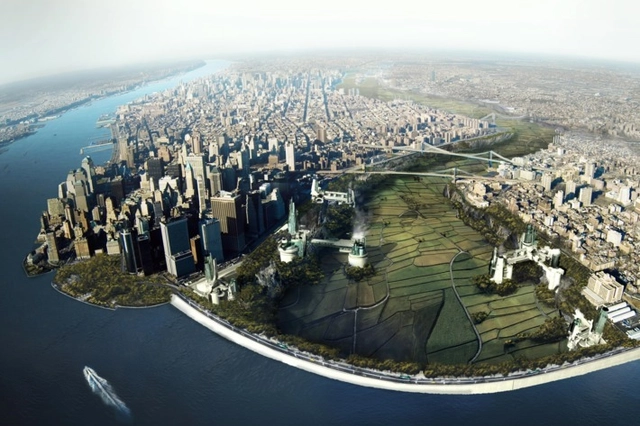
New York Magazine asked some of New York City’s distinguished architects how they would improve the city and save it from climate change. NY Mag reported on their findings.