1. ArchDaily
  2. Mark Wigley

Mark Wigley: The Latest Architecture and News

UIA 2026 Barcelona Reveals Program Structured Around Six Thematic “Becomings”

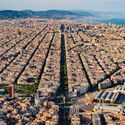
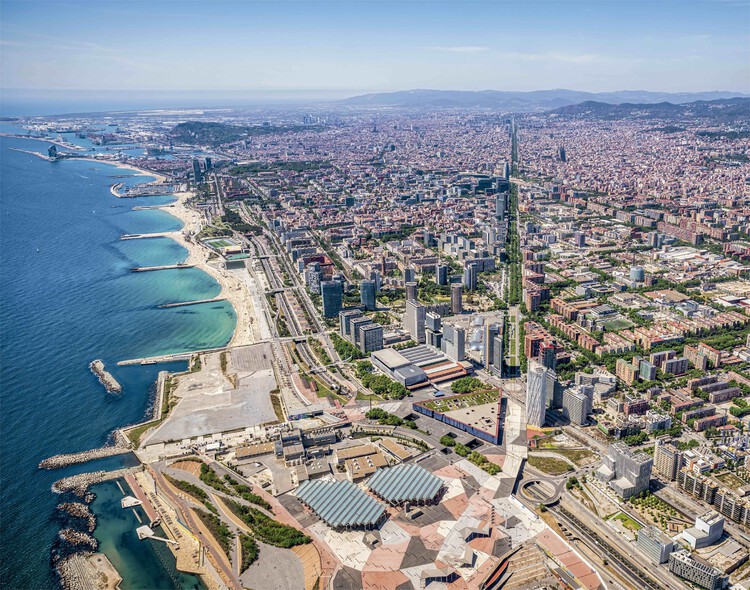
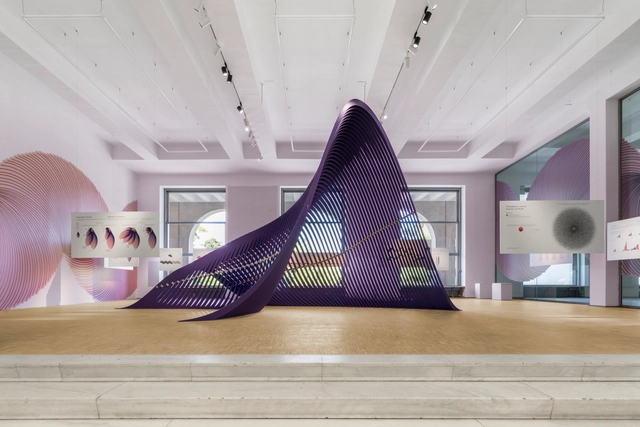
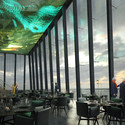
More than three decades after previously hosting the event, Barcelona is set to welcome the UIA World Congress of Architects 2026 Barcelona (UIA2026BCN), bringing the global architectural community back to the city between 28 June and 2 July 2026. Organized under the theme "Becoming. Architectures for a Planet in Transition," the Congress is expected to gather approximately 10,000 participants from over 130 countries, including practitioners, researchers, and students. Rather than being confined to a single venue, the event will unfold across multiple locations along the Mediterranean seafront, among them the Three Chimneys complex, positioning the city itself as an active platform for exchange, discussion, and public programming.

UIA 2026 Barcelona Reveals Program Structured Around Six Thematic “Becomings” - Image 1 of 4UIA 2026 Barcelona Reveals Program Structured Around Six Thematic “Becomings” - Image 2 of 4UIA 2026 Barcelona Reveals Program Structured Around Six Thematic “Becomings” - Image 3 of 4UIA 2026 Barcelona Reveals Program Structured Around Six Thematic “Becomings” - Image 4 of 4UIA 2026 Barcelona Reveals Program Structured Around Six Thematic “Becomings” - More Images+ 13

Architectural Authorship in the Age of the Collective Practices

Subscriber Access | 

This article is part of our new Opinion section, a format for argument-driven essays on critical questions shaping our field.

Who designs architecture today? In a professional landscape increasingly defined by collaborative workflows, generative software, and distributed teams, the figure of the architect as a singular creative author feels both anachronistic and inadequate. This article argues that architectural authorship is no longer an individual act, but a collective and distributed condition shaped by institutions, technologies, and shared forms of labor. The transition from individual to collective authorship is not simply a consequence of larger offices or digital tools; it signals a deeper structural shift in how architecture is produced, communicated, and validated.
Architectural Authorship in the Age of the Collective Practices - Image 1 of 4Architectural Authorship in the Age of the Collective Practices - Image 2 of 4Architectural Authorship in the Age of the Collective Practices - Image 3 of 4Architectural Authorship in the Age of the Collective Practices - Image 5 of 4Architectural Authorship in the Age of the Collective Practices - More Images+ 23

24th International Exhibition of Triennale Milano Announces Bee Award Winners

The 24th International Exhibition of Triennale Milano opened to the public on May 13, 2025, at the historic Palazzo dell'Arte. Running until November 9, this edition explores the theme of "Inequalities", continuing Triennale Milano's tradition of addressing urgent global issues through the lenses of art, architecture, and design. The exhibition is formed by two main sections: one that presents a curated selection of exhibitions and installations by individual artists and teams, and another that features international participations, including national pavilions and their contributions. At the opening ceremony on May 12th, the Bee Awards were presented to recognize selected contributions across the exhibition. From both the exhibitions and the international participations, the jury awarded one winner and one honorable mention each.

24th International Exhibition of Triennale Milano Announces Bee Award Winners - Image 1 of 424th International Exhibition of Triennale Milano Announces Bee Award Winners - Image 2 of 424th International Exhibition of Triennale Milano Announces Bee Award Winners - Image 3 of 424th International Exhibition of Triennale Milano Announces Bee Award Winners - Image 4 of 424th International Exhibition of Triennale Milano Announces Bee Award Winners - More Images+ 4

AD Classics: 1988 Deconstructivist Exhibition at New York's Museum of Modern Art (MoMA)

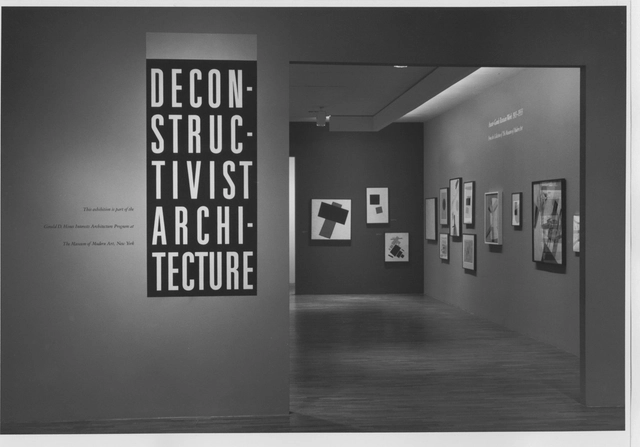
When Philip Johnson curated the Museum of Modern Arts’ (MoMA) 1932 “International Exhibition of Modern Architecture,” he did so with the explicit intention of defining the International Style. As a guest curator at the same institution in 1988 alongside Mark Wigley (now Dean Emeritus of the Columbia GSAPP), Johnson took the opposite approach: rather than present architecture derived from a rigidly uniform set of design principles, he gathered a collection of work by architects whose similar (but not identical) approaches had yielded similar results. The designers he selected—Peter Eisenman, Frank Gehry, Zaha Hadid, Rem Koolhaas, Daniel Libeskind, Bernard Tschumi, and the firm Coop Himmelblau (led by Wolf Prix)—would prove to be some of the most influential architects of the late 20th Century to the present day.[1,2]

AD Classics: 1988 Deconstructivist Exhibition at New York's Museum of Modern Art (MoMA) - Installation, TableAD Classics: 1988 Deconstructivist Exhibition at New York's Museum of Modern Art (MoMA) - Installation, Table, ChairAD Classics: 1988 Deconstructivist Exhibition at New York's Museum of Modern Art (MoMA) - InstallationAD Classics: 1988 Deconstructivist Exhibition at New York's Museum of Modern Art (MoMA) - InstallationAD Classics: 1988 Deconstructivist Exhibition at New York's Museum of Modern Art (MoMA) - More Images+ 1

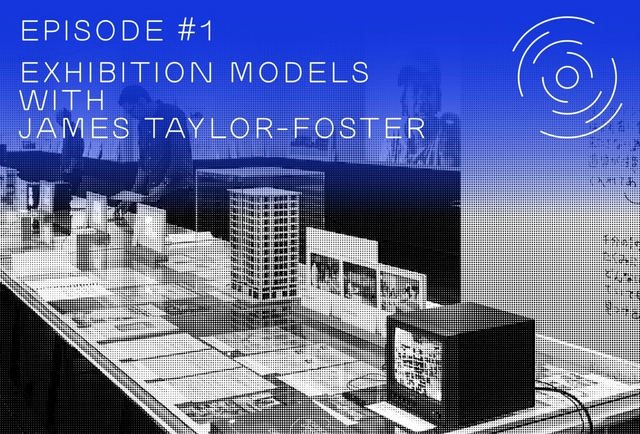
Introducing GSAPP Conversations' Inaugural Episode: "Exhibition Models"

We are pleased to announce a new content partnership between ArchDaily and Columbia University's Graduate School of Architecture, Planning and Preservation (GSAPP) in New York City.

GSAPP Conversations is a podcast series designed to offer a window onto the expanding field of contemporary architectural practice. Each episode pivots around discussions on current projects, research, and obsessions of a diverse group of invited guests at Columbia, from both emerging and well-established practices. Usually hosted by the Dean of the GSAPP, Amale Andraos, the conversations also feature the school's influential faculty and alumni and give students the opportunity to engage architects on issues of concern to the next generation.

Introducing GSAPP Conversations' Inaugural Episode: "Exhibition Models" - Image 1 of 4

After "Are We Human?" – Beatriz Colomina and Mark Wigley Discuss the Istanbul Manifesto

Subscriber Access | 

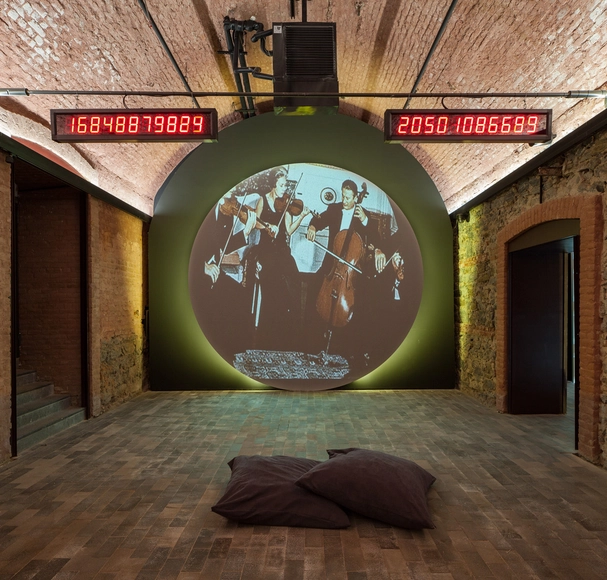
With Are We Human—the exhibition of the 3rd Istanbul Design Biennial, which ran for one month at the end of 2016—curators Beatriz Colomina and Mark Wigley were researching the fundamental notion of ‘design’. Their historic, cultural and conceptual exploration attempted to unravel the various programs and ambitions behind a (mainly) market driven inventiveness, which is presented as progress. This pushed the notion of design and the biennale as a format beyond their established definitions.

After "Are We Human?" – Beatriz Colomina and Mark Wigley Discuss the Istanbul Manifesto - Image 1 of 4After "Are We Human?" – Beatriz Colomina and Mark Wigley Discuss the Istanbul Manifesto - Image 2 of 4After "Are We Human?" – Beatriz Colomina and Mark Wigley Discuss the Istanbul Manifesto - Image 3 of 4After "Are We Human?" – Beatriz Colomina and Mark Wigley Discuss the Istanbul Manifesto - Image 4 of 4After Are We Human? – Beatriz Colomina and Mark Wigley Discuss the Istanbul Manifesto - More Images+ 4

After "Are We Human?" – Beatriz Colomina and Mark Wigley Discuss the Istanbul Manifesto - Image 5 of 4

A Tilting Horizon: Reflecting on 50 Issues of VOLUME and What's Yet to Come

Subscriber Access | 

A photo posted by Volume (@archisvolume) on

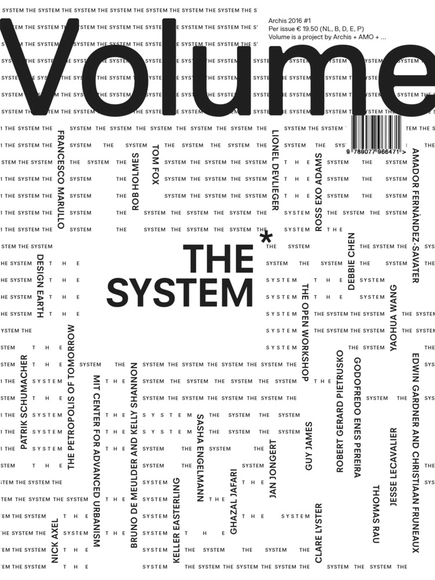
In this editorial from VOLUME's milestone 50th issue, Arjen Oosterman—the magazine's Editor-in-Chief—reflects on over ten years of cultural production and discourse and outlines what is to come. ArchDaily will be sharing a selection of the articles from this issue over the coming weeks.

Moving forward implies looking back. When we started this research engine called VOLUME in 2005, economic, political, and social conditions were very different to how they are today. The intention to rethink the agency of ‘beyond’ as driver for change inevitably means historicizing the trajectory of the VOLUME project so far. That said, we really didn’t want to turn VOLUME itself into the subject of reflection. So we’ll instead talk about the present and, in so doing, find history creeping its way in whether we like it or not.

A Tilting Horizon: Reflecting on 50 Issues of VOLUME and What's Yet to Come - Image 1 of 4

Colomina and Wigley Announce Theme For 2016 Istanbul Design Biennial: "Are We Human?"

At a media meeting this morning at the Istanbul Archaeological Museums Library, the curators of the 3rd Istanbul Design Biennial Beatriz Colomina and Mark Wigley announced the theme of next year's event, titled “ARE WE HUMAN?: The Design of the Species: 2 seconds, 2 days, 2 years, 200 years, 200,000 years.” The event, which will be held from October 22nd to December 4th next year, is intended to combine elements of both media documentary and archaeological project and according to the curators "will explore the intimate relationship between the concepts of 'design' and 'human.'"

Moreau Kusunoki's 'Art in the City' Proposal Wins Guggenheim Helsinki Competition

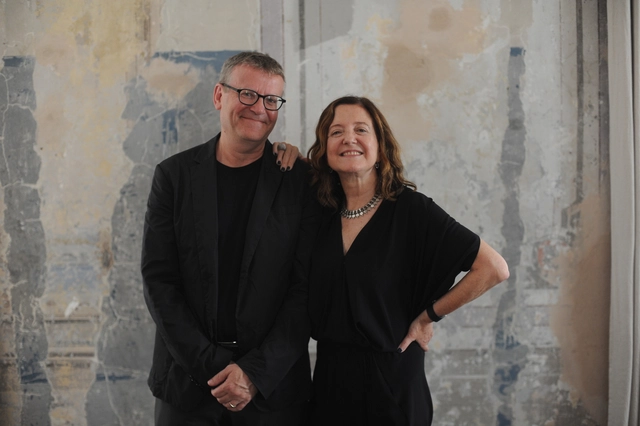
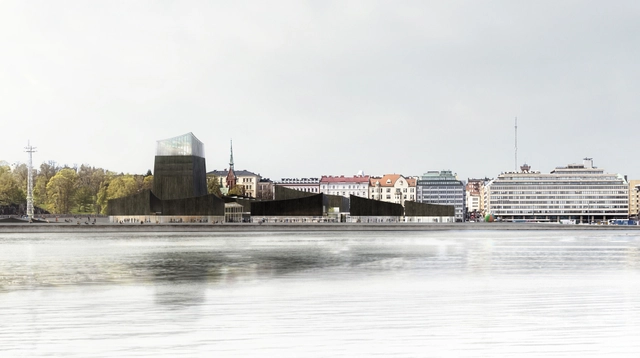
Moreau Kusunoki, based in Paris, have been announced as the winners of the Guggenheim Helsinki competition following a year of shortlisting, refining and deliberation. Their proposal—entitled Art in the City—"sums up the qualities the jury admired in the design" noted Mark Wigley, chair of the jury. He continued: "the waterfront, park, and nearby urban area all have a dialogue with the loose cluster of pavilions, with people and activities flowing between them. The design is imbued with a sense of community and animation that matches the ambitions of the brief to honor both the people of Finland and the creation of a more responsive museum of the future."

The announcement was made this morning in Helsinki by Richard Armstrong, Director of the Solomon R. Guggenheim Museum and Foundation. Also present was Professor Mark Wigley, chair of the jury and Dean Emeritus of Columbia GSAPP, Jussi Pajunen, Mayor of Helsinki, Ari Lahti, chairman of the Guggenheim Helsinki Supporting Foundation, and the architect team.

Moreau Kusunoki's 'Art in the City' Proposal Wins Guggenheim Helsinki Competition - Image 7 of 4Moreau Kusunoki's 'Art in the City' Proposal Wins Guggenheim Helsinki Competition - Image 8 of 4Moreau Kusunoki's 'Art in the City' Proposal Wins Guggenheim Helsinki Competition - Image 5 of 4Moreau Kusunoki's 'Art in the City' Proposal Wins Guggenheim Helsinki Competition - Image 9 of 4Moreau Kusunoki's 'Art in the City' Proposal Wins Guggenheim Helsinki Competition - More Images+ 11

Beatriz Colomina And Mark Wigley Appointed As Curators Of The 2016 Istanbul Design Biennial

The Istanbul Foundation for Culture and Arts have announced that internationally renowned architectural historian and theorist Beatriz Colomina and architectural historian, theorist, and critic Mark Wigley will curate the 3rd Istanbul Design Biennial to be held in the summer of 2016. Colomina, a Professor of Architecture at Princeton University and curator of the recent Radical Pedagogies: Architectural Education in a Time of Disciplinary Instability exhibition (Lisbon Triennale, 2013; Venice Biennale 2014) will join Wigley, Professor and Dean Emeritus of Columbia University's GSAPP and renowned writer and curator, in helping to cement the biennial's international reputation.

Mark Wigley Steps Down as Dean of Columbia University's GSAPP

Mark Wigley announced Monday that he will be stepping down as dean of Columbia University's Graduate School of Architecture, Planning and Preservation (GSAPP) at the end of the academic year in 2014.

"In every context, he has represented the School and the institution in ways that make us all proud to be part of such a vibrant place," wrote Columbia President, Lee Bollinger, "And to all of it he has brought his unique humor and made us laugh."

A Country of Cities: A Manifesto for an Urban America

Last monday, Columbia University's Avery Hall was buzzing. 

The Graduate School of Architecture, Planning and Preservation (GSAPP) hosted a highly attended event that welcomed respected academics and professionals from architecture and real estate to what the dean, Mark Wigley, warned might take the form a a celebrity roast. Vishaan Chakrabarti, a partner at SHoP Architects and director of the Center for Urban Real Estate at Columbia, was on deck to deliver an abridged, more "urban version" of a longer lecture on his new book, A Country of Cities: A Manifesto for an Urban America. Proceeding the twenty minute lecture, an "A-list" panel of architects and historians - that included Kenneth Frampton, Gwendolyn Wright, Bernard Tschumi, Laurie Hawkinson and Reinhold Martin - lined up to discuss Chakrabarti's work.