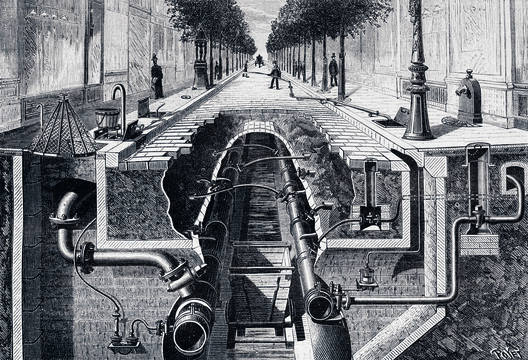
Architecture has long been understood as a discipline created by humans and for humans. But in We the Bacteria: Notes Toward Biotic Architecture, Beatriz Colomina and Mark Wigley challenge that assumption, arguing that "microbes invented architecture." From this premise unfolds an alternative history of architecture that shifts the focus away from human exceptionalism and toward the microorganisms that have shaped life, environments, and the built world for billions of years.
The book explores the idea that architecture cannot be understood separately from the microbial worlds that shape it, suggesting that "architecture inhabits humans just as much as humans inhabit architecture." Rather than inert objects, buildings emerge as dynamic ecosystems that Colomina and Wigley go as far as describing as "an expanded gut shared with others," where microbes, materials, people, and countless other forms of life continuously coexist, exchange, and evolve.
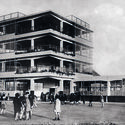
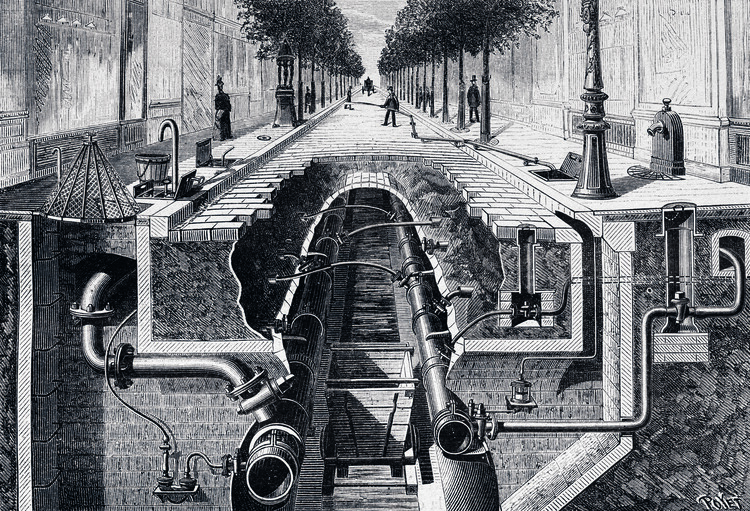
Revisiting architectural history through this lens, We the Bacteria retraces how epidemics, hygiene, and changing understandings of biology have profoundly influenced the spaces we build, from the first settlements to the emergence of modern architecture. As the authors write, "humans, microbial pathogens and architecture modified themselves in response to each other and have continued to co-evolve for millennia." The book also proposes a vision for the future through the concept of biotic architecture, asking what architecture might become if it embraced coexistence rather than exclusion. As Colomina and Wigley write, "the very idea of shelter changes from excluding danger to including it," reimagining architecture as a space that fosters relationships between species rather than separating them.
Related Article
Beyond Human: Architecture as a Participant in Living SystemsFollowing this publication, ArchDaily spoke with Beatriz Colomina and Mark Wigley about the book's central ideas, from microbes and architectural history to multispecies coexistence and the future of architecture. At the heart of the conversation is a question that runs throughout the book: Has architecture ever been entirely human? Read on for the full conversation.
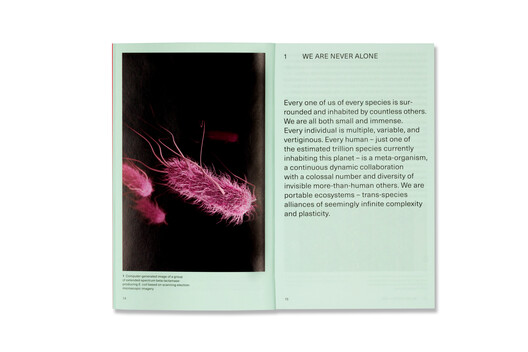
The Book- We the Bacteria: Notes Toward Biotic Architecture
ArchDaily: What is the central argument of We the Bacteria? What does architecture look like when viewed from the perspective of microbes rather than humans?
Beatriz Colomina and Mark Wigley: We are thoroughly bacterial, as are buildings, the materials they are made of, and the wider world they sit in.
Bacteria are the real architects, construction workers, clients, and maintenance workers. They are invisible yet produce everything we see. They even organize how we see, think, and feel. If you could see only microbes, it would be the highest resolution image of architecture possible.
Actually, it would be more like a movie of endless dynamic transactions between trillions upon trillions of interacting microbes. Architecture is always alive, which is to say that it is constantly composing and decomposing, within all its spaces, materials, and technologies. The image of architecture as a static, unwavering, unresponsive, inert object is illusory, conveying the all-too-human fantasy of transcending the living world. But this illusion has had a devastating effect on the biosphere, the space of all life and its sediments that has wrapped the planet for around 4.2 billion years since the emergence of the first bacteria.
AD: The book proposes an alternative history of architecture through the perspective of microbes. Looking back at canonical moments in architectural history, what surprised you most when revisiting them through this lens?
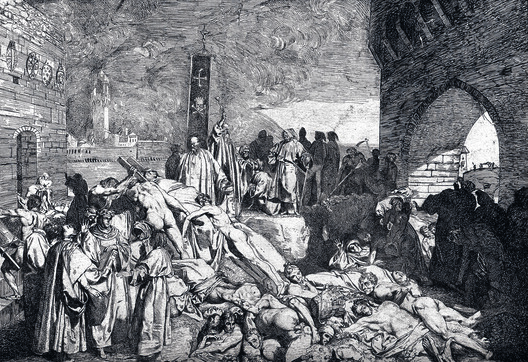
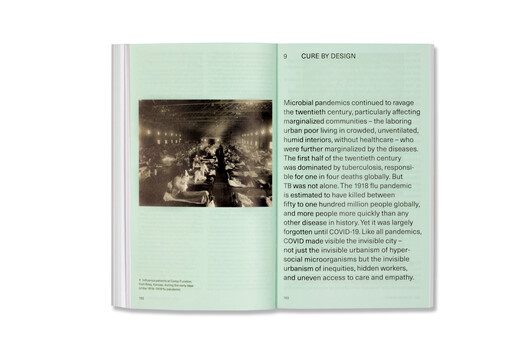
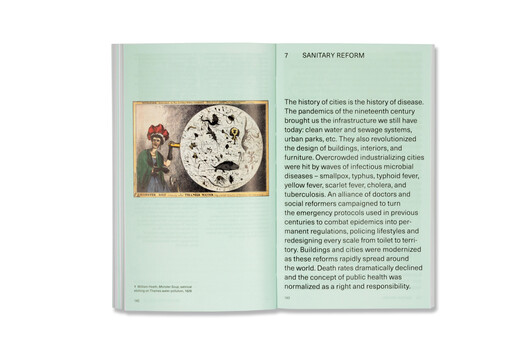
BC & MW: What is most striking to us is how the devastating effects of bacterial diseases are so quickly forgotten, again and again through history, in a kind of collective amnesia—even if buildings and cities are shaped and reshaped by the traumas of devastating epidemics. This amnesia is assisted by architectural historians who blind us to the fact that modern architecture, for example, was completely shaped by the battle against tuberculosis that was killing up to 1 in 3 people in large cities. Modern architecture thought of itself as an antibiotic. Every detail of modern buildings (the smooth white surfaces, large glass, roof terraces, etc.) was shaped as a form of resistance to bacteria. Modern architects talked a lot about this, even describing themselves as bacteriologists, yet histories of modern architecture obscure it.
In a sense, historians have sanitized architecture, cleansing architecture of its microbes.
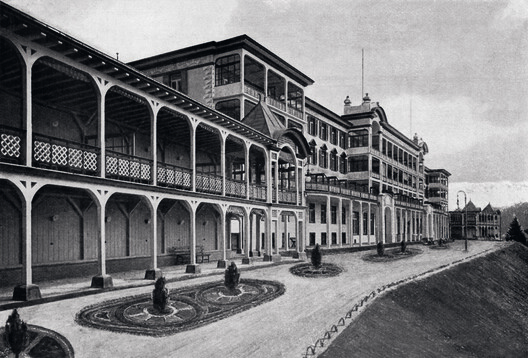
AD: Throughout the book, you show how disease has repeatedly shaped buildings, cities, and even architectural theory itself. From Vitruvius to modernism, architecture often developed as a response to microbial threats. What does this history reveal about the relationship between architecture and life?
The human-built environment is shaped by disease. There is no architecture without disease and perhaps no disease without architecture.
BC & MW: Health has inevitably been at the center of architectural theory. Architecture and medicine are inseparable. Yet buildings have been unhealthy from the beginning. They counter one set of threats to life only to produce other threats. The first permanently inhabited buildings 10,000 years ago were already antibiotic. They were made of lime plaster which is antibacterial and antifungal, forming a prophylactic separation of humans from most microbes, plants, animals and insects. Yet after moving indoors, humans became shorter and lived shorter lives. Diseases like tuberculosis became epidemic for the first time.
Architecture is an antibacterial project that paradoxically fosters the growth of particular bacteria, including debilitating and deadly pathogens. Architecture is fearful of more-than-human life, yet actively fosters and reshapes that life, including the living communities of 100 trillion microbes within each human.
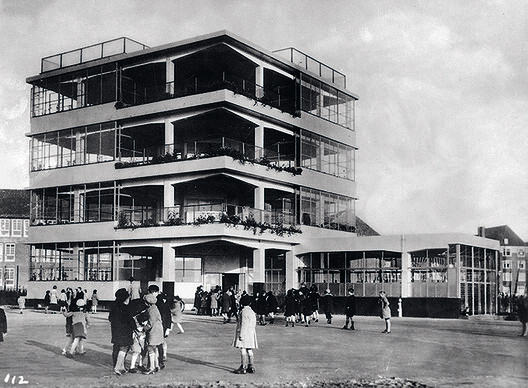
AD: You describe architecture as an antimicrobial project and trace how ideals of hygiene, light, ventilation, and even the rejection of ornament became embedded in modern architecture. How do these assumptions still shape contemporary practice, and should they be reconsidered?
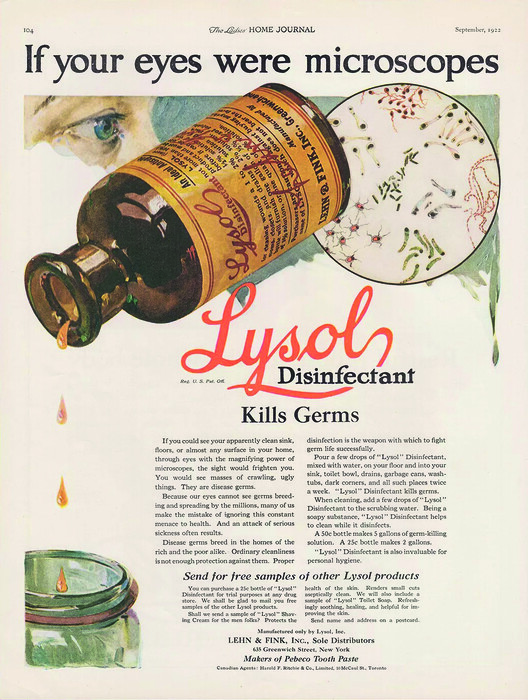
BC & MW: All the anti-microbial elements of modern architecture remain in place today. In fact, they have been taken to the next level with anti-microbial coatings of nano-particles used on most external and internal surfaces, furniture, tools and toys. As with all other kinds of antibiotics, we are abusing them in a way that now threatens rather than protects us. The counter-move is now is to use materials that provide hospitality to a diversity of microbes, establishing more porosity between inside and outside, and especially to reconnect with the microbially rich soil in which the human species grew for two hundred thousand years, like another plant.
Transspecies Architecture
AD: One of the ideas that stood out to me is that "architecture inhabits humans just as much as humans inhabit architecture." Could you elaborate on this concept and explain how it changes the way we think about buildings, bodies, and cities?
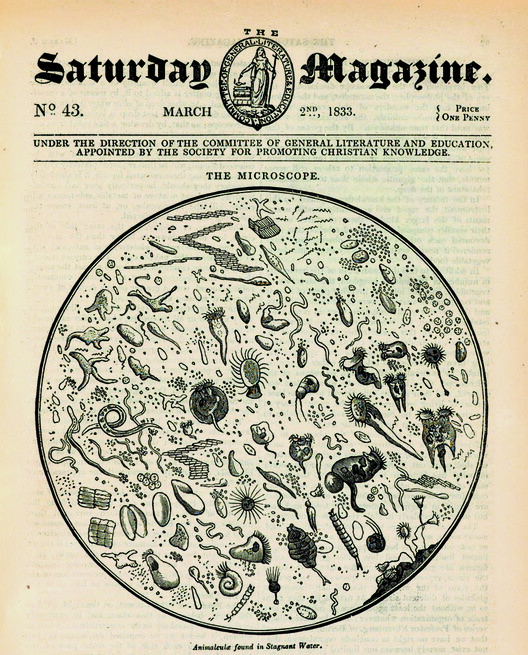
BC & MW: To occupy a room is to absorb the microbes living within it, with every breath and touch. Architecture is inside us. It flows through us. We digest it. Buildings are always infused with microbes occupying every space, surface, duct, layer, fitting, and material. The apparent solidity of any surface and permanence of any angle is undone by the vertiginous complexity and mobility of the life around, on, and within it. Each human inhabitant continuously contributes species of microbes to this community and receives species from it.
To inhabit a room is to be inhabited by this pulsating collective microbial space.

AD: The book argues that buildings are not inert objects but living microbial environments. If architects understood buildings as ecosystems rather than containers, what specific aspects of design practice would need to change?
BC & MW: To understand humans as portable ecosystems intimately entangled with the ecosystems of buildings is already to rethink design. Architecture could aspire to curate trans-species communities. A model is the immune system. It used to be thought that our immune system keeps threats outside. Now it is understood that a healthy immune system actively curates microbial communities, inviting the threats inside.
The multiplicity of "good" microbes minimizes the effect of the "bad" ones. Design can likewise shift from the idea of sheltering life by keeping threats outside to sheltering life by welcoming what threatens. This means a complete paradigm shift. Without it, the odds of our recently arrived species hanging around are not great.
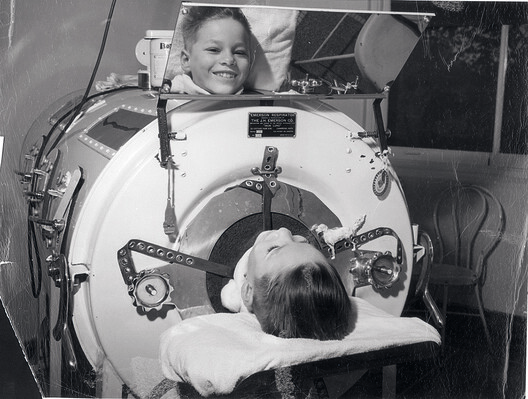
AD: The concept of "biotic architecture" is one of the most compelling ideas in the book. How would you define biotic architecture, and how does it differ from concepts such as sustainable, regenerative, or human-centered design?
BC & MW: We are careful not to define it. Biotic architecture would not be any one virtuous thing. The worst thing about architecture today is that it is a monoculture. Buildings are everywhere built more or less then same way. Biotic means life, which is multiple, symbiotic, entangled, shifting. The discourse about sustainability is entirely human-centered. The apparent care for the planet is just care for human survival. The biosphere will survive whatever level of devastation our species invents. Human-centered design is a terrible idea, for humans and for most other species.
Decentering the human is an urgent task.
For us this doesn't mean throwing humans away. On the contrary, it means entering the human more deeply, embracing the wriggling, smelly 100 trillion microbes in a thousand or so species that constitute us. Or to say it the other way round, the human that has been at the center of architectural discourse at least from Vitruvius on is not human but a fiction, more inert than any building.
The Possible Future of Architecture
AD: Living materials, fungi, algae, and bacteria are increasingly entering architectural experimentation. Which of these developments do you believe have the greatest potential to fundamentally transform architecture?
BC & MW: It is the diversity of experiments and their possible interactions that matters rather than any particular one. Today, the materials, techniques, maintenance, and preservation of buildings are being profoundly transformed by actively collaborating with microbes. The building industries are rapidly evolving, as are many designers. Think of concrete, the single biggest contributor to carbon emissions. Paradoxically it degenerates too quickly and is replaced with even more concrete. To synthesize it with bacteria or with bacteria inside it that enable it to self-heal and last longer is transformative. Preserving existing buildings by infusing them with microbes to counter those that cause their decay is now standard practice. A new generation of designers is working with ways to use bacteria and fungi for generating building materials, producing energy, carbon capture, soil remediation, and contributing to the shared health of people, plants, pets, and insects. This is not some nostalgic appeal to a time before architecture. It is stupidity reduction, and involves a different sense of politics in which the rights of the living environment are attended to as an ongoing responsibility, a question to always be asked in different ways rather than a formulaic answer.
AD: A recurring theme in the book is the need to move beyond human exceptionalism. If we acknowledge that buildings are shaped by complex alliances between humans, microbes, materials, and environments, how should we rethink agency, authorship, and the role of the architect?
BC & MW: At the very least it means thinking of architects as always having been entangled in countless collaborations with other disciplines and more-than-human clients. Even the idea of the curator or gardener implies just a softer version of exceptionalism.
Better perhaps to think of architects as a species that is dependent, like all other species, on countless other species but also able to contribute to shared well-being and planetary health. This contribution might be more about asking questions than answering them.
A key role of architects, as with artists, is to produce some kinds of hesitation in everyday life that allows things to be seen differently, thought differently, and maybe lived differently. This hesitation that might provoke different ways of living can include hesitations in the rhythms and flows of seemingly more-than-human life.
AD: Looking ahead, what do you think is the most important lesson architects should take from microbial life? What is the one lesson from microbial life that should become part of architectural education?
BC & MW: For us it is not about a single thoughtful lesson. As teachers, we are much more interested in creating a kind of hospitality to a multiplicity of unexpected thoughts by the next generation. To see architecture in microbial terms is to unlearn so much that is thought to be architectural education. This book offers a 10,000 year history of architecture to help unlearn so much of the dogmas of the discipline and thereby open up a space for experiments in architectural design and theory. We don't try to give specific shape to that urgent political work of design.
The lesson is that if we humans are microbial—as are the spaces we live in, the materials we built with, and the world we build in—the future of architecture, understand as a survival mechanism, is of course microbial.
Cedric Price used to say that he didn't know what the question is but he knew the answer was technology. We don't know what the question is but we know the answer is microbes.
This article is part of the ArchDaily Topic: Transspecies Architecture: The Life of Materials, Ecological Alliances, and Nature's Agency. Every month we explore a topic in-depth through articles, interviews, news, and architecture projects. We invite you to learn more about our ArchDaily Topics. And, as always, at ArchDaily we welcome the contributions of our readers; if you want to submit an article or project, contact us.


