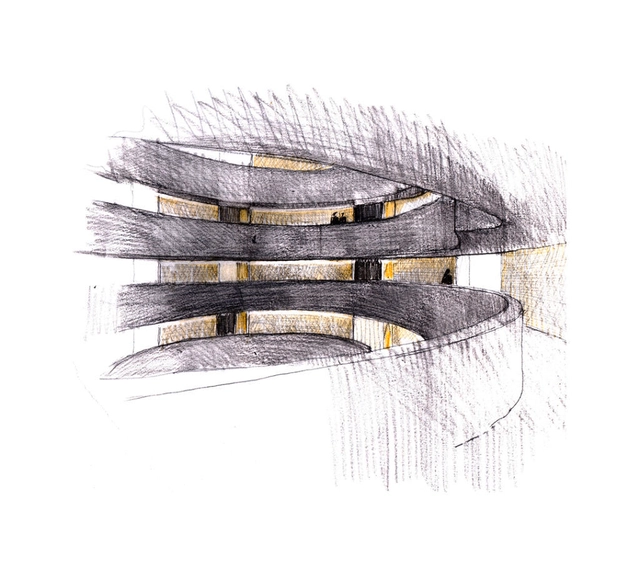
Interior sketch. Image Courtesy of Jonathan Tuckey Design
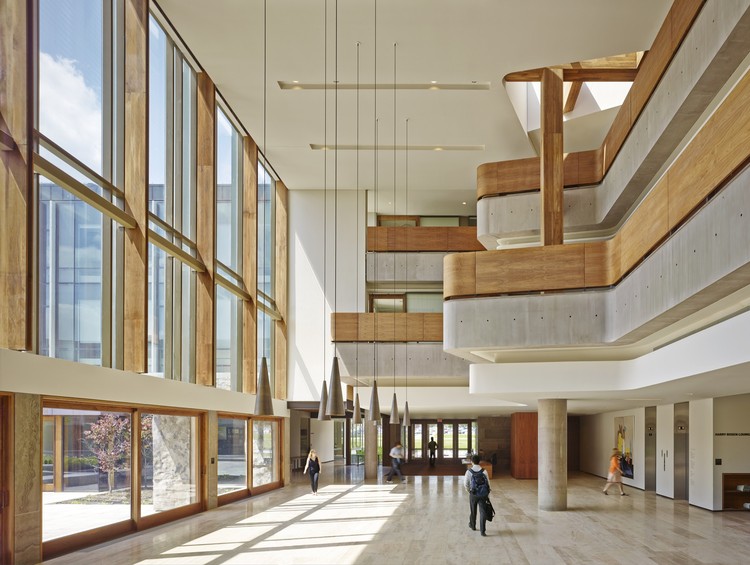
London-based British practice Jonathan Tuckey Design (JTD) have created a series of residential interiors for the 'Gasholder Triplets' in London's formerly industrial King's Cross district. 145 individual apartments have been designed inside these mid-nineteenth century structures, within which Wilkinson Eyre Architects have created the "architectural insertions" (the buildings themselves).
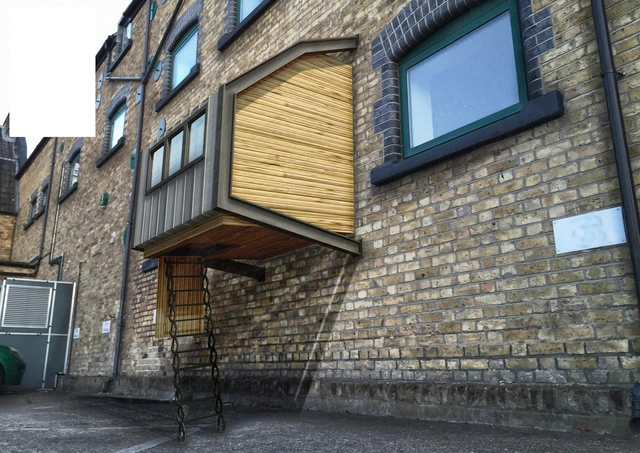
With ideas ranging from floating homes to new mega-cities, New London Architecture has revealed 100 proposals to address the housing crisis in London. The ideas will be on display as part of the New Ideas for Housing exhibition at the NLA Galleries in the Building Centre in London. After an open ideas competition announced June 2015, over 200 entries from 16 different countries were received. Of the 100 shortlisted projects 10 finalists will be selected and have the opportunity to work with the Greater London Authority to implement their ideas. Read more about the entries and exhibit after the break.
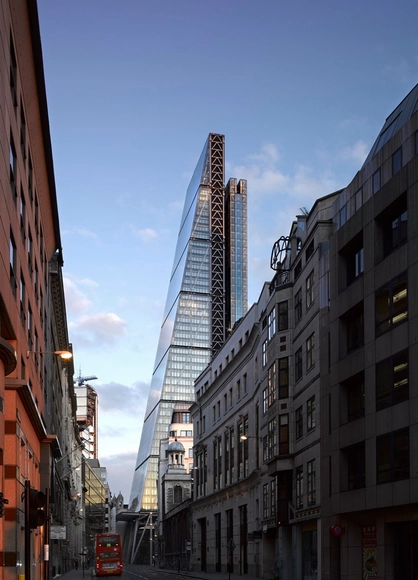
The award's jury, chaired by World Architecture Festival director Paul Finch, selected the Leadenhall Building over 15 other publicly nominated buildings. It was lauded for providing a "world-class working environment" and having a positive impact on the city street.
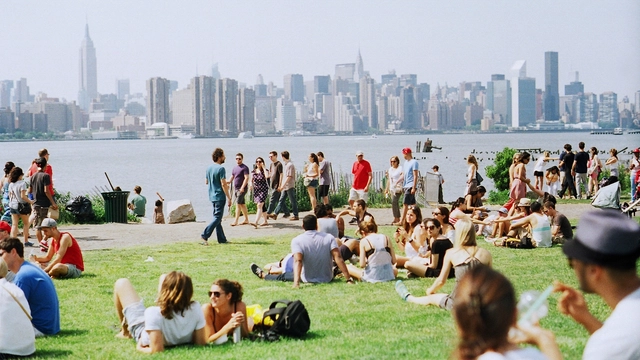
For the latest episode of The Urbanist, Monocle 24's weekly "guide to making better cities," the team explore the role of bilateral inspiration between metropolises across the world. Examples of cities relying on one another to draw lessons from and progress can be seen across the world: from the ways in which London and New York City tackle similar urban problems, to how a bike-sharing scheme in Paris has proven to be contagious. The show also visits Vienna, where its Imperial heritage is being imitated the world over, and the show ponders whether the fact that every continent "claiming to have its own Venice" is actually a good thing?
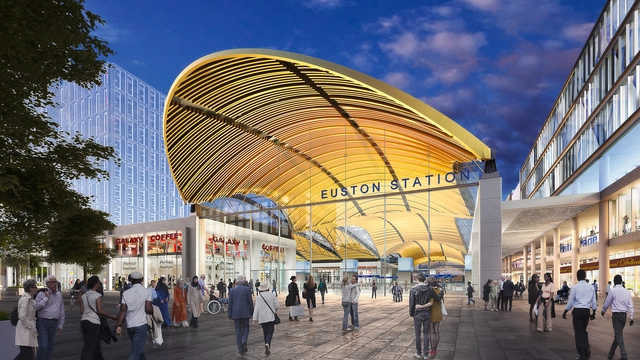
Grimshaw Architects, in collaboration with Arup, have revealed renderings for their proposed 25,000 square metre High Speed Two (HS2) railway terminal at Euston Station, in north London. They have developed an "incremental staged design" that will allow for the construction of the new high speed station while maintaining all existing services. Fronted by a 38 metre glazed façade, the new entrances will transform the internal circulation spaces into a "light and airy destination with shops, restaurants, and cafés."
Herzog & de Meuron has revealed their plans for a new £500 million stadium for Chelsea Football Club, intended to built in place of their existing stadium at Stamford Bridge. As reported by BD, the images and a model of the stadium were not officially released to the press but were presented in a public consultation meeting held by the club.
London firm, Amos Goldreich Architecture and Israel firm Jacobs-Yaniv Architects have come together to design a new shelter for the No to Violence Against Women charity, which helps domestic abuse victims in Israel. This will be the charity’s first purpose-built shelter, replacing an overcrowded, makeshift building.
Located in a quiet neighbourhood, the site is surrounded by a mix of private homes and townhouses and is within reach of community resources like stores, jobs, clinics, schools, parks, counseling centres and recreational facilities. The shelter will include independent living quarters for up to 12 families, communal areas, a kindergarten, a computer room, laundry facilities, kitchens, a refectory as well as staff accommodation and office areas.
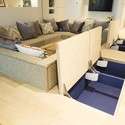
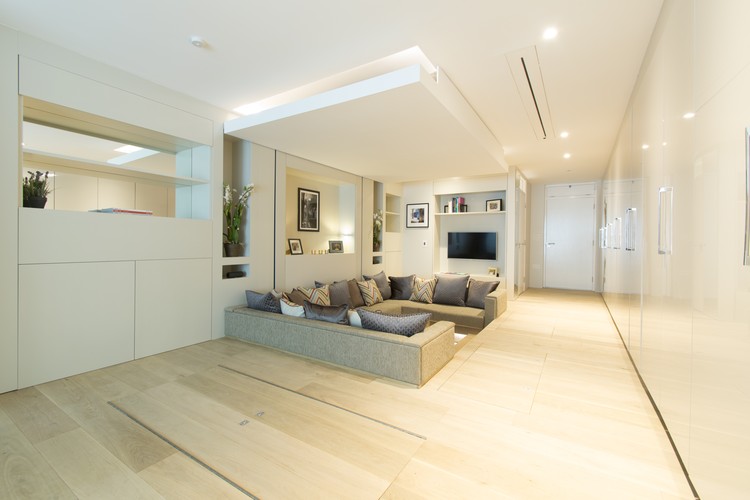
With the cost of space rising in city centres everywhere, YO! Home by Simon Woodroffe provides a possible solution – a transformable, modular living space. Acting as a reinvention of the traditional studio apartment, YO! Home is a 40 square metre living space with movable features to create the impression of a much bigger home. Read more about this London apartment project after the break.
For the past century or so, the key to turning around the fortunes of a community was thought to be simple: large scale, infrastructural overhaul was capable of rethinking a place from the ground up, fixing any problems. The deficiencies with this sort of thinking are now well known, and in recent years small, surgical interventions which preserve the existing qualities of a town have gained traction. But how do you create large-scale change with such small-scale proposals?
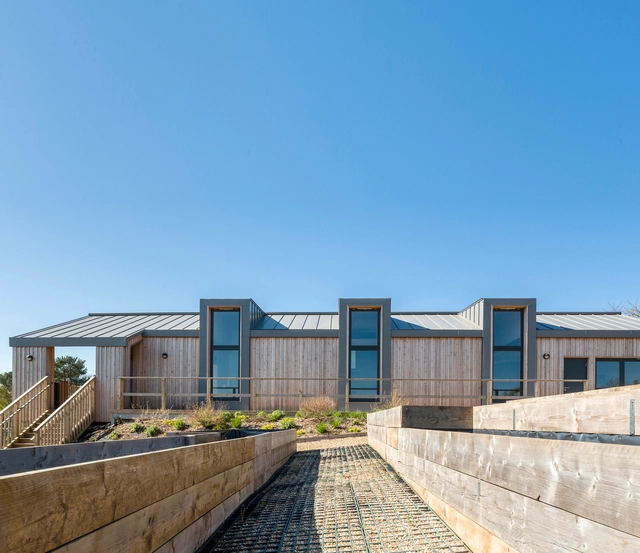
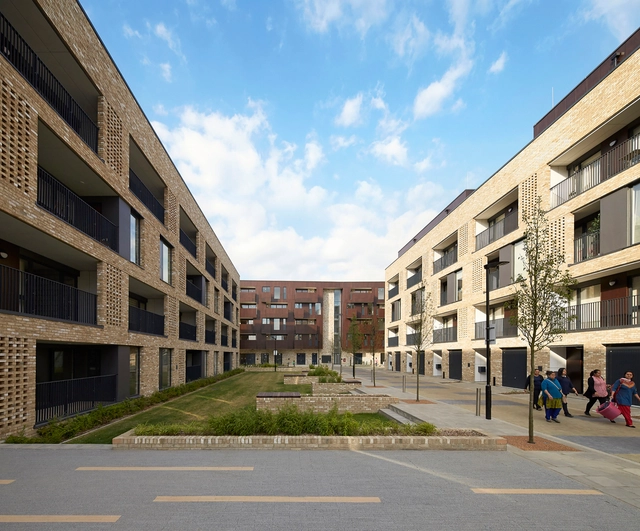
The town of Rainham, at the far Eastern reaches of London, might hold an answer. Having preserved its village-like atmosphere despite being part of London's industrial hinterlands, since the turn of the millennium Rainham has been the subject of a series of small developments that have made a big overall change. Projects by Alison Brooks Architects, Maccreanor Lavington, Peter Beard LANDROOM, Studio Weave, Civic, and East have improved key spaces within Rainham while connecting it to the Thames and the nearby marshes - all by being respectful of the town's existing qualities and responsive to each others' interventions.
On the 25th and 26th September The Gallery on the Corner in Battersea is opening its doors for the first solo exhibition of the Architectural Artist Minty Sainsbury.
Studying Architecture at Cambridge has not only influenced her choice of subject matter but has also taught her to draw with an eye for detail and a spatial understanding of composition.
Part of the exhibition will be a series of street views in which the building in focus is drawn in rich detail and the contextual surroundings are left as silhouettes. By concealing the focal building behind the faceless structures, Sainsbury references a visual experience that you would experience yourself walking in the city streets.
















_Keith_Collie_05.jpg?1441656171&format=webp&width=640&height=580)