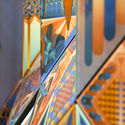
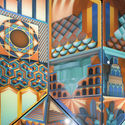
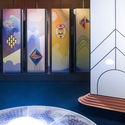
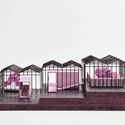
"The Glass Chain" (Die Gläserne Kettein its native German) was an exchange of written letters initiated by Bruno Taut in November 1919. The correspondence lasted only a year, and included the likes of Walter Gropius, Hans Scharoun, and Paul Gösch. In the letters, the penfriends—thirteen in all—speculated and fantasized about the possibilities of glass, imagining, in the words of Fredrik Hellberg and Lara Lesmes (Space Popular), "fluid and organic glass follies and colourful crystal cathedrals covering entire mountain chains and even reaching into space."
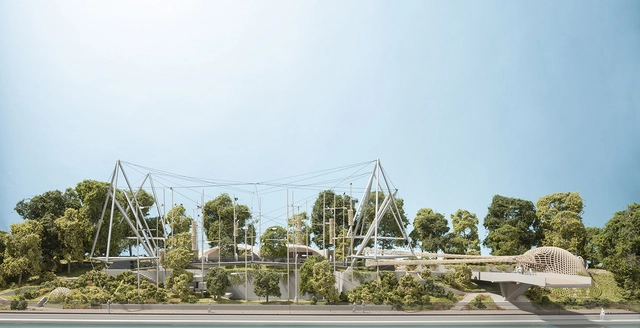
The Westminster Council has approved plans for the Foster + Partners-led transformation of the Snowdon Aviary at ZSL LondonZoo. Designed by English architect and theorist Cedric Price in collaboration with Frank Newby and Lord Snowdon, the Grade II-listed structure became the first aviary in the UK to allow visitors to walk through a natural bird habitat when it opened to the public in 1962.
The revamp will preserve many of the original design qualities from the original structure, while updating safety and viewing strategies for its new inhabitants: a family of colobus monkeys and parrots. To make the monkeys feel at home, the design features a series of platforms and vertical elements, allowing visitors to learn about the animals as they swing, jump and explore their surroundings.
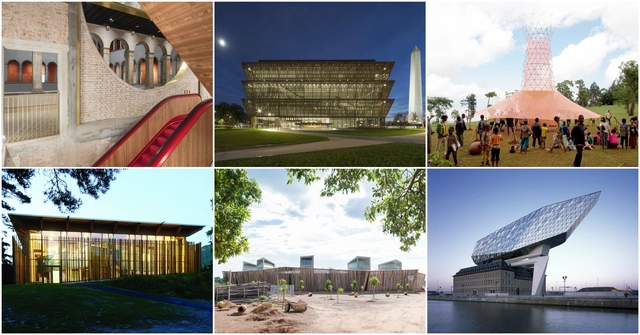
The Design Museum in London has announced the shortlist projects in the running for the 2017 edition of their prestigious Beazley Design of the Year award. Now in its tenth year, the award was established to “celebrate design that promotes or delivers change, enables access, extends design practice or captures the spirit of the year.”
This year, a total of 62 projects have been nominated across six categories: Architecture, Digital, Fashion, Graphics, Product and Transport – including 13 projects from the Architecture category. A winner from each category and the overall winner will be announced on January 25, 2018. Previous winners of the architecture category include: IKEA’s Better Shelter last year (also the overall winner), Alejandro Aravena's UC Innovation Center in 2015, and Zaha Hadid Architects’ Heydar Aliyev Center (overall winner in 2014).
Organized by Frieze Academy on Friday 6 October, from 10am – 4.30pm at The Royal Institution in London, this full-day conference will be hosted by Alice Rawsthorn with:
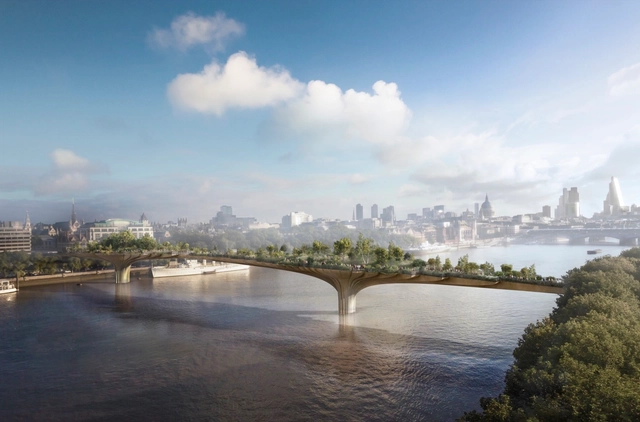
The saga of London’s controversial Thames Garden Bridge project has finally come to end, as the Garden Bridge Trust has announced the official “closure of the project” after losing the support of the public and London Mayor Sadiq Khan.
"It is with great regret that Trustees have concluded that without Mayoral support the project cannot be delivered,” said Lord Mervyn Davies, Chairman of the Garden Bridge Trust in a statement released today.
“We are incredibly sad that we have not been able to make the dream of the Garden Bridge a reality and that the Mayor does not feel able to continue with the support he initially gave us.”
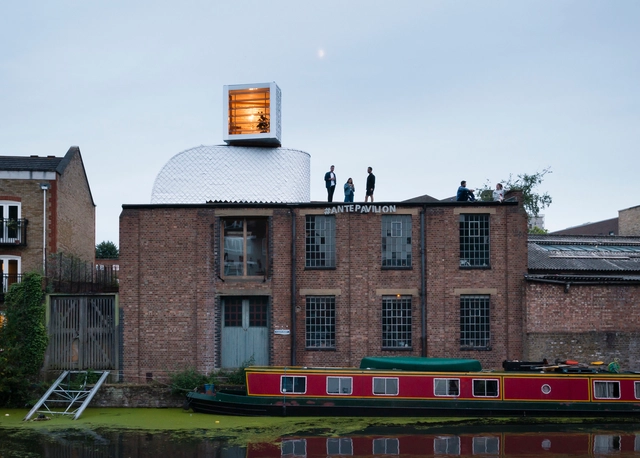
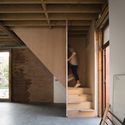
London’s first Antepavillion officially opened to the public last weekend, kicking off an annual series of experimental structures set to explore alternative ways of living in the city. Designed and built by emerging studio PUP Architects, the proposal beat out 128 other entries as the winner of a competition held by the Architecture Foundation. Calling for proposals that engaged with issues of sustainability and recycling, PUP's design, dubbed H-VAC is built using prefab elements made in-house by a team of volunteers. The pavilion's tongue-in-cheek appearance resembling an air duct is a playful subversion of planning legislation, exploiting loopholes for mechanical rooftop equipment to be built without planning permission.
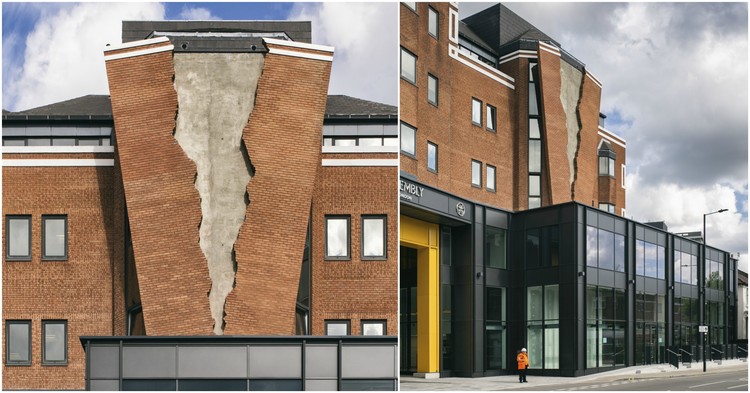
The work of artist Alex Chinneck is grounded in architecture. From melting buildings to a slumping facade to a structure ripped in half and hovering, Chinneck’s work plays with the expectation of materials and tectonics, resulting in captivating mind-bending illusions. His latest work (and first permanent sculpture), Six Pins and Half a Dozen Needles, continues this exploration, taking the form of a large brick wall ripped down the center.
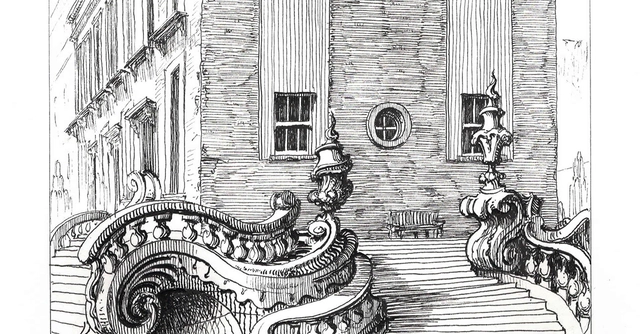
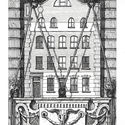
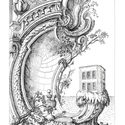
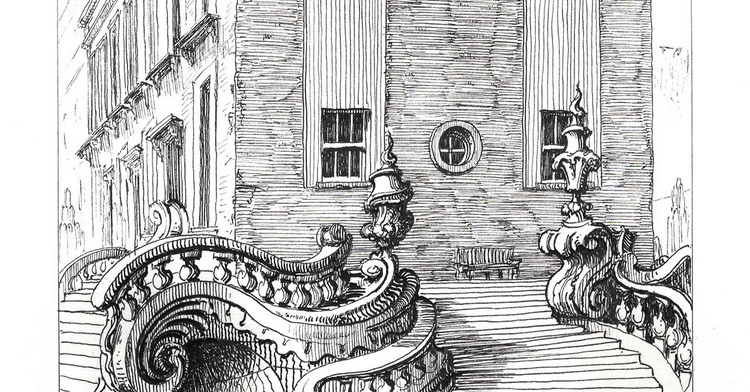
Detail: 132-135 Sewardstone Road, Victoria Park E2 9JQ. Ink on Paper, 21 x 14 cm. Copyright Pablo Bronstein, 2017. Courtesy Herald St, London and Galeria Franco Noero, Turin. Image Courtesy of RIBA
A new exhibition of commissioned work by artist Pablo Bronstein at London's Royal Institute of British Architects (RIBA) will explore "ubiquitous" neo-Georgian developments as exemplar of a British vernacular. The show—Pablo Bronstein: Conservatism, or The Long Reign of Pseudo-Georgian Architecture—will feature fifty new drawings of buildings constructed during the second half of the 20th Century in "an ostensibly neo-Georgian style." These will be presented alongside historical Georgian and neo-Georgian material chosen by Bronstein from the RIBA’s collections.










.jpg?1505117693&format=webp&width=640&height=580)
.jpg?1505117755 "© Tim Soar")


.jpg?1505117693)














.jpg?1500971896&format=webp&width=640&height=580)
.jpg?1500972002 "© Simone Bossi")
.jpg?1500969878 "© Simone Bossi")
.jpg?1500971865 "© Simone Bossi")
.jpg?1500971952 "© Simone Bossi")
.jpg?1500971896)
.jpg?1500544085&format=webp&width=640&height=580)
.jpg?1500543595 "© Gabriel de la Chapelle")
.jpg?1500543840 "© Philip Vile")
.jpg?1500543628 "© Philip Vile")
.jpg?1500543809 "© Philip Vile")
.jpg?1500544085)