Around the world, zoos draw in hundreds of millions of visitors each year. For some cities, they’re major tourist attractions and economic hubs that generate taxpayer dollars and create long-term employment for thousands of people. But beyond these statistics, people have been criticizing the role that zoos play in our society and the way in which we design them that holds the potential a more positive and natural environment for animals.
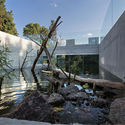
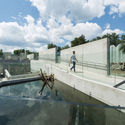
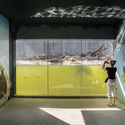
Zooraji, Olson Kundig's latest, takes its inspiration not from its site (the roof of a department store) or context (the futuristic city of Busan), but from a story. Aesop's The Town Mouse and the Country Mouse, to be precise.
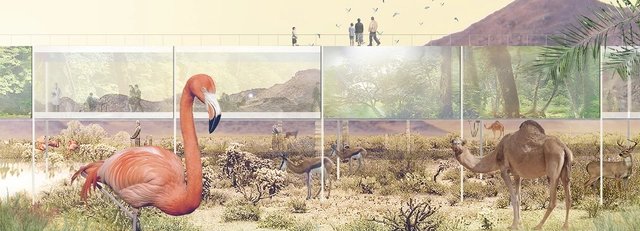
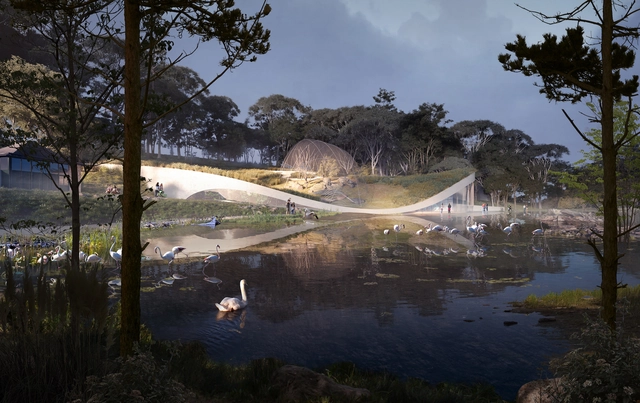
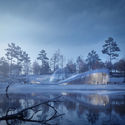
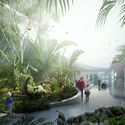
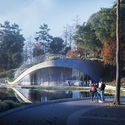
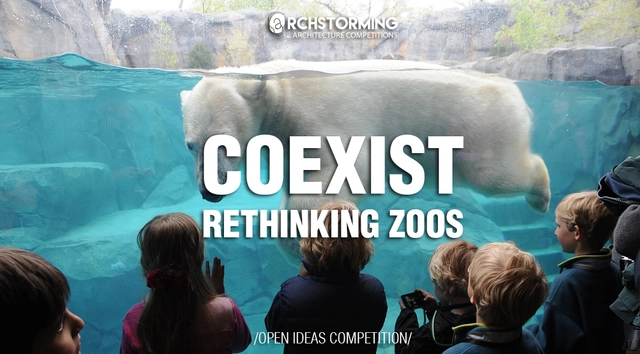
Archstorming have announced the winning projects of "Coexist: Rethinking Zoos," their recent competition to design a concept for the zoo of the 21st century. The call for entries asked participants to redefine the traditional zoo and transform the space from something that is not only an exhibition of animals, but also an educational tool, and a place for research and conservation. The team of international jurors selected three winners from more than 40 countries that submitted ideas.
The site for the proposal was the zoo in Barcelona, which has committed itself to prioritizing the welfare of its animals. To promote the well-being of the animals and nature, the winning teams designed imaginative alternatives to the traditional zoo methods of interaction, such as non-intrusive paths and even 3D virtual animals. The winners show that there are new ways for visitors to understand animals that are both ecologically friendly and sustainable.
Check out the winning submissions after the break.
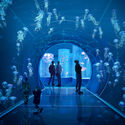
3XN and GERNER GERNER PLUS have released details of their competition entry for the design of a new aquarium in Schönbrunn Zoo, Vienna. Developed in collaboration with aquarium specialists ATT, “Poseidon’s Realm” was designed to be “elegant, simple and mysterious, lying across the landscape like a great veil.” The scheme was awarded second place in an international competition for the aquarium’s design, with the winner yet to be announced.
The “Poseidon’s Realm” scheme is defined by a spacious green roof landscape embedded in the zoo’s path network. The aquarium covers a total area of 65,000 square feet (6,000 square meters), divided across four levels, with a large, glazed, wave-shaped entrance enticing visitors to transition between outdoor greenery and a “softly undulating waterworld.”
Future of zoos will be decided in the next few years. We are facing radical changes in the concept. Over the decades we have been proved that animal captivity, in most cases in terrible conditions, has affected badly their quality of life and their expected lifetime. The raison d’être and the welfare of the more than 3.5 million animals that they contain around the world are increasingly questioned. These places, emerged between the eighteenth and nineteenth century, deeply linked to colonialism and the discovery of new worlds, must evolve adapting to the new needs. The question is how to do so.
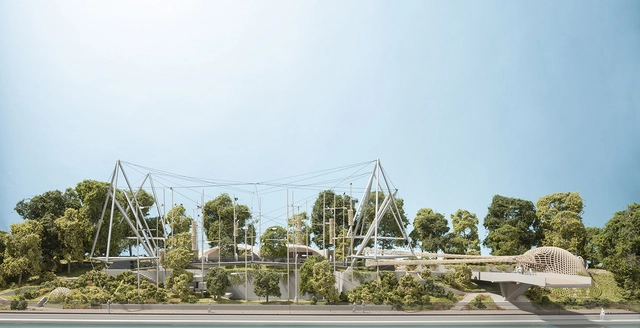
The Westminster Council has approved plans for the Foster + Partners-led transformation of the Snowdon Aviary at ZSL LondonZoo. Designed by English architect and theorist Cedric Price in collaboration with Frank Newby and Lord Snowdon, the Grade II-listed structure became the first aviary in the UK to allow visitors to walk through a natural bird habitat when it opened to the public in 1962.
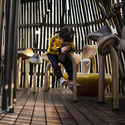
The revamp will preserve many of the original design qualities from the original structure, while updating safety and viewing strategies for its new inhabitants: a family of colobus monkeys and parrots. To make the monkeys feel at home, the design features a series of platforms and vertical elements, allowing visitors to learn about the animals as they swing, jump and explore their surroundings.
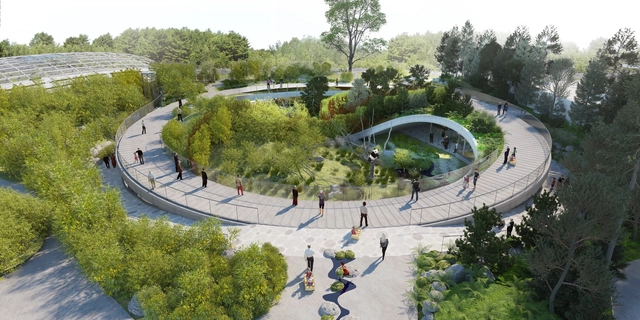
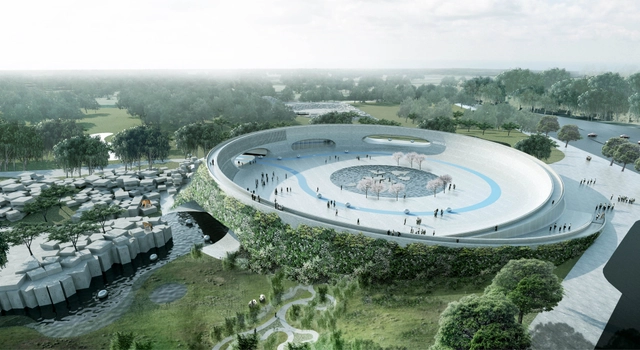
BIG, in collaboration with Schønherr Landscape Architects and MOE, has revealed designs for a new yin-yang-shaped panda enclosure at the CopenhagenZoo that will serve as the new home of two Chinese giant pandas upon their arrival in 2018.
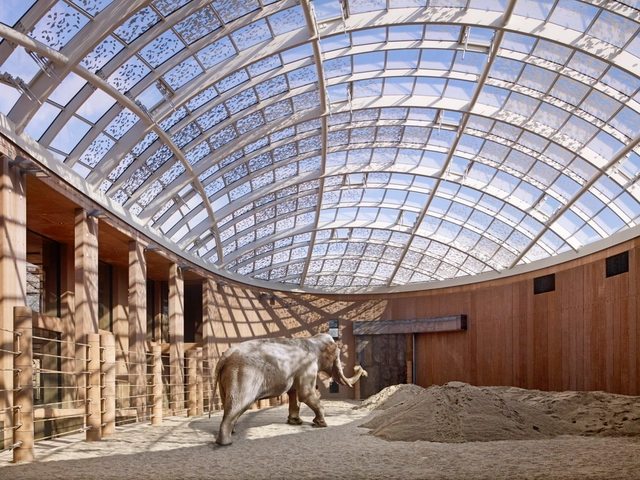
Located between several existing buildings, including the award-winning Elephant House by Foster + Partners, the circular shaped habitat will be split to create separate enclosures for the male and female pandas; to increase the probability of mating, partnered pandas should not be able to see, hear or even smell each other for the majority of the year.
The impacts of architecture on the quality of human life are often debated, and in the 21st century, projects are under greater scrutiny than ever for the experiences they provide for people. Buildings all over the world must address a specific context, responding to the cultural framework of their users.
In light of this, we’ve gathered 8 projects that have a different sort of user -- projects designed not just for people, but also for animals. Ranging from zoo buildings to aquariums, stables and shelters, these projects have the unique challenge of balancing a human and animal experience. See them all after the break.
Our friends at the Pavillion de l'Arsenal have shared a collection of videos from their "Paris Architectures" series. Dive into these short films that document remarkable architecture around France's capital city.
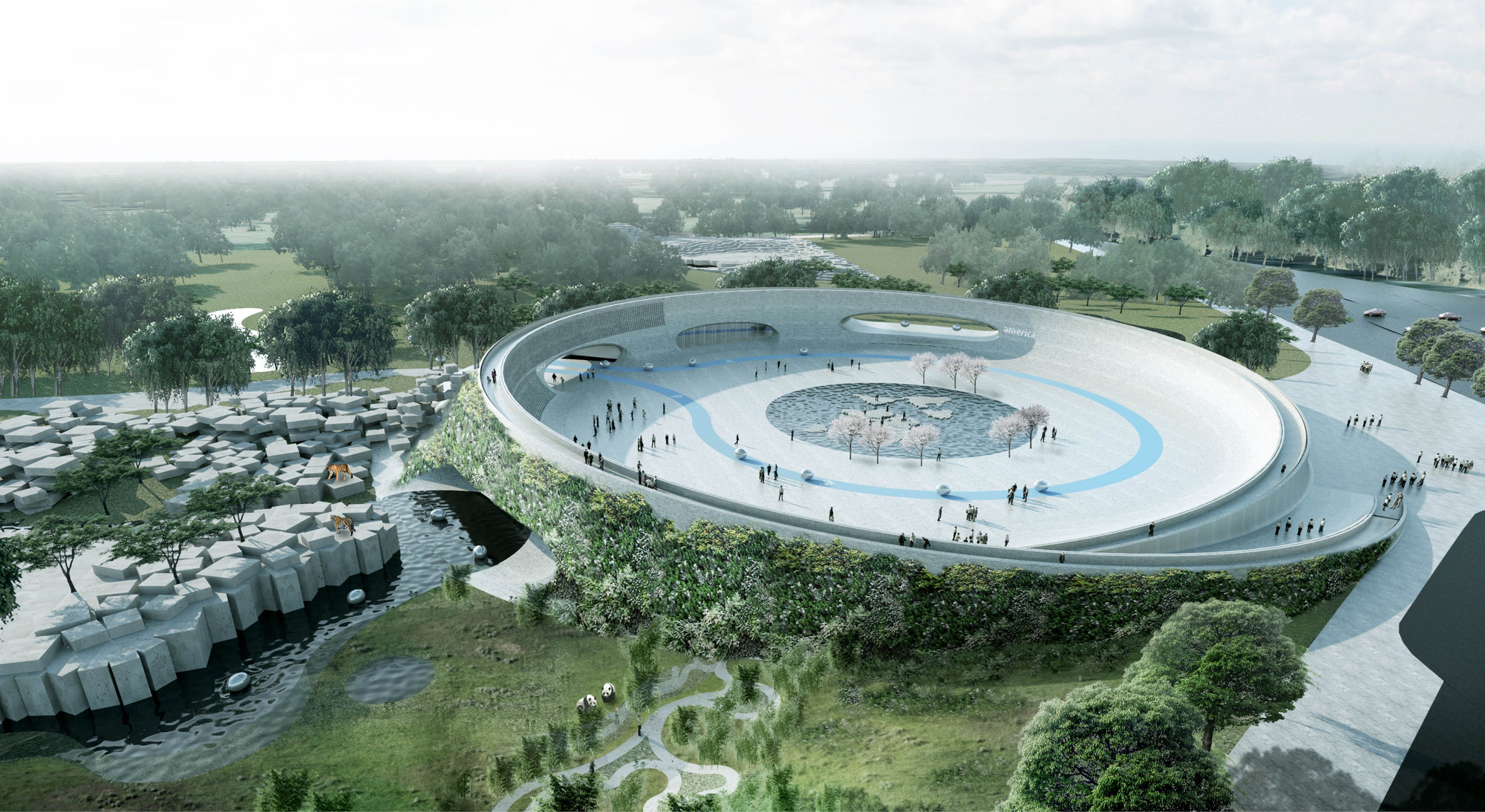
Danish architects BIG (Bjarke Ingels Group) have just released ambitious designs for a zoo in Givskud, Denmark. It's a project that provides an intriguing opportunity for, as BIG explains, the creation of a space with "the best possible and freest possible environment for the animals’ lives and relationships with each other and visitors." The firm has been working for the past two years to make Zootopia what the Danish press is calling "the world's most advanced zoo." According to Givskud Zoo's director Richard Østerballe, the park's transformation will benefit greatly from BIG's fresh approach to design--one that has been characterized by the integration of nature and natural elements into cutting-edge, innovative architecture.
The project will attempt to "integrate and hide buildings" within the landscape. Upon entering the zoo, visitors can either enter a large central square or climb the "building-landscape," allowing them to get a general overview of the layout of the park. From this central element, visitors can access different areas of the zoo. A 4km hiking trail connects the different areas (which represent the continents of Africa, America and Asia).
The first phase is expected to be completed in 2019 to coincide with the park's 50th anniversary.
Read on for more images and BIG's project statement.
Oglo Architects have recently shared with us their “Hollow Tower” for the Buenos Aires Vertical Zoo competition. Their sculptural proposal aims to act as a polarizing object amongst its surroundings in Buenos Aires without removing itself from the context of the city. Additional images and the architects description after the break.
Architect: Beckmann-N’Thépé architects – Aldric Beckmann, Françoise N’thépé Landscape design :TN+ / Bruno Tanant & Jean-Christophe Nani Location: Helsinki, Finland Project Manager: Wilfried Daufy Project Architect: Anne-Catherine Dufros Assistant Architects: Constance Héau, Jessica Pallatier Landscape design team: Guillaume Derrien & Agathe TurmelZoo expert: Jean Marc Lernould Constructed Area: 26,2 ha
The zoological island of Korkeasaari will be cut off again. Its architectural interventions will be concentrated to make it wild and mysterious once more – a park / garden as a place of popular privilege, the nobility of the future city.