Koolhaas' journalism work won him fame in architecture before he completed a single building. The switch from storyteller to architect was more a change in the script than a professional shift. He pointed out that "[architecture] is a form of scriptwriting that implicitly describes human and spatial relationships." Restating the role of architecture in defining daily life beyond buildings and cities' construction, architecture is also a written and spoken tool capable of explaining daily worldwide events, giving voices to unspoken projects, and actively shaping the future of the architect's role.
The International Committee of Architectural Critics CICA is pleased to announce an invitation to publishers, editors, curators and authors to submit their publications for consideration for the 10th CICA Awards 2020 by 30th November 2019. Award winners will be announced during the UIA XXVII World Congress of Architecture to be held in Rio de Janeiro from July 19th to 23rd, 2020.
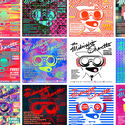
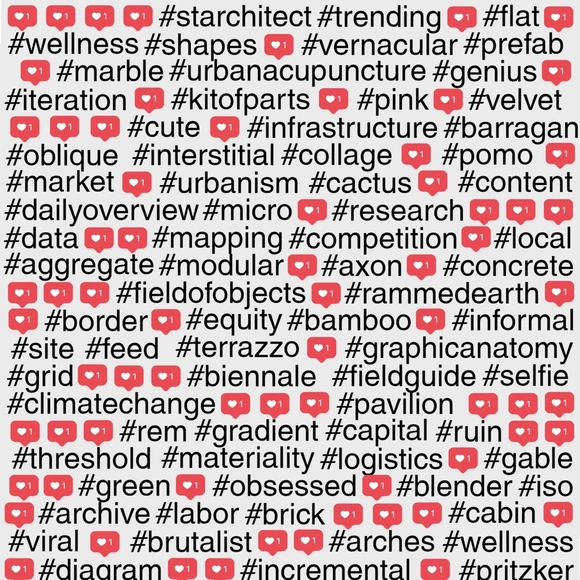
Call for Submissions: Fetishes and Obsessions and Trends (Oh My!) — Paprika! Volume 5, Issue 7
Although the field of architecture likes to think it is cutting-edge, adamantly liberal, and on the forefront of history, we still look towards the compulsive tendencies of the glorified visionary, their revolutionary thoughts, illuminating process, and iconic vision. This historiography is, in and of itself, an obsession - fetishizing personas, establishing camps, crafting a storyline that awards persuasion and trend over quality and sincerity. In the longstanding tradition of self-made, winner-take-all fanaticism, now more than ever do we see a craving for attention that is pulling (or rather dragging) the field even further from its core values and closer to soulless squander.
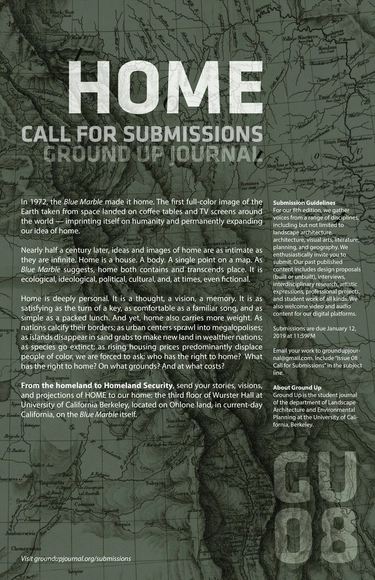
Ground Up, the journal of the Department of Landscape Architecture and Environmental Planning at UC Berkeley, Issue 08 seeks entries that address the idea of HOME.
In today’s chaotic world, simplicity grows virtuous. As an operational directive, simplicity forces the pursuit of the essential, where what matters is retained and what doesn’t is tossed overboard. Simplicity is at once classic and trending; ambitious and naive; utopian and pragmatic. A decade after 2008, the feeling is baked into current trends of austerity, with economic realities influencing aesthetics and ethics within architecture in deep ways. The value of simplicity lies not just in the luxury of a representational project, but more powerfully in methods of practice—in understandings of how architects make decisions in realizing their work. Simplicity in communication matters, as related professionals require information, clients want to know what they’re paying for, and various publics are curious about what architects do. Lately, simplicity is a conceptual survival tactic: A sharable, legible understanding of a piece of architecture, even as image, is needed if it is to endure in our fast-paced, media-soaked environment. PLAT suspects that this conciseness leaves work open for continued engagement, and that simplicity is not the opposite of complexity, but instead exists as its complement: Complexity is built out of simplicities, and vice versa.
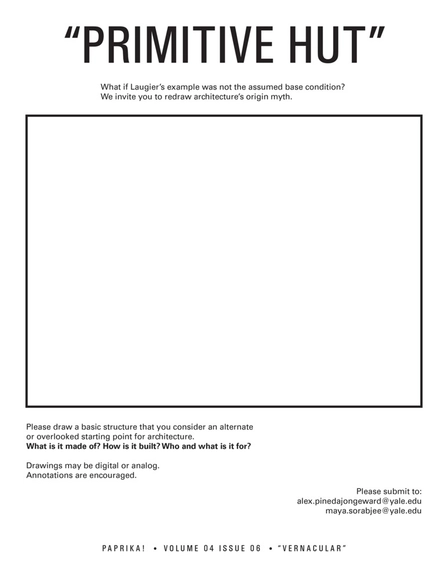
Reimagine the primitive hut for Volume 4, Issue 6 of Yale's weekly journal, Paprika!
In the spirit of Virgil Abloh we put quotation marks around the word "vernacular." Then we replace the word with a blank and ask you to fill it in. What do they build with where you're from? What do indigenous houses look like? What methods do they prefer and who actually uses them? This issue of Paprika!, a weekly journal at the Yale School of Architecture, will probe the architectural vernacular, a concept increasingly in vogue but equally undefined.
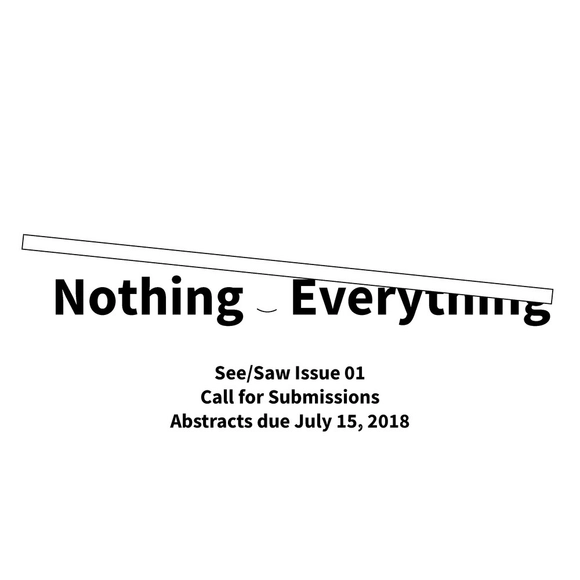
See/Saw is the student-run architecture publication of the University of Maryland.
“Nothing, and Everything Else” aims to locate architecture’s general position between nothing and something. Nothing is temporary, easily intimated, fleeing whenever something comes to take its place. At one point obsessed with space, architecture as a discipline has become occupied by a diffuse range of topics and fields which poses the question - is everything now architecture, or alternatively, is architecture now nothing? Is there a middle ground between the two? And is nothing residual - does it last or linger, smell stinky or pleasant, is it strong or subtle?
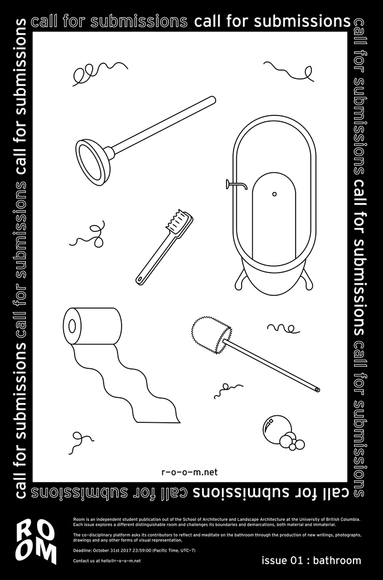
Room is an independent student publication out of the School of Architecture and Landscape Architecture at the University of British Columbia. Each issue of the annual digest explores a different distinguishable room and challenges its boundaries and demarcations, both material and immaterial.
It is often thought that architecture has a quality permanence. In the third issue of [TRANS-] journal we seek to understand that this is not always true. Exploring how the construction of spaces can speak to impermanence, transient design could be a variety of things: built one day and disassembled another; rootless, wandering, and drifting as a nomad among environmental and geopolitical conditions; or spaces that house impermanent populations or respond to temporary phenomena or needs. With transient space comes participants that condition its purpose and interpretation. Perhaps of equal importance is not the design itself but rather the symbolic significance of its remnants, which has the capacity to endure or pass.
ABOUT :: [TRANS-] is a critically-reviewed academic journal published in print and online, inviting expressions of interest for submitting works of design, writing, or multi-media on the topic of design process and design communication for Vol. No. 2 to be published in May 2016.
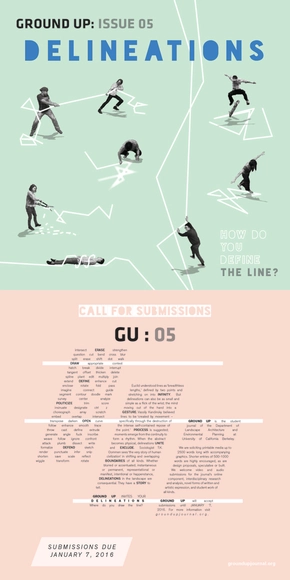
Euclid understood lines as ‘breadthless lengths,’ defined by two points and stretching on into infinity. But delineations can also be as small and simple as a flick of the wrist; the mind moving out of the hand into a gesture. Vassily Kandinsky believed lines to be ‘created by movement – specifically through the destruction of the intense self-contained repose of the point.’ Process is suggested; moments emerge from the continuity to form a rhythm. When the abstract becomes physical, delineations unite and exclude. Sociologist T.K. Oommen sees ‘the very story of human civilization’ in shifting and overlapping boundaries of all kinds. Whether blurred or accentuated, instantaneous or permanent, representational or manifest, intentional or happenstance, DELINEATIONS in the landscape are consequential. They have a story to tell.
Videos
Work by Javier Galindo. Image Courtesy of Morpholio
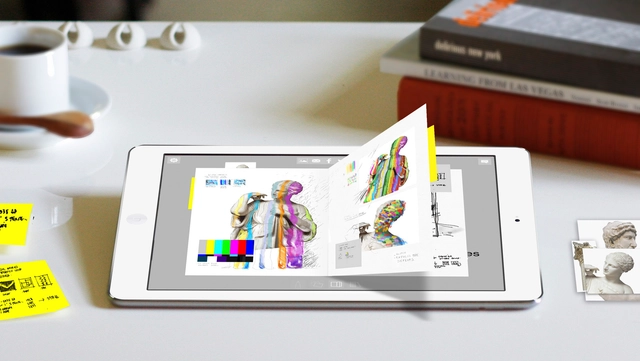
Continuing their streak of new apps for architects and designers, today Morpholio has released their latest work – a digital notebook known as “Journal.” An improvement to existing digital sketchbooks, Journal seeks to capture the day-to-day recording of ideas, inspiration, thoughts and recollections of an analog notebook as faithfully as possible. Unlike most digital sketchbooks, Journal allows users to combine the amalgamation of photos, images, hand sketches and drawings that a real journal might encompass, lending new material to the debate between digital versus analog. But could such an app ever really replace the role that analog journals have in the life of an architect? To find out, we spoke to the people of Morpholio about Journal and the future of digital and analog media.
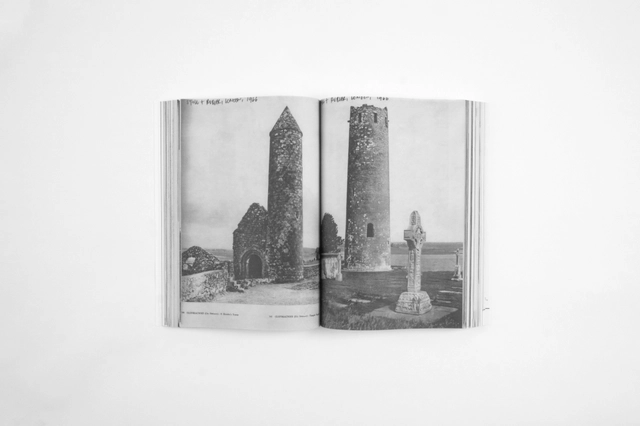
Earlier this year San Rocco, recipients of the inaugural Icon Award for Emerging Architectural Practice of the Year in 2013, published a limited single-edition run of a new publication: the San Rocco Book of Copies. Within five volumes of 4120 pages lies what they describe as "a database comprised of images that may be copied in order to produce architecture; a receptacle of a collective form of knowledge that we can provisionally call 'architecture'."
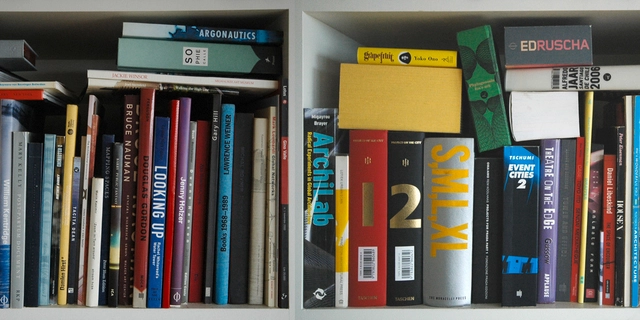
From Vitruvius to Le Corbusier, words and writing have always played an essential role in architectural discourse. One could argue that crafting words is akin to orchestrating space: indeed, history’s most notable architects and designers are often remembered for their written philosophies as much as they are for their built works.
With the exception of a few of architecture’s biggest names, the majority of practicing architects no longer exploit the inherent value writing offers as a means for spatial and theoretical communication. This trend is exacerbated by the fact that many architectural schools place little emphasis on the once-primary subjects of history and literature, resulting in a generation of architects who struggle to articulate their ideas in words, resulting in an ever-growing proliferation of ill-defined “archispeak.”
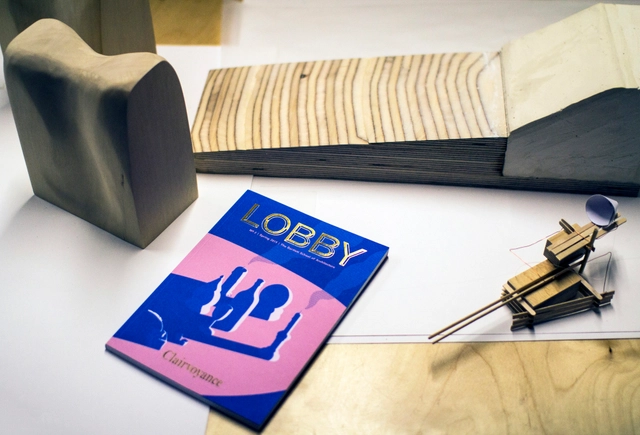
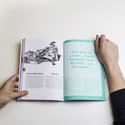
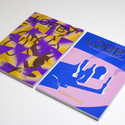
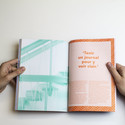
LOBBY is an attempt from students of London’s Bartlett School of Architecture to reclaim the potency of the written word, presenting in their second issue an ambitious array of in-house research and external contributions. The theme is Clairvoyance, and the journal seeks to investigate the ways in which architects are forced to constantly grapple with the possibilities and uncertainties of designing spaces that exist in the intangible realm of the world-to-be.
University of Detroit Mercy's Dichotomy Journal has issued an open call for submissions to its 21st edition on the theme of "Odds," inviting discussion on projects that "defy the status quo and aim for greater fortune." Risk takers rejoice: Dichotomy 21 will shine a spotlight on architectural anomalies and the "implications of defying the odds and embracing the strange."The journal aims to stimulate a new discourse on extraordinary and unconventional designs that push the architectural envelope. Submissions are invited to discuss ideas defying the odds in design, architecture, urbanism and community development.
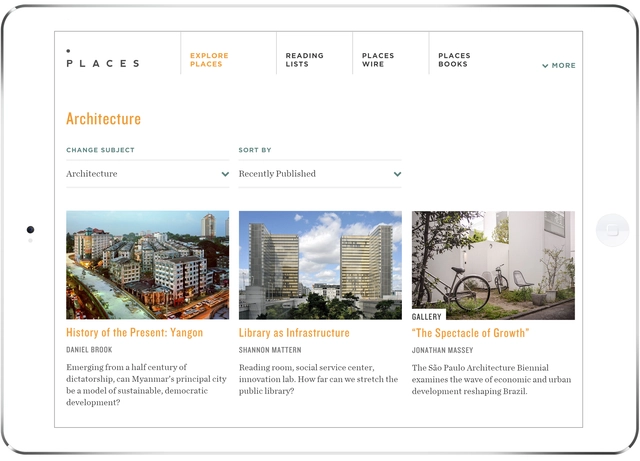
After a five-year stint as part of the Design Observer Group, Places Journal has now struck out on their own with a fresh, modern website and a renewed commitment to their editorial goal of publishing "rigorous and lively public scholarship on architecture, landscape, and urbanism." As explained by Places Journal's editor and executive director Nancy Levinson, "what drives our editorial enterprise is the publication of excellent work that combines the narrative power of serious journalism with the precision and depth of scholarship — work that advances the cause of equitable cities and sustainable landscapes." Read more about the new Places Journal after the break.

![[TRANS-] topia 2019 :: journal call for submissions - Featured Image](https://snoopy.archdaily.com/images/archdaily/media/images/5c65/646c/284d/d176/a900/0407/slideshow/open-uri20190214-19344-17ny7ws.jpg?1550148698&format=webp&width=640&height=580)

![Call for Submissions: [TRANS-]ient - Featured Image](https://snoopy.archdaily.com/images/archdaily/media/images/58a5/8e68/e58e/cec2/1d00/0166/slideshow/open-uri20170216-15296-jiuusk.jpg?1487244878&format=webp&width=640&height=580)
![Call For Submissions: [TRANS-] lation - Featured Image](https://snoopy.archdaily.com/images/archdaily/media/images/5694/f06b/e58e/cec2/8000/00d0/slideshow/open-uri20160112-18439-x06j8r.jpg?1452601447&format=webp&width=640&height=580)