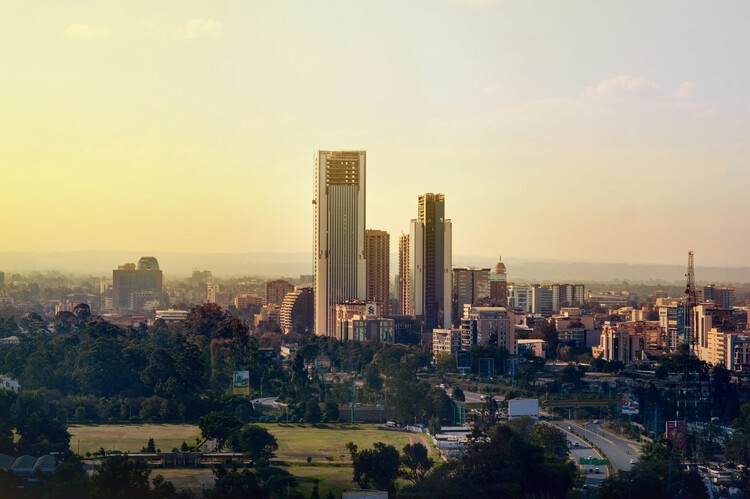
Nairobi's architectural identity was transformed by Kenya's independence in 1963. As the new nation sought to define itself, the city became a testing ground for a modern architecture that could embody progress while responding to African culture, climate, and local conditions. This opened a period of architectural experimentation, with different approaches emerging to the relationship between modernity, identity, and place.
The Kenyatta International Convention Centre is perhaps the clearest expression of this moment. Its architecture brought together modernist principles with references to African forms, establishing a distinctive response to the ambitions of a newly independent nation. Around it, Kenyan and international architects developed other interpretations of modernism, from the sun-shading facades of Reinsurance Plaza to the sculptural silhouette of Nation Centre, alongside religious, educational, and civic projects that expanded the architectural vocabulary of the city.
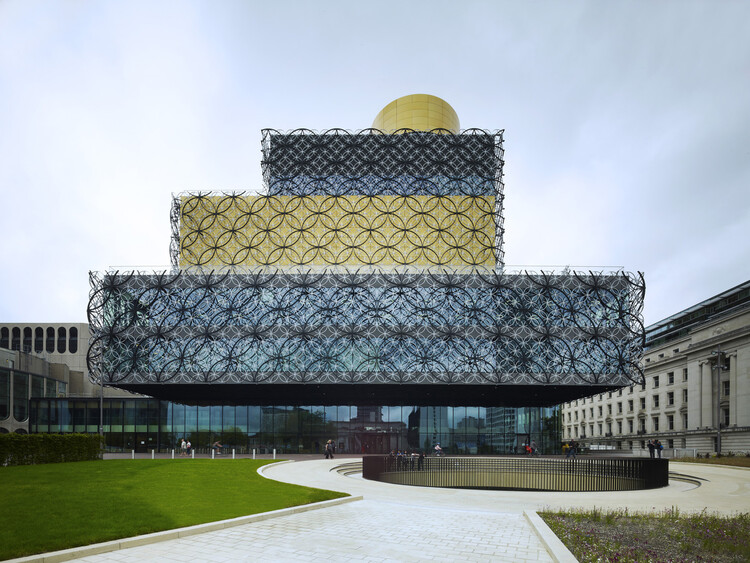
The architecture of Birmingham reflects the city's history as one of the first industrial centers of England. The wealth generated in the city and the surrounding region led to the grandeur of the Victorian era in the nineteenth century. Heavy bombardment during the Second World War caused widespread destruction. This was followed by rapid reconstruction in the 1950s-70s, introducing rational modernism and brutalist ambition, which characterizes large parts of the city center today. A few decades later, erasure returned to Birmingham, with reconsideration of some of the decisions of the mid-twentieth century. Famously, the Bullring Centre and the Birmingham Library were torn down to make way for twenty-first-century redevelopments, adding new layers of richness to the city's built environment.
In this edition of International Women's Day, we have joined forces with the Colombian print publication de-Arq (Universidad de Los Andes) to showcase the work of five contemporary Colombian women architects, who represent different complementary approaches within our discipline: design, research, teaching, and experimentation.
Today we talk with Lina Toro, a Colombian architect, co-founder of dosmasunoarquitectos, current director of linatoro.arch, and professor at IE University in Spain. "I believe the problem lies in the system's inability to recognize excellence," says Toro.
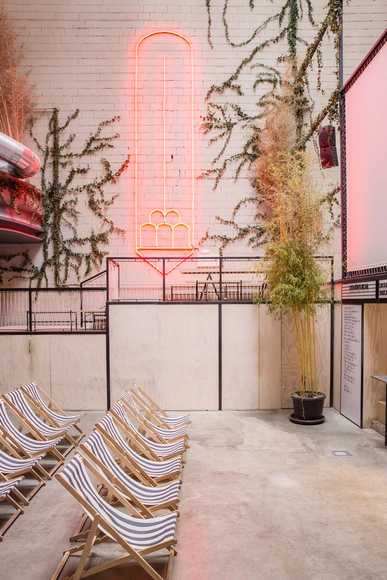
The Official Association of Architects of Madrid has awarded the 2018 COAM First Prize ‘ex aequo’ to the renovation of Sala Equis, designed by architects Lorenzo and Luis Gil (Plantea Estudio), to Espacio SOLO by Juan Herreros and Jens Richter, and to the book Oiza by Javier Vellés.
Regarding Sala Equis, the jury highlighted that the renovation of the former Duque de Alba cinema “equips the available space with contemporary uses, materials, and furniture, balanced with the memory of the existing structure,” and emphasized that it “encompasses the traditional movie theater alongside other activities surrounding this main function.”
Two weeks and over 85,000 nominations later, the finalists of this year's Building of the Year Awards are in. The selection is much like the ArchDaily audience that chose it: diverse in geography, generous in ideas, and precise in intent. With projects from 46 countries, in a variety of typologies and scales, they present a beautiful snapshot of the current architectural moment.
We invite you to sit back, browse, and vote for your ultimate favorites. Below, you will find all of the 75 finalists in their respective categories. Voting is open until February 18th at 18:00 EST. Thank you—your participation is key to making this the world's largest community-driven architecture award.
The EUmies Awards are organized annually by the Fundació Mies van der Rohe and the European Commission, with the support of the European Union's Creative Europe Programme. Based on the principle that "architecture is not merely a technical or aesthetic matter, but a cultural, environmental, and democratic issue," this 19th cycle of the Prize brings together 410 works from 40 countries and 143 regions across Europe. Beyond recognizing contemporary architecture projects, the Awards also aim to reflect European values such as cultural diversity, sustainability, democracy, and solidarity. This year, most nominated works (23%) are residential projects, including both collective and single-family housing, followed by cultural (13%) and educational (12%) programs. The selection shows a balance between transformations of existing buildings (44%) and new construction (56%), while 12% of the nominees are transnational works and 33% of the studios are 10 years old or younger, underscoring the growing visibility of emerging practices.
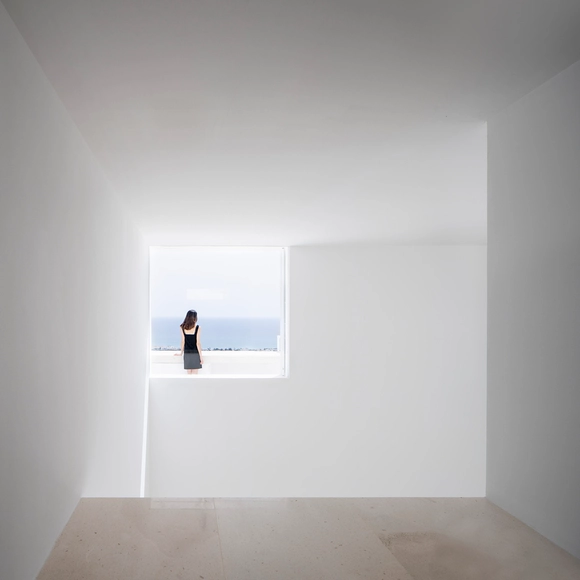
In The Poetics of Space, French philosopher Gaston Bachelard proposes reading architecture as a lived experience, in which each environment carries emotional and symbolic meaning. Reflecting on the house, he places particular importance on thresholds (windows, doors, stairs, attics, basements) as zones of transition and rupture between the intimate and the open, the known and the unknown. For him, the window is not merely a functional opening, but a point of dreaming and contemplation: it is through the window that the inhabitant projects themselves into the world. This perspective inspires a sensitive approach to architectural work, in which boundaries are not limited to separation, but articulate imagination, memory, and desire.
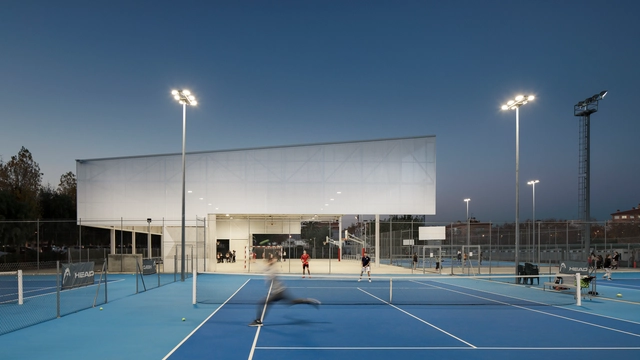
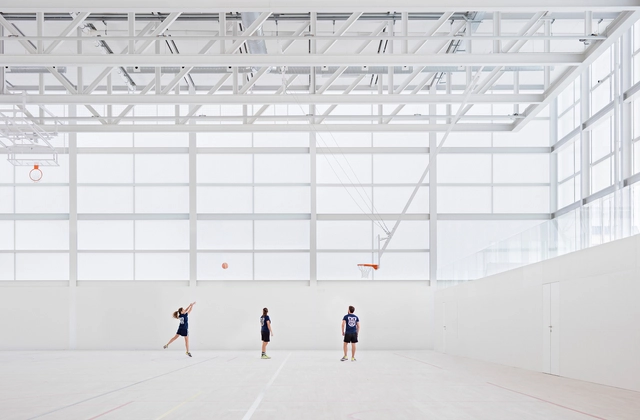
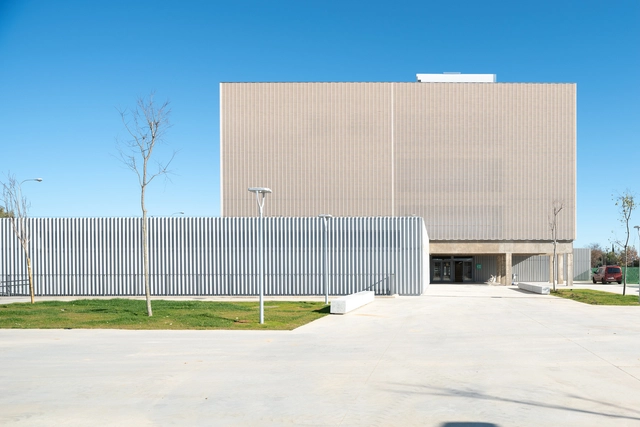
Community benefit is among the first terms mentioned when announcing a new public project. This is especially true in the case of sports halls, promising improvements in well-being and social cohesion. At a closer look, two typologies of sports halls emerge, with varying degrees of involvement with community life: on the one hand, there are large-scale venues dedicated to hosting international competitions, often boosting the capacities of thousands of people, taking on the role of modern landmarks alongside stadiums. On the other hand, there are small-scale multi-purpose sports halls, commonly annexed to schools, dispersed throughout neighborhoods, or present in rural areas with limited access to other public amenities. Despite the often-understated presence, these venues embrace and expand their multi-purpose role by offering opportunities to play, connect, organize events, and support diverse community activities.
The Roman Colosseum is arguably the most iconic versatile venue in the world. Although this structure was not intended for sporting activities, it hosted various events, from the well-known gladiatorial combats to theatrical performances and the dramatic naumachia (naval battles). This demonstrates that flexible use of space has been relevant since ancient times. Centuries later, in the context of the ever-changing built environment and urban development, sports venues have similarly evolved, becoming outstanding examples of multi-purpose spaces.
These athletic complexes have transformed from highly specialized venues into dynamic, multifunctional structures. Whether hosting major international events such as the Olympic and Paralympic Games or serving as gathering spots for local communities, these spaces strike a delicate balance between addressing the needs of specific sports and maintaining the flexibility to accommodate a range of activities. How do these diverse functions coexist and interconnect? This analysis will explore how sports facilities are configured as flexible hubs for other disciplines and everyday activities.
https://www.archdaily.com/1020243/from-wooden-shells-to-polycarbonate-panels-the-materials-shaping-flexible-sports-spacesEnrique Tovar
Architecture firms and real estate developers are constantly seeking industrialized construction solutions to optimize project timelines and costs. However, compromising on aesthetics and energy efficiency is not an option. A viable solution lies within the wide range of systems in the face brick ecosystem.
Three recent projects developed in Spain exemplify how integrating face brick facades can yield unique designs. Furthermore, all three are finalists for the Hispalyt Brick Architecture Award 2021-2023 in the "Industrialization" category.




.jpg?1520271044&format=webp&width=640&height=580)


.jpg?1520271044)