-
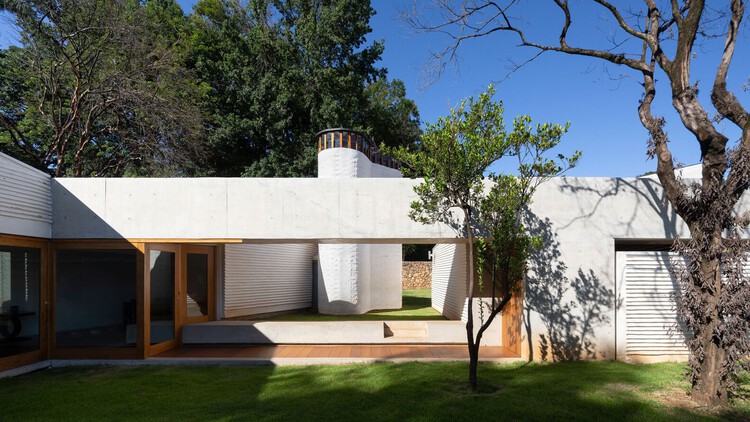
Architects: DRM Arquitectura
- Area: 510 m²
- Year: 2024


When designing residential interiors, architects increasingly lean toward creating environments where flexibility and space optimization provide solutions tailored to programmatic and functional needs, helping to achieve the well-being and comfort that turn a house into a true home.
.jpg?1643844501&format=webp&width=640&height=580)
The Association of Architects of Uruguay has announced the selected works from the 129 projects that participated in the 2021 Completed Work Competition. To ensure maximum territorial equity, the competition considered projects built between 2014 and 2020 across different regions of Uruguay. Divided into seven diverse categories—ranging from housing, cultural, and social infrastructure to interventions in built heritage or public spaces—one award and two honorable mentions were granted for each category.
The jury comprised Alma Varela, Humberto Eliash, Bernardo Martín, Héctor Berio, María Samaniego, Fernando Giordano, Alejandro Baptista, Nivaldo Andrade, and Angela Perdomo, who evaluated their respective categories. They were advised by Juan A. Articardi, Cristina Bausero, and Salvador Schelotto. Below are the winners in each category.

Originating as protection against low temperatures around 3,500 years ago, carpets and rugs have, over time, evolved into a true art form, reaching a high level of specialization by the 16th century. Rugs, carpets, and tapestries of various shapes, colors, textures, and patterns are integrated into different areas of the home to meet users' needs and enhance spatial comfort, sometimes extending far beyond their original purpose.

For its 43rd edition, the Grand Jury of the 2022 Konex Awards has selected the 100 most outstanding figures of the last decade in Argentine Visual Arts, spanning the period from 2012 to 2021. Honoring five individuals in each of the 21 established disciplines, the awards and diplomas of merit will be presented on Tuesday, September 13.

As part of the series of public activities organized by the Center for Contemporary Architecture Studies (CEAC) at the School of Architecture and Urban Studies (EAEU) of Torcuato Di Tella University (UTDT), architect Ricardo Fernández Rojas will deliver a lecture on Thursday, March 17, introduced by Martín Torrado. Like other past and upcoming lectures, this series, titled "The Work of Others," is a program of free, in-person activities that require prior registration.

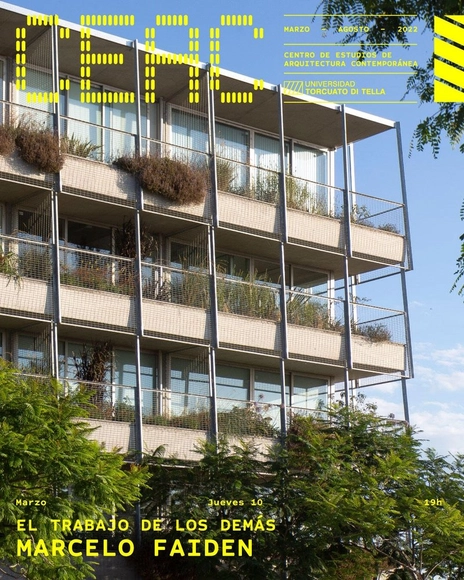
The Center for Architecture and Contemporary Studies (CEAC) at the School of Architecture and Urban Studies (EAEU) of the Universidad Torcuato Di Tella (UTDT) has presented its public programming for the first semester of 2022, which began on Thursday, March 3, with a lecture by Spanish architect Juan Herreros. On Thursday, March 10, the second cycle of activities, titled "The Work of Others," will begin. This series aims to showcase the intellectual affinities of the School's new leadership through weekly presentations. The inaugural lecture will be delivered by Marcelo Faiden, with an introduction by Ricardo Fernández Rojas.

On Thursday, March 31, the final lecture of the month for the "The Work of Others" series will take place. The series is organized by the Center for Studies of Contemporary Architecture (CEAC) at the School of Architecture and Urban Studies (EAEU) of the Torcuato Di Tella University (UTDT) for the first semester of 2022. The lecture will be led by architect Diego Arriagada, with an introduction by architect Martín Huberman. Lectures by Martín Torrado, Jorge Silvetti (Machado Silvetti), and Mariano Clusellas will follow throughout April as part of this program of public, in-person events, which runs through early August and requires prior registration.

The Latin American Architecture Biennale (BAL) provides a perspective on the architectural scene—a bridge between Latin America and Spain. Currently organized by the AREA association in collaboration with the Pamplona City Council, the Basque-Navarre Association of Architects, the Government of Navarra, and the Ministry of Development, the event takes place primarily in Pamplona, with extensions in Madrid and Barcelona, alongside a traveling exhibition across the country.

Founded in 2013 in São Paulo, this young transdisciplinary practice focuses on architecture, urbanism, and fine arts. Influenced by visual arts, music, theater, and everyday urban life, the firm translates these lived experiences into projects across diverse scales, briefs, and contexts.
Named after a term with multiple meanings in Portuguese—in architecture, *vão* represents the void or span between structural elements, a space to be occupied and activated by social, political, artistic, and various other interactions—the firm was founded by Anna Juni, Enk te Winkel, and Gustavo Delonero. Throughout its nearly ten-year history, it has maintained a small team, alongside occasional collaborations with friends and colleagues on specific projects.