1. ArchDaily
  2. Itala Fulvia Villa

Itala Fulvia Villa: The Latest Architecture and News

Adapting Modernism in Argentina: The Case of Grupo Austral and Los Eucaliptos Building

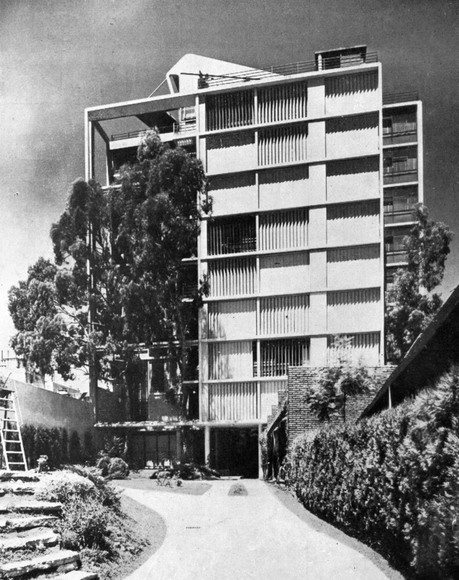
At the intersection of the inevitable influence of the international modern movement and Argentinian architectural tradition, the Grupo Austral emerges as a collective of architects proposing a reinterpretation of Le Corbusier's rationalism, adapting it to the particularities of the local context. In this framework, we can speak of an international architecture that is not merely incorporated but can be considered "appropriated" architecture, meaning it is rooted in Argentina's climatic conditions, lifestyles, and local materials. This leads us to question: How does European architecture correspond with the local? Is it the product of similar situations or a process of transferring architectural images, as has happened throughout history? Is it a mix of both factors? Can we talk about appropriated architecture?

Adapting Modernism in Argentina: The Case of Grupo Austral and Los Eucaliptos Building - Image 1 of 4Adapting Modernism in Argentina: The Case of Grupo Austral and Los Eucaliptos Building - Image 2 of 4Adapting Modernism in Argentina: The Case of Grupo Austral and Los Eucaliptos Building - Image 3 of 4Adapting Modernism in Argentina: The Case of Grupo Austral and Los Eucaliptos Building - Image 4 of 4Adapting Modernism in Argentina: The Case of Grupo Austral and Los Eucaliptos Building - More Images+ 7

2024 Year in Review: Celebrating Architectural Classics

Architectural Classics featured on ArchDaily serve as a record of significant works that have influenced the evolution of architecture and design. These projects represent a range of styles, purposes, and contexts, offering insight into how architecture responds to cultural, social, and environmental factors. By revisiting these influential works, one can better understand the principles and ideas that have shaped the built environment globally over time. These classics highlight moments of design innovation while also providing a broader perspective on architecture's role in reflecting and shaping the world around us.

2024 Year in Review: Celebrating Architectural Classics - Image 1 of 42024 Year in Review: Celebrating Architectural Classics - Image 2 of 42024 Year in Review: Celebrating Architectural Classics - Image 3 of 42024 Year in Review: Celebrating Architectural Classics - Image 4 of 42024 Year in Review: Celebrating Architectural Classics - More Images+ 9

Ítala Fulvia Villa and her Sixth Pantheon: The Story Behind Buenos Aires' Brutalist Necropolis

Subscriber Access | 

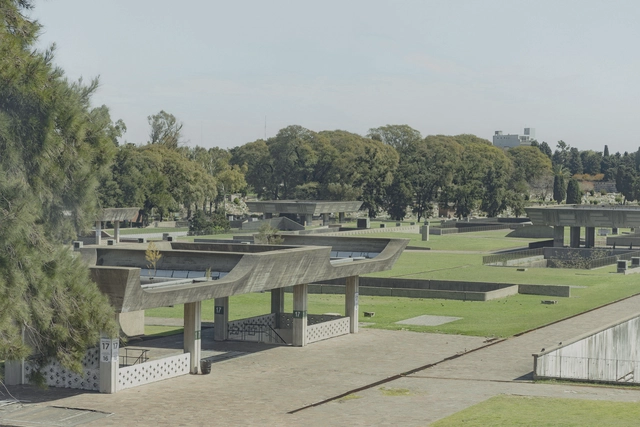
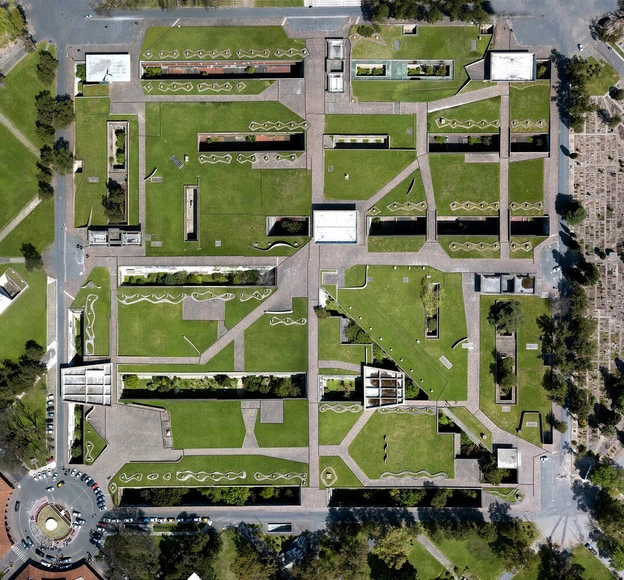
Around 1949, the city of Buenos Aires led the construction of the Sixth Pantheon in the Chacarita neighborhood. Monumental in character and brutalist in style, this underground necropolis turned out to be the first and largest experiment in modern architecture in the funerary field. Designed by Ítala Fulvia Villa, one of the first Argentine women architects and urban planners, and a pioneer of South American modernism, along with her team comprised of Leila Cornell, Raquel S. de Días, Gunter Ernest, Carlos A. Gabutti, Ludovico Koppman, and Clorindo Testa, this work was discovered by Léa Namer, who conducted an in-depth investigation reflecting on the legacy of a modern utopia and a feminist rereading of history.

Architecture Classics: Sixth Pantheon of Chacarita

Until recently, the Sixth Pantheon of Chacarita was an icon of Argentine modern architecture that went unnoticed. Located in the heart of the city of Buenos Aires, this pantheon represents one of the first and one of the largest experiments in modern funerary architecture of such magnitude in the world.