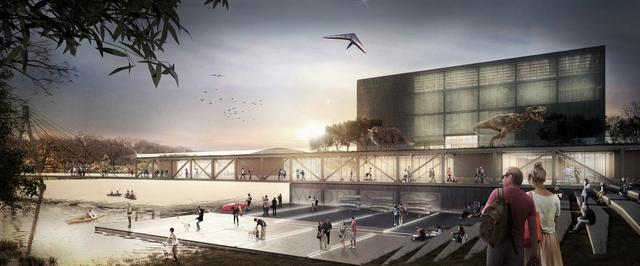
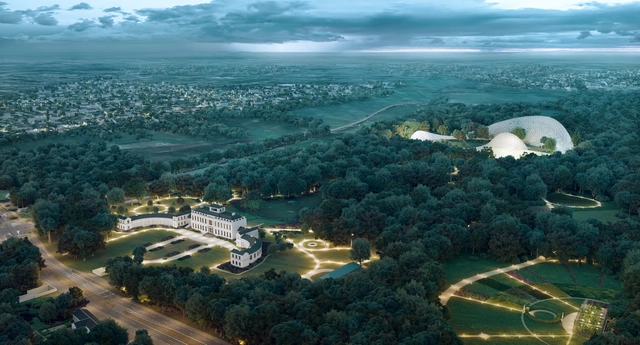
Mecanoo has unveiled its design to transform The Soestdijk Estate into Eden Soestdijk, “an experimental garden for a sustainable society and a paradise destination for all” in The Netherlands. In an effort to become an educational tool for environmental awareness, the project aims to make a significant contribution to meeting the UN’s Sustainable Development Goals.
“The world is facing pressure from increasingly larger and more complex problems when it comes to water, food, climate and energy,” said Anton Valk, chairman of the Eden Soestdijk foundation. “Eden Soestdijk wants to tackle these problems and contribute to a more sustainable society by stimulating and inspiring visitors to change their behaviour in a positive way.”
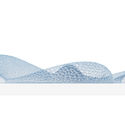
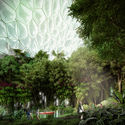
An architectural greenhouse behind the palace gardens will be the centerpiece of the project, and will house an interactive exhibition focusing on topics like circularity, ecological balance, and social aspects of sustainability.
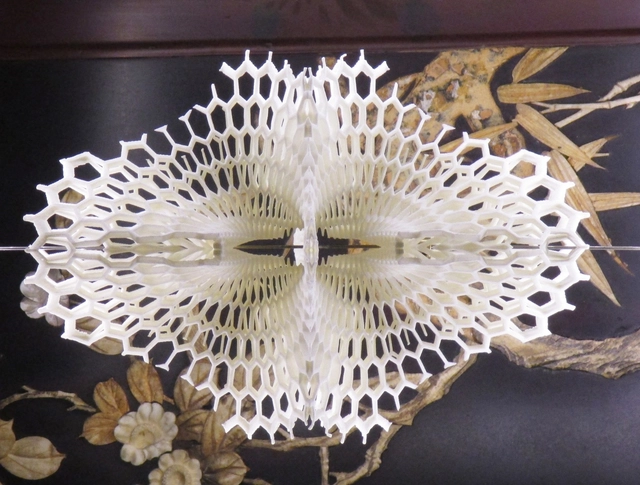
In somewhat of a departure from its usual parametric, experimental work, Margot Krasojević Architects has created a recycled, 3D printed LED light, in an investigation of the importance of reappropriating plastics. The project—Lace LED—however, aligns with the firm’s exploration of renewable energy and environmental issues within architecture and product design.
Printed with post-consumer plastics like synthetic polymer packaging from takeout food containers and 3D printer off-cuts, Lace LED is a light diffuser with fractal pattern configurations resembling a piece of woven lace.
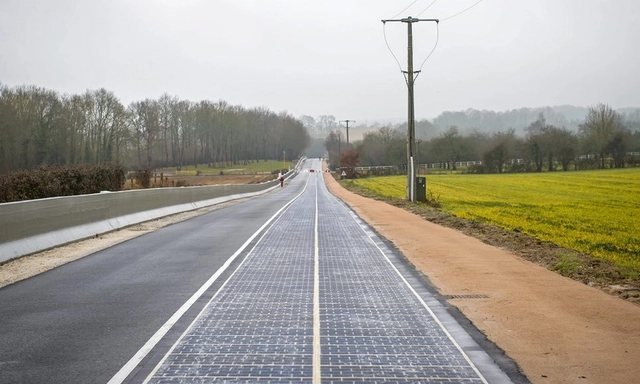
The world’s first solar panel road has officially opened in a small village in Normandy, France.
Built in the small village of Tourouvre-au-Perche, the 1 kilometer route, dubbed the “Wattway,” is covered in 2,800 square meters of photovoltaic panels. It is designed to be used by up to 2,000 motorists per day, while providing an average of 767 kilowatt-hours (kWh) per day, enough energy to power all of the street lighting in the 3,400-resident village.
Awarding the top ecological projects of the year, d3 has announced this year’s winners of its Natural Systems competition. Established in 2009, the annual competition has grown into one of the most notable awards in speculative, performance-based design. The brief challenges architects, designers, engineers, and students to develop ideas for sustainable living by exploring natural processes. This year’s program was co-directed by Ji Young Kim of Shigeru Ban Architects and Gregory Marinic of the Syracuse University School of Design.
Read on to find out about the jury’s picks for the top three projects and seven special mentions.
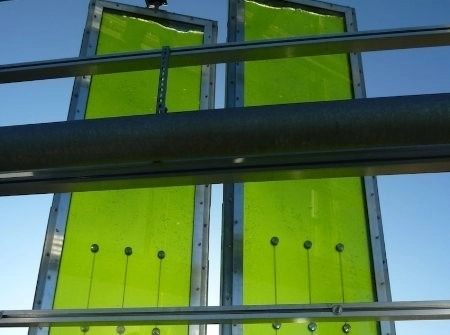
In a recent article for 99% Invisible, Kurt Kohlstedt explores how integrating microalgae into buildings can create a dualistic system of living and built, in order to perform services like create shade, generate power, and work with HVAC systems to modulate interior environments.
Projects that utilize such technology include bioreactors that produce oxygen and bio-fuel, a building with a bio-adaptive façade, and a street lamp that filters carbon dioxide from the urban environment.
Tree and Design Action Group is a group that “shares the collective vision that the location of trees, and all the benefits they bring, can be secured for future generations through better collaboration in the planning, design, construction and management of our urban infrastructure and spaces.”
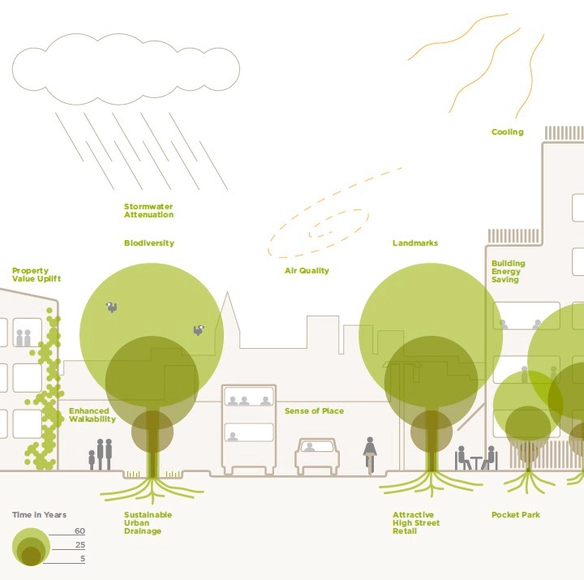
“Trees make places look and feel better, as well as playing a role in climate proofing our neighborhoods and supporting human health and environmental well-being, trees can also help to create conditions for economic success.” The Trees in the Townscape guide presents a modern approach to urban forestry, providing officials and professionals with the principles and references needed to realize the potential of vegetation in urban areas.
This is an approach that keeps pace with and responds to the challenges of our times. “Trees in the Townscape offers a comprehensive set of 12 action-oriented principles which can be adapted to the unique context of [any] own town or city.”
Vincent Callebaut Architectures has released in-progress images of their Tao Zhu Yin Yuan sustainable tower, under construction in the Xinjin District of Taipei City, Taiwan. The tower’s rotating form draws inspiration from the double helix structure of DNA and will be covered in 23,000 trees in its aim to become a pioneering sustainable residential eco-construction that finds “the right symbiosis between the human being and the Nature.”
Pneumatic Vacuum Elevators, LLC has created a series of air-powered, space-saving, “plug & play” elevators designed to be easily installed into home environments.
Ranging from a single-passenger to a three-passenger, wheelchair accessible model, the elevators—called Pneumatic Vacuum Elevators (PVE)—are self-supporting, and do not require equipment rooms or other additional spaces above or below the shaft. Similarly, the elevators are completely enclosed and are not built into the framework of the home around them, and thus it can easily be relocated.
Students at Woodbury University School of Architecture. One of Woodbury's graduate professional practice courses, focused on the Los Angeles region and the state of California, was named one of seven exemplary courses in sustainability-centered design. Image Courtesy of Woodbury University
For many years now, climate change has been a major concern for architects and engineers— and with good reason. After all, the built environment contributes to over 39% of all CO2 emissions and over 70% of all electricity usage in the United States. Several architecture and design-based initiatives aim to guide architecture away from environmentally harmful practice and towards a more sustainable approach. Architecture 2030, one such initiative, believes that to incite design change we must begin at its source: architectural education.
https://www.archdaily.com/799721/the-7-best-sustainable-design-courses-in-the-united-statesGretchen Von Koenig
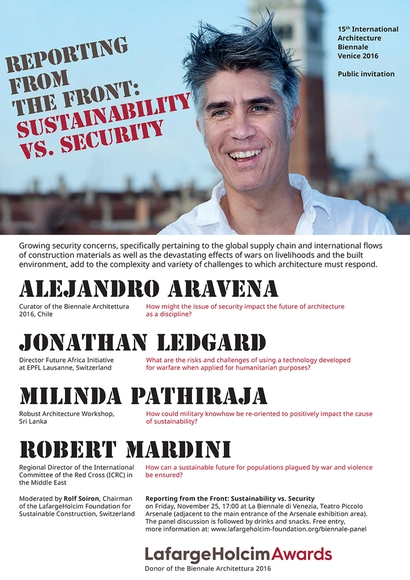
Based on his experience in curating the 15th International Architecture Exhibition of La Biennale di Venezia 2016 in Venice, the Chilean architect Alejandro Aravena inspired the LafargeHolcim Foundation for Sustainable Construction to organize a debate on sustainability and security. Framed as one of this year Architecture Biennale’s discussions, the event will foreground topics that were raised in the context of the exhibition “Reporting from the Front” and expose them to “real life reports” from the forefront of architecture and related disciplines.
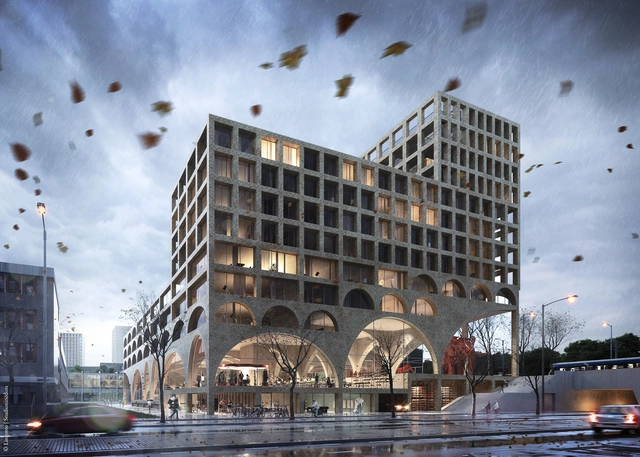
Combining entrepreneurship with affordable housing, West Beat is the winning project for a creative complex in Nieuw-West, Amsterdam. The building proposal, created by Studioninedots in collaboration with Lingotto was inspired by the elements of light and sound, with each design choice reacting to the surrounding environment.
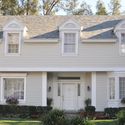
Elon Musk has revealed his company Tesla’s latest world-changing innovation: a solar roof system so fully integrated into a home’s architecture as to be indistinguishable from a traditional roof.
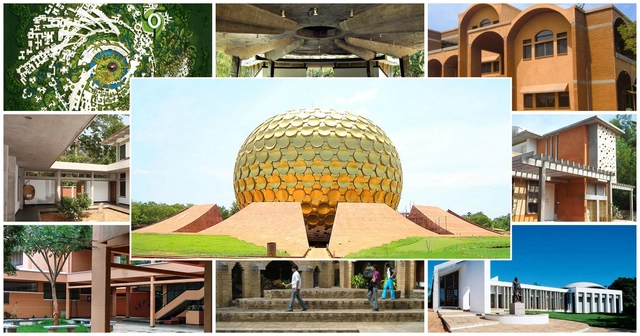
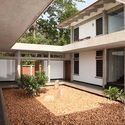
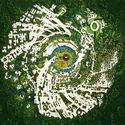
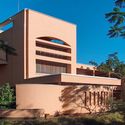
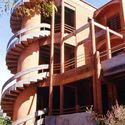
Near Pondicherry in Southern Indian is Auroville, an experimental township devoted to the teachings of mystic philosopher Sri Aurobindo. The 20 square kilometer site was founded in 1968 by Aurobindo’s spiritual collaborator, Mirra Alfassa. Otherwise known as “The Mother,” she saw Auroville as a place “where men of all countries would be at home”.
A fascinating exhibition about the current state of building culture with focus on timber – the natural renewable resource
Based on selected distinguished national and international projects, the exhibition represents the state of the art in sustainable and modern timber architecture. The presentation spans from spectacular projects by Toyo Ito, Shigeru Ban and Frei Otto to direction setting urban timber houses such as those by Kaden & Klingbeil in Berlin/Prenzlauer Berg, and upwards to the newest trends in highrise buildings realized in timber. Plans, excerpts, and photographs accompany the largesized models.
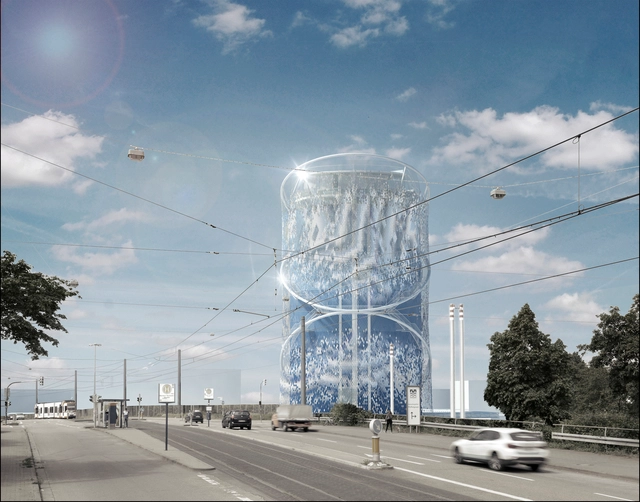
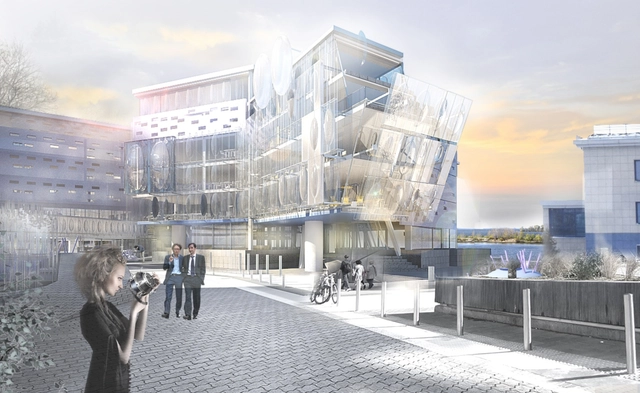
LAVA (Laboratory for Visionary Architecture) has won the competition to redesign an energy park and energy storage building in Heidelberg, Germany, for the Stadtwerke Heidelberg. Currently a cylindrically shaped storage center, the space will be transformed into a dynamic sculpture, city icon, and knowledge hub for sustainable energy, fully accessible to the public with city views.
In order to display the concepts of energy transition, decentralization, networking, flexibility and adaptability, the project will feature a multi-layered façade structure inspired by geometries in nature like leaves, spider webs, and reptile skins. “The result is a dynamic, ever-changing surface of light and shadow, animated by wind, turning the building into a beacon of a dynamic new energy regime.”
Team Rambo, also known as Ramboland, is a project born from the need of Ron Rambo, born with Cerebral Palsy, for a home that can support his disability and increase his quality of life. However, Ramboland doesn’t just stop there. LEED Fellow Max Zahniser, has used his experience with Green Architecture to combine Ron’s social vision with an environmental one that can benefit the entire community. The meeting of these objectives has been defined by the goal “to design a project that will actually increase the vitality of life and life-support systems in every way possible,” using architecture to make a difference.










.jpg?1477928406 "\"Textured\" Style. Image © Tesla. Via the Verge")