1. ArchDaily
  2. Interventions in Public Spaces

Interventions in Public Spaces: The Latest Architecture and News

Exclusionary Architecture: How Design Interventions in Public Spaces are Dismissing the Homeless

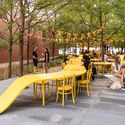
Social responsibility and the desire to improve society has long been influenced by the built environment. Looking at city centers, architecture has contributed to the improvement of the urban fabric, whether it being through planning and zoning strategies, integration of public spaces, or small interventions. In some cases however, these interventions are in fact used as tools to keep the homeless off the streets, disguised as art or conceptual designs. Several public urban policies have all implicitly prohibited the homeless and other marginalized social groups from city centers, claiming that their presence and “irregular” use of public space could compromise the reputation, security, and desirability of the city.

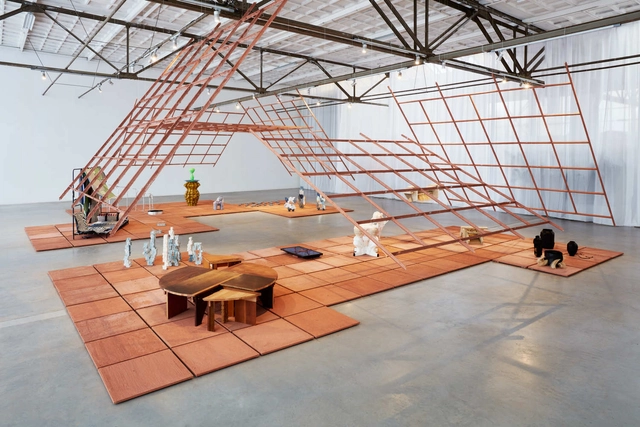
Exclusionary Architecture: How Design Interventions in Public Spaces are Dismissing the Homeless - Image 1 of 4Exclusionary Architecture: How Design Interventions in Public Spaces are Dismissing the Homeless - Image 2 of 4Exclusionary Architecture: How Design Interventions in Public Spaces are Dismissing the Homeless - Image 3 of 4Exclusionary Architecture: How Design Interventions in Public Spaces are Dismissing the Homeless - Image 4 of 4Exclusionary Architecture: How Design Interventions in Public Spaces are Dismissing the Homeless - More Images+ 3

Less Waste or More Value: 8 Architecturally Relevant Interventions at the 2021 Dutch Design Week

Subscriber Access | 

Under the theme of 'The Greater Number', the Dutch Design Week (DDW) returns with a physical edition from the 16 until the 24th of October 2021 in Eindhoven, the Netherlands. The largest design event in Northern Europe has decided for its comeback to tackle the notion of less consumption, less production, and less waste. Knowing that this is not always possible, the design happening also calls for more sustainable products with more value.

Striving to change the behavior of consumers and manufacturers, Dutch Design Week organized lectures, debates, and exhibitions, from which ArchDaily selected 8 architecturally relevant interventions to underline. Highlighting ideas that can shape a positive future, the list is mostly focused on future cities, while also tackling notions such as adapted realities, connected living, interactive experiences, and designing society.

Less Waste or More Value: 8 Architecturally Relevant Interventions at the 2021 Dutch Design Week - Image 1 of 4Less Waste or More Value: 8 Architecturally Relevant Interventions at the 2021 Dutch Design Week - Image 2 of 4Less Waste or More Value: 8 Architecturally Relevant Interventions at the 2021 Dutch Design Week - Image 3 of 4Less Waste or More Value: 8 Architecturally Relevant Interventions at the 2021 Dutch Design Week - Image 4 of 4Less Waste or More Value: 8 Architecturally Relevant Interventions at the 2021 Dutch Design Week - More Images+ 10

How Has Public Space Changed in 2020?

Subscriber Access | 

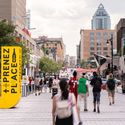
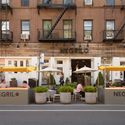
The pandemic provided a unique circumstance for city-scale experiments regarding mobility, while immediate responses showed the transformative power of tactical urbanism. In many cities, the measures meant to ensure social distancing are to be kept in place post-pandemic, paving the path towards recovery with less traffic and more outdoor activities. How did the pressure of rethinking streets, functions, and transportation systems transform public space in 2020?

How Has Public Space Changed in 2020? - Image 1 of 4How Has Public Space Changed in 2020? - Image 2 of 4How Has Public Space Changed in 2020? - Image 5 of 4How Has Public Space Changed in 2020? - Image 3 of 4How Has Public Space Changed in 2020? - More Images+ 5

The Challenges and Opportunities of Urban Regeneration in Gentrified Areas of China

Since the 1990s, copious amounts of cities in China have been undergoing urban renewal. Prompted by this state-facilitated urban redevelopment, skyscrapers are being built rapidly in major cities to attract affluent middle-classes, resulting in countless relocation and displacement of the working-class population. Such process is known as “gentrification”.

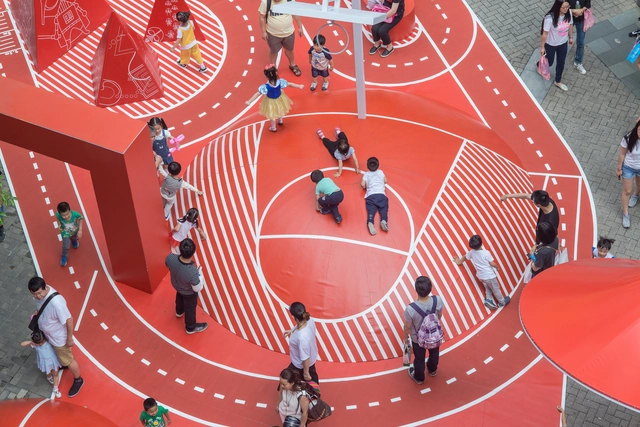
As cities and neighborhoods are being gentrified thoroughly to meet middle-class taste and boost economic growth, urban land resources are being treated in ways to increase business potential, leaving little room for the development of urban street life. Among rows of concrete and steel constructions, nowadays, urbanites are struggling to find a place to sit, rest, and play during leisure time. Analyzing five architectural practices creating livable urban public spaces, this article discusses the challenges and opportunities of urban revitalization in China under the phenomenon of gentrification.

Urban Space as a Canvas for Civilian Expression

Subscriber Access | 

Urban Space as a Canvas for Civilian Expression - Image 1 of 4Urban Space as a Canvas for Civilian Expression - Image 2 of 4Urban Space as a Canvas for Civilian Expression - Image 3 of 4Urban Space as a Canvas for Civilian Expression - Image 4 of 4Urban Space as a Canvas for Civilian Expression - More Images+ 1

When urban spaces become the medium for expression, protest, criticism, and defiance, the audience is limitless. Pedestrians and bystanders of all ages and ideologies become spectators of demonstrations that walk the line between art and activism and transform the city's streets, walls, and sidewalks into canvases for diffusing ideas on a massive scale. Banksy once said that "a wall is a very big weapon. It's one of the nastiest things you can hit someone with." This call to arms has rung true for many as they take to the streets in a bid to make themselves heard.