1. ArchDaily
  2. Institutional Architecture

Institutional Architecture: The Latest Architecture and News

Climate, Culture, and Modernism: The Postcolonial Campus as Architectural Laboratory

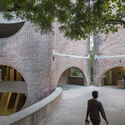
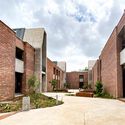
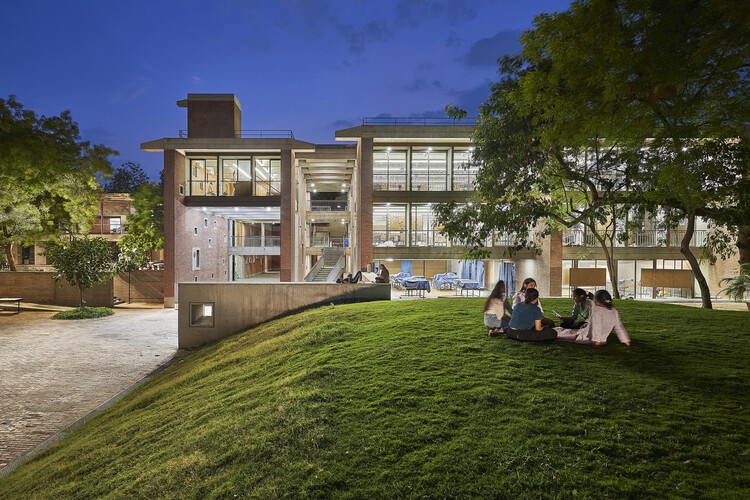
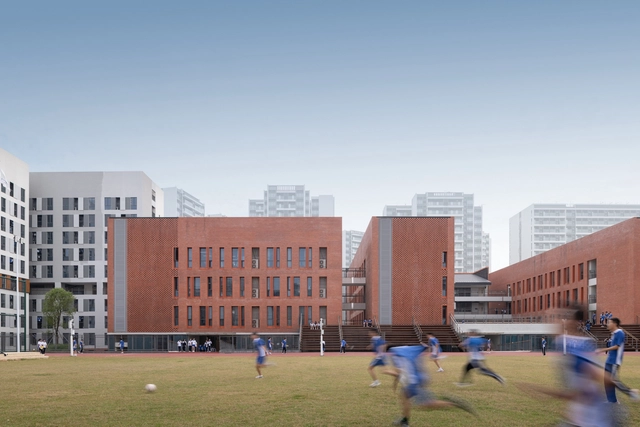
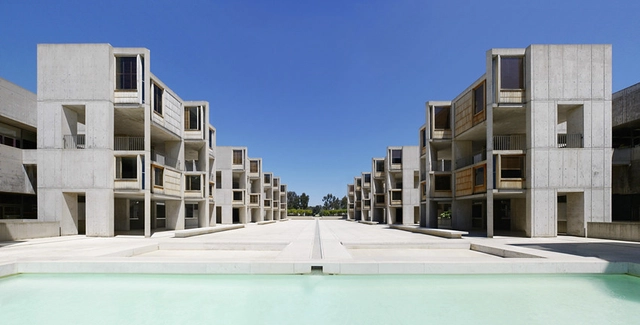
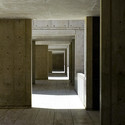
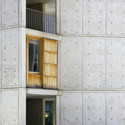
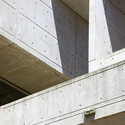
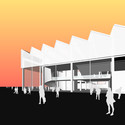
In the decades following independence, some of the most ambitious architectural experiments in the world did not emerge through museums, monuments, or government palaces. They emerged through universities. Across South Asia and Africa, newly formed nations turned campuses into testing grounds for entirely new ways of imagining collective life. These campuses functioned as more than educational institutions. They became territories where states tested how modernity might be organized, for citizens to gather, institutions to function, climate to shape architecture, and imported ideas to transform local realities.

Climate, Culture, and Modernism: The Postcolonial Campus as Architectural Laboratory - Image 1 of 4Climate, Culture, and Modernism: The Postcolonial Campus as Architectural Laboratory - Image 2 of 4Climate, Culture, and Modernism: The Postcolonial Campus as Architectural Laboratory - Image 3 of 4Climate, Culture, and Modernism: The Postcolonial Campus as Architectural Laboratory - Image 4 of 4Climate, Culture, and Modernism: The Postcolonial Campus as Architectural Laboratory - More Images+ 7

Frida Escobedo to Design Qatar’s New Ministry Building with Adaptive Reuse of a Modernist Landmark in Doha

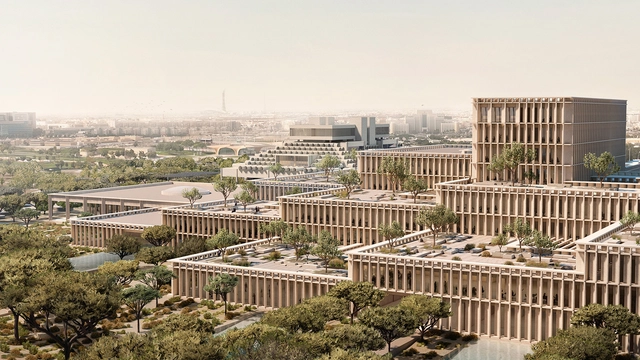
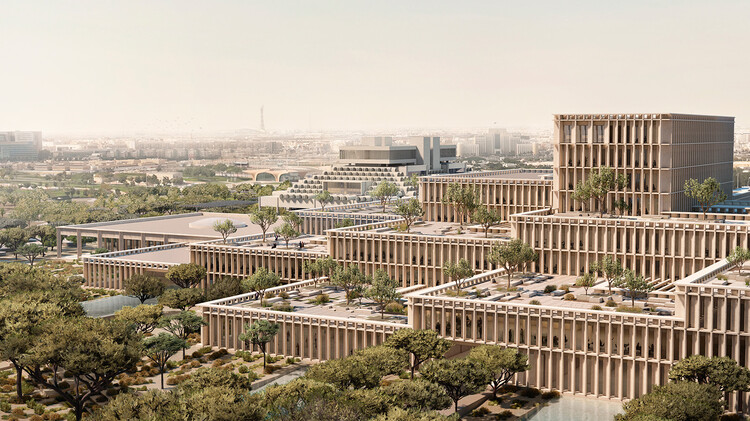
The State of Qatar announced on December 4, 2025, the selection of Frida Escobedo Studio, with Buro Happold engineers and Studio Zewde landscape designers, to design the new headquarters for the Ministry of Foreign Affairs. Intended to establish a more visible civic presence for the Qatari diplomatic service and provide public access to the Ministry complex, the project is planned for a prominent site along Doha's waterfront, transforming a significant section of the city's Corniche. Situated beside Doha Bay, the 70,000-square-meter (750,000-square-foot) project is conceived as a combination of new construction and the adaptive reuse of the historic modernist General Post Office currently on the site.

Frida Escobedo to Design Qatar’s New Ministry Building with Adaptive Reuse of a Modernist Landmark in Doha - Image 1 of 4Frida Escobedo to Design Qatar’s New Ministry Building with Adaptive Reuse of a Modernist Landmark in Doha - Image 2 of 4Frida Escobedo to Design Qatar’s New Ministry Building with Adaptive Reuse of a Modernist Landmark in Doha - Image 3 of 4Frida Escobedo to Design Qatar’s New Ministry Building with Adaptive Reuse of a Modernist Landmark in Doha - Image 4 of 4Frida Escobedo to Design Qatar’s New Ministry Building with Adaptive Reuse of a Modernist Landmark in Doha - More Images

Creating Safe Spaces for Learning: Explore Solis Colomer Arquitectos' Educational Projects in Latin America

Subscriber Access | 

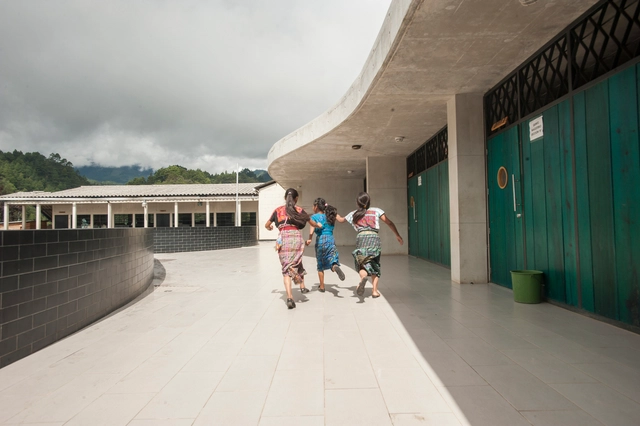
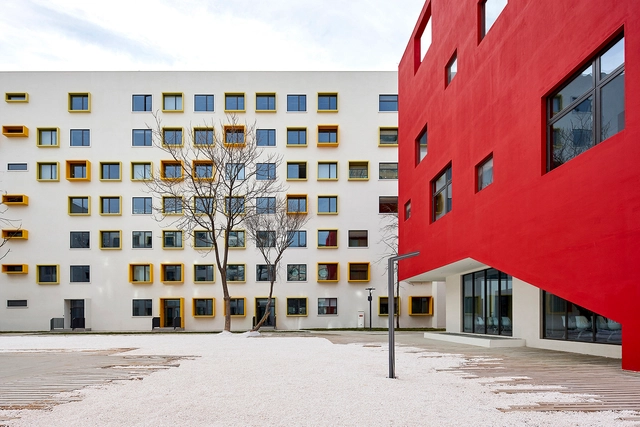
Founded in 2002, Solis Colomer Arquitectos has established a strong reputation over the past two decades, designing and constructing projects with both social and commercial impact across Latin America. With over 200 completed works, the firm specializes in institutional architecture with social impact and user-centered commercial architecture. Its mission is clear: to use architecture as a tool to dignify the human experience, especially for those in greatest need.

Creating Safe Spaces for Learning: Explore Solis Colomer Arquitectos' Educational Projects in Latin America - Image 1 of 4Creating Safe Spaces for Learning: Explore Solis Colomer Arquitectos' Educational Projects in Latin America - Image 2 of 4Creating Safe Spaces for Learning: Explore Solis Colomer Arquitectos' Educational Projects in Latin America - Image 3 of 4Creating Safe Spaces for Learning: Explore Solis Colomer Arquitectos' Educational Projects in Latin America - Image 4 of 4Creating Safe Spaces for Learning: Explore Solis Colomer Arquitectos' Educational Projects in Latin America - More Images+ 4

Courtyardism: A Vision for a More Balanced Urban Future in the Greater Bay Area by Wang Weijen Architecture

Situated in one of the fastest-developing regions over the past decade—the southern part of China, including Hong Kong and the Greater Bay Area—urban growth has been driven by an overwhelming wave of commercial ambition. Projects here are often designed for maximum density, height, and efficiency, resulting in developments of enormous scale that can easily span several acres. Prioritizing transit-oriented development, these complexes frequently take the form of sprawling malls built directly above major transportation hubs. Designed to disorient and prolong foot traffic to encourage economic activities, these mega-structures have become commonplace in cities like Hong Kong and Shenzhen.

While this typology of megastructures offers clear advantages—economic efficiency, high development returns, and convenience for transit users—it almost invariably ignores its urban context and environment. These developments often turn a blind eye, deliberately so, to their environmental footprint and the city's walkability. At such overwhelming scales, the human walking experience is diminished, if not outright neglected. Pedestrians become interiorized—trapped within the insulated world of these complexes.

Courtyardism: A Vision for a More Balanced Urban Future in the Greater Bay Area by Wang Weijen Architecture - Image 1 of 4Courtyardism: A Vision for a More Balanced Urban Future in the Greater Bay Area by Wang Weijen Architecture - Image 2 of 4Courtyardism: A Vision for a More Balanced Urban Future in the Greater Bay Area by Wang Weijen Architecture - Image 3 of 4Courtyardism: A Vision for a More Balanced Urban Future in the Greater Bay Area by Wang Weijen Architecture - Image 4 of 4Courtyardism: A Vision for a More Balanced Urban Future in the Greater Bay Area by Wang Weijen Architecture - More Images+ 26

Brutalism and Bureaucracy: An Architectural Language of Authority in the Postwar United States

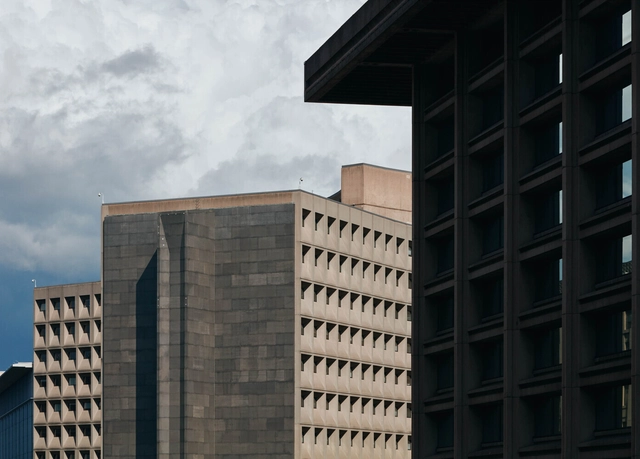
Brutalist architecture in the United States is a monument to collective postwar optimism and reassurance that the city and federal governments are in authority. Conceived as an embodiment of strength and efficiency, Brutalist structures were quickly adopted for the architectural language of civic and governmental institutions in the mid-to-late twentieth century in the United States. Towering monoliths of raw concrete rose across the nation, projecting an image of institutional permanence while simultaneously provoking debate over their social and psychological impact.

Brutalism and Bureaucracy: An Architectural Language of Authority in the Postwar United States - Image 1 of 4Brutalism and Bureaucracy: An Architectural Language of Authority in the Postwar United States - Image 2 of 4Brutalism and Bureaucracy: An Architectural Language of Authority in the Postwar United States - Image 3 of 4Brutalism and Bureaucracy: An Architectural Language of Authority in the Postwar United States - Image 4 of 4Brutalism and Bureaucracy: An Architectural Language of Authority in the Postwar United States - More Images+ 7

Architect and Educator Deborah Berke Receives the 2025 AIA Gold Medal

Influential figure Deborah Berke, FAIA, LEED AP, has been announced as the recipient of the 2025 AIA Gold Medal, in recognition of her four-decade career integrating design prowess, and academic leadership demonstrating social and environmental responsibility. Her work, encompassing residential, institutional, and adaptive reuse projects, demonstrates a commitment to sustainability and community engagement. Founding Deborah Berke Partners (now TenBerke) in 1982 and serving as the first female dean of the Yale School of Architecture, she has held various leadership positions within the architectural profession and contributed to discussions on design ethics, sustainability, and education.

Architect and Educator Deborah Berke Receives the 2025 AIA Gold Medal - Image 1 of 4Architect and Educator Deborah Berke Receives the 2025 AIA Gold Medal - Image 2 of 4Architect and Educator Deborah Berke Receives the 2025 AIA Gold Medal - Image 3 of 4Architect and Educator Deborah Berke Receives the 2025 AIA Gold Medal - Image 4 of 4Architect and Educator Deborah Berke Receives the 2025 AIA Gold Medal - More Images+ 3

Crafting Spatial Experiences: Service Design in Architecture

Subscriber Access | 

Architecture has the power to emotionally engage with its occupants. Tactfully crafted spatial moments extend architecture into experience design - a growing need in the experience economy. Through sensorial and intellectual stimulation, spaces can deeply connect with their occupants to result in memorable instances. The orchestration of an experience requires not only an understanding of spatial principles but also how the service of the space is designed.

Crafting Spatial Experiences: Service Design in Architecture - Image 1 of 4Crafting Spatial Experiences: Service Design in Architecture - Image 2 of 4Crafting Spatial Experiences: Service Design in Architecture - Image 3 of 4Crafting Spatial Experiences: Service Design in Architecture - Image 4 of 4Crafting Spatial Experiences: Service Design in Architecture - More Images+ 2

The Important Role Libraries Play in Building a Creative and Innovative Society

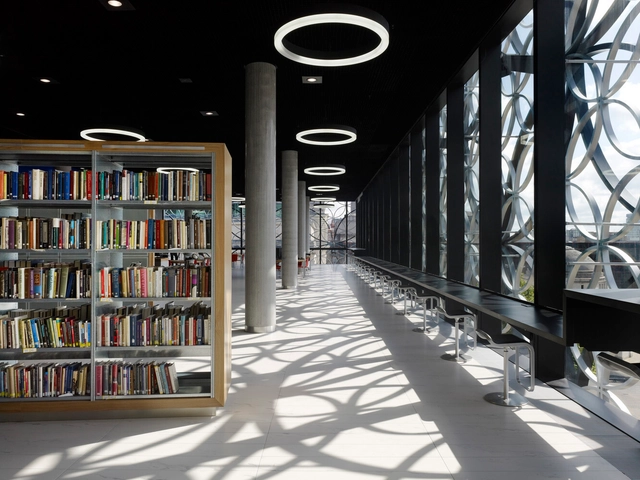
As gateways to knowledge and culture, libraries play a fundamental role in society. Foundational in creating opportunities for learning, as well as supporting literacy and education, the resources and services each library offers all work towards helping to shape new ideas that are central to building a creative and innovative society.

The Important Role Libraries Play in Building a Creative and Innovative Society - Image 1 of 4The Important Role Libraries Play in Building a Creative and Innovative Society - Image 2 of 4The Important Role Libraries Play in Building a Creative and Innovative Society - Image 4 of 4The Important Role Libraries Play in Building a Creative and Innovative Society - Image 6 of 4The Important Role Libraries Play in Building a Creative and Innovative Society - More Images+ 2

Kita Göttingen / Despang Architekten

Subscriber Access | 
Kita Göttingen / Despang Architekten - Image 14 of 4
© Jochen Stüber

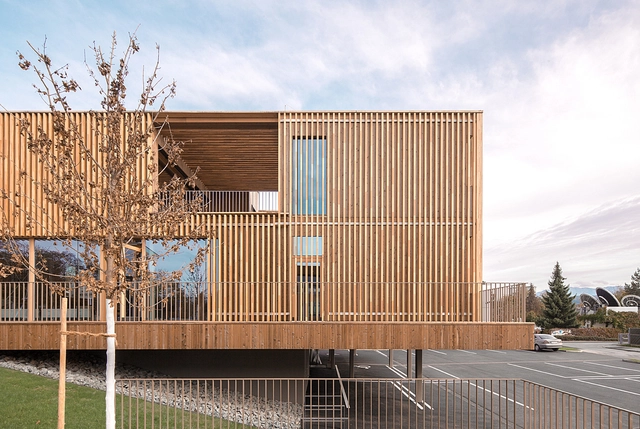
Architects: Despang Architekten Location: Göttingen, Germany Architects In Charge: Günther Despang/Martin Despang Project Architects: Philip Hogrebe/Jörg Steveker Area: 512 sqm Year: 2010 Photographs: Jochen Stüber, Olaf Baumann

Kita Göttingen / Despang Architekten - Image 18 of 4Kita Göttingen / Despang Architekten - Image 27 of 4Kita Göttingen / Despang Architekten - Image 8 of 4Kita Göttingen / Despang Architekten - Image 16 of 4Kita Göttingen / Despang Architekten - More Images+ 23

New Law Courts of Caen Competition Entry / be baumschlager eberle

Subscriber Access | 
New Law Courts of Caen Competition Entry / be baumschlager eberle - Image 10 of 4
Rendering by RSI-Studio

With urbanistic planning in mind, the proposal by Baumschlager Eberle for the law courts of Caen redefines a new domain in the center of the city. In collaboration with Atelier d’Architecture Pierre Champenois, the shape of the building agrees not only with the tradition but of course with the more complex duties of law courts in the 21st century. An orthogonal pattern constitutes the base for the organization of the needs of the law courts. More images and architects’ description after the break.

New United States Courthouse Competition Entry / Yazdani Studio of Cannon Design

Subscriber Access | 
New United States Courthouse Competition Entry / Yazdani Studio of Cannon Design - Image 8 of 4
Courtesy of Yazdani Studio of Cannon Design

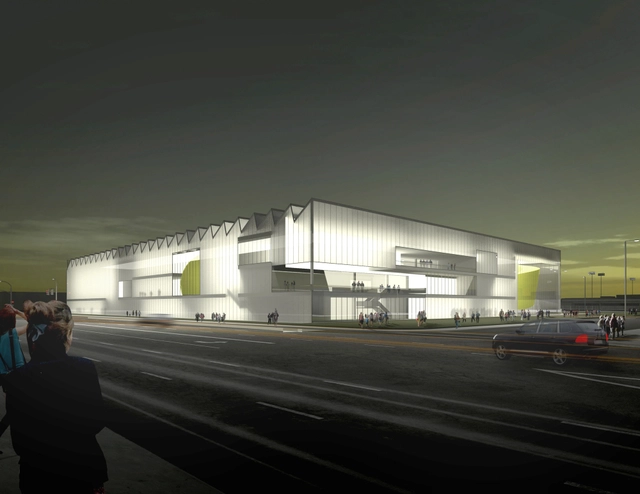
Yazdani Studio of Cannon Design and Gruen Associates have shared with us their second place proposal for the highly anticipated design-build competition for the new United States courthouse in Los Angeles, California. Envisioned as an icon within the city skyline, the triangular monolith provides a sustainable, 21st century courthouse that embodies the democratic qualities of dignity, stature, transparency, openness and accessibility.

Located at a pivotal node connecting the Los Angeles Civic Center, the Broadway Historic District and Bunker Hill, the 550,000 square foot courthouse is surrounded by a lush civic space that plays an important role in the existing cityscape.

Read the architect’s description after the break…

VIDEO: Federal Architecture

Subscriber Access | 

Democratic By Design is a short film, produced by the General Services Administration and narrated by Luke Russert, that tackles the issue of federal architecture. Buildings designed for the government typically have a familiar aesthetic. Washington, DC, is dominated by Neoclassical Architecture, building on the connotations of ancient Greek and Roman fora and temples as a symbol of democracy. But they perpetuate a sense of dominance and formality. Most of these buildings – city halls, courthouses, agency headquarters – were built in the 18th and 19th century, yet they leave behind a legacy and association in the architecture of the federal government.

VIDEO: Federal Architecture - Image 3 of 4
US Census Bureau Headquarters / SOM

On the contrary, government buildings built in the mid to late 20th century, specifically after 1962, have a more varied vernacular. This can be credited to Daniel Patrick Moynihan, aide to President John F. Kennedy. His one page document outlined guidelines for public architecture – an effort to contextualize and modernism government buildings. This video brings his words to life via well-known architects who have have designed federal buildings.

Join us after the break for a look at some of these buildings.

Mersin Chamber of Commerce and Industry Building Competition Entry / Ziya İmren and Onat Öktem

Subscriber Access | 
Mersin Chamber of Commerce and Industry Building Competition Entry / Ziya İmren and Onat Öktem - Image 7 of 4
Courtesy of Ziya İmren and Onat Öktem

The Mersin Chamber of Commerce and Industry Building proposal by Ziya Imren and Onat Öktem has placed itself in an important position for the development of city of Mersin and its surroundings. Located at the intersection of the two main axes of the city, the proposal will play a major role in this new developing urban area of the city. More images and architects’ description after the break.

Çanakkale Municipality “Green” Cultural Center & Municipality Building Competition Entry / Onat Öktem and Ziya Imren

Subscriber Access | 
Çanakkale Municipality “Green” Cultural Center & Municipality Building Competition Entry / Onat Öktem and Ziya Imren - Image 17 of 4
Courtesy of Onat Öktem and Ziya Imren

Designed by Onat Öktem and Ziya Imren, the proposal for the Çanakkale Municipality “Green” Cultural Center & Municipality Building, which won an honorable mention, aims to create a new focal point located at the intersection of two busy pedestrian and vehicle axes, that strengthens the urban identity. The project intends to achieve a sharing/networking space that supports the everyday life of urban dwellers with social and cultural activities/facilities/uses, and a human-centered urban space that is also respectful to environmental values. More images and architects’ description after the break.

Jeanne Gang and Michael Kimmelman's proposal to save Prentice Women’s Hospital

Subscriber Access | 
Jeanne Gang and Michael Kimmelman's proposal to save Prentice Women’s Hospital - Featured Image
Image courtesy of Studio Gang Architects; Illustration, Jay Hoffman

The preservation battle continues over the fate of Bertrand Goldberg’s 1970’s Prentice Woman’s Hospital. As we reported in July, an ever-growing community of prominent architects – such as Frank Gehry, Jeanne Gang, Tod Williams and Billie Tsien – have joined preservationists in the fight to save the late modernist structure that is at risk of being replaced by a new biomedical research facility for Northwestern University.
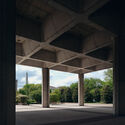
The seven-story concrete cloverleaf, cantilevered 45 feet from the supporting core and floating atop a glass and steel box, is an engineering feat ahead of it’s time as well as an important icon within the Chicago skyline. As architecture critic Michael Kimmelman argues, “Great late-Modernist buildings, innovative and ruggedly beautiful, deserve respect and, increasingly, careful custody. Prentice is a good example.” However, it is not suited for 21st-century research labs and many Chicagoans hate it. Currently, Northwestern University is leading the debate by arguing that a new building would “bring to the city millions of investment dollars, create jobs and save lives”.

Could there be a compromise? Solutions are rarely black-and-white. Kimmelman has consulted Chicago architect Jeanne Gang to envision a proposal that would satisfy both opposing sides. Continue reading to learn more.

AD Round Up: Institutional Architecture Part X

Subscriber Access | 
AD Round Up: Institutional Architecture Part X - Image 4 of 4
Courtesy of Audrius Ambrasas Architects

Keelung Harbor Service Building / Neil M. Denari Architects

Subscriber Access | 
Keelung Harbor Service Building / Neil M. Denari Architects - Image 18 of 4
Waterside view of gateway tower - Courtesy of Neil M. Denari Architects

Yesterday, we announced that Los Angeles based Neil M. Denari Architects (NMDA), in collaboration with Taiwanese architectural firm Fei and Cheng Associates, have been selected as winner of a highly publicized, international competition for the new Keelung Harbor Service Building in Taiwan’s largest port city. As promised, we now present to you the winning proposal.
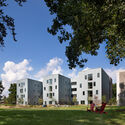
Serving as a “Gateway to the Nation”, the project site consists of a new cruise ship port terminal, a 250 meter long, three level building that will accommodate the largest ships in Asia; a 53,000 square meter Harbor Authority office complex; parking for 1000 cars; and a third phase 23,000 square meter speculative office building. The NT$6.2 billion (US$211.5 million) renewal project will be completed in phases. Construction will commence next year on the three-floor terminal, which is planned for completion by 2015. Work on the complex’s office building is expected to come to a conclusion in 2017. Learn more after the break, with the architects’ complete project statement.
Town Hall and Health Center / Henning Larsen Architects

Subscriber Access | 
Town Hall and Health Center / Henning Larsen Architects - Image 9 of 4
Courtesy of Henning Larsen Architects

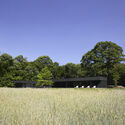
Spearheading the development of the new district in Egedal, Demark, the town hall and health center will be the uniting center of the new Municipality of the city as one of the first buildings in the new planned urban area around Egedal Station. Designed by Henning Larsen Architects, their proposal won the highest score for all criteria in the competition to get the first prize. The health center will become an active part of the town hall, while at the same time offering citizens the opportunity to use the area outside town hall opening hours. More images and architects’ description after the break.