

-
Architects: Camilo Rebelo
- Year: 2014
-
Professionals: GOP - Gabinete de Organização de Projectos Lda, Matriz


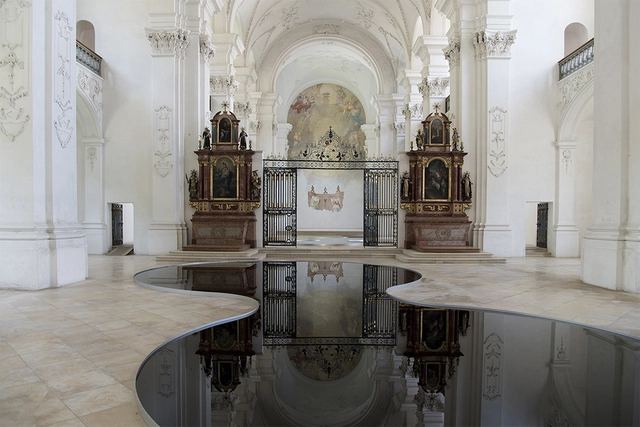
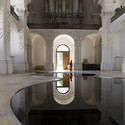
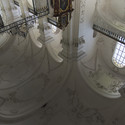
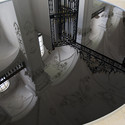
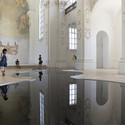
This sculptural installation, created by Swiss artist Romain Crelier, was exhibited at Bellelay Abbey in 2013. Although the structure dates back to the 12th century, the current Abbey Church of the Assumption was built by Franz Beer in a Vorarlberg Baroque style and completed in 1714.
Almost three hundred years later Crelier's piece, entitled La Mise en Abîme (which roughly translates to, 'to have put into an abyss'), placed two shallow pools of used engine oil to act as reflective mirrors. These 'puddles' "allow the viewers to interact with the architecture of the church by being pulled into the reflection so that they, in turn, become part of the sculpture themselves." According to We Find Wildness' interpretation, "the installation not only dispenses multiple visual thrills and mysteries but also offers a moment where sculpture creates another reading of space."
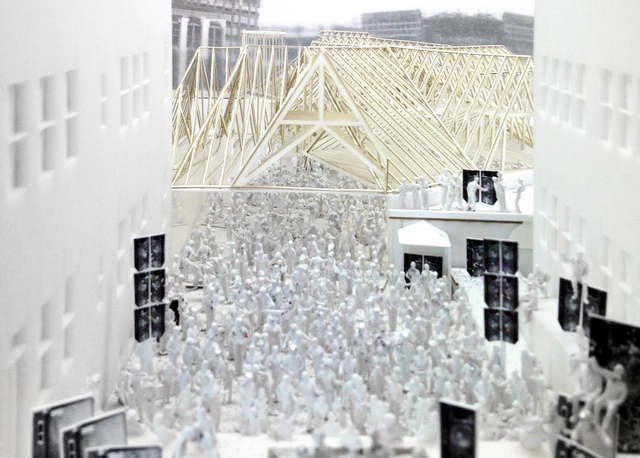
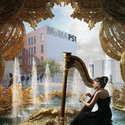
Despite Andrés Jaque of Office of Political Innovation emerging as the winner of the 2015 MoMA PS1 Young Architects Program (YAP), his competitors put up quite a fight. One of this year's five shortlisted proposals, Erin Besler's Roof Deck breathes life into arguably the most overlooked aspect of architecture - the roof - by injecting it with an active public program and making it a vessel for summer celebration.
Read on after the break for more on Besler's proposal.
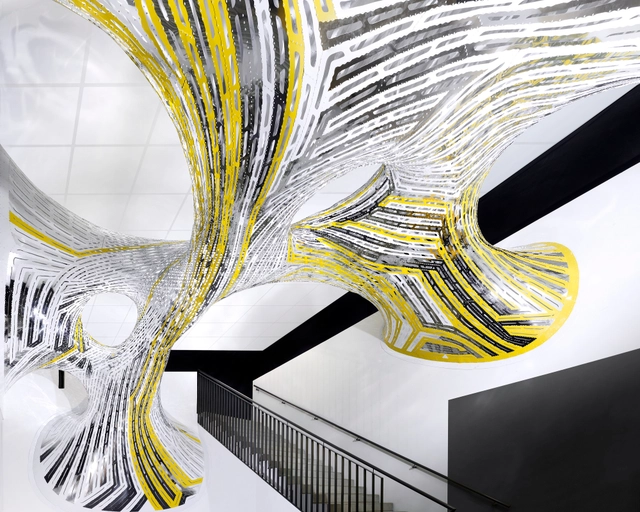
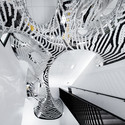
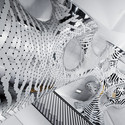
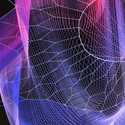
Marc Fornes / THEVERYMANY has realized two permanent installations - “Under Stress” and “Sous Tension” - in the public areas of the Department of Computer Science at the French Institute for Research in Computer Science and Automation (INRIA). Both structures “utilize programming techniques inherent in computer science to optimize the form and creating a pattern on the surface.”
“The structures engage the spaces with their intricate and gestural movements that effortlessly travel over the areas,” says the practice. “They provide visitors with iconic hubs for informal and spontaneous social gatherings while expressing the tension between the dynamic interactions from the multi-directional and converging paths within the public spaces. More than a signal for the school, they become elements of enhancement for the school's identity.”
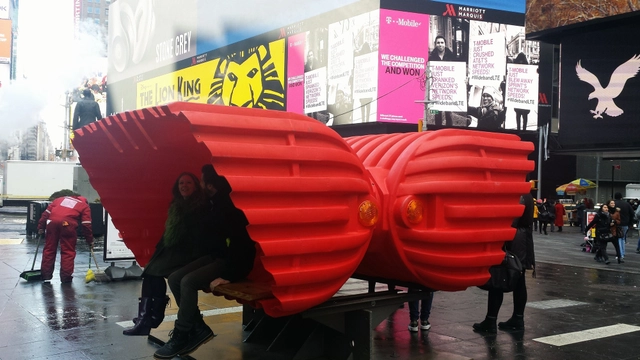
Stereotank’s HeartBeat filled the air in Times Square this past Valentine’s Day. Now that the love season is over, the Brooklyn-based practice has turned their clever installation into a welcoming “HeartSeat” by simply opening up their heart-shaped sculpture to the public and transforming it into a bench. The installation will remain on view through Sunday, March 8th. See a video of HeartSeat, after the break.
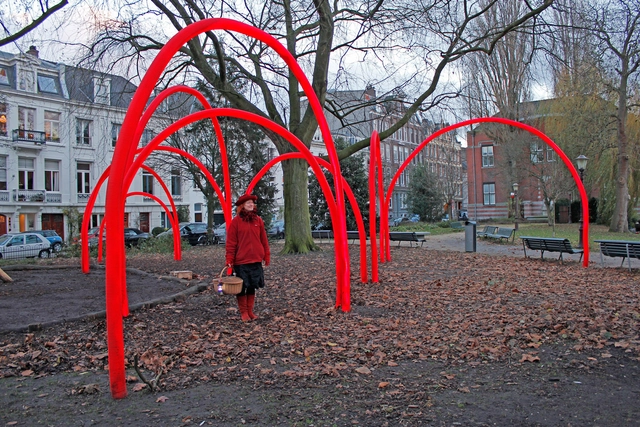

This sculptural memorial by SO/AP Architectes, located at the center of what was the Warsaw Ghetto, commemorates the history and memories of the Polish nation by uniting its oppressive and heroic pasts in one form. Simultaneously representing the Jewish and non-Jewish population, the serpentine structure symbolizes the entirety of the Polish people to strengthen their identity as one collective community.
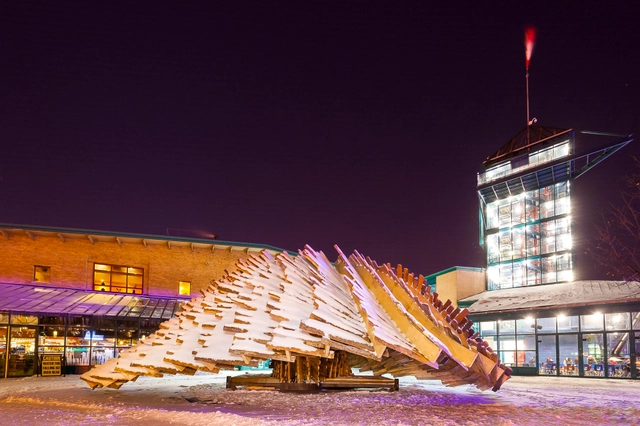
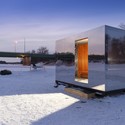
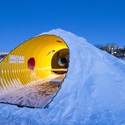
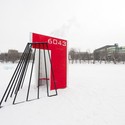
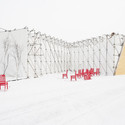
Each year Winnipeg’s Red River Mutual Rivertrail is transformed by a series of site specific "Warming Huts" that bring life and refuge to what is the world's longest naturally frozen skating trail. The annual tradition’s popularity has grown exponentially, attracting participation from firm’s worldwide. This edition is offering visitors a highly acclaimed pop-up restaurant, a ski-through museum, and an eclectic collection of warm shelters, including a “hybrid” wood hut designed by Mexico’s Rojkind Arquitectos. You can see all eight completed installations, after the break.
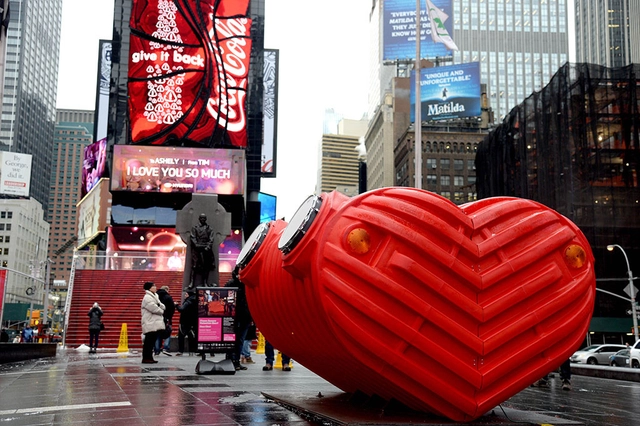
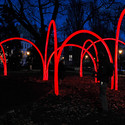
New York City is celebrating the opening of its seventh annual Valentine’s Day installation in Times Square. As part of Times Square Alliance’s heart design competition, Brooklyn-based, Venezuelan-born firm Stereotank has constructed their heart-beating urban drum in hopes to bring New Yorkers together through music.

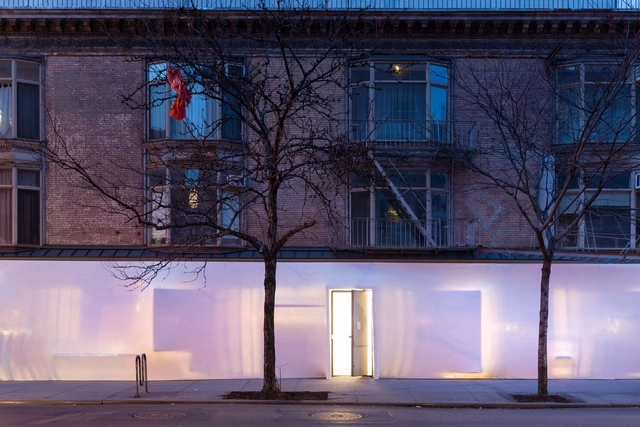
Steven Holl and Vito Acconci’s Storefront for Art and Architecture has hosted its share of installations, but its newest intervention envisioned by SO-IL as part of the Blueprint exhibition is a whole new concept: covering the entire facade with shrink-wrap. The seamless outcome is deceptively simple, however, as the installation involved some careful calculations, a massive frame, and a dedicated team with an acute attention to detail. Read more about the project, see the finished product, and watch the process, here.
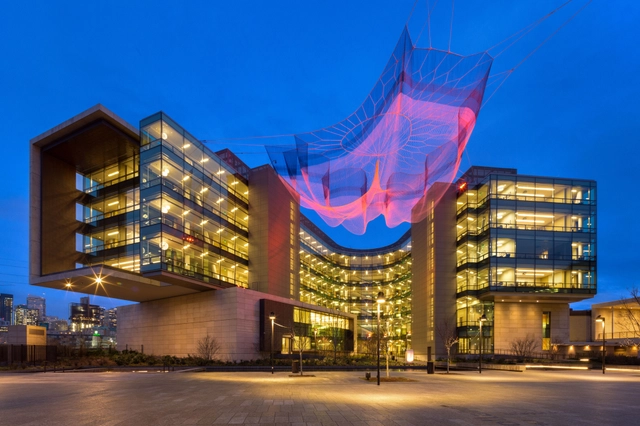
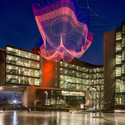
A new aerial sculpture by renowned artist Janet Echelman has been installed at the Bill & Melinda Gates Foundation campus in Seattle. Entitled "Impatient Optimist," the sculpture consists of a custom net structure suspended above the courtyard, resulting in an ethereal floating surface which seems to defy gravity. The award-winning artist's piece hovers above the city as a symbol of connectivity and stands as a testament to the impact an individual can have on a broader scale.

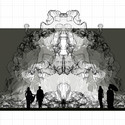
Although the Young Architects Program (YAP) announced Andrés Jaque of Office of Political Innovation as winner of its 2015 MoMA PS1 competition last week, the competition was fierce. Phenomena by Studio Benjamin Dillenburger addressed the idea of phenomenology in design, creating an experiential space that stimulates all the senses and hosts multiple programs.
Phenomena was one of the five shortlisted proposals for this year's MoMA PS1 YAP competition. Read more about the proposal after the break.
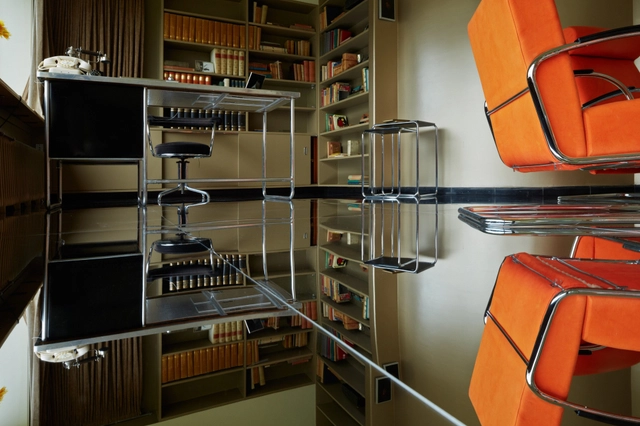
Inside Rotterdam's Sonneveld House everything is in order: books arranged nearly on shelves, chairs tucked under tables, rugs set square on the bedroom floor. The house is a pristine tableau depicting what the interior would have looked like whilst inhabited by the eponymous Albertus Sonneveld and his family.
Yet something interesting lies underfoot, thanks to an intervention by Inside Outside that sees the entire floor of the home covered with a single, continuous mirror. Read more about the installation and view selected images after the break.
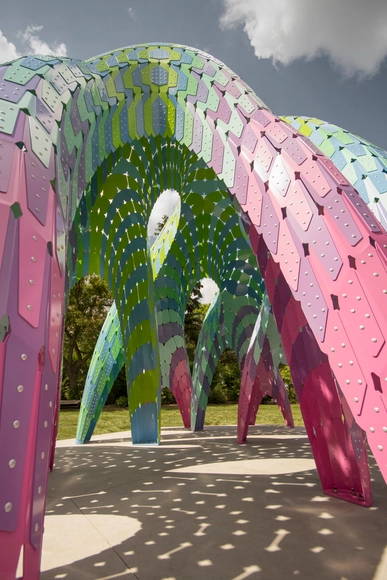
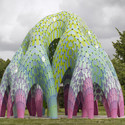
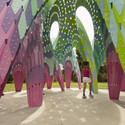
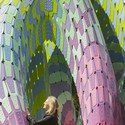
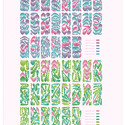
The Edmonton Arts Council has commissioned Marc Fornes / THEVERYMANY to construct an “architectural folly” in the Canadian city’s Borden Park. The project, known as “Vaulted Willow,” aims to “resolve and delineate structure, skin and ornamentation into a single unified system” by “exploring lightweight, ultra-thin, self-supported shells through the development of custom computational protocols of structural form-finding and descriptive geometry.”
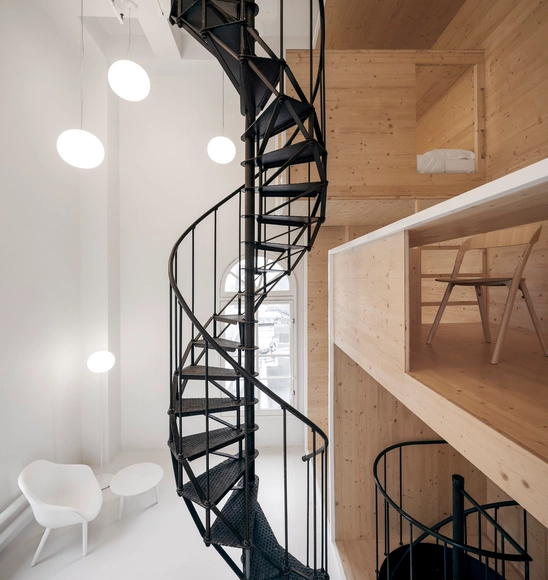
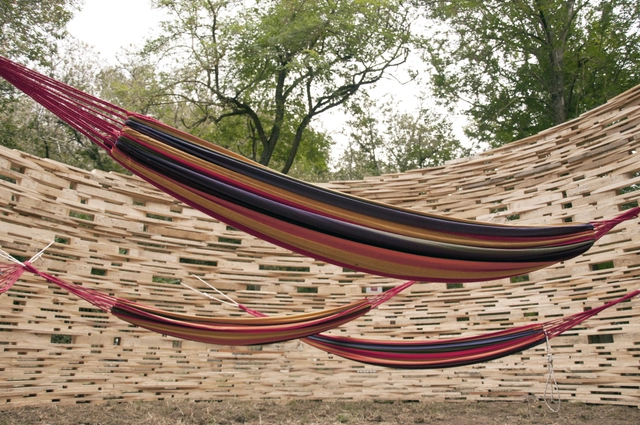
Rome-based firm Beyond Architecture Group (BAG) has designed “experimental furniture” - dubbed Looking (C)up - for the Frammenti Music Festival at the Archaeological Park in Tusculum, Italy. The firm, known for building houses with bales of straw, chose to craft an astronomical observatory with wooden pallets.

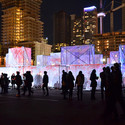
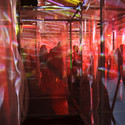
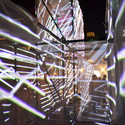
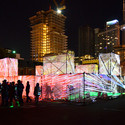
Colorful lights dance across translucent panels, illuminating the backdrop of Toronto’s glowing downtown high-rises. In their three-dimensional interactive installation entitled AMAZE, design and research laboratory UNSTABLE has created a multisensory experience like no other. Complex branching passageways challenge visitors to find their own path through the ever-changing structure, as if wandering through a vivid psychedelic dream. Becoming an integral part of the installation, visitors are met with dynamic shadows of the crowd and the urban landscape beyond before finding their way out of the maze.