1. ArchDaily
  2. Industrial Design

Industrial Design: The Latest Architecture and News

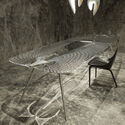
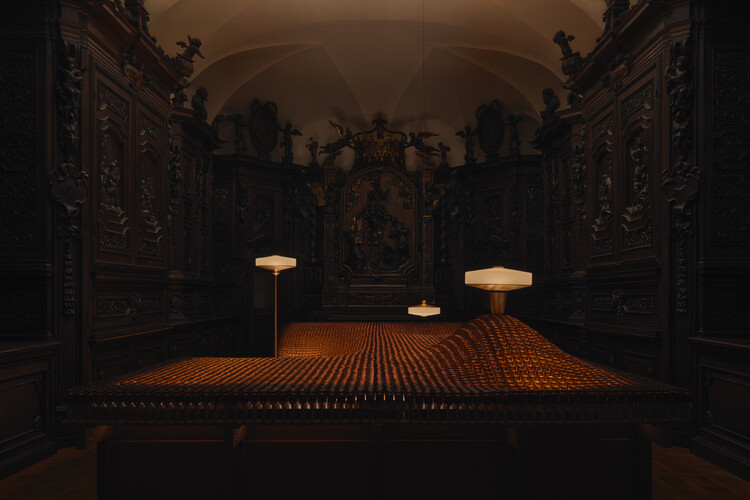
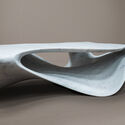
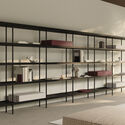
From Lighting to Modular Systems: ArchDaily’s Selection of 13 Architect-Designed Objects at Milan Design Week 2026

Each spring, Milan Design Week 2026 transforms the city into a distributed platform for design culture, where prototypes, product launches, and research-driven explorations coexist across multiple scales, including a growing presence of architect-designed objects. Held from April 20 to 26, the 2026 edition once again centered around the 64th Salone del Mobile.Milano at Fiera Milano, complemented by a network of independent venues and exhibitions throughout the city, an expanded landscape that is further reflected in ArchDaily's accompanying selection of installations and exhibitions from this year's program.
From Lighting to Modular Systems: ArchDaily’s Selection of 13 Architect-Designed Objects at Milan Design Week 2026 - Image 1 of 4From Lighting to Modular Systems: ArchDaily’s Selection of 13 Architect-Designed Objects at Milan Design Week 2026 - Image 2 of 4From Lighting to Modular Systems: ArchDaily’s Selection of 13 Architect-Designed Objects at Milan Design Week 2026 - Image 3 of 4From Lighting to Modular Systems: ArchDaily’s Selection of 13 Architect-Designed Objects at Milan Design Week 2026 - Image 4 of 4From Lighting to Modular Systems: ArchDaily’s Selection of 13 Architect-Designed Objects at Milan Design Week 2026 - More Images+ 6

Logistics Landscapes: The Architecture of the 24-Hour Supply Chain

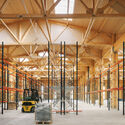
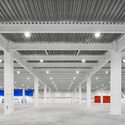
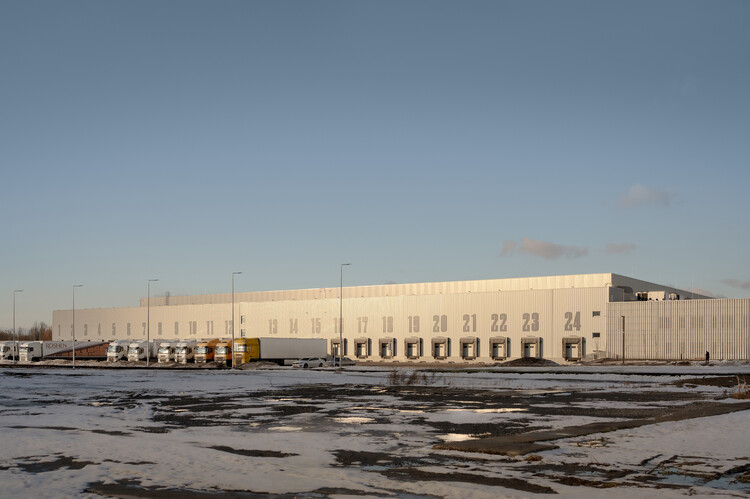
At the edge of most cities, beyond the ring roads and interchanges, a different kind of architecture is taking shape. It is not designed to be seen, visited, or remembered. It does not gather people; it moves things. Inside, thousands of parcels travel continuously, being sorted, lifted, scanned, and dispatched with minimal interruption. These buildings rarely enter architectural discourse, yet they are among the most consequential spaces of our time. The defining typology of the 21st century is increasingly the warehouse.

The scale of this transformation is difficult to grasp because it unfolds horizontally, across territories rather than skylines. Global warehouse space now exceeds tens of billions of square feet, expanding rapidly alongside the rise of e-commerce. During the COVID-19 pandemic, demand for logistics infrastructure accelerated by several years, compressing future growth into an already strained present. In India, the warehousing sector continues to grow at double-digit rates, reshaping peri-urban land into storage and distribution corridors. Logistics is no longer a background system; it is a territorial condition.

Logistics Landscapes: The Architecture of the 24-Hour Supply Chain - Image 1 of 4Logistics Landscapes: The Architecture of the 24-Hour Supply Chain - Image 2 of 4Logistics Landscapes: The Architecture of the 24-Hour Supply Chain - Image 3 of 4Logistics Landscapes: The Architecture of the 24-Hour Supply Chain - Image 4 of 4Logistics Landscapes: The Architecture of the 24-Hour Supply Chain - More Images+ 9

Calibrated Rawness: Studio 1:1 and the Discipline of Making in Hong Kong and Beyond

Subscriber Access | 

In Hong Kong, where interiors and small buildings are routinely caught between two extremes—high-gloss "luxury" finishes on one end, and budget-cautious industrial roughness on the other—a third attitude has emerged through the calibration of both: a uniquely precise, relevant, and materially honest execution that is not dependent on price point. This is calibrated rawness. Calibrated rawness describes an architecture that retains the directness of matter and materiality—concrete, metal, blockwork, exposed structure, visible services—while subjecting it to rigorous control.

The "raw" is not a costume, and the "refined" is not polished; it is a discipline of precise execution, producing spaces that feel balanced and considered, yet never "made up" or overworked. Studio 1:1 demonstrates this attitude consistently across its work—and its upcoming publication, Architecture under the Radar: Three Projects in Asia (with a foreword by Nader Tehrani), offers a timely frame through which to read this ethos as more than an aesthetic, but as a repeatable architectural method.

Calibrated Rawness: Studio 1:1 and the Discipline of Making in Hong Kong and Beyond - Image 1 of 4Calibrated Rawness: Studio 1:1 and the Discipline of Making in Hong Kong and Beyond - Image 2 of 4Calibrated Rawness: Studio 1:1 and the Discipline of Making in Hong Kong and Beyond - Image 3 of 4Calibrated Rawness: Studio 1:1 and the Discipline of Making in Hong Kong and Beyond - Image 4 of 4Calibrated Rawness: Studio 1:1 and the Discipline of Making in Hong Kong and Beyond - More Images+ 11

Designing with What Exists: Rieder’s HQ Expansion Turns Residual Materials into Facade Design

 | In Collaboration

What if industrial leftovers weren't waste, but the start of architectural design? At Rieder's headquarters in Maishofen, Austria, over 1,300 cubic meters of timber, 180 ceiling elements, and hundreds of upcycled glassfiber-reinforced concrete fragments come together in a building shaped as much by reuse as by planning. The new production hall, designed by Kessler² Architecture, treats material leftovers as a design resource. Developed as part of a long-term investment in sustainable manufacturing, the timber-concrete hybrid building introduces a facade technique that inverts conventional architectural workflows: instead of designing first and producing components afterward, the building envelope is generated from the material remnants already available on site establishing a new language for industrial architecture.

Why Sit by the Dock of the Bay? Designing Thresholds to the Water

Subscriber Access | 

Boat docks and harbors are liminal spaces where the shore marks the meeting of land and water, and serve as a space for the convergence of culture, industry, and community. For those who work at sea, from commercial fishers to marine freight operators, the dock is a threshold between labor and rest, between oceanic uncertainty and terrestrial stability. For others, the dock serves as a gateway to recreation, sport, and adventure, accommodating everything from rowing clubs to family sailing trips. And for many who never board a vessel, the dock offers a powerful connection to the marine environment where one can pause, observe, and engage with the rhythmic tides.

Why Sit by the Dock of the Bay? Designing Thresholds to the Water - Image 1 of 4Why Sit by the Dock of the Bay? Designing Thresholds to the Water - Image 2 of 4Why Sit by the Dock of the Bay? Designing Thresholds to the Water - Image 3 of 4Why Sit by the Dock of the Bay? Designing Thresholds to the Water - Image 4 of 4Why Sit by the Dock of the Bay? Designing Thresholds to the Water - More Images+ 48

Van Nelle Factory: The Story Behind a Modernist Icon in Rotterdam

Subscriber Access | 

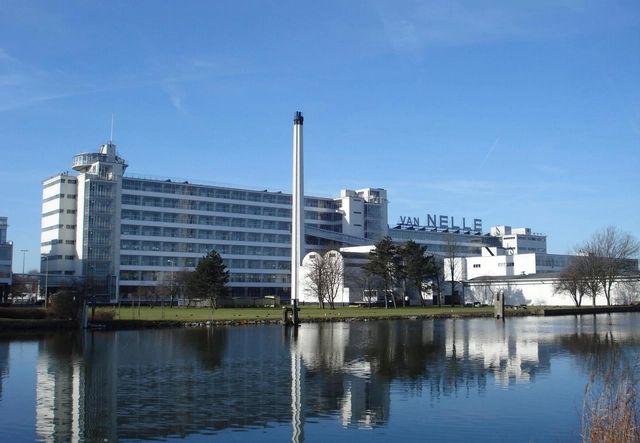
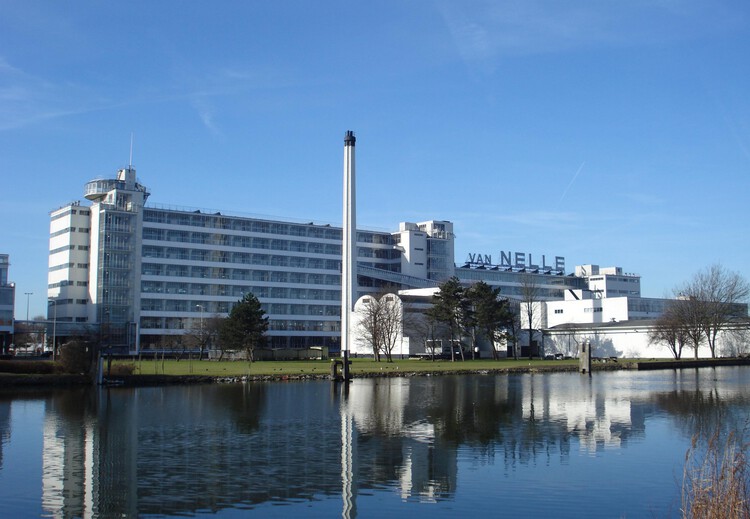
The Van Nelle Factory, located in Rotterdam, is one of the most significant examples of Modernist Industrial Architecture. Designed by Johannes Andreas Brinkman and Leendert van der Vlugt between 1925 and 1931, with the involvement of Mart Stam — a pioneer in modernist furniture design and architecture — the factory was conceived as a progressive and functional building for processing coffee, tea, and tobacco.

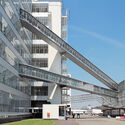
Envisioned as a "daylight factory", the Van Nelle complex introduced revolutionary architectural and social concepts for its time. By integrating glass, steel, and concrete into an open, rational layout, it demonstrated how design could transform industrial processes while improving the lives of the people within. It was not merely a space for production but a symbol of optimism, representing the potential of architecture to reshape industries and communities.

Van Nelle Factory: The Story Behind a Modernist Icon in Rotterdam - Image 1 of 4Van Nelle Factory: The Story Behind a Modernist Icon in Rotterdam - Image 2 of 4Van Nelle Factory: The Story Behind a Modernist Icon in Rotterdam - Image 3 of 4Van Nelle Factory: The Story Behind a Modernist Icon in Rotterdam - Image 4 of 4Van Nelle Factory: The Story Behind a Modernist Icon in Rotterdam - More Images+ 37

From Patina to Purpose: 15 Projects that Explore Corten Steel as a Design Element

Subscriber Access | 

In architectural design, materials convey narratives, shaping how spaces are perceived and experienced. Weathering steel, often known by its genericized trademark name, Corten steel, stands out for its ability to evolve, transforming into a medium that tells its own story. It represents a group of steel alloys that form a stable external layer of rust that replaces the need for paint to protect the steel while allowing it to develop in time. Its weathered patina serves as more than a functional shield; it becomes an aesthetic language, a testament to the interplay between architecture and nature. This ever-changing surface bridges the ephemeral and the enduring, offering architects a material that grows richer with age.

From Patina to Purpose: 15 Projects that Explore Corten Steel as a Design Element - Image 1 of 4From Patina to Purpose: 15 Projects that Explore Corten Steel as a Design Element - Image 4 of 4From Patina to Purpose: 15 Projects that Explore Corten Steel as a Design Element - Image 2 of 4From Patina to Purpose: 15 Projects that Explore Corten Steel as a Design Element - Image 3 of 4From Patina to Purpose: 15 Projects that Explore Corten Steel as a Design Element - More Images+ 13

The Role of Aesthetics in Modern Office Design: Insights from the XYZ Collection

 | Sponsored Content

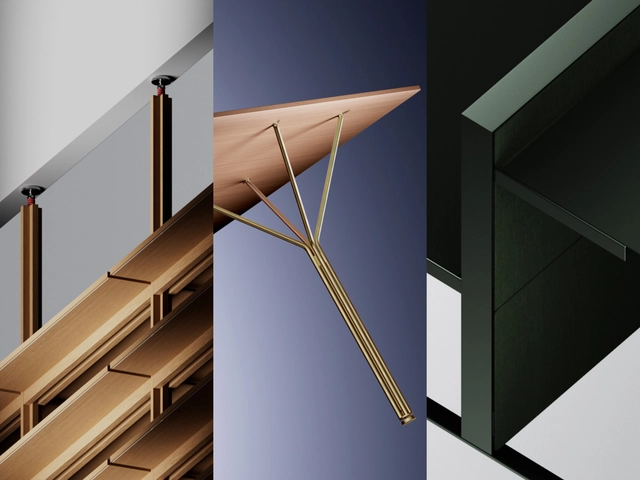
In today's rapidly changing professional landscape, the office is no longer a static environment. As companies continue to embrace hybrid working models and flexible teams, the need for adaptable, people-centric workspaces has never been greater. In collaboration with Foster + Partners Industrial Design, UniFor has responded to this shift with the XYZ collection, a suite of modular, versatile furniture designed to meet the dynamic needs of contemporary workplaces.

The collection features three key products: the X Shelving System, the Y Table, and the Z Desk—each designed to support a range of working styles while maintaining a harmonious visual language.

Architects and Boats: A Love Affair

The relationship between architecture and naval design has been a fascinating interplay of form and function that has evolved significantly. Both disciplines have a shared history of innovation, aesthetics, and functionality that have informed and inspired each other. This "love affair" has seen architects drawing inspiration from boats, particularly in the modernist era when ships' streamlined, efficient designs influenced the aesthetic of buildings. Conversely, architectural principles have also been adapted to enhance the functionality and form of boats, demonstrating a reciprocal exchange that continues to shape both disciplines.

Architects and Boats: A Love Affair - Image 1 of 4Architects and Boats: A Love Affair - Featured ImageArchitects and Boats: A Love Affair - Image 2 of 4Architects and Boats: A Love Affair - Image 3 of 4Architects and Boats: A Love Affair - More Images+ 29

A Chair's Anatomy: The Ergonomics of Anti-Gravity Office Seating

 | Sponsored Content

Sitting for extended periods is an everyday reality in many workspaces, which can lead to a dangerously sedentary working day. This makes office chair design a crucial element for both productivity and overall well-being. Ergonomic design takes into account the human body's needs, including posture, comfort, support, and health. A good ergonomic chair is adjustable, allowing for better control and customized settings that support the spine and promote a natural position for the body's joints. An even better ergonomic chair employs technology to accommodate all seating nuances—including occasional slouching, neck rest, and continuous hip movements, among others—, helping to maintain good body posture at all times.

Italian Architect and Designer Gaetano Pesce Passes Away at 84

Italian architect and industrial designer Gaetano Pesce has passed away at the age of 84, as announced today on the creator's official Instagram page. Known for the famous UP5 Chair (2000) by B&B Italia which can be compressed like a sponge, and the Organic Building in Osaka, Japan (1993), with a vertical garden irrigated by a complex, computer-controlled hydration system, Pesce dedicated over six decades to his craft, accumulating a portfolio that spanned architecture, product design, and art.

During Milan Design Week 2024, a monographic exhibition titled "Nice to See You" showing at Biblioteca Ambrosiana, is set to feature unreleased works of Gaetano Pesce. Additionally, Gaetano was presenting "L’Uomo Stanco" an outdoor installation in Piazza San Pio XI.

"My Photographs Are a Celebration of the Making of Things": In Conversation with Christopher Payne

This article was originally published on Common Edge.

Christopher Payne’s fascination with factories goes back decades. As an architecture student at the University of Pennsylvania in the 1990s, Payne had the good fortune to find a summer job with an agency inside the National Park Service called the Historic American Buildings Survey. “They sent teams of architecture students, historians, and photographers to document all kinds of projects,” he says. “We documented grain elevators in Buffalo, cast iron bridges in Ohio, a power plant in Alabama, and national parks in Utah. That experience instilled a deep appreciation for industrial architecture.” After graduation, he worked for several years as an architect in New York City before transitioning full-time to photography. His previous books include New York’s Forgotten Substations: The Power Behind the Subway; Asylum: Inside the Closed World of State Mental Hospitals; North Brother Island: The Last Unknown Place in New York City; and Making Steinway: An American Workplace. Last month, Payne gave the School of Visual Art’s Ralph Caplan Memorial Lecture, and shortly afterward I reached out to him to talk about his most recent book, Made in America (Abrams), his long love affair with factories, and the photographic process.

"My Photographs Are a Celebration of the Making of Things": In Conversation with Christopher Payne - Image 1 of 4"My Photographs Are a Celebration of the Making of Things": In Conversation with Christopher Payne - Image 2 of 4"My Photographs Are a Celebration of the Making of Things": In Conversation with Christopher Payne - Image 3 of 4"My Photographs Are a Celebration of the Making of Things": In Conversation with Christopher Payne - Image 4 of 4My Photographs Are a Celebration of the Making of Things: In Conversation with Christopher Payne - More Images+ 9

The Renaissance of the Sofa: Innovations, Atypical Shapes, and Anthropometry

 | Sponsored Content

The earliest vestiges of furniture in society can be traced back to the Fourth Dynasty of Egypt when the armchair of Queen Hetepheres I (ca. 2600 BC) was discovered. This armchair marked a significant milestone in the history of furniture. It is not surprising, therefore, that the chronology of furniture is intertwined with architectural, pictorial, and sculptural expressions of the time, where these elements often act as witnesses and, in exceptional cases, as central objects in the history of art and design.

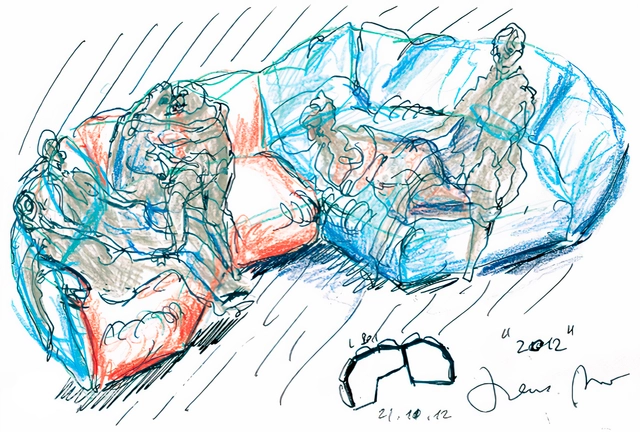
Furniture consists of everyday objects designed to meet specific needs in our daily lives. However, sometimes they transcend their practical function and take on an autonomous presence. A piece of furniture has no nobler purpose than its interaction with human beings, therefore, separating these objects from their utilitarian dimension becomes an act of disruption. As a result, designers such as Francesco Binfaré have described sofas as “The most mysterious object amongst the furniture populating the interior design universe. In this context, Edra creates unique objects that blend art and industrial production, reflecting contemporary domestic landscapes and experimenting with new shapes and materials.

Exploring the Industrial Aesthetic in Interiors Through Corten Tiles

 | Sponsored Content

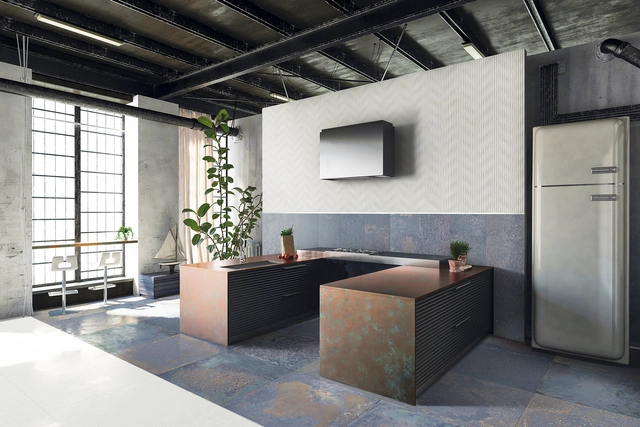
In recent decades, the industrial style has strongly attracted the attention of architects, designers and homeowners. However, few know its true origin. Following the rise of industrialization in the United States during the 1950s, many old industrial spaces, such as warehouses or factories, were abandoned in areas like New York's Soho. As a consequence, prices fell and became affordable housing alternatives for city dwellers. These new repurposed spaces were characterized by an aesthetic that mixed raw and exposed materials with modern elements and technologies, generating a strong aesthetic identity that was as rustic as it was sophisticated.

Today, industrialized-looking interiors are highly appreciated for the character of their materials, providing different shades, textures, brightness and opacity. There are, however, new materials that blend this weathered aesthetic with innovations that facilitate their installation and maintenance. Let's review the case of Aparici's Corten Tile Collection and its possible applications in different spaces of the home.

Interior Design Aesthetics: 22 Projects that Explore Trending Interior Styles

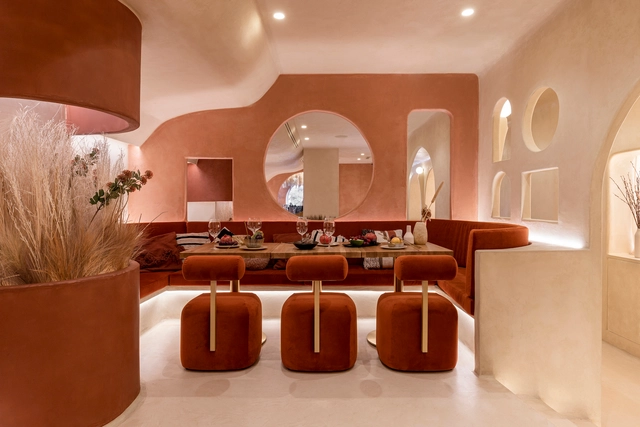
"The details are not the details. They make the design." – Charles Eames. Creating attractive spaces that anticipate the needs of users relies on several factors: scale, circulation, functionality, and comfort. However, the past few decades have proved that the visual appeal of a project is also greatly important, and can make or break the interior space. In this interior focus, we will explore the aesthetic side of interior design, looking at popular styles across the world and how architects and designers use elements such as color, furniture, accessories, and finishes to define their spatial identity. 

Interior Design Aesthetics: 22 Projects that Explore Trending Interior Styles - Image 1 of 4Interior Design Aesthetics: 22 Projects that Explore Trending Interior Styles - Image 2 of 4Interior Design Aesthetics: 22 Projects that Explore Trending Interior Styles - Image 3 of 4Interior Design Aesthetics: 22 Projects that Explore Trending Interior Styles - Image 4 of 4Interior Design Aesthetics: 22 Projects that Explore Trending Interior Styles - More Images+ 19

Charles and Ray Eames: The Designers Who Shaped the Course of Modernism

Subscriber Access | 

Charles (June 17, 1907 – August 21, 1978) and Ray Eames (December 15, 1912 – August 21, 1988) are best known for their personal and artistic collaboration and their innovative designs that shaped the course of modernism. Their firm worked on a diverse array of projects, with designs for exhibitions, furniture, houses, monuments, and toys. Together they developed manufacturing processes to take advantage of new materials and technology, aiming to produce high-quality everyday objects at a reasonable cost. Many of their furniture designs are considered contemporary classics, particularly the Eames Lounge & Shell Chairs, while the Eames House is a seminal work of architectural modernism.

San Francisco Design Week 2020

The 14th Annual SAN FRANCISCO DESIGN WEEK (SFDW), which attracts annually 60,000 visitors from around the world, is returning this year as the first regional virtual design festival. The all-online program kicks off June 15-25, celebrating with the provocative theme “Intentional Distortions” which is now more relevant than ever.

PlayHouse Competition - Call for Entries

Play is an essential part of all our lives, whether child or adult. Be it playing sports, a board game or simply sharing jokes with friends, play is just as important to adults as building a den or playing dress-up is to a child.