Smart homes leverage technology to provide residents with increased convenience, savings, comfort, and security. With automated environments, household routines are streamlined. What once seemed like a distant future is now within reach as smart devices have become more accessible. They enable a new level of interaction between the home and its inhabitants through Wi-Fi and Bluetooth connections.
https://www.archdaily.com/1010597/how-to-create-a-smart-home-a-complete-guide-for-beginners-in-home-automationArchDaily Team
Artificial intelligence, machine learning and generative design have begun to shape architecture as we know it. As systems and tools to reimagine the built environment, they present diverse opportunities to rethink traditional workflows. Designers also fear they may inversely affect practice, limiting the services of the architect. Looking to building technologies, new companies are creating software and projects to explore the future of design.
The renowned Mexican architect Miguel Ángel Aragonés presented ten years of research materialized in his most recent project entitled "Casa PI" whose acronym translates to a new "intelligent prefabricated" construction project. Patented in Switzerland, this system seeks to break the housing paradigm from an integral design that combines the structure of the house with the furniture and new automation technologies in architecture.
https://www.archdaily.com/965480/mexican-architect-miguel-angel-aragones-patents-construction-system-with-intelligent-prefabricated-technologyArchDaily Team
Videos
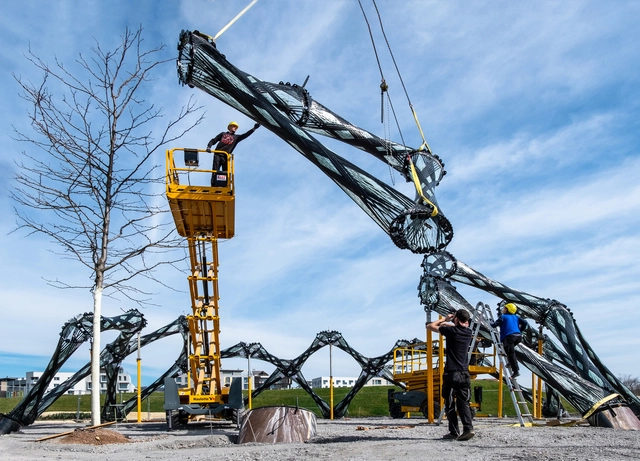
Courtesy of ICD/ITKE University of Stuttgart
Efficiency in the construction site by reducing waste and lowering costs, improving safety through better planning, and introducing machines to assist in the construction and design process. These benefits can be achieved through automation in architecture, but for technology to reach this point of empowering and supporting creativity while also improving efficiency, we have come a long way. To understand how automation developed and the prospects it offers for architecture, here is a brief timeline.
Automation is everywhere around us - our homes, furniture, offices, cars, and even our clothing; we have become so accustomed to being surrounded by automated systems that we have forgotten what life was like without them. And while automation has noticeably improved the quality of interior spaces with solutions like purified air and temperature control, nothing compares to the natural cool breeze of mother nature.
But just like everything else in architecture, there is no one size fits all; what works in Tanzania cannot work in Switzerland or Colombia. This is due to several reasons, such as the difference in wind direction, average temperature, spatial needs, and environmental restrictions (or lack thereof). In this article, we take a look at natural ventilation in all its forms, and how architects have employed this passive solution in different contexts.
We’re in an age of unprecedented technological innovation. The architecture and construction industries are increasingly becoming more and more automated, as firms seek to take full advantage of new machinery and new ways of working to make the design process more efficient. With this increase in automation, however, comes lots of questions too. Will robots ever replace architects?Will the near future see a fully automated construction industry? A pertinent question, too, is the complicated case of automation and the individuality of design – does automation take away from the individuality of design?
In theory, parking spaces serve only one function: park a car safely until it is used again, and in terms of design, car garages are flexible and straightforward, requiring minimal design interventions. However, parking spaces nowadays are no longer considered one-function buildings. The emptier the space, the more potential it has to integrate additional functions. Architects and urban planners have redefined traditional parking lots, adding recreational and commercial facilities to the structure. Instead of a typical structured grid plan with yellow and white markings on the floor, we are now seeing inviting structures that incorporate green facades and rooftop playgrounds, car washes, cafeterias, and work/study zones.
In a 2016 survey of 400 employees in the U.S., Saint-Gobain found that office building occupants commonly complained about poor lighting, temperature, noise, and air quality, leading the company to deduce a need for improved lighting and thermal comfort in buildings while also maintaining low energy consumption and freedom of design for architects and clients. Their solution was SageGlass, an innovative glass created first in 1989 and developed over the course of the past three decades. The glass, which features dynamic glazing protecting from solar heat and glare, simultaneously optimizes natural light intake. A sustainable and aesthetic solution, SageGlass’ adaptability to external conditions dispels the need for shutters or blinds.
https://www.archdaily.com/957605/more-daylight-but-less-glare-and-heat-how-does-automatically-tintable-glass-workLilly Cao
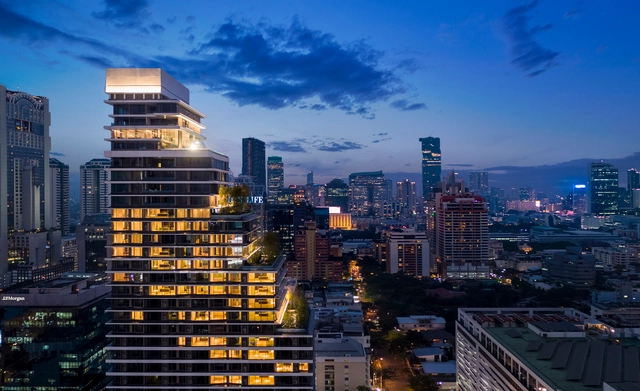
Multifamily housing in urban environments provides social, economic, and environmental benefits to both individual residents and cities as a whole. Kicked into overdrive after the 2008 financial crisis, demand for multifamily housing has since continued to rise and remains strong today. Generations Y and Z are the youngest urbanized group of adults and these young professionals are fueling much of the demand for compact living in city centers. Though the younger generations are the ones driving the changes, the result is expected to be more secure, convenient living for everyone.
Home automation has long been associated with high costs, a burdening assembly time, and a cumbersome process that impelled us to discard the idea of automating projects. However, these days are long gone.
With lower costs and easier assembly, today, developing a new project without home automation seems somewhat absurd. Below, with the help of AVE Chile, we've compiled a series of tips to help you incorporate domotics into your next project.
Before the pandemic, the world was already facing a series of global transformations in the field of construction, where emerging countries were at the forefront of a powerful economic shift. As the world's population is expected to reach the 10-billion milestone before 2100, the construction sector should be able to understand and adapt to the megatrends that are reshaping the globe.
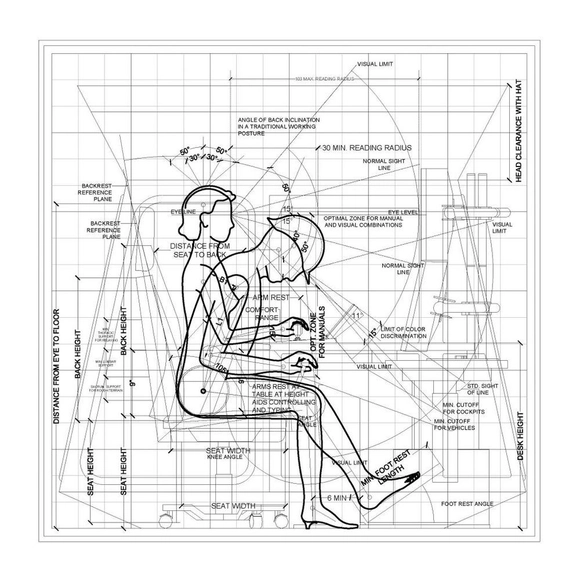
Anthropometric Data - Crane Cabin Operator vs Remote Control Operator. Drawing by Het Nieuwe Instituut 2017. Image Courtesy of Het Nieuwe Instituut
In 2013, Michael Osborne and Carl Benedikt Frey ranked 702 occupations according to their probability of computerisation in the near future, from least probable (“recreational therapist”) to most probable (“telemarketers”). "Architectural and Engineering Managers” was ranked seventy-third, and “architects” eighty-second, while “architectural and civil drafters” ranked three-hundred and fifth. Clearly, technological advancements in fields such as machine learning and robotics are rapidly confronting us with issues of changing professional demand and qualifications. In this essay, Maurizio Ferraris turns the table on us: what if what we should be concerned with is not maintaining the human element in labor as production, but rather recognising human labor as consumption? Expanding on the arguments of his 2012 book, “Lasciar tracce: documentalità e architettura,” the author sees in automation an extraordinary opportunity in defining a renewed centrality of the human element, as the production of value associated with digital exchange is read through the three concepts of invention, mobilization and consumption.
Smart homes, the Internet of Things, and contactless technology have become an indelible part of the architecture and interior design industries, with automated lighting, smart HVAC units, and speakers like Alexa or Google Home becoming a principal part of the modern upper middle class home. As new devices and competing systems are continually released, we list some of the most popular home technologies developed by Lutron, alongside tips for how to integrate and choose among them.
https://www.archdaily.com/941241/how-to-design-a-smart-and-contactless-homeLilly Cao
In the past 30 days, Amazon searches for touchless products such as automatic shoe cover dispensers, touch free soap dispensers, contactless thermometers, and hand free faucets have increased by up to 2000%. As anxieties over the spread of COVID-19 through contact or shared surfaces continue to plague the general population, these technologies offer a potential solution for offices or organizations struggling to stay operational without increasing the risk of viral spread.
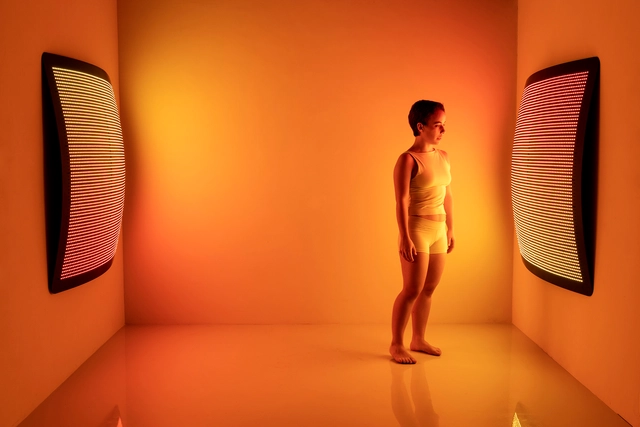
With the aim of creating immersive environmental experiences in interior spaces, the design studio Aqua Creations has developed Manta Ray Light, a lighting installation built with responsive RGB LED technology that mixes the colors red, green, and blue to generate more than 16 million light tones. By presetting its color spectrum, offering a range of brightness settings on a scale of 0.1 to 100%, and even loading images and videos into its internal memory, the system allows its user to add color and movement to expressive spaces, or deliver a feeling of warmth and concentration to intimate and private rooms.
In 2018, the UN released an article stating that 55% of the world’s population already lived in urban areas, predicting that by 2050 this percentage would reach 68%. This trend toward greater urbanization carries with it several implications regarding environmental degradation and social inequality. According to National Geographic, urban growth increases air pollution, endangers animal populations, promotes the loss of urban tree cover, and heightens the likelihood of environmental catastrophes such as flash flooding. These health hazards and catastrophic phenomena may be more likely to impact poorer populations, as larger cities tend to demonstrate higher rates of economic inequality and uncontrolled growth tends to produce unequal distributions of space, services, and opportunities.
To mitigate these negative effects of urbanization, designers are increasingly prioritizing sustainability and the maximization of available space – allowing more people to occupy less space with a smaller footprint.
There has been a lot of talk about how automation will affect the way we do architecture, and what our role will be when technologies reach our own desks and work tables. In recent years, while we have seen how robotics and advanced technology are gaining ground in construction and manufacturing, new tools are emerging that promise to automate the design process itself. These would allow us to quickly and easily configure living spaces and their dimensions in the initial stages of a project, using simulations and artificial intelligence.
Will this automation be the future of architectural design? We talked with Jesper Wallgren, architect and founder of Finch 3D, to better understand this tool and its possible scope.



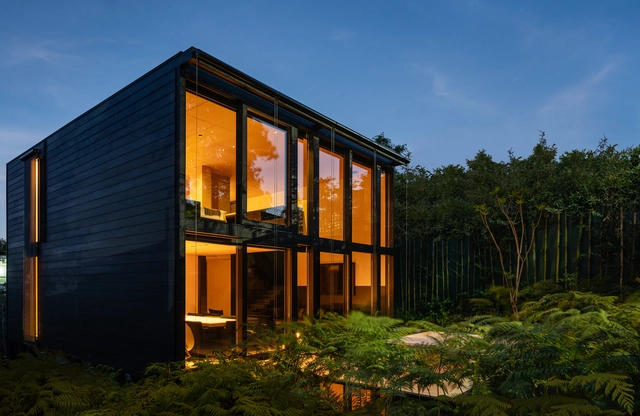

















.jpg?1587954414 "NUBO Kindergarten / PAL Design. Image © Michelle Young, Amy Piddington")







.jpg?1583859382&format=webp&width=640&height=580)




.jpg?1583859382)