1. ArchDaily
  2. Heritage Conservation

Heritage Conservation: The Latest Architecture and News

Urban Transformation of San Salvador: Contemporary Placemaking in Central America

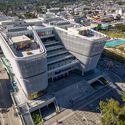
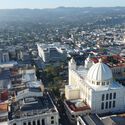
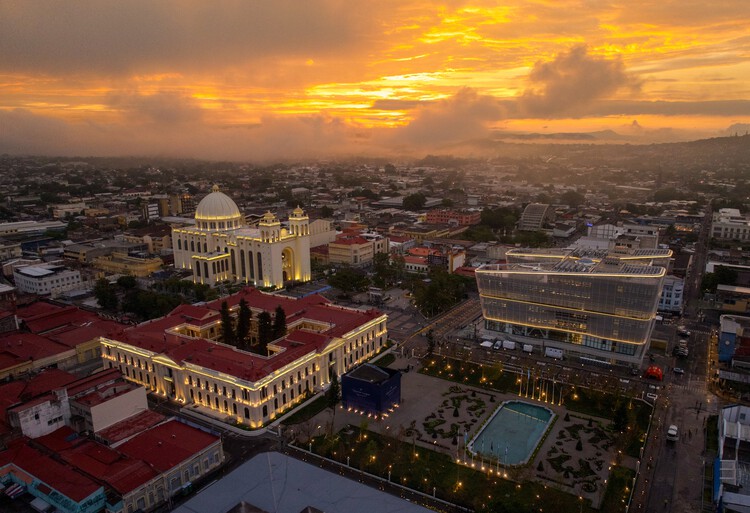
Historic center renewal has become a recurring strategy in Central American cities seeking to reassert the symbolic, economic, and functional relevance of their traditional cores. These processes often combine physical rehabilitation, institutional investment, and stricter control over public space. San Salvador offers a recent and instructive case, which allows for understanding of how interventions in inherited civic spaces balance infrastructure improvement with heritage conservation and social regulation. It also enables the assessment of how these choices resonate within broader debates on urban transformation in the region.

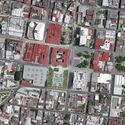
Urban Transformation of San Salvador: Contemporary Placemaking in Central America - Image 1 of 4Urban Transformation of San Salvador: Contemporary Placemaking in Central America - Image 2 of 4Urban Transformation of San Salvador: Contemporary Placemaking in Central America - Image 3 of 4Urban Transformation of San Salvador: Contemporary Placemaking in Central America - Image 4 of 4Urban Transformation of San Salvador: Contemporary Placemaking in Central America - More Images+ 5

Saving the City Fabric: Blanche Lemco van Ginkel and the Preservation of Old Montreal

Subscriber Access | 

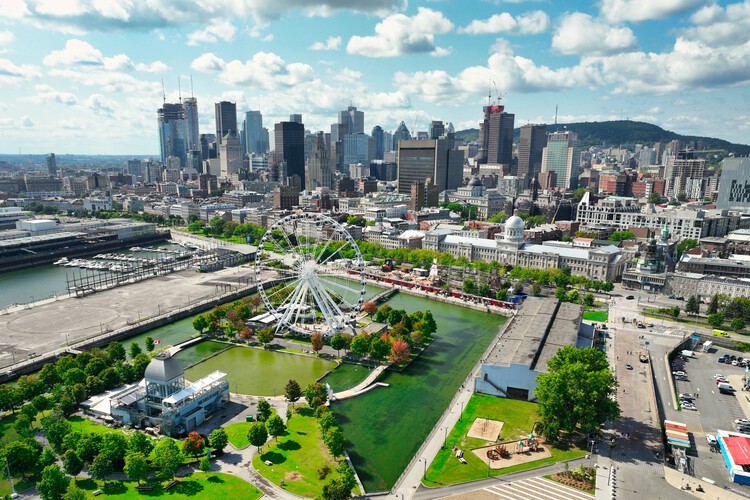
The architectural history of North American cities in the 20th century is often characterized by the pursuit of urban renewal. In the United States, Boston, Portland, and San Francisco are just some examples of when municipal governments prioritized high-speed vehicular infrastructure over the existing urban fabric. In Canada, Montreal would have followed this trajectory if not for the intervention of several figures throughout its history, most notably Blanche Lemco van Ginkel (1923–2022). A Harvard-trained planner and architect who, along with her husband Sandy Van Ginkel, advocated for the preservation of urban heritage while applying the principles of modernist infrastructure.

Saving the City Fabric: Blanche Lemco van Ginkel and the Preservation of Old Montreal - Image 1 of 4Saving the City Fabric: Blanche Lemco van Ginkel and the Preservation of Old Montreal - Image 5 of 4Saving the City Fabric: Blanche Lemco van Ginkel and the Preservation of Old Montreal - Image 2 of 4Saving the City Fabric: Blanche Lemco van Ginkel and the Preservation of Old Montreal - Image 3 of 4Saving the City Fabric: Blanche Lemco van Ginkel and the Preservation of Old Montreal - More Images+ 1

"Full of People and Alive Once Again": In Conversation With Holcim Award Grand Prize Winner RIWAQ – Centre for Architectural Conservation

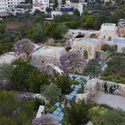
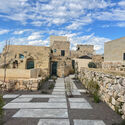
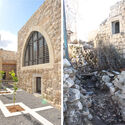
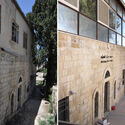
Qalandiya: the Green Historic Maze, developed by RIWAQ – Centre for Architectural Conservation, has been awarded the Grand Prize at the Holcim Foundation Awards 2025, recognizing its sensitive and deeply contextual approach to heritage conservation in Palestine, selected among the 20 winners of this year's edition. Located in Qalandiya, north of Jerusalem, the project reactivates a historic village center long affected by political fragmentation, neglect, and spatial disconnection. Through an incremental rehabilitation strategy, the project restores deteriorated structures using traditional knowledge, local stone masonry, and native materials, transforming abandoned fabric into active public spaces while reinforcing environmental resilience through passive climate strategies and landscape-based infrastructure.
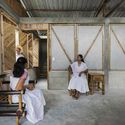
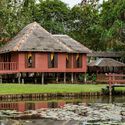
"Full of People and Alive Once Again": In Conversation With Holcim Award Grand Prize Winner RIWAQ – Centre for Architectural Conservation - Image 1 of 4"Full of People and Alive Once Again": In Conversation With Holcim Award Grand Prize Winner RIWAQ – Centre for Architectural Conservation - Image 2 of 4"Full of People and Alive Once Again": In Conversation With Holcim Award Grand Prize Winner RIWAQ – Centre for Architectural Conservation - Image 3 of 4"Full of People and Alive Once Again": In Conversation With Holcim Award Grand Prize Winner RIWAQ – Centre for Architectural Conservation - Image 4 of 4Full of People and Alive Once Again: In Conversation With Holcim Award Grand Prize Winner RIWAQ – Centre for Architectural Conservation - More Images+ 5

The Egg Performing Arts Center Reopens Following Six-Month Restoration in Albany, New York

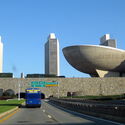
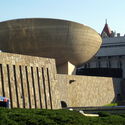
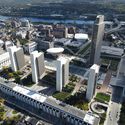
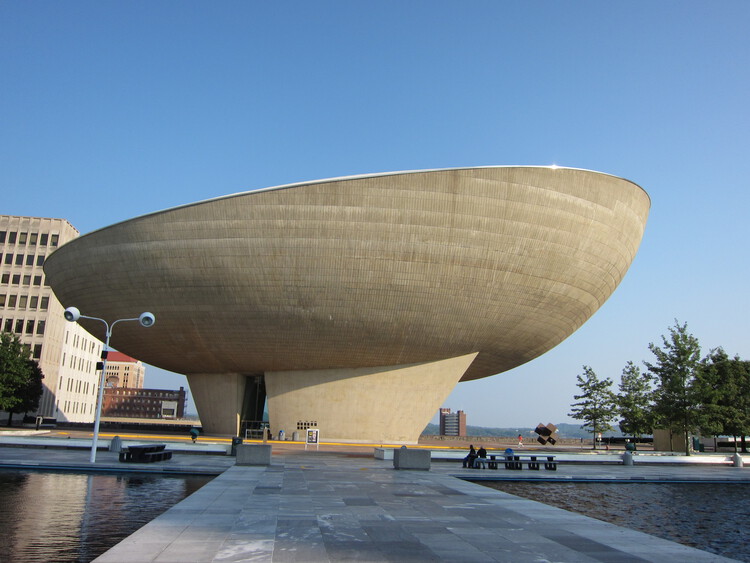
The Egg is a performing arts centre located in Albany, within New York's Empire State Plaza, designed by the North American firm Harrison & Abramovitz. Construction began in 1966 and was completed twelve years later, in 1978, with the aim of hosting a broad range of cultural events and performances for New York State residents. Drawing inspiration from Brazilian modernism, the domed, egg-like concrete structure stands out as a striking counterpoint within an otherwise rational urban ensemble. Surrounded by state government towers set in an open plaza and clad in stone, the building's exposed concrete, its seemingly suspended form, and pronounced curved geometry position it as a late example of modernist Brutalism. The venue is currently undergoing restoration and, after six months of renovations, is set to reopen on January 8, 2026, in what has been described as a "refreshed and reimagined" space.

The Egg Performing Arts Center Reopens Following Six-Month Restoration in Albany, New York - Image 1 of 4The Egg Performing Arts Center Reopens Following Six-Month Restoration in Albany, New York - Image 2 of 4The Egg Performing Arts Center Reopens Following Six-Month Restoration in Albany, New York - Image 3 of 4The Egg Performing Arts Center Reopens Following Six-Month Restoration in Albany, New York - Image 4 of 4The Egg Performing Arts Center Reopens Following Six-Month Restoration in Albany, New York - More Images

Palestinian Architect Suad Amiry Wins 2025 Great Arab Minds Award in Architecture and Design

Palestinian architect Suad Amiry has been awarded the 2025 Great Arab Minds Award in the Architecture and Design category. Founder and director of the Riwaq - Centre for Architectural Conservation, Amiry was recognised for her long-standing work in documenting, preserving, and reusing Palestinian architectural heritage through conservation practices that link historic structures with contemporary community needs. Her approach positions architecture as both a repository of collective memory and an active social framework, emphasising the role of heritage in everyday urban and rural life.

Palestinian Architect Suad Amiry Wins 2025 Great Arab Minds Award in Architecture and Design - Image 1 of 4Palestinian Architect Suad Amiry Wins 2025 Great Arab Minds Award in Architecture and Design - Image 2 of 4Palestinian Architect Suad Amiry Wins 2025 Great Arab Minds Award in Architecture and Design - Image 3 of 4Palestinian Architect Suad Amiry Wins 2025 Great Arab Minds Award in Architecture and Design - Image 4 of 4Palestinian Architect Suad Amiry Wins 2025 Great Arab Minds Award in Architecture and Design - More Images+ 3

Frank Lloyd Wright’s Fountainhead Residence Purchased by the Mississippi Museum of Art and Prepared for Public Tours

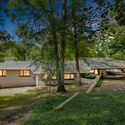
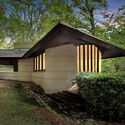
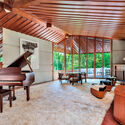
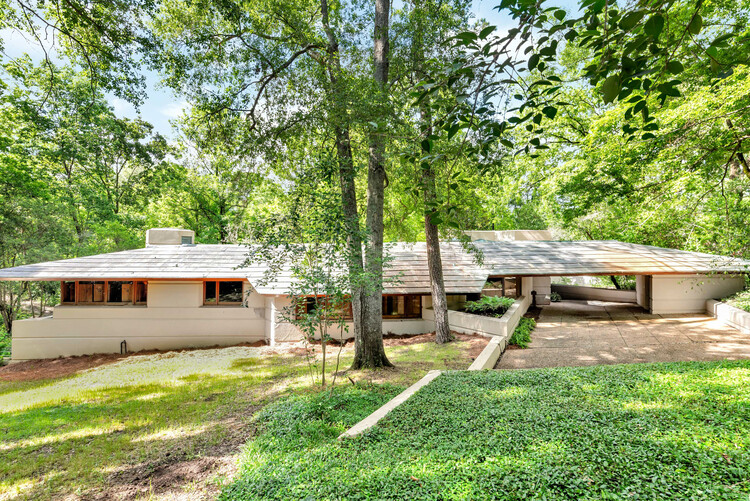
On November 20, 2025, the Mississippi Museum of Art (MMA) confirmed the purchase of Fountainhead, a house designed by Frank Lloyd Wright in 1948 and completed in 1954. The renowned modernist architect designed the residence and its furnishings for oil businessman J. Willis Hughes, who lived there with his family until 1980. Established in 1911, the MMA is the largest art museum in the state of Mississippi, offering exhibitions, public programs, artistic and community partnerships, educational initiatives, and opportunities for exchange year-round through a permanent collection of paintings, photography, multimedia works, and sculpture. The purchase is part of the Museum's goal to embed itself in neighborhoods across the city in ways that support its community-building priorities, making the architectural landmark available to the public for tours with reservations. The initiative is inspired by institutions such as the Crystal Bridges Museum of American Art, which acquired the Wright-designed Bachman-Wilson House in 2015.

Frank Lloyd Wright’s Fountainhead Residence Purchased by the Mississippi Museum of Art and Prepared for Public Tours - Image 1 of 4Frank Lloyd Wright’s Fountainhead Residence Purchased by the Mississippi Museum of Art and Prepared for Public Tours - Image 2 of 4Frank Lloyd Wright’s Fountainhead Residence Purchased by the Mississippi Museum of Art and Prepared for Public Tours - Image 3 of 4Frank Lloyd Wright’s Fountainhead Residence Purchased by the Mississippi Museum of Art and Prepared for Public Tours - Image 4 of 4Frank Lloyd Wright’s Fountainhead Residence Purchased by the Mississippi Museum of Art and Prepared for Public Tours - More Images+ 65

How Open-Source Toolkits Are Democratizing Built Heritage

For monuments worthy of sustained admiration, conservation practices have been selectively mobilized to reinforce their prestige and secure their place at the center of heritage narratives. Structures whose vernacular ought to be passed down miss the discerning eye of the experts. Rowhouses, shopfronts, and neighborhood structures that form the fabric of our cities are often left to deteriorate beyond repair. Much more is lost, apart from aesthetics.

How Open-Source Toolkits Are Democratizing Built Heritage - Image 1 of 4How Open-Source Toolkits Are Democratizing Built Heritage - Image 2 of 4How Open-Source Toolkits Are Democratizing Built Heritage - Image 3 of 4How Open-Source Toolkits Are Democratizing Built Heritage - Image 4 of 4How Open-Source Toolkits Are Democratizing Built Heritage - More Images+ 4