1. ArchDaily
  2. Harvard Art Museums

Harvard Art Museums: The Latest Architecture and News

Looking into Lost Persian Architecture through Safavid Manuscripts

Looking into Lost Persian Architecture through Safavid Manuscripts - Image 9 of 4
Yusuf and Zulaikha (Yusuf pursued by Potiphar's wife), miniature by Behzād, 1488. Image

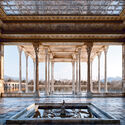
From the 14th to the 16th century, Iran had witnessed growth and affluence under the Timurid and Safavid dynasties. During this period, many mosques, palaces and pavilions were commissioned and contributed to sites of veneration and pilgrimage. However not many of these key architectural realms survived and few historical texts exist to relay the intricacies of the architecture of that time.

What remained were some dispersed manuscripts from the Shahnameh and other renowned illustrated stories or poems that represented the moral values and aesthetics of that period. Inadvertently these initial renders became the main representation of a unique and fantastic Islamic architecture.


Looking into Lost Persian Architecture through Safavid Manuscripts - Image 1 of 4Looking into Lost Persian Architecture through Safavid Manuscripts - Image 2 of 4Looking into Lost Persian Architecture through Safavid Manuscripts - Image 3 of 4Looking into Lost Persian Architecture through Safavid Manuscripts - Image 4 of 4Looking into Lost Persian Architecture through Safavid Manuscripts - More Images+ 6

Crimson Veritas: Building Architecture and History at Harvard

Subscriber Access | 

As the oldest institution of higher learning in the United States, Harvard has emerged as one of the world's most well-known universities. Organized into ten academic faculties and the Radcliffe Institute for Advanced Study, it is spread across 200 acres and centers on Harvard Yard in Cambridge. Developed along the Charles River adjacent to the Allston neighborhood of Boston, Harvard has the largest financial endowment of any academic institution. This has supported a number of different campus building projects across the university’s history.

Crimson Veritas: Building Architecture and History at Harvard - Image 1 of 4Crimson Veritas: Building Architecture and History at Harvard - Image 2 of 4Crimson Veritas: Building Architecture and History at Harvard - Image 3 of 4Crimson Veritas: Building Architecture and History at Harvard - Image 4 of 4Crimson Veritas: Building Architecture and History at Harvard - More Images+ 12

Renzo Piano’s Renovation of the Harvard Art Museums is, Years On, a Quiet, Neighbourly Triumph

Subscriber Access | 

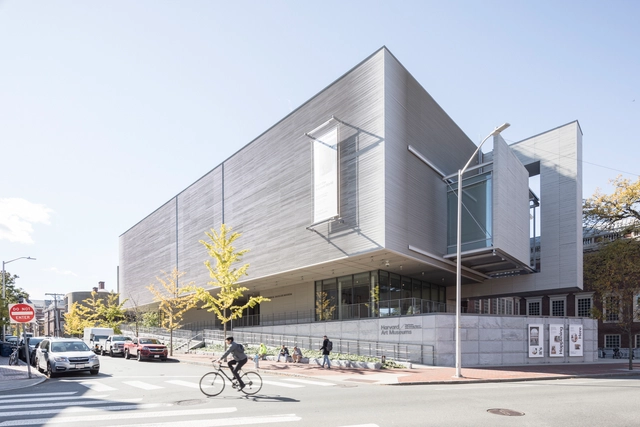
On the surface, designing a new art museum for Harvard University is a brief so straightforward that it sounds like part of university curriculum itself. The program lends itself to the type of light and airy spaces architects dream of creating; the campus site promises both steady and engaged traffic. But, for all the apparent advantages, the road to realizing Harvard’s Art Museums was a deceptively complex one - one that ultimately took six years to see realized.

Renzo Piano’s Renovation of the Harvard Art Museums is, Years On, a Quiet, Neighbourly Triumph - Image 1 of 4Renzo Piano’s Renovation of the Harvard Art Museums is, Years On, a Quiet, Neighbourly Triumph - Image 2 of 4Renzo Piano’s Renovation of the Harvard Art Museums is, Years On, a Quiet, Neighbourly Triumph - Image 3 of 4Renzo Piano’s Renovation of the Harvard Art Museums is, Years On, a Quiet, Neighbourly Triumph - Image 4 of 4Renzo Piano’s Renovation of the Harvard Art Museums is, Years On, a Quiet, Neighbourly Triumph - More Images+ 16

Harvard Museums Releases Online Catalogue of 32,000 Bauhaus Works

In anticipation of the 100th anniversary of the founding of the Bauhaus school in 2019, Harvard Art Museums has released an online catalogue of their 32,000-piece Bauhaus Collection, containing rarely seen drawings and photographs from attendees and instructors of the revolutionary German design school.

The collection features work from the likes of Mies van der Rohe, Bertrand Goldberg, Marcel Breuer, and Bauhaus-founder Walter Gropius himself, and can be navigated through a search bar and an easy-to-use set of filters, allowing you to categorize work by topic, medium, date or artist.

A Matchmaker For People and Art: Kulapat Yantrasast

Subscriber Access | 

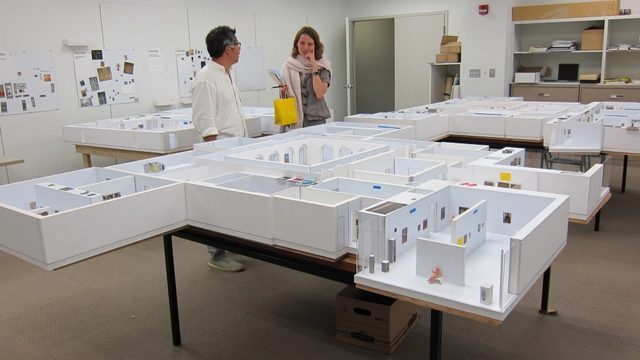
Last month we spoke with Kulapat Yantrasast, Co-Founder and Creative Director of the LA-based design firm wHY. On the heels of the opening of Harvard Art Museums - for which Yantrasast collaborated on the designs of the exhibition spaces - we wanted to learn more about his approach to designing the galleries for Harvard. “One of the things that I'm super sensitive about is the identify of the experience. Harvard, in particular, is a university museum. So first and foremost it's a place for students and faculty to spend time looking at things closely. Because of that, we want to make sure that a group of 15 people can sit or stand around an art object and could really have a discussion,” Yantrasast explained.

wHY has carried out a wide range of museum and gallery projects, including the Grand Rapids Art Museum, the Royal/T project and the renovation of the galleries at the Art Institute of Chicago. Read the full interview with Yantrasast below to learn more about the challenges of gallery design and how technology is affecting museums exhibitions.

A Matchmaker For People and Art: Kulapat Yantrasast - Image 1 of 4A Matchmaker For People and Art: Kulapat Yantrasast - Image 2 of 4A Matchmaker For People and Art: Kulapat Yantrasast - Image 3 of 4A Matchmaker For People and Art: Kulapat Yantrasast - Image 4 of 4A Matchmaker For People and Art: Kulapat Yantrasast - More Images+ 8