1. ArchDaily
  2. Gothic Revival

Gothic Revival: The Latest Architecture and News

Sweden Transports Century-Old Church Across Town to Escape Mine Expansion

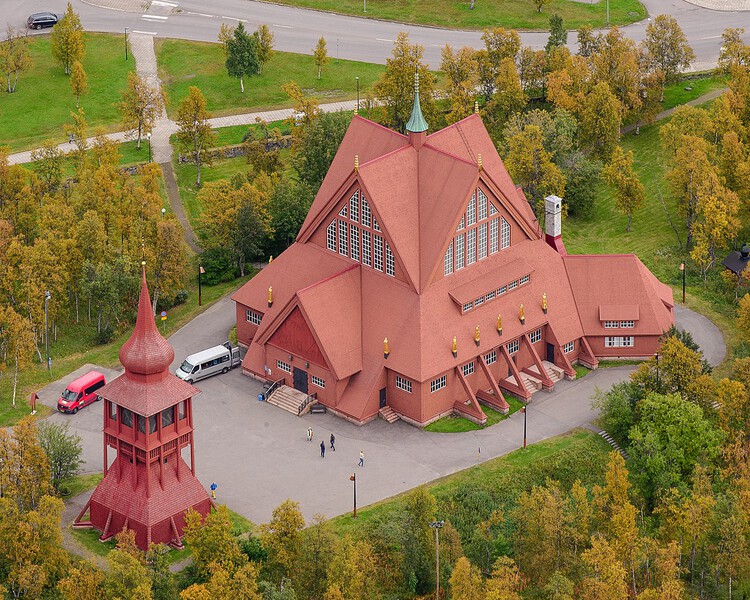
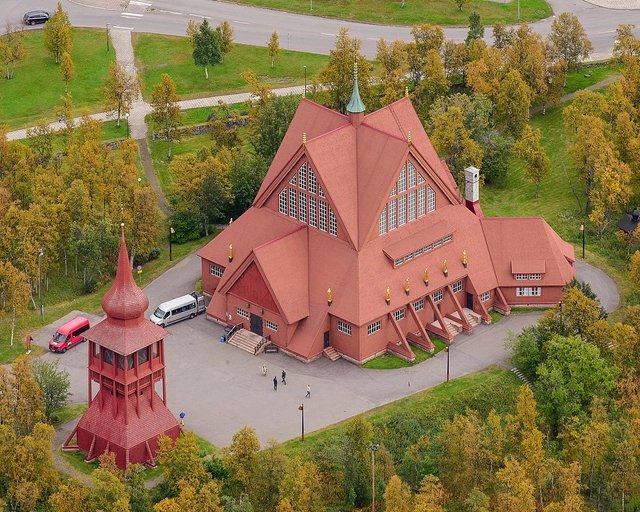
Between August 19 and 20, 2025, thousands of spectators watched as one of Sweden's largest wooden buildings was lifted onto beams and wheeled across town. The Kiruna Church, constructed between 1909 and 1912, was designed to echo the form of a Sámi hut in Sweden's far northern region, within the Arctic Circle. The building was designed by architect Gustaf Wickman, who served as the church's architect at the time, and combines elements of Gothic Revival with an Art Nouveau altar. The building, one of the city's main tourist attractions, was moved to a new location between the cemetery and the new city center to prevent damage caused by the expansion of the local mine.
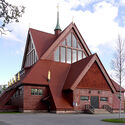

Sweden Transports Century-Old Church Across Town to Escape Mine Expansion - Image 1 of 4Sweden Transports Century-Old Church Across Town to Escape Mine Expansion - Image 2 of 4Sweden Transports Century-Old Church Across Town to Escape Mine Expansion - Image 3 of 4Sweden Transports Century-Old Church Across Town to Escape Mine Expansion - Image 4 of 4Sweden Transports Century-Old Church Across Town to Escape Mine Expansion - More Images

Enriching Architecture: Stained Glass

Subscriber Access | 

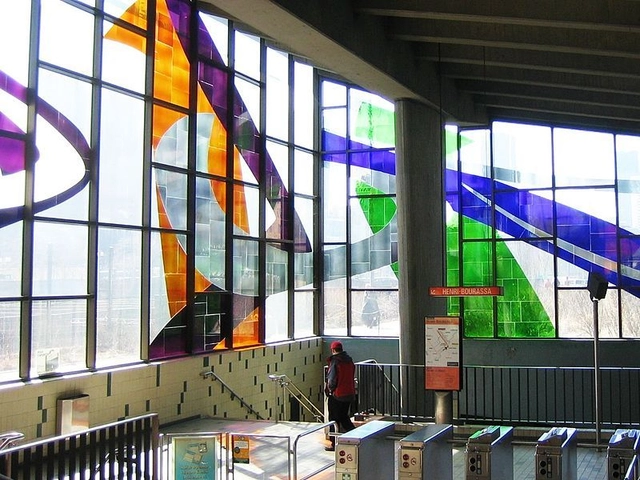
Predominantly associated with places of worship, stained glass has been used by artisans across the globe for thousands of years in an array of art ventures and installations. Intensifying architecture with vivid color, the process of stained glass refers to a particular action in which glass has been colored via metallic oxides during its manufacture, using different additives in order to create a range of hues and tones.

In terms of architectural enhancement, stained glass is often pieced together in order to produce depictions of decorative art, allowing light to filter and penetrate a particular structure or building. As a component it is both decorative and a variety of window, allowing a substantial and sufficient amount of light into a space, for atmospheric and beneficial effect. 

Enriching Architecture: Stained Glass  - Image 1 of 4Enriching Architecture: Stained Glass  - Image 2 of 4Enriching Architecture: Stained Glass  - Image 3 of 4Enriching Architecture: Stained Glass  - Image 4 of 4Enriching Architecture: Stained Glass  - More Images+ 9

The Origins and Evolution of Gothic Architecture

Subscriber Access | 

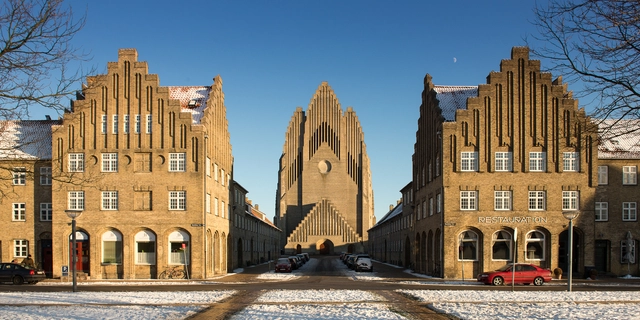
The word “Gothic” often envokes a description of mysterious homes, or a modern-day group of people who have an affinity for dark aesthetics, but what the gothic architectural style historically brought to the built environment could not have been more opposite. Gothic designs were actually created to bring more sunlight into spaces, mainly churches, and led to the design and construction of some of the world’s most iconic buildings.

AD Classics: Red House / William Morris and Philip Webb

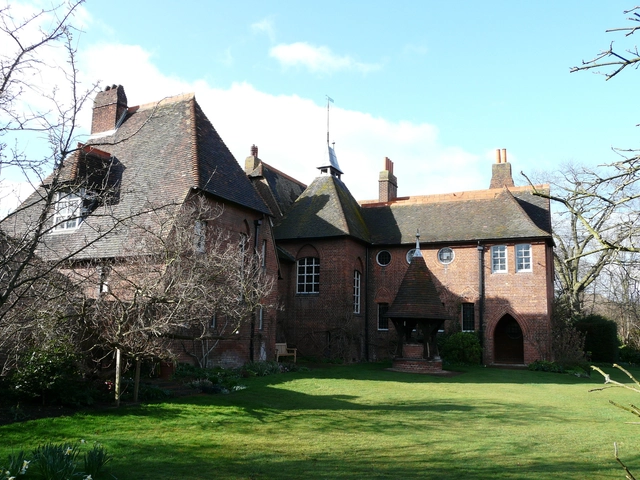
In the heart of a suburb just east of London stands an incongruous red brick villa. With its pointed arched window frames and towering chimneys, the house was designed to appear  like a relic of the Middle Ages. In reality, its vintage dates to the 1860’s. This is Red House, the Arts and Crafts home of artist William Morris and his family. Built as a rebuttal to an increasingly industrialized age, Red House’s message has been both diminished by the passage of time and, over the course of the centuries, been cast in greater relief against its context.

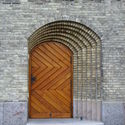
AD Classics: Red House / William Morris and Philip Webb - ResidentialAD Classics: Red House / William Morris and Philip Webb - Residential, Door, Facade, ArchAD Classics: Red House / William Morris and Philip Webb - ResidentialAD Classics: Red House / William Morris and Philip Webb - Residential, Garden, FacadeAD Classics: Red House / William Morris and Philip Webb - More Images+ 9

How Rebuilding Britain’s Houses of Parliament Helped Create Clean Air Laws

MIT has published new research revealing how the reconstruction of the British Houses of Parliament paved the way for legislation to tackle air pollution in Victorian London. Through original archival work into the 1840-1870 reconstruction, MIT architectural historian Timothy Hyde has revealed that work on the Parliament building was so hindered by air pollution that the British government ordered an inquiry into the effects of the atmosphere on new buildings.

How Rebuilding Britain’s Houses of Parliament Helped Create Clean Air Laws - Featured ImageHow Rebuilding Britain’s Houses of Parliament Helped Create Clean Air Laws - Image 1 of 4How Rebuilding Britain’s Houses of Parliament Helped Create Clean Air Laws - Image 2 of 4How Rebuilding Britain’s Houses of Parliament Helped Create Clean Air Laws - Image 3 of 4How Rebuilding Britain’s Houses of Parliament Helped Create Clean Air Laws - More Images

Uncovering Viollet-le-Duc's "Unexpected" Career

Uncovering Viollet-le-Duc's "Unexpected" Career - Image 2 of 4
Half of a rhombohedron. Remains of a crystal system separating the glacier of Envers Blaitière Vallée Blanche (Viollet-le-Duc). Image © Médiathèque de l’architecture & du patrimoine

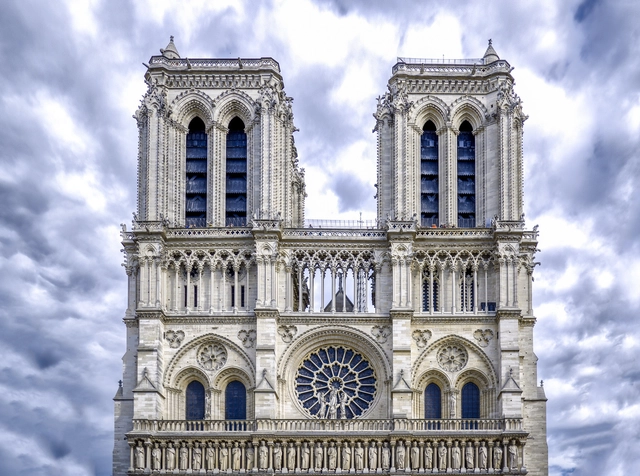
Eugène Viollet-le-Duc, the French architect most famous for the 'restoration' of Notre-Dame de Paris, is a person we unequivocally associate with 19th century Gothic Revival. Although there is no doubt that his interpretive restorations of medieval French monuments were some of his greatest achievements, a new exhibition at Paris' Cité de l'architecture et du patrimoine seeks to uncover a "well-connected character who pursued an uninterrupted career drawing, building, teaching, restoring, and many other things."

In a review for Domus, Léa-Catherine Szacka examines this first major retrospective dedicated to the designer, theorist and artist since 1980 in celebration of the bicentennial of his birth. According to Szacka curator Jean-Michel Leniaud has, in this exhibition, shifted focus to Viollet-le-Duc's artistic output, thereby presenting "the less known and the more unexpected aspect" of his career.